
By Dr. Malachy Chuma Ochie,
In a landmark moment that will be etched into the annals of Enugu State’s governance history, the Enugu State Government has successfully recovered ₦1.28 billion from the controversial Sujimoto Smart Schools contract, following a rigorous investigation and prosecution process coordinated with the Economic and Financial Crimes Commission (EFCC).
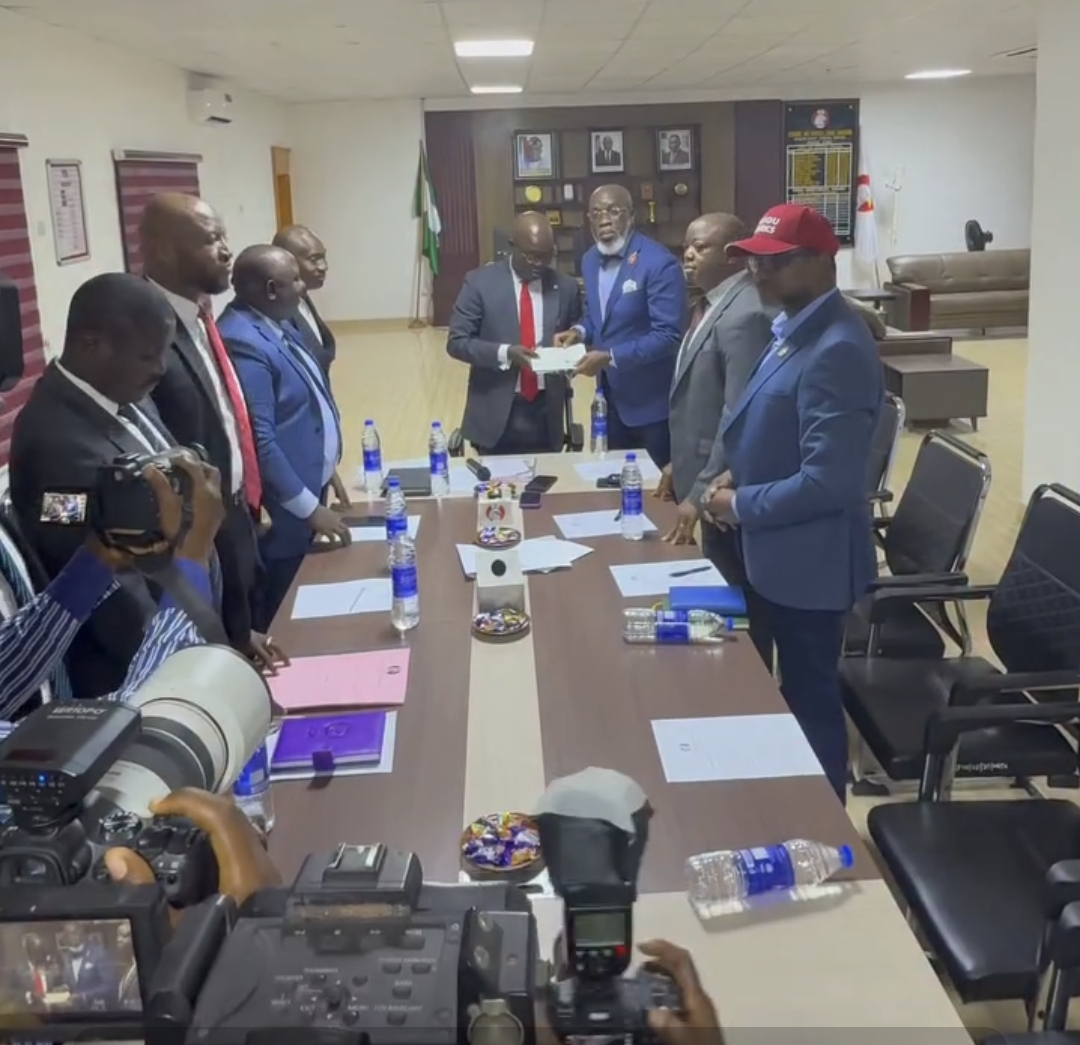
The recovered funds, representing public money previously paid for unexecuted or abandoned projects, were officially handed over to the state at the EFCC Enugu Zonal Office, marking a decisive victory for transparency and fiscal probity.
This milestone is the culmination of a relentless pursuit of justice and resource recovery initiated and championed by Governor Peter Mbah, whose administration refused to be deterred by distractions, detractors, or the noise that often accompanies processes of accountability.
From the outset, the governor asserted that every kobo of public funds entrusted to the state would be defended, protected, and, where necessary, fully recovered.
The EFCC, acting on a petition submitted by the Enugu State Government, applied its full statutory mandate to trace, recover, and restitute these public funds.
In doing so, the anti-graft agency demonstrated not just procedural diligence but a commitment aligned with the very essence of good governance, which is ensuring that government contracts deliver value, and that breaches of trust do not go unchecked.
This achievement is historic for Enugu in the sense that for the first time in the state’s history, stolen or misapplied public funds have been methodically tracked, legally reclaimed, and restored to the treasury through cooperative, lawful action.
It sends a powerful message to citizens and contractors alike that no amount of money misappropriated through contract breaches or financial impropriety will remain beyond the reach of the rule of law.
For detractors who once went to town to cast aspersions on the administration, deriding efforts to pursue accountability as political theatre or unfounded attacks, the results now speak louder than rhetoric.
What once was cynicism and scepticism has given way to vindication: the people of Enugu now know that their resources matter, that governance under Peter Mbah is not a passive exercise of authority, but a proactive stewardship of public trust.
Governor Mbah’s leadership in this process reflects a broader commitment to prudent maximization of scarce resources, accountability, and probity in public office.
His administration’s insistence on legal process, collaboration with anti-corruption institutions, and firm resolve to hold defaulting contractors accountable sets a new standard for governance in Nigeria.
It is not enough to simply initiate projects; the state must ensure that such projects yield public benefit, and that citizens’ funds are never squandered with impunity.
The recovered funds will now be reinvested into critical infrastructure and development projects that genuinely improve the lives of the people of Enugu State; a testament to the fact that good governance and accountability are cornerstones of sustainable development.
Indeed, Governor Peter Mbah has proven to be an exceptional leader dedicated to the highest ideals of public service: integrity, transparency, and the tireless defence of the public purse.
This victory is not merely financial; it is moral, symbolic, and a clarion call to all public officials that stewardship without accountability is no longer acceptable.