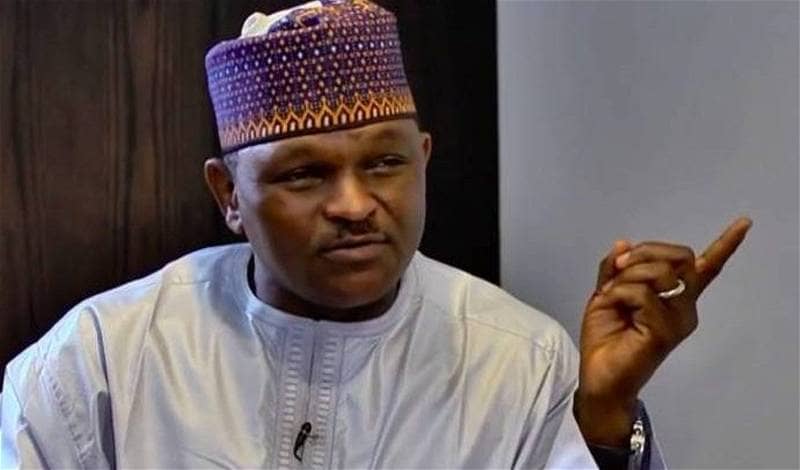

Former Chief Security Officer to late Head of State, General Sani Abacha, Major Hamza Al-Mustapha (retd), has described the Supreme Court’s decision ending his prosecution over the murder of Kudirat Abiola as a moment of forgiveness, closure and renewed dedication to Nigeria.
Speaking for the first time after the apex court, on January 22, brought to an end a legal battle that lasted 28 years across the Lagos High Court, the Court of Appeal and the Supreme Court, Al-Mustapha said the judgment affirmed his innocence and freed him to move forward without resentment.
He said he bore no grudge against any individual or institution and expressed appreciation to the Federal Government for allowing the judiciary to carry out its duties without interference throughout the prolonged trial.
In a statement issued at the weekend, Al-Mustapha thanked his family, Nigerians and the judiciary for standing by him during what he described as “a harrowing, unforgettable and traumatic journey that began like a joke and which has finally ended on a very happy note.”
“My battle with the forces of darkness started in 1998 when I, along with others, was arrested and arraigned on trumped-up charges orchestrated by those who decided not only to blackmail me, but also to get rid of me for reasons best known to them,” he said.
“Of course, it would be an understatement to say that the 28 years of trial that followed were enjoyable. But to the glory of Almighty Allah, all ended well at the Supreme Court of Nigeria.”
He said the verdict had enabled him to put the painful chapter behind him and move on with his life.
“As a good and patriotic Nigerian, I have to put all that happened behind me, gear up and get ready to move on with my life without grudges against any individual or institution,” he said.
Al-Mustapha added that the judgment had vindicated him completely.
“The Supreme Court verdict has vindicated me and proved my innocence; so what more do I ask Almighty Allah for than the heart to forgive all those who masterminded my almost three-decade ordeal. As a Muslim, I have forgiven them all.”
He said he was now prepared to return to public life in a positive and constructive manner. “I am ready now to contribute my own quota to the well-being, development and advancement of Nigeria,” he said.
Paying tribute to the Justices of the Supreme Court, Al-Mustapha said, “To the eminent and erudite Justices at the Supreme Court of Nigeria, I remain eternally effusive in my gratitude for your painstaking and just judgment. I thank you so much for living up to expectations as the last hope of the common and defenceless man.”
He also thanked Nigerians who supported him during the trial, as well as members of his family who, he said, endured sustained harassment.
“I am grateful to my parents, who suffered from wanton harassment by forces bent on seeing my end. My wife and children, who also suffered deliberate harassment, deserve commendation for standing firm, even in the face of all threats,” he said.
Al-Mustapha acknowledged the ordeals faced by his siblings, legal team and associates, noting that his lawyers were subjected to “physical attacks, illegal break-ins and burglary of their chambers,” while friends experienced “illegal searches and abuses.”
On a sombre note, he remembered journalists and others who lost their lives or were injured while covering the trial.
“On a sad note, however, I remember all those who paid the supreme price and other patriots who sustained life-threatening injuries, especially from all the geo-political zones of Nigeria, in the course of covering my court trial,” he said.
“I sympathise with their family members and other loved ones. They are heroes, and their labours shall not be in vain.”
He concluded by urging Nigerians to move beyond bitterness and division, calling on citizens to reject hatred and work together in unity “to ensure that Nigeria becomes the country of our lofty dreams for the sake of posterity.”