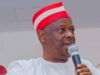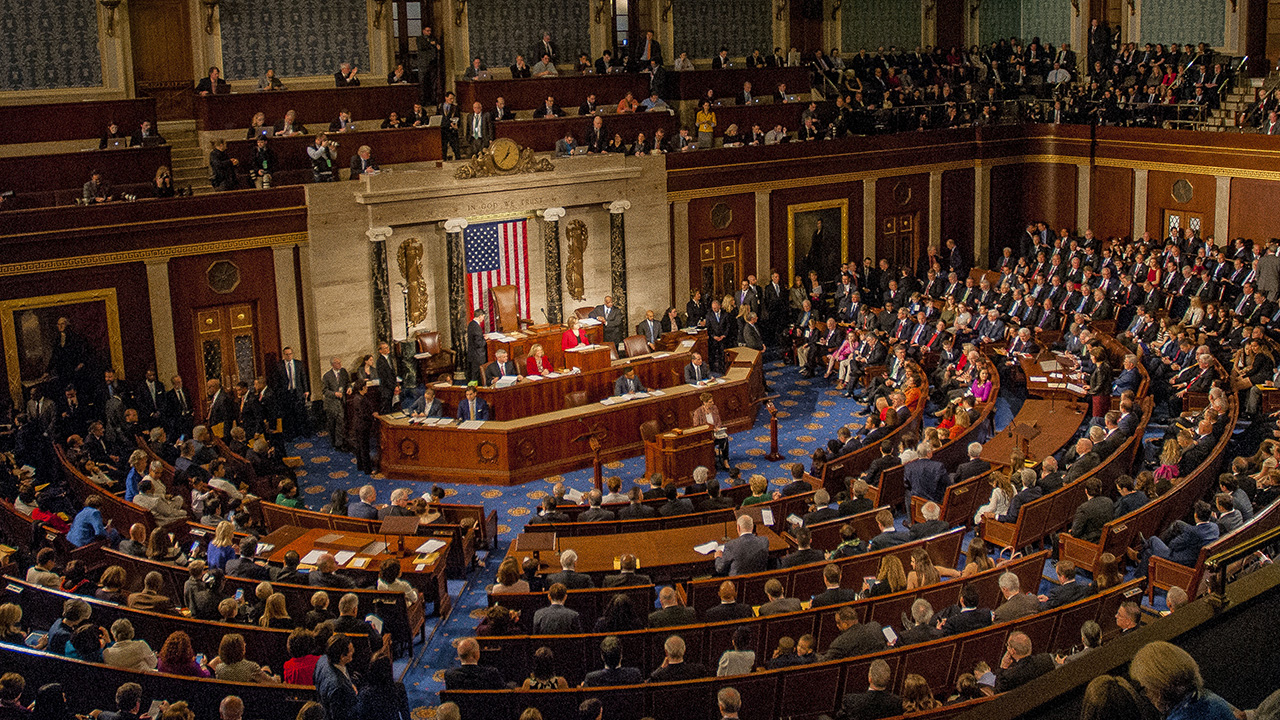

United States lawmakers have introduced new legislation aimed at increasing accountability for human rights abuses in Nigeria, including potential sanctions against Fulani militias and former Kano State Governor Rabiu Kwankwaso.
According to the lawmakers, the proposed legislation seeks to strengthen the impact of previous US actions in Nigeria.
“Today, I am proud to introduce the Nigeria Religious Freedom and Accountability Act of 2026 with Rep. Chris Smith,” US Representative Riley Moore stated.
Moore, a Republican, emphasised the US commitment to global religious freedom, adding, “The U.S. is a Christian nation. As such, we must stand with persecuted Christians around the world.”
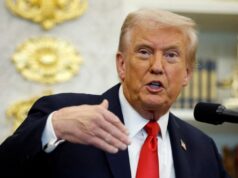
“Our legislation will build upon the momentum of President Trump designating Nigeria as a Country of Particular Concern and the recent US-Nigeria security framework agreement,” he said, referencing past measures targeting religious persecution and security cooperation.
Legal experts and advocates have highlighted the bill’s focus on accountability for specific actors involved in religiously motivated violence.
Sean Nelson, Senior Counsel for Global Religious Freedom, praised the bipartisan effort, noting, “Powerhouse team of Rep. Chris Smith & Rep Riley Moore today introduced a new bill on religious freedom in Nigeria increasing accountability measures, incl recs for sanctions against Fulani militias and former Kano State gov Kwankwaso, who intro’d Sharia criminal law there.”
The legislation comes amid growing international attention on the rise of sectarian violence in Nigeria.
The bill specifically recommends sanctions against armed groups accused of perpetrating violence and government figures who have enacted or supported laws that critics say infringe on religious freedoms.
Observers note that the bill signals a stronger US willingness to tie security and economic cooperation with human rights benchmarks.
By linking sanctions directly to accountability for abuses, the proposed law could influence how Nigeria addresses religiously motivated attacks in the future.
The Nigeria Religious Freedom and Accountability Act of 2026 is expected to undergo committee review in the US House of Representatives, with supporters urging quick consideration given the urgency of ongoing religious freedom concerns.
DAILY GAZETTE earlier reported that the United States would deploy 200 troops to Nigeria to provide training and technical support to the country’s armed forces, with both governments stressing that the personnel will not participate in direct combat operations.
“We are getting US troops to assist in training and technical support,” Major General Samaila Uba, spokesperson for Nigeria’s Defence Headquarters, told AFP.
According to a report by The Wall Street Journal, the additional 200 troops will supplement a small US team already in Nigeria assisting with air strike targeting.
The reinforcements are expected to arrive in the coming weeks and will focus on strengthening operational coordination between Nigerian forces.
The US personnel will provide “training and technical guidance,” including helping Nigerian counterparts better coordinate operations involving air strikes and ground troops simultaneously, the newspaper reported.
Despite the scale-up, Nigerian authorities were emphatic that the American troops would not be drawn into frontline fighting.
“US troops aren’t going to be involved in direct combat or operations,” Uba told the Journal, underscoring that their role would be limited to advisory and support functions.
He added that Nigeria requested the additional assistance as part of efforts to enhance the effectiveness of its security operations against extremist groups operating in parts of the country.
Nigeria has battled insurgency for more than a decade, particularly in the North-East, where Boko Haram and the Islamic State West Africa Province (ISWAP) have carried out attacks on both civilian and military targets.
The conflict has led to thousands of deaths and the displacement of millions.
The expanded cooperation comes amid diplomatic pressure from Washington over insecurity in Nigeria.
US President Donald Trump has previously described the situation as “persecution” and “genocide” against Christians.
The Nigerian government has consistently rejected allegations that the violence amounts to a targeted campaign of Christian persecution, describing such claims as a mischaracterisation of a complex security crisis driven by terrorism, banditry and communal conflicts.