
Nigeria’s chances of featuring at the 2026 FIFA World Cup appear increasingly remote following a fresh move by the Nigeria Football Federation (NFF) that signals a shift in priority away from any last-minute qualification hopes.
Although FIFA is yet to deliver a final ruling on Nigeria’s petition against DR Congo over alleged ineligible players, the NFF’s latest announcement suggests the federation is already planning beyond the 2026 tournament.
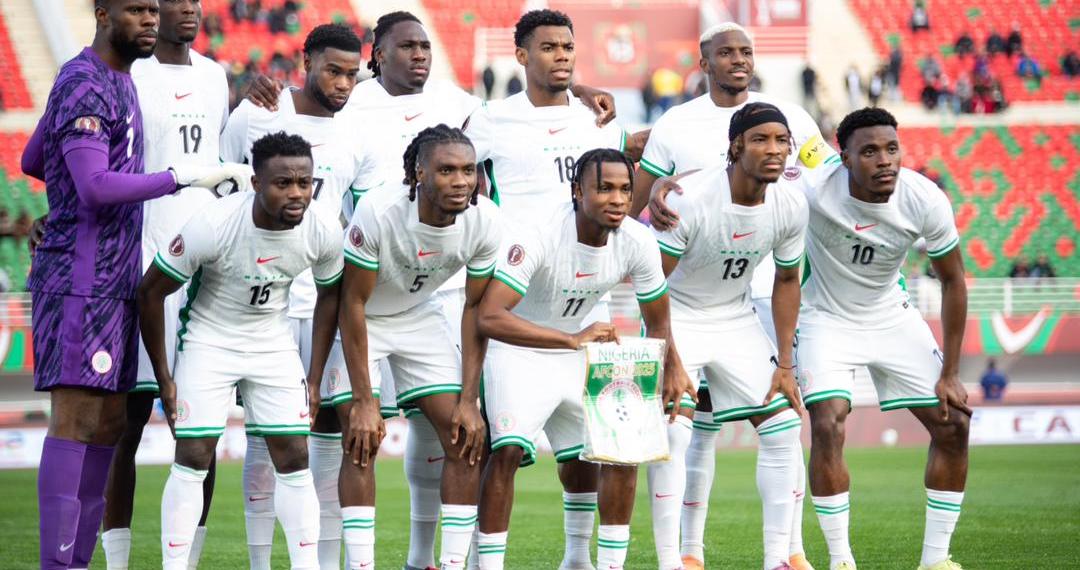
In a statement issued on Friday, NFF Director of Communications Ademola Olajire confirmed that the Super Eagles will participate in a Four-Nation Invitational Tournament in Amman, Jordan, during the March FIFA international window — the same period reserved for the final World Cup playoffs.
According to the federation, the three-time African champions will open their campaign against Iran on 27 March 2026 at the 17,000-capacity Amman International Stadium.
On the same day, hosts Jordan will face Costa Rica at the 62,000-capacity King Abdullah Sports City Stadium.
Nigeria will then take on Jordan on 31 March, while Costa Rica and Iran clash in the other fixture.
Match times are expected to be announced soon.
The scheduling has sparked speculation, as the March window coincides with the decisive World Cup playoff matches.
Nigeria’s confirmed participation in a friendly tournament — with no indication of possible playoff involvement — reinforces the perception that the federation is preparing for life outside the 2026 Mundial.
Nigeria lodged a protest with FIFA after losing to DR Congo on penalties in the African playoffs last November.
The NFF challenged the eligibility of certain Congolese players, arguing that DR Congo’s domestic law does not recognise dual citizenship for adults.
The federation suggested that some players may have retained European passports while representing DR Congo and raised concerns that FIFA could have been misled during the eligibility clearance process.
NFF General Secretary Mohammed Sanusi had maintained that FIFA’s eligibility rules are primarily passport-based but expressed reservations about whether accurate information was supplied.
Despite widespread speculation online, the NFF recently dismissed claims that FIFA had already ruled on the matter.
“There is no decision from FIFA at this time. Any claims that a ruling has been made are false. FIFA has not communicated any verdict to the NFF or the Congolese federation,” Mr Olajire stated.
Chairman of the National Sports Commission Shehu Dikko also confirmed that the matter remains before FIFA’s independent judicial bodies, including its disciplinary and ethics committees.
Speaking to journalists after a visit to President Bola Tinubu at the Presidential Villa, he acknowledged that while Nigeria believes it has a strong case, the federation is no longer building its plans around a potential reversal.
He stressed that attention has shifted toward upcoming competitions, including the Africa Cup of Nations and the Women’s Africa Cup of Nations, describing the World Cup campaign as a closed chapter pending the outcome of the legal process.
For supporters, the reality is difficult to digest. Missing out on the 2026 tournament would mark Nigeria’s second consecutive absence from the global showpiece, following their failure to qualify for the 2022 edition.
While the petition remains unresolved, the NFF’s decision to commit to a friendly tournament during a crucial playoff window signals a pragmatic approach: preparing the Super Eagles for the next cycle rather than holding onto fading hopes.
Barring an unexpected ruling from FIFA, Nigeria appears set to focus on rebuilding, strengthening the squad, and targeting continental success as it charts a new path forward.