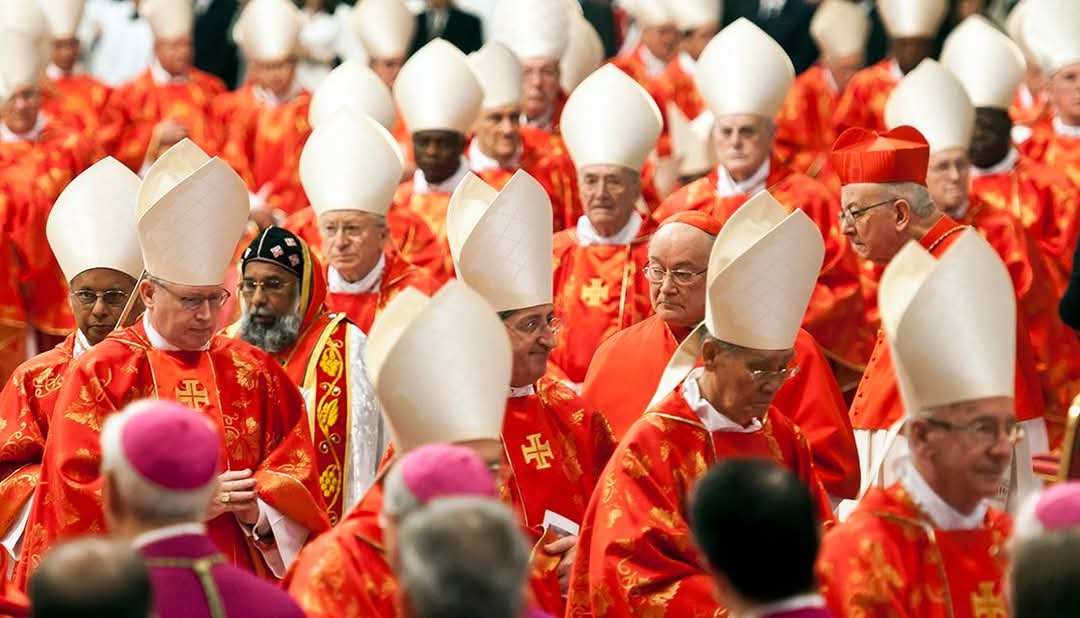

The eyes of the world turned once again to the Vatican yesterday as 133 cardinal electors were formally sealed inside the Sistine Chapel, beginning the sacred and highly secretive process of choosing a new pope.
This comes just over two weeks after the passing of Pope Francis, whose 12-year pontificate reshaped global Catholicism through progressive reforms and outspoken moral leadership.
The solemn ritual was marked at approximately 5:45 p.m. (1545 GMT) when Vatican master of ceremonies, Monsignor Diego Ravelli, intoned the Latin command “Extra Omnes”, “Everyone out”, ordering all non-electors to exit the chapel.
He then closed the large wooden doors, symbolizing the start of the conclave.
Earlier, the cardinals gathered in silent reflection at the Pauline Chapel before processing into the iconic 15th-century Sistine Chapel, where they took a collective oath of secrecy.
One by one, they approached the altar beneath Michelangelo’s towering Last Judgement fresco to make individual vows, swearing to maintain confidentiality on pain of excommunication.
This conclave is historic not only for its context but also for its diversity. Of the 135 eligible electors, 133 are participating, representing 71 countries across five continents, the largest and most international gathering in Church history.
Two cardinals, Antonio Cañizares of Spain and John Njue of Kenya, are absent due to illness, while Bosnian Cardinal Vinko Puljić will vote from his room at the Casa Santa Marta because of health issues.
Pope Francis appointed 108 of the electors, a significant factor likely to influence the ideological direction of the Church.
Twenty-two were appointed by Pope Benedict XVI, and five by Pope John Paul II.
With no clear frontrunner, speculation is intense. Among those viewed as leading candidates:
Fridolin Cardinal Ambongo Besungu (65), the outspoken Archbishop of Kinshasa, DR Congo, is seen as a powerful voice from Africa.
Pietro Cardinal Parolin (70), the current Vatican Secretary of State and seasoned diplomat from Italy.
Matteo Cardinal Zuppi (69), Archbishop of Bologna, noted for his work with peace and marginalized communities.
From Asia, Luis Antonio Cardinal Tagle (67) and Pablo Virgilio Cardinal David (66) of the Philippines are seen as contenders with deep pastoral and missionary experience.
Other prominent names include Jean-Claude Cardinal Hollerich (66) of Luxembourg, Joseph Cardinal Tobin (72) of the U.S., Tarcisius Cardinal Isao Kikuchi (66) of Japan, and Cristóbal Cardinal López Romero (72), the Archbishop of Rabat.
As the cardinals deliberate, attention turns to the future direction of the Church.
Will the next pope build upon Francis’ legacy of reform, outreach to the margins, and commitment to social justice? Or will a new leader chart a more conservative path?
In an age marked by declining church attendance in the West, ongoing fallout from abuse scandals, and shifting geopolitical realities, the next pontiff will need to command both moral authority and global vision.
Many observers believe the future of Catholicism lies in the Global South, particularly in Asia and Africa, regions where the faith is vibrant and growing.
The world now waits for the appearance of white smoke from the Sistine Chapel chimney, signaling that a new pope has been chosen.