
In a historic moment for the Catholic Church and the global community, the College of Cardinals has elected a new pope following the death of Pope Francis, DAILY GAZETTE reports.
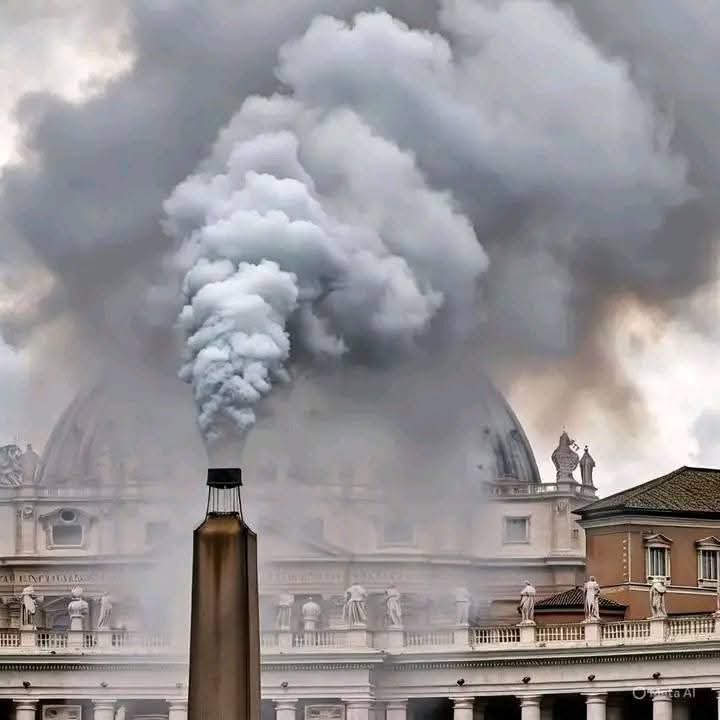
White smoke rose from the chimney of the Sistine Chapel on Thursday evening, announcing to the world that a new pope has been elected to lead the Roman Catholic Church’s 1.4 billion faithful.
The long-anticipated moment drew cheers and applause from the thousands gathered in St Peter’s Square, their eyes fixed on the Vatican skyline as the bells of St Peter’s Basilica began to toll.
This moment marks the end of a historic conclave, the largest in Church history, as 133 cardinals from across the globe cast their votes in solemn secrecy.
Their task: to choose a successor to Pope Francis, the Argentine reformer who died last month after a 12-year papacy marked by humility, inclusiveness, and bold reforms.
After two inconclusive rounds, signaled by black smoke on Wednesday and again on Thursday midday, the white smoke at just past 6:00 p.m. Rome time (1600 GMT) signified consensus.
The Church’s 267th pontiff has been chosen.
Inside the Vatican, the newly elected pope entered the traditional “Room of Tears,” where new popes often shed private emotion before donning the white cassock.
Soon after, he returned to the Sistine Chapel to receive the pledges of obedience from his fellow cardinals.
Now, the eyes of the world turn to the central balcony of St Peter’s Basilica. There, a senior cardinal will soon deliver the historic Latin phrase “Habemus Papam” , “We have a pope”, followed by the pope’s chosen name.
Then, for the first time, the new pontiff will greet the world and deliver his first Urbi et Orbi (“To the City and the World”) blessing.
The new pope assumes office at a time of global turbulence and internal Church struggles.
Alongside asserting moral leadership in an era of war, migration crises, and political extremism, he must also confront long-standing scandals of clerical abuse, waning Church attendance in the West, and the need for greater financial transparency within the Vatican.
The conclave itself reflected the Church’s diversity: a majority of voting cardinals were appointed by Pope Francis and represented 70 countries.
Yet despite the Francis-era appointments, uncertainty surrounded whether the electors would choose a candidate in his reformist image or turn toward a more conservative figure focused on traditional doctrine.
Church insiders and observers debated whether the next pope would be a pastoral leader or a skilled diplomat, someone steeped in Vatican bureaucracy or a fresh voice from the Global South, where Catholicism continues to flourish.
Before the conclave began, Cardinal Giovanni Battista Re, the dean of the College of Cardinals, urged his peers to elect someone capable of unifying a fragmented Church and providing clear spiritual leadership in an increasingly polarized world.
The new pope’s public inauguration Mass is expected within days, attended by global leaders and religious figures.
He is also expected to tour St Peter’s Square in the popemobile and deliver a homily laying out his vision for the Church’s future.