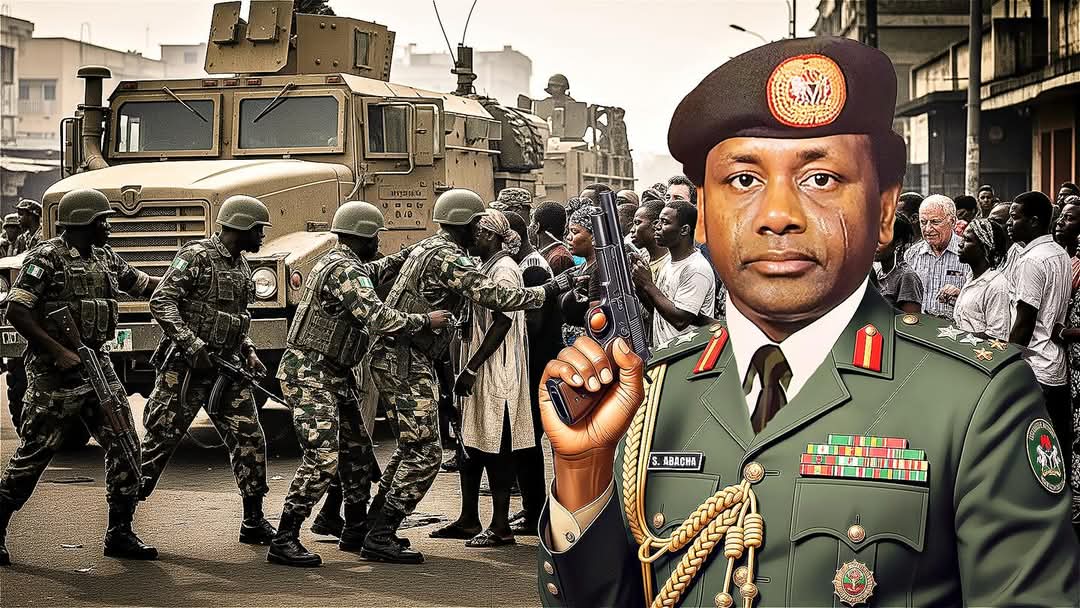

On this day, June 8, 1998, Nigeria awoke to the stunning news that its military Head of State, General Sani Abacha, had died suddenly at the Aso Rock Presidential Villa in Abuja.
He was 58 years old.
Abacha’s death, shrouded in mystery, came without warning.
No official cause was ever publicly confirmed, and in line with Islamic rites, he was buried the same day without an autopsy.
The sudden end of his rule brought a dramatic close to one of the most authoritarian eras in Nigeria’s post-independence history.
Rising to power in 1993 through a military coup, General Abacha ran the country with an iron grip.
Under his leadership, Nigeria saw a mix of economic stabilization and international isolation.
While some praised his ability to rein in inflation and restore a degree of fiscal order, his regime was notorious for its human rights abuses, brutal suppression of dissent, and large-scale corruption.
Political opponents were jailed or exiled, and the execution of activists, most notably Ken Saro-Wiwa and the Ogoni Nine in 1995, drew global outrage.
The unexpected nature of his death left a vacuum at the top of Nigeria’s military hierarchy.
Yet it also opened the door to rapid political change. Just ten months later, in May 1999, Nigeria transitioned to civilian rule with the inauguration of President Olusegun Obasanjo, a former military leader turned elected president.
More than 25 years on, the legacy of Sani Abacha remains deeply polarizing.
For some, he is remembered as a strong leader who brought order to chaos; for others, he symbolizes repression, lost potential, and the deep scars left by years of autocratic rule.
Regardless of where opinions fall, June 8 stands as a pivotal date in Nigeria’s modern history, a moment when the course of the nation began to shift away from dictatorship and toward democracy.