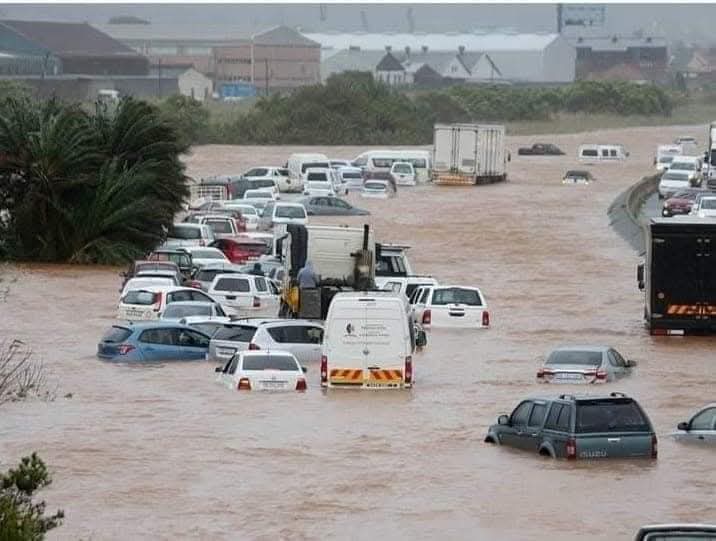

Rescue operations continued in South Africa’s Eastern Cape on Thursday as the death toll from devastating floods rose to 67, following several days of heavy rains and fierce winds that battered the largely rural province.
Officials fear the toll may still climb as search teams recover more bodies from submerged homes.
The storm, described as “unprecedented” by President Cyril Ramaphosa, struck on Monday, causing rivers to overflow and wash away homes, especially in Mthatha, about 800 kilometers (500 miles) south of Johannesburg.
The flooding upended thousands of lives and left communities wading through muddy wreckage in search of salvageable belongings.
AFP journalists at the scene witnessed rescue workers pulling four bodies, including children, from a one-room house as devastated residents looked on.
“As the water subsides, more bodies are being discovered,” said Caroline Gallant, Eastern Cape manager at the South African Red Cross Society, who described the disaster as the “worst ever” recorded in the region. More than 3,000 houses have reportedly been affected, she added.
Authorities confirmed that six of the dead were school children who had been inside a school van swept away by floodwaters. Four more children from that van are still missing.
“The figure now has gone to 67 in terms of deceased,” said Velenkosini Hlabisa, Minister of Cooperative Governance and Traditional Affairs.
“We learnt of an additional two learners today… who have been confirmed as having died on the walk to school,” added Basic Education Minister Siviwe Gwarube, who said “we are reeling” from the tragic loss during a broadcast on SABC News.
The flood has disrupted power and water supplies across communities and forced at least 600 people to relocate, many of whom are now taking refuge in community halls.
In addition, at least 20 health facilities have been impacted, according to local authorities.
President Ramaphosa is expected to visit the affected region on Friday to assess the damage firsthand.
Meanwhile, rescue teams remain on high alert as they comb through damaged homes for victims or possible survivors.
“We are going door to door to see, because yesterday we did find people locked inside houses who couldn’t get out and were deceased,” said one rescuer, who spoke anonymously due to restrictions on speaking to the media.
The Gift of the Givers Foundation, a humanitarian relief group, has also deployed emergency teams.
According to its spokesperson Ali Sablay, the need for aid is growing fast.
“In the last 24 hours the number of people requiring assistance has jumped from 5,000 to 10,000,” he said, warning that “the numbers will increase dramatically.”
“The homes are fragile, they can collapse any time; food is contaminated so people need to be evacuated,” Sablay added.
Officials have urged South Africans to remain cautious as forecasts predict more “extreme weather” across the country in the coming days.
The Eastern Cape, birthplace of Nelson Mandela, is one of South Africa’s poorest provinces, with 72 percent of residents living below the poverty line, according to the Southern African Regional Poverty Network.
Harsh winters, marked by heavy rain and snow, are not uncommon, but experts warn that climate change is amplifying the frequency and severity of weather disasters like floods, droughts, and wildfires.
“We must take a tough stance that everyone who is living on a flood plain must be removed,” said Minister Hlabisa, adding: “Climate change is a reality now.”