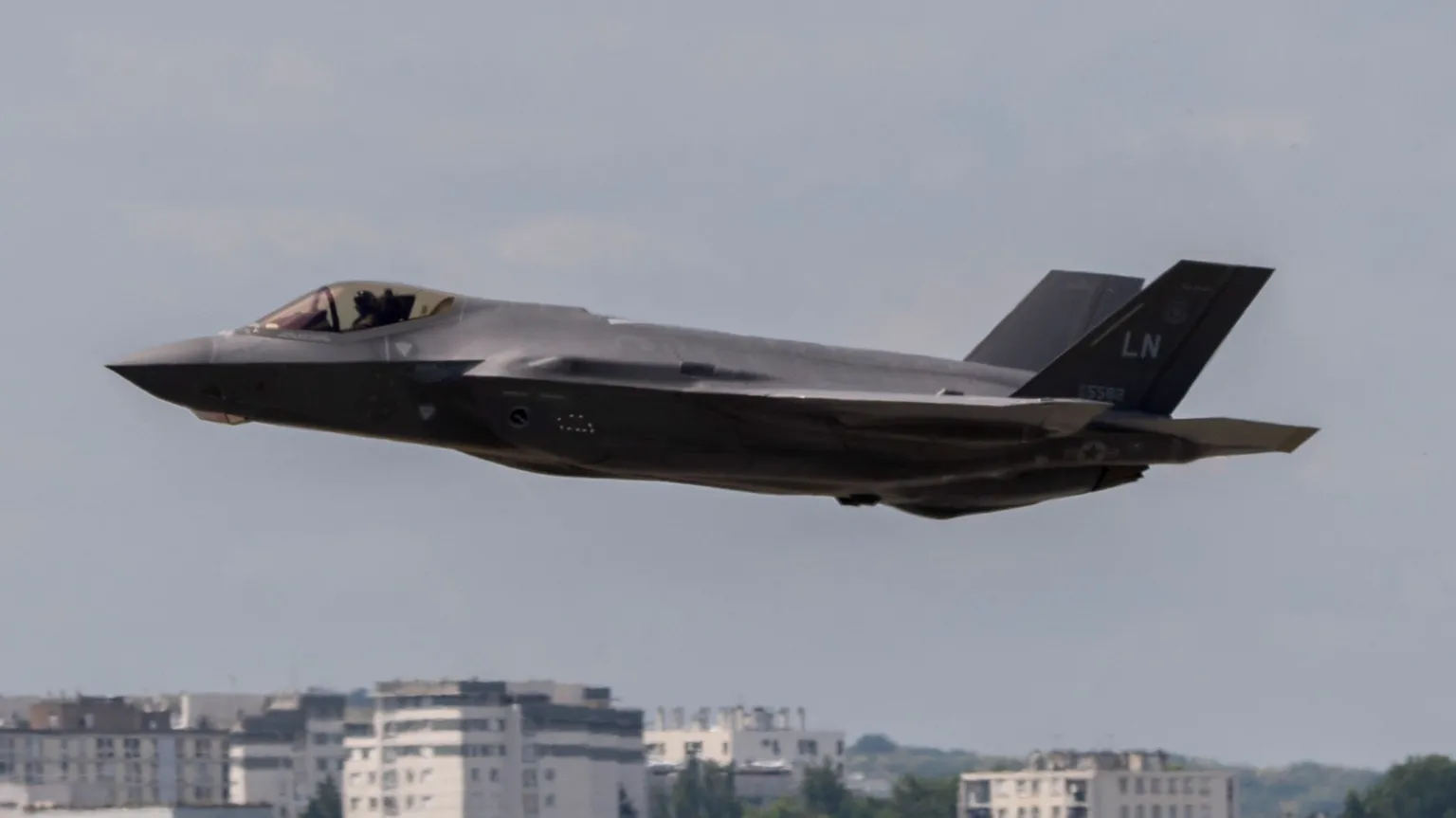

The UK has announced plans to purchase 12 new F-35A fighter jets capable of carrying nuclear weapons, marking what Prime Minister Sir Keir Starmer describes as “the biggest strengthening of the UK’s nuclear posture in a generation.”
The jets, which can also deploy conventional weapons, will join NATO’s airborne nuclear mission. The announcement is set to be formally delivered at the NATO summit in the Netherlands this week.
Unlike the F-35B aircraft currently operated by the RAF and Royal Navy, the new F-35A models have longer range and can carry a wider variety of armaments, including the American-made B61 tactical nuclear bombs, already stockpiled in Europe by the US.
These dual-capability aircraft will be based at RAF Marham in Norfolk and are expected to significantly upgrade the UK’s tactical strike options.
Until 1998, British aircraft had carried the UK-designed WE177 nuclear bombs, which were later retired, leaving submarines as the UK’s sole nuclear delivery system.
This move comes amid rising global tensions and what UK defence officials describe as a new era of nuclear uncertainty.
According to the recently published National Security Strategy, the UK must now prepare for the possibility of direct threats to its homeland, even in a wartime context.
Sir Keir Starmer defended the investment, stating, “In an era of radical uncertainty we can no longer take peace for granted.”
He emphasized that the acquisition will also have economic benefits, supporting around 20,000 jobs and 100 UK businesses.
The decision aligns Britain with seven other NATO members, including the US, Germany, and Italy, already participating in the alliance’s nuclear-sharing arrangement.
In this program, NATO aircraft are configured to carry B61 bombs, though their deployment would still require joint authorization from the NATO Nuclear Planning Group, the US President, and the UK Prime Minister.
While the UK’s Trident missile system, launched from Vanguard-class submarines, remains its primary nuclear deterrent, this development introduces a second delivery mechanism.
However, experts point out that Britain would remain reliant on the US for control over the actual bombs, a potential sticking point in sovereignty debates.
Defence expert Justin Bronk from the Royal United Services Institute (RUSI) notes that it will take time for the RAF to reestablish nuclear delivery capabilities after a nearly three-decade pause.
This strategic purchase is part of a broader defence overhaul.
The UK has committed to meeting a new NATO spending goal: dedicating 5% of GDP to national security by 2035, with 3.5% going directly to defence.
All 32 NATO member states are expected to endorse this target at the summit.
NATO Secretary-General Mark Rutte praised the UK’s decision, calling it “yet another robust British contribution to NATO.”