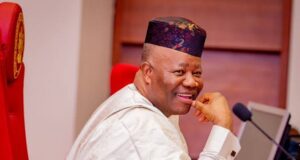

Former National Chairman of the Inter-Party Advisory Council (IPAC), Peter Ameh, has strongly opposed proposals to allow prison inmates to vote in Nigerian elections, warning it could open the floodgates to a new wave of electoral fraud.
Appearing on The Weekend Show, Ameh said the current state of Nigeria’s correctional facilities makes inmates vulnerable to political manipulation and coercion by prison officials and state actors.
“Prison voting, without structural safeguards, will not strengthen our democracy, it will deepen manipulation,” he stated.
Ameh argued that inmate voting should not be prioritised at this time.
Instead, he said Nigeria should focus on enfranchising Diaspora Nigerians, who contribute billions of naira in annual remittances and remain deeply invested in national progress.
Beyond his concerns about prison voting, Ameh made a strong case for sweeping reforms to strengthen the electoral process, including unbundling INEC to guarantee greater independence, conducting all elections on a single day to reduce costs and improve transparency, as well as mandating electronic transmission of results to curb vote manipulation.
“It’s unjust for a President who is also a contestant to appoint the very referee of an election. This undermines public trust,” he said, referring to the current structure where the President appoints INEC officials.
He advocated for changes in the appointment process, suggesting that INEC chairpersons and commissioners should be screened and confirmed by the National Assembly to avoid political bias.
Meanwhile, the Nigerian Electoral Reform Coalition (NERCO) has launched a nationwide campaign to push for electoral reforms through what it calls a “people’s bill.”
The coalition is engaging lawmakers, civil society groups, and citizens in a bid to close electoral loopholes and enforce transparency at every stage of the process.
NERCO’s proposals echo Ameh’s concerns, particularly on electronic result transmission through the INEC Result Viewing (IReV) portal, which they insist must be enshrined in law to restore public confidence in elections.