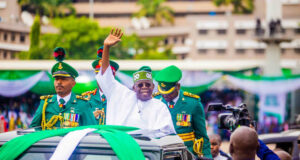
President Bola Ahmed Tinubu has disclosed that Nigeria was on the verge of economic collapse when he assumed office in May 2023, forcing his administration to embark on sweeping reforms.
In a nationwide broadcast to mark Nigeria’s 65th Independence Anniversary on Wednesday, Tinubu described the state of the economy he met as “near-collapsed,” weakened by “decades of fiscal distortions and misalignments” that stunted real growth.
“Upon assuming office, our administration faced a stark reality. We could either continue with business as usual and watch our nation drift further into crisis, or take bold steps to reset the economy. We chose reform,” Tinubu said.
The President defended his controversial policy decisions, including the removal of petrol subsidy and the unification of the foreign exchange market, insisting that both were necessary to restore economic stability.
“For too long, fuel subsidies and multiple exchange rates served only a privileged few, while the majority of Nigerians saw little benefit from our commonwealth. By ending these distortions, we created the foundation for sustainable growth,” he explained.
The removal of subsidy, however, triggered sharp increases in the cost of fuel and basic goods, deepening hardship for millions of Nigerians.
Critics and some economists have accused the government of worsening living conditions, but Tinubu has remained steadfast.
“We chose the path of tomorrow over the comfort of today. Less than three years later, the seeds of those tough but essential choices are beginning to bear fruit,” he insisted.
The President’s Independence Day message comes amid continuing debate over whether the reforms will deliver long-term gains or entrench deeper inequality.