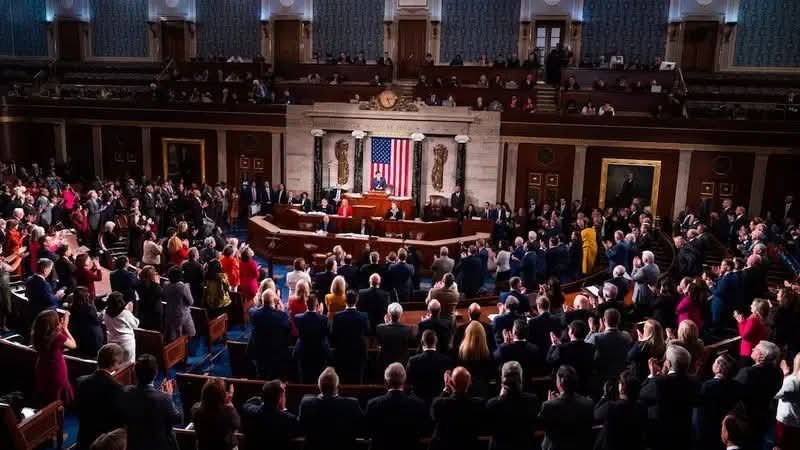

The United States House Subcommittee on Africa on Thursday held a public hearing in Washington, D.C., to examine President Donald Trump’s recent decision to redesignate Nigeria as a Country of Particular Concern, a classification that heightens U.S monitoring of alleged religious freedom abuses in the country.
The session, chaired by Representative Chris Smith, began at 5 pm and featured testimony from senior U.S State Department officials as well as Nigerian religious leaders.
Lawmakers reviewed the implications of the CPC status, including the possibility of sanctions against Nigerian officials and limits on some U.S assistance.
During the hearing, Representative John James, a former chair of the Africa Subcommittee and now a member of the House Energy and Commerce Committee, called the designation necessary to confront what he described as a rapidly escalating threat to Christian communities in Nigeria.
“Nigeria is facing one of the worst religious freedom crises on the planet,” James said.
“I have been there. I have seen the worsening situation in what is now the most dangerous place in the world to be a Christian.”
James said nearly 17,000 Christians have been killed since 2019, with hundreds more murdered in just the first seven months of the current year.
He stressed that the pattern of killings is neither random nor rare.
“These are not isolated incidents, this is a sustained campaign of religiously motivated violence. Too often, it is ignored or even passively enabled by the Nigerian government.”
He added that extremist groups such as Boko Haram, Fulani militants, and ISIS West Africa continue to launch attacks with little or no meaningful government response.
“The absence of accountability has created an environment of impunity. Christians live every day under the shadow of fear,” James said.
James also raised concerns about the prolonged detention of Mazi Nnamdi Kanu, linking it to what he described as institutional decay and selective justice in Nigeria.
“Religious persecution is closely tied to political repression and weakening institutions. Kanu’s detention illustrates this.
In 2022, the Court of Appeal dismissed the charges and ordered his release. The UN Working Group on Arbitrary Detention also called for his freedom. Yet he remains in solitary confinement and had to represent himself in court.”
James noted that despite domestic and international appeals, Kanu was convicted on all charges earlier on Thursday.
In response to a question about whether jihadist groups have infiltrated the Nigerian government, Jonathan Pratt, a Senior Bureau Official at the U.S. State Department’s Bureau of African Affairs, said he did not believe such infiltration had taken place.
James pressed further, citing concerns about the selective enforcement of the rule of law and whether authorities have turned a blind eye to targeted attacks.
When asked about Nigeria’s reaction to the CPC designation, Pratt said the Nigerian government appears to be taking the matter seriously.
“A senior delegation is currently in Washington,” Pratt explained.
“They are meeting with top U.S. officials, and we have already engaged them in Abuja and here regarding an action plan. So far, we have seen positive signs of cooperation.”