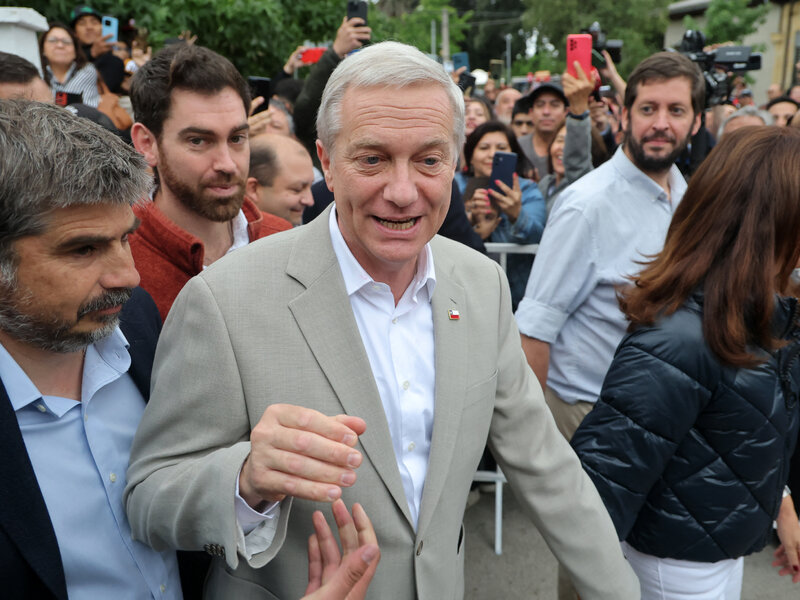

Chile has elected conservative firebrand José Antonio Kast as its next president, signalling the country’s sharpest political shift to the right since the end of Augusto Pinochet’s military rule more than three decades ago.
Kast won Sunday’s runoff election with 58 per cent of the vote, defeating left-wing candidate Jeannette Jara, who secured 42 per cent and conceded soon after official results were released. Jara was backed by the outgoing government.
The president-elect built his campaign around tough law-and-order messaging, tapping into widespread public concern over rising crime and irregular migration.
His policy proposals include stricter border controls, the construction of physical barriers, the deployment of the military to crime-prone areas and the deportation of undocumented migrants.
Speaking to cheering supporters at the headquarters of his Republican Party in Santiago’s upscale Las Condes district, Kast pledged sweeping reforms anchored on security, which he described as the foundation of democratic freedom.
“There can be no peace without security, no democracy without peace, and no freedom without democracy,” he said, while acknowledging that meaningful change would require patience and sustained effort.
Kast’s victory adds Chile to a growing list of Latin American countries that have recently swung to the right, following electoral successes by leaders such as Ecuador’s Daniel Noboa, El Salvador’s Nayib Bukele and Argentina’s Javier Milei.
In Bolivia, the election of centrist Rodrigo Paz earlier this year ended almost 20 years of socialist dominance.
This marks Kast’s third attempt at the presidency and his second time reaching a runoff, after losing narrowly to incumbent President Gabriel Boric in 2021.
Analysts say heightened fears over crime and immigration helped expand his support base, including in regions that have traditionally leaned left.
Claudia Heiss, a political scientist at the University of Chile, noted that voter unease with Jara’s Communist Party background also contributed significantly to Kast’s emphatic win.
Although Chile remains among the safest countries in Latin America, violent crime has risen in recent years, driven by organised criminal groups, weak border controls and increased migration, particularly from Venezuela.
Financial markets welcomed the election outcome, with investors anticipating lighter regulation and more pro-business policies.
The Chilean peso strengthened and local stocks advanced in the world’s leading copper producer and a key global supplier of lithium.
Nonetheless, Kast is expected to govern amid political constraints.
Congress is sharply divided, with the Senate split evenly between left and right, while a populist bloc holds the balance of power in the lower chamber.
Analysts warn this could curb the implementation of some of his more hardline proposals.
Observers say the incoming president will need to navigate a careful path between ideological conviction and the practical demands of leading a politically diverse nation.