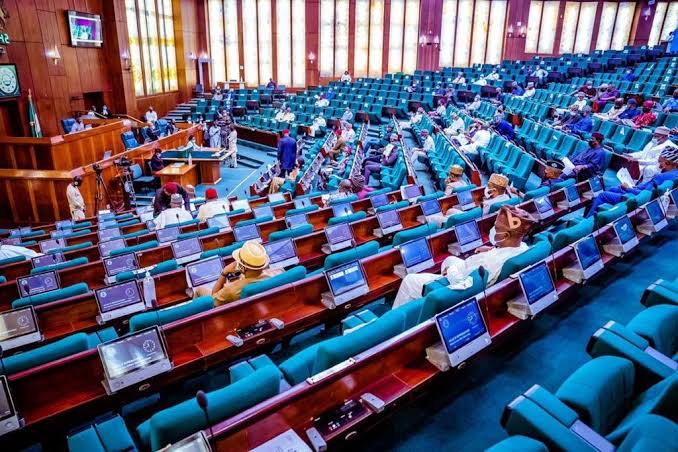

A member of the House of Representatives, Hon. Abdulsamad Dasuki (PDP, Sokoto), has raised concerns that the tax laws currently available to the public are not the same as those passed by the National Assembly.
Dasuki drew the attention of the House to the issue on Wednesday while rising on a Point of Privilege under Order Six, Rule Two of the House Rules.
He said the development amounted to a violation of his legislative rights and a serious breach of parliamentary procedure, noting that the contents of the gazetted tax laws do not reflect what lawmakers debated, voted on, and approved on the floor.
According to the lawmaker, he spent three days after the passage of the tax reform bills examining the gazetted versions alongside the Votes and Proceedings of the House, as well as the harmonised copies adopted by both chambers of the National Assembly.
He said the review revealed clear discrepancies.
“I was present, I cast my vote and it was duly counted, yet what I am seeing now is completely different,” Dasuki said.
He added that copies of the laws obtained from the Ministry of Information did not correspond with the versions approved by the House of Representatives and the Senate.
Dasuki stressed that his intervention was not aimed at moving a motion but at alerting the House to what he described as a grave constitutional and legislative anomaly.
He called on the Speaker, Tajudeen Abbas, to ensure that all relevant documents, including the harmonised bills, the Votes and Proceedings of both chambers, and the gazetted laws in circulation, are presented before the Committee of the Whole for thorough scrutiny.
“Mr Speaker, all members should be allowed to see what is contained in the gazetted copies and compare them with what was passed on the floor so that any necessary corrections can be made. This goes to the heart of our Constitution and our laws,” he said.
Responding, Speaker Abbas, who presided over the plenary, said he had taken note of the Point of Privilege and assured lawmakers that appropriate action would be taken.
President Bola Ahmed Tinubu had, on June 26, 2025, signed four tax reform bills into law.
The new legislations are the Nigeria Tax Act, the Nigeria Tax Administration Act, the Nigeria Revenue Service Act and the Joint Revenue Board Act.
The laws are intended to overhaul Nigeria’s tax system by boosting revenue generation, improving the business environment and strengthening tax administration across federal, state and local governments.
Under the new framework, the Value Added Tax rate remains at 7.5 per cent, despite earlier proposals to raise it to 12.5 per cent, although the scope of VAT has been widened.
Essential goods and services such as food, education, healthcare, public transport, residential rent and exports are zero-rated to cushion inflationary pressures.
The revenue allocation formula for VAT has also been adjusted, with 30 per cent now shared based on consumption, 50 per cent distributed equally among states, and 20 per cent allocated according to population.