
By Dr. Jeff Ejiofor,
Politics, when examined beyond emotion and sentiment, is fundamentally about interest, opportunity, and development. Communities and regions must align themselves where their collective aspirations stand the best chance of being realised.
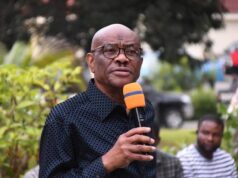
It is within this context that the decision of Dr Peter Ndubuisi Mbah, the amiable Governor of Enugu State, to lead the South-East away from the People’s Democratic Party toward the All Progressives Congress should be carefully understood.
For more than two decades, the South-East remained one of the most accommodating regions for the PDP in Nigeria.
From the return to democratic rule in 1999, the zone consistently produced PDP governors across the region, except in Anambra State, which elected a governor under the All Progressives Grand Alliance from 2006.
In every practical sense, the PDP dominated politics in Igbo land, particularly in Enugu State, which has never produced a governor outside the party since 1999.
During this period, the PDP practically determined the political direction of the South-East. The party decided political opportunities and influence in line with the famous definition of politics by Harold Lasswell as the process of deciding “who gets what, when, and how.”
It also played the decisive role in distributing political values and opportunities within the region, reflecting the democratic description offered by David Easton as the authoritative allocation of values in society.
In simple terms, the South-East remained loyal to the PDP more than most other regions in Nigeria.
The people sustained this loyalty in the hope that when the presidential ticket of the party rotated to the South, the zone would finally be given the opportunity to produce a president. Unfortunately, that expectation was shattered in 2023.
However, after waiting patiently for twenty-two years, the PDP not only denied the South-East its presidential ticket but also abandoned its long-standing zoning principle.
Instead, the party handed its ticket to Atiku Abubakar from the North at a time when power was expected to rotate to the South.
Even more painful was the manner a potential South-East aspirant within the party, Peter Obi, was politically frustrated and eventually forced to leave the PDP for the Labour Party, a party that lacked the nationwide political structure necessary to win the presidency.
This development left many in the South-East with the painful realization that despite decades of loyalty, the PDP had little regard for the political aspirations of the region.
Obviously, the signs of neglect were visible in governance. Throughout its sixteen years of leadership at the federal level, the PDP never considered an Igbo son fit to head the crucial Federal Ministry of Works despite the glaring infrastructural deficit in the South-East Instead, the region was often assigned ministries such as information that had little direct impact on solving the infrastructure problems confronting the zone.
As a result, many federal roads in the zone became dangerous death traps. The Enugu–Onitsha expressway, Enugu–Port Harcourt road, Enugu–Abakaliki highway, and the strategic 9th Mile–Obollo Afor road were neglected for years without meaningful intervention.
Today, however, the situation appears to be changing. Under the leadership of Bola Ahmed Tinubu and the All Progressives Congress, the relationship between the federal government and the South-East is beginning to take a different direction.
For the first time since 1999, an Igbo son now heads the Federal Ministry of Works, an appointment that is already making visible impact in the region.
Consequently, major federal roads across the South-East such as Enugu–Onitsha, Enugu–Port Harcourt, Enugu–Abakaliki, and the 9th Mile–Obollo Afor road are now receiving accelerated attention.
Beyond infrastructure, the current administration has also extended significant strategic appointments to the region. Under President Tinubu, an illustrious son of Enugu State, Emmanuel Ikechukwu Ogalla, became Chief of the Naval Staff of Nigeria.
Upon his retirement, another Enugu indigene, Sunday Aneke, assumed the position of Chief of the Air Staff in the Nigerian Air Force.
These appointments reinforce the sense of inclusion of a region that had long felt politically marginalised.
Against this background, the decision of Governor Peter Ndubuisi Mbah to reposition the South-East politically should not be misunderstood. The real question is:
What exactly is so special about the PDP that should prevent the region from reassessing its political alliances?
What measurable benefits did the South-East obtain from sixteen years of PDP leadership at the centre that would justify continued loyalty despite clear neglect?
It is therefore surprising when some politically naïve voices criticize the calculated decision of Governor Mbah to align the region strategically with the APC.
It suffices to say that politics should be viewed through the lens of development and opportunity, not blind sentiment.
As we observe the renewed pace of federal road construction across the South-East today, it becomes evident that strategic political engagement with the centre can produce tangible results.
For this reason, Governor Peter Mbah’s political calculation should be seen as a bold step toward repositioning the South-East within the national power structure.
Sometimes, leadership requires courage, the courage to make difficult decisions in the interest of the people.
As the APC state congress has come and gone successfully, I heartily congratulate the amiable governor of Enugu State, Dr Peter Ndubuisi Mbah, for taking the right step in the right direction.
Indeed, Tomorrow is Here.