
The Federal Government has acknowledged that Nigeria currently lacks sufficient crude oil production to meet the daily requirements of the Dangote Petroleum Refinery, which needs about 700,000 barrels to operate at its stated capacity.
The Minister of Finance and Coordinating Minister of the Economy, Taiwo Oyedele, made this known on Friday during an interview on Channels Television’s Politics Today programme.
Oyedele explained that Nigeria’s current crude oil production was insufficient to supply the refinery’s entire demand while meeting other domestic obligations and export commitments.
“We (Nigeria) are still not at the point where we can give Dangote Refinery 700,000 barrels of crude oil; we don’t have enough to service Dangote Refinery,” he said.
His remarks come amid ongoing concerns over Nigeria’s crude oil output and the availability of locally produced crude for domestic refining.
The Dangote Refinery, located in the Lekki area of Lagos State, has a nameplate capacity of 650,000 barrels per day, making it one of the largest single-train refineries in the world.
However, securing sufficient crude oil supplies has remained a major issue in discussions surrounding the refinery’s operations and the country’s drive to reduce dependence on imported petroleum products.
The Federal Government’s admission also highlights the challenge of reconciling domestic refining ambitions with Nigeria’s crude oil production levels and other competing demands for the commodity.
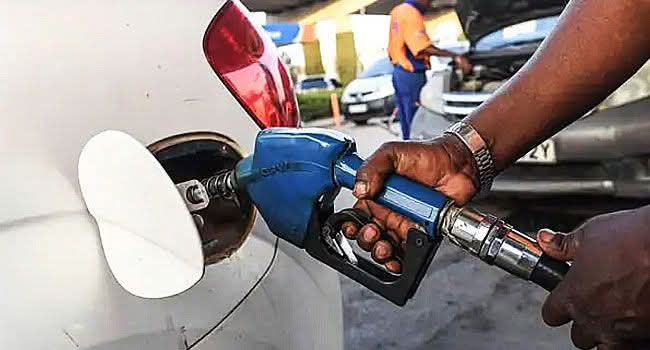
Meanwhile, the government has introduced a 30-day petrol discount at Nigerian National Petroleum Company Limited (NNPCL) filling stations in an effort to provide temporary relief to motorists and other fuel consumers amid high petrol prices.
The initiative has, however, raised questions about how much relief consumers will receive and whether the short-term intervention can significantly reduce transportation expenses and the broader cost of living.
Opposition figures have also criticised the timing and sustainability of the measure, arguing that a temporary price reduction may not resolve the structural challenges affecting Nigeria’s downstream petroleum sector.