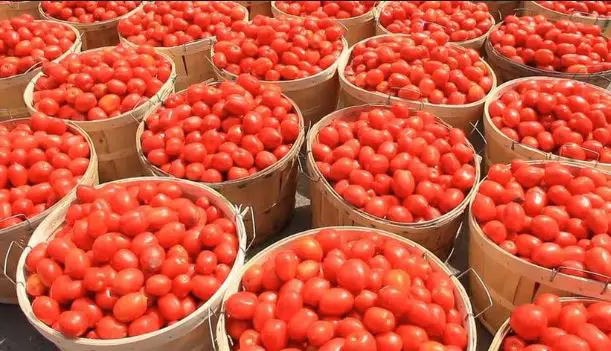

Nigerian consumers can look forward to a significant drop in tomato prices this July, according to the Tomatoes and Orchard Producers Association of Nigeria (TOPAN).
The assurance comes as Plateau State, a major tomato-producing region, is set to deliver a substantial harvest.
TOPAN’s National President, Oyeleke Bola, highlighted the factors contributing to the recent surge in tomato prices.
 Advertorial
“The delayed rains and the outbreak of tuta absoluta, also known as tomato ebola, severely impacted farmers, especially in Kano State, leading to the unprecedented price hike,” Bola explained.
He noted that the optimal planting period for tomatoes in Nigeria is between December and March, with harvesting typically occurring in the lean months from May to August when prices peak.
This year, however, farmers faced significant setbacks.
 Advertorial
“Climate conditions were unfavorable this year. Late rains and intense heat damaged large areas of tomato crops, particularly in Kano. The subsequent tuta absoluta outbreak further exacerbated the situation, making it challenging for farmers to sustain their operations,” Bola said.
Despite these hurdles, the upcoming harvest from Plateau State is expected to alleviate the high prices.
Bola expressed optimism that the influx of tomatoes into major cities like Lagos, Abuja, and Port Harcourt would help reduce prices by mid-July.
 Advertorial
Transportation costs have also contributed to the high prices.
“The cost of transporting tomatoes remains a challenge, but the new harvest will help mitigate this issue,” Bola added.
TOPAN is also focused on improving future production strategies.
“Farmers have learned valuable lessons from this year’s weather challenges. We plan to enhance land preparation and adapt our planting schedules accordingly,” he said.
 Advertorial
Bola emphasized the need for year-round tomato production to prevent future shortages and stabilize prices.
“Achieving continuous production requires significant investment from the private sector and collaboration with the government. Technological advancements in land preparation and mechanization for small-scale farmers are crucial,” he stated.
While some advocate for genetically modified (GMO) tomato seeds to boost yields, Bola prefers improving local seed varieties.
 Advertorial
“We should focus on enhancing local seeds, which can also provide high yields and support our growing population,” he argued.
Bola called on the government to establish a Federal Department for Tomato Development within the Ministry of Agriculture and Food Security.
“This department should focus on seed development, technology deployment, farmer training, and infrastructure for processing and storage. Such initiatives would address the challenges in the tomato value chain and attract investments in seeds, fertilizers, irrigation, and processing,” he concluded.