Home Blog Page 101

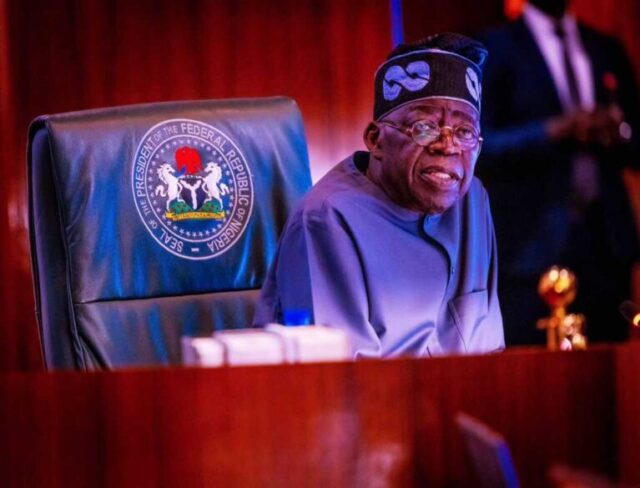
Tinubu Presents 2026 Budget Of N58.18trn To National Assembly, Defence Gets N5.41trn

President Bola Tinubu on Friday presented a ₦58.18 trillion budget proposal for the 2026 fiscal year to a joint sitting of the National Assembly, outlining his administration’s fiscal priorities amid ongoing economic reforms and security challenges.

The proposal sets capital expenditure at ₦26.08 trillion, while recurrent non-debt spending stands at ₦15.25 trillion.

Tinubu also pegged the crude oil benchmark at US$64.85 per barrel, with projected production of 1.84 million barrels per day and an exchange rate assumption of ₦1,400 to the dollar.

According to the president, expected total revenue for 2026 is ₦34.33 trillion, while debt servicing is estimated at ₦15.52 trillion.

The resulting budget deficit of ₦23.85 trillion represents about 4.28 per cent of Nigeria’s Gross Domestic Product.

Sectoral allocations show a strong tilt toward security and infrastructure. Defence and security received the highest allocation of ₦5.41 trillion, followed by infrastructure with ₦3.56 trillion.

Education was allocated ₦3.52 trillion, while health received ₦2.48 trillion.

The proposal is titled Budget of Consolidation, Renewed Resilience and Shared Prosperity.

Addressing lawmakers, Tinubu said the budget reflects more than fiscal arithmetic.

He described it as a statement of national priorities, stressing his administration’s commitment to fiscal sustainability, transparency in debt management, and value-for-money spending.

On security, the president said the heavy allocation was informed by persistent insecurity across parts of the country.

He noted that his government would continue to modernise the armed forces, strengthen intelligence-led policing, improve border security, and deploy technology-driven surveillance alongside community-based peacebuilding initiatives.

Tinubu said security spending would be tied to measurable outcomes, adding that boosting personnel strength and procuring advanced equipment for security agencies remain central to his plans.

The budget presentation also came against the backdrop of economic reforms introduced since his assumption of office in May 2023, including the removal of fuel subsidy and the floating of the naira, which contributed to rising inflation and cost-of-living pressures.

While acknowledging the hardship faced by Nigerians, Tinubu maintained that the economy has begun to stabilise.

He assured citizens that the sacrifices made would yield long-term benefits, describing the reform path as difficult but necessary for sustainable growth.

The president further pledged increased investment in infrastructure and agriculture, describing food security as a core national security concern.

He said the 2026 budget prioritises input financing, mechanisation, irrigation, climate-resilient farming, storage, processing, and agro-value chains.

According to him, these measures are aimed at reducing post-harvest losses, raising farmers’ incomes, deepening agro-industrialisation, and building a more diversified and resilient economy.

Google search engine

FCT Senator Kingibe Dumps LP For ADC

The Senator representing the Federal Capital Territory, Ireti Kingibe, has identified the Abuja Municipal Area Council as the starting point of her political push ahead of the February 2026 area council elections, following her defection from the Labour Party to the African Democratic Congress.

Kingibe made the declaration on Thursday, less than 24 hours after formally joining the ADC in preparation for the 2027 general elections.

She completed her registration at her Wuse Ward in AMAC, describing the move as the beginning of a serious political contest rather than a ceremonial exercise.

Speaking to journalists and party supporters after receiving her ADC membership card, the senator said the party was determined to take control of all six area councils in the FCT, beginning with AMAC.

She said the task ahead was a major political battle, stressing that AMAC, as her local government area and Wuse as her ward, naturally provided the launchpad for the ADC’s grassroots mobilisation.

The event also featured the unveiling of the ADC’s chairmanship and councillorship candidates across the FCT, with party flags presented to signal the party’s readiness for the February polls.

Political watchers believe Kingibe’s entry into the ADC could reshape the political landscape in the FCT, as competition for grassroots dominance intensifies ahead of the 2026 council elections and the 2027 general polls.

Former National Chairman of the ADC, Ralph Nwosu, described Kingibe’s defection as a major boost to the party’s growing influence in the territory.

He said her decision reflected a wider national realignment driven by public frustration with existing political arrangements.

According to Nwosu, the defection of the FCT’s senator was a strong signal that Nigerians were seeking a new political direction, adding that the ADC was steadily emerging as a rallying point for change.

He, however, noted that the party would be selective in admitting new members, insisting it would not become a haven for politicians motivated solely by money or personal ambition.

Also speaking, the ADC National Treasurer, Mani Ahmed, said the party was fully prepared for upcoming elections at both local and national levels.

He stated that widespread dissatisfaction with governance had positioned the ADC as a credible alternative.

From the constituency angle, Head of Senator Kingibe’s constituency office and national ex-official representing the FCT, Emmanuel Destiny, said the senator’s defection marked the start of a new political chapter for residents of the territory, particularly women and young people.

He urged women and youths to rally behind Kingibe, arguing that Nigerians were yearning for meaningful change amid hardship, insecurity and economic pressure, and that the ADC offered a viable platform for that transformation.

Google search engine

FG Reopens 47 Unity Schools After Security Upgrade

The Federal Government has announced the reopening of 47 Federal Unity Colleges that were earlier closed due to security concerns across parts of the country.

The announcement was made on Thursday in a statement issued by the Federal Ministry of Education, which said the decision followed the strengthening of security architecture within and around the affected schools.

According to the ministry, academic activities have fully resumed in the colleges, with students returning safely to their campuses.

It noted that while some schools are currently concluding their December academic programmes, others have successfully conducted and completed their examinations.

The statement, signed by the Director of Press and Public Relations, Boriowo Folasade, reaffirmed the government’s commitment to the safety of students and the uninterrupted delivery of education nationwide.

The ministry assured parents, guardians and the general public that the safety, welfare and well-being of students remain a top priority, adding that collaboration with relevant security agencies is ongoing to sustain stability and normalcy in school environments.

It stressed that the Federal Government remains resolute in protecting every Nigerian child and upholding their right to education in a safe and secure atmosphere, describing education as a critical pillar for national growth and human capital development.

The government further noted that the safe return of students and the successful conduct of examinations in several unity colleges demonstrate its determination to keep learning on track despite prevailing security challenges.

The schools were initially shut on November 21 following rising insecurity and a wave of mass abductions targeting students in different parts of the country.

The closure affected 41 unity colleges across the North-West, North-East, North-Central and parts of the South, alongside additional closures announced by some state governments.

The decision came amid renewed attacks on schools, including the abduction of hundreds of pupils and teachers in Niger and Kebbi states, as well as similar incidents in other northern states.

In response to the escalating situation at the time, President Bola Tinubu ordered intensified security measures, directed senior defence officials to oversee rescue operations, and postponed foreign engagements to focus on the crisis.

The reopening of the schools marks a significant step by the government to restore confidence in the education system while addressing ongoing security threats.

Google search engine

Ebonyi Assistant Police Commissioner Slumps, Dies

The Ebonyi State Police Command has been thrown into mourning following the sudden death of a senior officer, Assistant Commissioner of Police Ogbon-Inu Taiwo Popoola, who was in charge of the State Intelligence Department.

Popoola reportedly collapsed on Tuesday morning during a management meeting at the command headquarters in Abakaliki.

Eyewitnesses said he suddenly developed breathing difficulties and began gasping for air, prompting colleagues to rush him to the Police Medical Centre within the premises.

Despite prompt medical attention, doctors confirmed him dead shortly after arrival.

Preliminary medical findings indicated that the officer died from cardiac arrest linked to hypertensive heart disease.

His remains have been deposited at the morgue of the Alex Ekwueme Federal University Teaching Hospital, Abakaliki.

Confirming the incident, the Police Public Relations Officer in the state, DSP Joshua Ukandu, said the death came as a shock to the command, noting that the late officer had shown no signs of illness prior to the meeting.

“Yes, one of our senior officers had a crisis during a meeting and was rushed to the hospital, but unfortunately he did not survive. He was not sick before the incident. If he were, he would not have attended the meeting,” Ukandu said.

He described the late Popoola as a committed and professional officer who served the Nigeria Police Force with dedication, adding that his passing was a huge loss to the command.

The sudden death has left officers and men of the command in shock, with many describing Popoola as a key figure in intelligence operations in the state.

The incident recalls a similar tragedy earlier this year when an Inspector of Police, Stephen Enang, reportedly collapsed and died shortly after watching a football match in Calabar.

Enang, who was attached to the Akim Police Division, was said to have been in high spirits while watching Arsenal defeat Real Madrid 3–0 before he slumped after the match and was later pronounced dead at the police hospital.

Both incidents have reignited concerns over the health and welfare of police personnel across the country.

Google search engine

Senate Confirms 64 Career, Non-Career Ambassadorial Nominees


The Senate has confirmed 64 nominees for career and non-career ambassadorial positions after adopting the report of its Committee on Foreign Affairs.

The confirmation followed the presentation of the committee’s report by its chairman, Senator Sani Bello, which was subsequently considered and approved by the upper chamber.

During deliberations, Senator Sahabi Yau raised concerns over the absence of any nominee from Zamfara State in the list and urged that the matter be brought to the attention of the President.

Responding, the President of the Senate acknowledged the concern and explained that the list submitted was not exhaustive.

He assured lawmakers that additional nominations were expected and that Zamfara State would not be excluded.

He also pledged to raise the issue directly with President Bola Tinubu.

President Tinubu had, on December 4, forwarded a request to the Senate seeking confirmation of 65 ambassadorial nominees, comprising 34 career ambassadors and 31 non-career ambassadors and high commissioners.

The letter was read on the floor of the Senate during plenary.

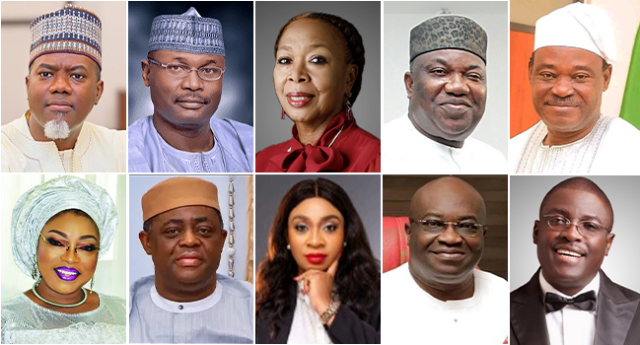
The list of nominees includes several prominent political figures among the non-career appointments, such as former Chairman of the Independent National Electoral Commission, Mahmood Yakubu; former Minister of Aviation, Femi Fani-Kayode; former Abia State Governor, Okezie Ikpeazu; and former presidential aide, Reno Omokri.
Others on the list are Senator Ita Enang, former Enugu State Governor Ifeanyi Ugwuanyi, Chioma Ohakim, Bello Danbazau, Vice Admiral Ibok Ete (retd.), and Senator Jimoh Ibrahim, among others.

The ambassadorial nominations were referred to the Senate Committee on Foreign Affairs for screening, bringing the total number of nominees considered by the Senate to 68.

This followed the earlier screening and confirmation of three nominees; Kayode Are, Aminu Dalhatu, and Ayodele Oke.

The nominations have continued to generate mixed reactions nationwide. While some stakeholders criticised the inclusion of certain nominees, others defended the President’s choices.

A former Permanent Secretary at the Ministry of Foreign Affairs, Joe Keshi, questioned the suitability of some nominees, while the President of the Nigerian Bar Association, Afam Osigwe, criticised the Senate’s screening process.

However, the Senior Special Assistant to the President on Foreign Affairs and Protocol, Ademola Oshodi, described the nominees as the best choices for Nigeria’s diplomatic interests, insisting that the final outcome would ultimately be judged by their performance in office.

Google search engine

Court Orders Ngige To Continue On EFCC Administrative Bail

A Federal Capital Territory High Court sitting in Gwarinpa has ordered a former Minister of Labour and Employment, Chris Ngige, to remain on the administrative bail earlier granted him by the Economic and Financial Crimes Commission.

Justice Mariam Hassan, who delivered the ruling on Thursday, however imposed fresh conditions, directing Ngige to produce a surety who must be a director in the employment of the Federal Government and also own landed property.

The court further ordered that the surety deposit documents relating to the landed property as well as travel documents with the court, pending the conclusion of processes for the retrieval of Ngige’s international passport.

Ngige was earlier granted bail by the EFCC on self-recognition, with a directive that he submit his travel documents to the commission and provide one surety.

Despite this, the former Anambra State governor was subsequently remanded at the Kuje Correctional Centre.

The former minister is facing an eight-count charge bordering on alleged corrupt practices to the tune of ₦2.2 billion.

The charge, dated October 31 and filed on December 9, was brought by a team of EFCC lawyers led by Sylvanus Tahir, SAN.

According to the prosecution, the alleged offences were committed while Ngige served as Minister of Labour and Employment under former President Muhammadu Buhari.

He pleaded not guilty to all the charges when he was arraigned.

The case has been adjourned to a later date for further proceedings.

Google search engine

NLC, Civil Society Groups Stage Nationwide Protest Over Rising Insecurity

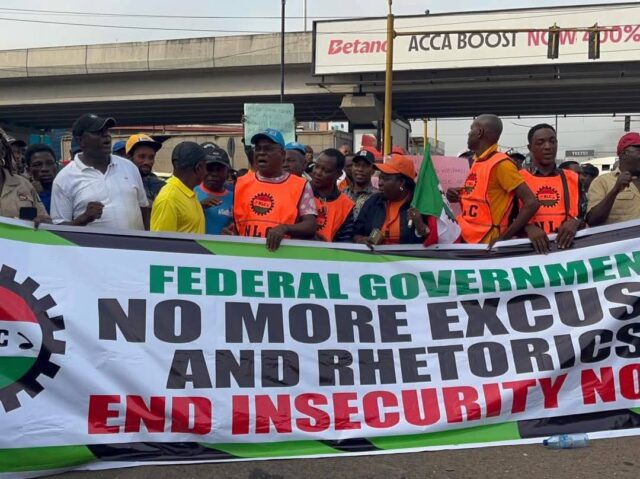
The Nigeria Labour Congress (NLC), joined by civil society organisations, staged protests across Nigeria on Wednesday, calling on the government to take urgent action against the rising wave of insecurity.

In Abuja, protesters marched from the NLC secretariat under the watch of security agents from the Nigeria Police Force, the Nigeria Security and Civil Defence Corps (NSCDC), and the Department of State Services (DSS), eventually proceeding to the Federal Ministry of Finance.

In Lagos, demonstrators moved from Ikeja to the Government House in Alausa, decrying kidnappings, banditry, and other crimes while urging both state and federal authorities to enhance public safety.

The Rivers State chapter of the NLC also conducted a peaceful march along the Port Harcourt-Aba Expressway, culminating at the Rivers State Government House, where workers expressed concerns about security threats to lives and livelihoods.

Similarly, workers in Taraba State took part in the protests.

In Niger State, the protest was led by NLC State Chairman Idrees Lafene, alongside other labour leaders, as they marched from the Labour House in Minna through major streets.

Demonstrators carried placards with messages including “No Security, No Peace, No Development,” “Protect Our Lives,” and “Federal Government, Stop the Criminalities Now.”

While acknowledging the state government’s efforts, Lafene stressed that more decisive action was needed.

“We are on this protest because we are not satisfied. Every Nigerian has the right to live peacefully in their own community,” he said.

The march ended at the Niger State House of Assembly, where protesters presented a position paper on insecurity to the legislature.
Edo State NLC Withdraws

The Edo State NLC withdrew from the nationwide protest, citing timing conflicts with the annual Igue festival and increased travel in the state.

The council, however, reaffirmed its support for the cause and said it would join at a later date.

NLC President Joe Ajaero, joined by human rights activist Omoyele Sowore and members of the Revolution Now Movement, emphasized the economic and social impacts of insecurity.

“Many workers are being kidnapped daily, and children of workers are not spared,” he said, urging government intervention to apprehend perpetrators.

Ajaero also suggested exploring an “insecurity allowance” for affected workers, highlighting the financial burden families face in paying ransoms.

He called for a nationwide condemnation of banditry and kidnappings, stressing that these acts are alien to Nigerian culture.

On Tuesday, the NLC met with President Bola Tinubu at the Aso Villa, along with key state governors and the Minister of State for Labour and Employment, Nkeiruka Onyejeocha.

The discussions, according to attendees, focused on addressing insecurity while ensuring dialogue between the government and labour continues.

“Consultation is ongoing. We are all working in service to the nation,” Governor Hope Uzodimma said, underscoring the collaborative effort between labour, government, and citizens to tackle insecurity.

Google search engine

How Former Chief Justice Of Nigeria Tanko Muhammad Died In Saudi Arabia


Former Chief Justice of Nigeria (CJN), Justice Tanko Muhammad, has passed away.

The veteran jurist reportedly died at a hospital in Saudi Arabia, just two weeks shy of his 72nd birthday on December 31.

Justice Muhammad hailed from Doguwa in Giade Local Government Area of Bauchi State and was widely respected for his legal acumen, discipline, and contributions to the development of Nigeria’s judicial system.

He served as Judge of the High Court, Justice of the Court of Appeal, Supreme Court Justice, and ultimately Chief Justice of Nigeria from 2019 to 2022, bringing his wealth of experience and commitment to the nation’s highest judicial office.

“Justice Tanko Muhammad exemplified the qualities of a patriotic Nigerian whose life was committed to the service of justice and the advancement of the nation. His passing is a significant loss to the Nigerian judiciary and the rule of law,” a statement by his family and colleagues said.

He resigned abruptly from office on health grounds on June 27, 2022, nearly 18 months before his scheduled retirement at age 70.

His resignation followed a tense period in the Supreme Court, amid allegations from some colleagues that he had hindered court operations by failing to provide adequate funding for judges’ welfare and essential services.

Justice Muhammad, Nigeria’s 17th Chief Justice, assumed office following the suspension of his predecessor, Walter Onnoghen, in January 2019 and served for three years and five months.

Google search engine

TikToker Peller In Custody, To Be Arraigned For Attempted Suicide – Police


The Lagos State Police Command has arrested and detained popular TikTok streamer Habeeb Hamzat, widely known as Peller, following a viral livestream in which he was seen driving recklessly and threatening to crash his vehicle.

The incident, which occurred on Sunday, December 14, 2025, ended in a road crash along the Lekki-Epe Expressway while the 20-year-old content creator was broadcasting live to his followers.

In a statement issued on Tuesday by the Police Public Relations Officer, Abimbola Adebisi, the police said Peller’s actions amounted to an alleged attempt to commit suicide and posed serious danger to other road users.

According to the statement, the video showed the influencer driving in a distressed state before crashing his vehicle, prompting immediate public concern and police intervention.

“The Lagos State Police Command has arrested and detained Habeeb Hamzat, also known as ‘Peller’, following the circulation of a viral video in which he was seen driving recklessly and live-streaming the incident, which resulted in a dangerous road crash,” the police said.

The command added that the case has been transferred to the State Criminal Investigation Department for a comprehensive investigation, after which the suspect would be charged in court in line with the law.

The Commissioner of Police, Olohundare Jimoh, also cautioned social media influencers and the general public against using online platforms to engage in or promote life-threatening behaviour, warning that such actions would attract the full weight of the law.

Meanwhile, the Federal Road Safety Corps has ordered Peller’s prosecution for multiple traffic violations, including the use of a mobile phone while driving.

In a statement by the Corps Public Education Officer, Olusegun Ogungbemide, the FRSC said the Corps Marshal, Shehu Mohammed, directed the Lagos State Sector Commander to begin prosecution, stressing that public roads are not content creation studios.

Mohammed expressed concern over what he described as a growing trend of dangerous conduct by celebrities and online personalities in pursuit of attention, warning that fame does not place anyone above the law.

The FRSC also called on influencer networks and entertainment bodies to encourage responsible behaviour, particularly given the strong influence public figures wield over young audiences.

The crash reportedly triggered the deployment of the vehicle’s airbags and drew the attention of bystanders, who assisted at the scene.

Peller was hospitalised after the incident, though the extent of any injuries has not been confirmed.

The episode has sparked widespread public debate, especially following reports that the influencer recently purchased a 2025 Mercedes-Benz GLE SUV and had been dealing with personal challenges, including a widely discussed breakup with fellow content creator Jarvis.

Google search engine

Tinubu Seeks NASS Approval For N43.56trn Consolidated Budget, Moves To Stop Multiple Appropriations


President Bola Ahmed Tinubu has forwarded the Appropriation (Repeal and Re-enactment) Bill 2024–2025 to the House of Representatives, seeking legislative approval for a N43.56 trillion spending plan aimed at ending the long-standing practice of running multiple budgets simultaneously.

The bill, transmitted in line with constitutional appropriation procedures, authorises the withdrawal of N43,561,041,744,507 from the Consolidated Revenue Fund of the Federation for the fiscal year ending December 31, 2025.

Deputy Speaker of the House, Benjamin Kalu, read the President’s letter during Wednesday’s plenary.

He disclosed that the proposed expenditure comprises N1.74 trillion for statutory transfers, N8.27 trillion for debt servicing, N8.11 trillion for recurrent non-debt spending, and N22.28 trillion allocated to capital expenditure and development fund contributions.

Multiple and overlapping budget cycles have remained a persistent feature of federal fiscal management, often justified by the government and the National Assembly as necessary to complete ongoing projects.

Under the Tinubu administration, lawmakers have approved several overlapping budgets, further entrenching the practice.

In 2024 alone, Nigeria operated three budgets: the N21.8 trillion 2023 budget, the N2.17 trillion 2023 supplementary budget, and the N28.7 trillion 2024 appropriation.

Although the first two were passed under the administration of late former President Muhammadu Buhari, Tinubu extended their capital components initially to June and later to December 2024, even as the 2024 budget was already in operation.

A similar pattern continued in 2025, with the capital component of the 2024 budget extended twice, first to June 2025 and subsequently to December 2025.

As a result, the country is currently implementing two budgets concurrently: the extended 2024 budget and the 2025 budget estimated at N54.2 trillion, which lawmakers increased by N7 billion from the President’s original proposal.

In his letter, Tinubu said the new bill is intended to halt the cycle of multiple budget implementations, which he noted often complicates fiscal planning and delays the execution of capital projects.

He said the legislation would help achieve significantly improved performance levels for the 2024 and 2025 capital budgets, signalling a shift toward a more capital-driven expenditure framework.

The President explained that the bill also provides a transparent and constitutionally sound mechanism for consolidating and appropriating urgent expenditures incurred in response to emergencies, including spending related to national security and public welfare, while maintaining fiscal discipline.

According to Tinubu, the proposed law strengthens accountability by mandating that appropriated funds are released and utilised strictly for the purposes approved by the National Assembly.

Any virement or alteration of approved spending, he said, would require prior legislative consent.

He added that the bill establishes provisions for correcting genuine errors through corrigenda, requires separate documentation of excess revenues, restricts their expenditure to National Assembly approval, and mandates periodic reporting on fund releases and revenues generated by government agencies.

Tinubu urged lawmakers to give the bill expedited consideration, stressing its importance to improving budget discipline, transparency and effective implementation of government programmes.

Google search engine

MOST COMMENTED

- Advertisement -
Google search engine