Home Blog Page 103

Osun 2026: PDP Abandons Own Candidate, Backs Adeleke’s Re-election On Accord Platform


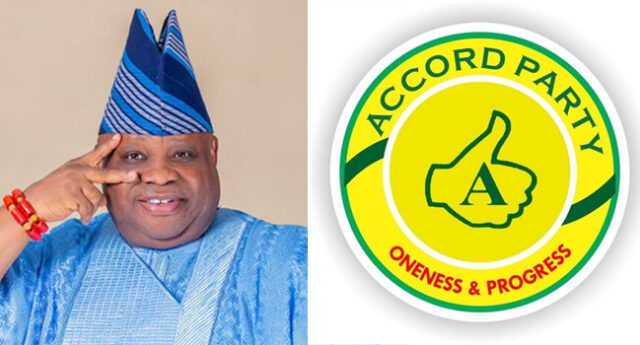
The Peoples Democratic Party (PDP) in Osun State has announced its decision to support Governor Ademola Adeleke’s second-term ambition, even though he is no longer a member of the party.

Chairman of the PDP in the state, Sunday Bisi, disclosed that the party’s entire structure would work for Adeleke’s re-election in the August 8, 2026, governorship election, which he will contest on the platform of the Accord Party.

Governor Adeleke recently resigned from the PDP and secured the Accord Party’s governorship ticket ahead of the poll.
Speaking in an interview in Osogbo, Bisi clarified that he had not defected from the PDP and would not be joining the governor in his new party.

He maintained that he remains the state chairman of the PDP, with his tenure running until 2027.

According to him, the party has already endorsed Adeleke for a second term, stressing that the governor enjoys the backing of PDP stakeholders across the state.

“I have not decamped to any political party. I am still the PDP chairman in Osun State, and my tenure subsists till 2027.”

“However, the entire PDP structure in Osun is solidly behind Governor Ademola Adeleke. We have endorsed him for a second term, and we will ensure he wins convincingly,” Bisi said.

When asked about the PDP’s governorship candidate, Adebayo Adedamola (FRYO), Bisi played down his candidacy, insisting that the party’s focus was on securing Adeleke’s victory under the Accord Party platform.

Reacting to concerns that his position could be viewed as anti-party activity, Bisi dismissed such fears, arguing that similar political alignments had occurred in the past without sanctions.

“There is nothing like anti-party in what we are doing. This is not new in Nigerian politics.”

“There have been instances where parties supported candidates from other platforms without issues. So, we are not doing anything unusual,” he said.

Meanwhile, former Osun State governor, Olagunsoye Oyinlola, has distanced himself from Adeleke’s defection, reaffirming his loyalty to the PDP.

Oyinlola spoke at the second matriculation ceremony of Alolade Oyinlola College of Health Sciences and Information Technology in Okuku, where about 90 students were admitted.

He stated that he has no intention of leaving the PDP, adding that Adeleke’s political decision would not influence his own stance.

“I will not leave the PDP unless it goes into extinction. I am not following Demola to Accord. At my age, I cannot be pushed around. I am gradually withdrawing from active politics. I will be 75 in February,” he said.

Google search engine

Downstream Sector Plagued By Sabotage, Cartels Stronger Than Drug Gangs – Dangote

Aliko Dangote, Founder and CEO of the Dangote Group, has raised serious concerns over sabotage and organised criminal activity in Nigeria’s downstream oil sector, describing cartels operating in the industry as a bigger threat than drug mafias.

Speaking to journalists on Sunday, Dangote recounted multiple incidents of sabotage at his refinery in Lekki and other public facilities.

He cited cases such as the theft of spare parts from a 400-ton boiler, the largest ever constructed at the refinery.

“Drug mafias are actually smaller than the people who operate in oil and gas. They have robbed so many people in this sector,” he said, highlighting the sophistication of criminal networks targeting the industry.

Dangote further stressed that pipeline infrastructure across the country has been systematically sabotaged.

From Kano to other states, depots have been deliberately targeted, resulting in extensive operational disruptions.

“You are talking about sabotage, not natural wear and tear. The depots we built, all 22 of them, were fully piped, yet they’ve been destroyed. This is not an earthquake, it is deliberate sabotage,” Dangote explained.
$82 Million in Losses

The Dangote Refinery, commissioned in May 2023, has reportedly lost about $82 million worth of items to theft and sabotage.

Dangote said that the persistent sabotage had also increased insurance costs, as insurers were forced to adjust premiums in response to repeated claims.

To protect the facility, the refinery employs over 2,000 security personnel more than the number of operational staff.

Dangote described the lengths to which saboteurs go, including attempts to smuggle equipment out of the refinery.

“People come with long cables strapped to their bodies trying to steal equipment, and this is what we are dealing with. The scale of organised theft here is alarming and represents a significant risk to national production and economic security,” he said.

In October 2025, Dangote Industries Limited Vice President Devakumar Edwin revealed that the refinery had faced 22 attempted sabotage incidents since operations began.

Some of these events coincided with the temporary strike by the Petroleum and Natural Gas Senior Staff Association of Nigeria (PENGASSAN) following the dismissal of about 800 workers, prompting speculation that union-related tensions may have played a role.

Google search engine

2027: Coalition Begins Nationwide Mobilisation For President Tinubu

The Presidential Coalition Council (PCC) has officially kicked off a nationwide campaign in Ibadan, Oyo State, to rally support for President Bola Tinubu’s re-election bid in 2027.

The coalition emphasized that a second term would allow for the continuation and consolidation of the far-reaching reforms initiated by his administration.

The launch, held at Christ Apostolic Church Grammar School, Adesola, Ibadan, featured a sensitisation programme on the policies and achievements of the Tinubu administration.

Speaking on behalf of the PCC, National Coordinator Abiodun Faleke urged Nigerians to actively participate in grassroots mobilisation ahead of the 2027 polls.

“The President assures you that there is no cause for fear ahead of 2027. The APC will emerge victorious at both the national and state levels. Keep your Permanent Voter’s Cards safe, and if you do not have one, register immediately.”

“Without your voter’s card, mobilisation efforts will amount to nothing,” Faleke relayed on behalf of Tinubu.

Highlighting the strategic importance of Ibadan, Abdullah Enilolobo of the PCC team from Abuja explained that the city accounts for nearly half of Oyo State’s votes, making it a critical starting point for the campaign.

Enilolobo also praised the administration’s economic reforms, including the removal of fuel subsidies, the floating of the naira, and the introduction of a new tax regime, describing them as necessary measures that helped stabilise the nation.

He urged party members to work collectively to secure victories in both the Oyo State governorship election and the 2027 presidential poll.

The event was supported by APC leaders and stakeholders from across Nigeria, including Ayo Bakare, who organised the launch and sensitisation programme using personal resources.

Several PCC members from Abuja and APC stalwarts in Oyo State, such as Mufutau Adisa, Abu Gbadamosi, Shittu Ibrahim, and Musbau Azeez, were also in attendance.

Google search engine

Former Assembly Speaker Wins Osun ADC Governorship Ticket


Former Speaker of the Osun State House of Assembly, Dr. Najeem Salaam, has been confirmed as the African Democratic Congress (ADC) candidate for the 2026 Osun State governorship election.

DAILY GAZETTE correspondent reports that Salaam won the party’s ticket during the ADC primary held at the Ultimate Civic Centre in Osogbo on Monday.

According to Mr. Emeka Nwajiuba, Chairman of the ADC 2026 Primary Election Committee, Salaam was the sole aspirant for the governorship position.

“The screening process and information from the ADC Organising Secretary’s Office confirm that Salaam is the only aspirant vying for the party’s ticket,” he stated.

A total of 528 delegates from the 332 wards of Osun State participated in the primary, casting their votes.

Out of these, 520 were valid votes in favour of Salaam, while eight were declared void.

“By the authority vested in this panel under the ADC constitution, I hereby announce Dr. Najeem Salaam as the candidate-elect and flag bearer of our party for the 2026 Osun governorship election,” Nwajiuba declared.

In his acceptance speech, Salaam expressed gratitude to the ADC leadership and members for their trust.

“I accept this mandate with a deep sense of responsibility. I accept it with hope, because our people still believe, and I accept it with prayer, knowing the challenges ahead are real,” he said.

Google search engine

Far-Right Conservative Firebrand José Antonio Kast Wins Chile Presidency


Chile has elected conservative firebrand José Antonio Kast as its next president, signalling the country’s sharpest political shift to the right since the end of Augusto Pinochet’s military rule more than three decades ago.

Kast won Sunday’s runoff election with 58 per cent of the vote, defeating left-wing candidate Jeannette Jara, who secured 42 per cent and conceded soon after official results were released. Jara was backed by the outgoing government.

The president-elect built his campaign around tough law-and-order messaging, tapping into widespread public concern over rising crime and irregular migration.

His policy proposals include stricter border controls, the construction of physical barriers, the deployment of the military to crime-prone areas and the deportation of undocumented migrants.

Speaking to cheering supporters at the headquarters of his Republican Party in Santiago’s upscale Las Condes district, Kast pledged sweeping reforms anchored on security, which he described as the foundation of democratic freedom.

“There can be no peace without security, no democracy without peace, and no freedom without democracy,” he said, while acknowledging that meaningful change would require patience and sustained effort.

Kast’s victory adds Chile to a growing list of Latin American countries that have recently swung to the right, following electoral successes by leaders such as Ecuador’s Daniel Noboa, El Salvador’s Nayib Bukele and Argentina’s Javier Milei.

In Bolivia, the election of centrist Rodrigo Paz earlier this year ended almost 20 years of socialist dominance.

This marks Kast’s third attempt at the presidency and his second time reaching a runoff, after losing narrowly to incumbent President Gabriel Boric in 2021.

Analysts say heightened fears over crime and immigration helped expand his support base, including in regions that have traditionally leaned left.

Claudia Heiss, a political scientist at the University of Chile, noted that voter unease with Jara’s Communist Party background also contributed significantly to Kast’s emphatic win.

Although Chile remains among the safest countries in Latin America, violent crime has risen in recent years, driven by organised criminal groups, weak border controls and increased migration, particularly from Venezuela.

Financial markets welcomed the election outcome, with investors anticipating lighter regulation and more pro-business policies.

The Chilean peso strengthened and local stocks advanced in the world’s leading copper producer and a key global supplier of lithium.

Nonetheless, Kast is expected to govern amid political constraints.

Congress is sharply divided, with the Senate split evenly between left and right, while a populist bloc holds the balance of power in the lower chamber.

Analysts warn this could curb the implementation of some of his more hardline proposals.

Observers say the incoming president will need to navigate a careful path between ideological conviction and the practical demands of leading a politically diverse nation.

Google search engine

FG Bars Admission, Transfer Of Students Into SS3 Nationwide


The Federal Government has announced a nationwide ban on the admission and transfer of students into Senior Secondary School Three (SS3) in both public and private secondary schools.

The directive, issued by the Federal Ministry of Education, is aimed at curbing the rising cases of examination malpractice, particularly the use of so-called “special centres” during external examinations, which authorities say undermines the credibility of Nigeria’s education system.

The policy was disclosed in a statement signed by the Director of Press and Public Relations of the ministry, Folasade Boriowo.

According to the statement, the ban will take effect from the 2026/2027 academic session.

Under the new guidelines, admissions and transfers will only be allowed into Senior Secondary School One (SS1) and Senior Secondary School Two (SS2).

Admission or transfer into SS3 will no longer be permitted under any circumstances.

The ministry explained that the measure is intended to discourage the last-minute movement of students to schools believed to offer unfair advantages during examinations, a practice it identified as a major driver of examination malpractice.

It added that the policy would also promote proper academic monitoring of students, ensure continuity in teaching and learning, and strengthen overall academic standards.

School owners, principals and administrators across the country have been directed to adhere strictly to the directive.

The ministry warned that any breach of the policy would attract sanctions in line with existing education laws and regulations.

The Federal Government reaffirmed its commitment to protecting the integrity of the education system, noting that the ban forms part of broader reforms aimed at promoting fairness, discipline and credibility in national examinations.

Google search engine

Another PDP Governor Set To Dump Party For APC

Governor Caleb Muftwang of Plateau State is set to defect from the Peoples Democratic Party (PDP) to the ruling All Progressives Congress (APC).

The governor’s Political Adviser, Istifanus Nwansat, disclosed this on Monday in Abuja, explaining that the decision was driven by the deepening crisis within the PDP.

He said the internal turmoil in the opposition party has made it an unreliable platform for political actors seeking stability ahead of future elections.

Nwansat noted that after weighing all available options, the governor and his team concluded that joining the APC posed the least political risk.

He added that the move would also position Plateau State in alignment with the political direction and governance agenda of President Bola Tinubu.

According to him, the governor believes it is in the best interest of the state to align more closely with the Federal Government, especially in view of ongoing national reforms.

He stressed that while Muftwang remains appreciative of the PDP, the prevailing circumstances within the party have made continued membership impractical.

“This decision is based on our assessment of the political environment. Given the uncertainty within the PDP, moving to the APC is the safest option with the least risk,” Nwansat said, adding that the governor sees the alignment with the President as a responsible step for leadership and development.

Meanwhile, the Senator representing Ondo Central Senatorial District, Adeniyi Adegbonmire, has declared that there is currently no formidable opposition capable of unseating President Tinubu in the 2027 general election.

He described the APC as firmly positioned ahead of future polls, insisting that supporters of the President are already mobilising nationwide to secure his re-election.

Adegbonmire made the remarks during the Renewed Hope Mega Empowerment programme in Ondo Central, where about 900 beneficiaries received various forms of support.

He said the initiative was part of efforts to strengthen grassroots backing for both the President and the APC, which he described as Nigeria’s most viable political platform.

Google search engine

Court Fixes Date To Rule On Ngige’s Bail Application

A Federal Capital Territory High Court sitting in Gwarimpa, Abuja, has fixed December 18 to rule on the bail application filed by former Minister of Labour and Employment, Chris Ngige, who is facing allegations of corruption.

Justice Maryam Hassan adjourned the matter on Monday after hearing arguments from both the defence and the prosecution on whether the former Anambra State governor should be granted bail.

Pending the ruling, Ngige is to remain in custody at the Kuje Correctional Centre.
Ngige’s counsel, Patrick Ikwueto, SAN, urged the court to grant his client bail, citing health concerns as the primary reason.

He argued that the former minister was not a flight risk and lacked the capacity to leave the country at this time.

The defence further assured the court that Ngige would not jump bail or interfere with witnesses if released.

Opposing the application, counsel for the Economic and Financial Crimes Commission, Sylvanus Tahir, told the court that Ngige could not be trusted with bail, insisting that he posed a flight risk.

Tahir said the defendant had previously been granted administrative bail by the EFCC and was permitted to travel abroad for medical treatment but failed to report back to the commission afterward.

He added that Ngige did not return the international passport released to him for the trip and only claimed that it was lost after he was re-arrested.

The EFCC lawyer described the claim as an afterthought and urged the court to dismiss the bail application as lacking merit.

Following the submissions from both parties, Justice Hassan adjourned the case to December 18 for ruling on the bail request.

Ngige, who served as a minister under former President Muhammadu Buhari, was arraigned last Friday on an eight-count charge bordering on alleged corrupt practices. He pleaded not guilty to all the charges.

Google search engine

Buhari’s Record Under Scrutiny As Emefiele, Former Ministers Face N3.5 Trillion Corruption Investigations


Fresh corruption investigations involving senior officials who served under former President Muhammadu Buhari have thrown renewed attention on the governance record of his eight-year administration, with alleged financial infractions estimated at about N3.47 trillion.

The unfolding probes, coming against the backdrop of Nigeria’s heavy debt burden, have reignited national debates around accountability, fiscal discipline and the real cost of governance during Buhari’s tenure.

Those under investigation include former ministers, top government officials and the immediate past Governor of the Central Bank of Nigeria, many of whom were regarded as key figures within the All Progressives Congress (APC) government.

At the centre of the investigations is former CBN Governor Godwin Emefiele, whose tenure coincided with expansive monetary interventions and large-scale use of Ways and Means financing.

The Economic and Financial Crimes Commission (EFCC) has accused him of allocating foreign exchange worth about $2 billion, estimated at N3 trillion, without due process or competitive bidding, allegedly favouring associates.

Investigators also allege that Emefiele operated hundreds of bank accounts across multiple jurisdictions, illegally acquired a large housing estate in Abuja and mismanaged more than N16 billion in public funds.

Court documents further indicate that between 2019 and 2022, billions of naira were allegedly funnelled through proxy accounts linked to private companies, with additional claims involving forged requests for the payment of millions of dollars to foreign election observers.

Beyond the financial sector, the EFCC is pursuing cases against several former ministers.

Chris Ngige, a former Minister of Labour, is being investigated over an alleged N2.2 billion fraud.

Former Minister of State for Petroleum Resources, Timipre Sylva, has been declared wanted over claims of a N21.4 billion fraud, while former Aviation Minister Hadi Sirika is facing charges linked to an alleged N2.7 billion aviation contract scandal.

Also under prosecution is former Minister of Power, Saleh Mamman, who is standing trial for alleged money laundering amounting to N33.8 billion.

Similarly, the Ministry of Humanitarian Affairs, under former minister Sadiya Umar-Farouk, is accused of laundering N37 billion meant for social intervention programmes.

In direct naira terms, allegations against Buhari-era officials amount to about N471 billion.

When the disputed foreign exchange allocations are included, the figure rises to an estimated N3.47 trillion, underscoring the scale of the cases now confronting anti-graft agencies.

The investigations have drawn attention to Nigeria’s debt profile under Buhari.

When he assumed office in 2015, the country’s total debt stood at about $65.4 billion.

Although there was a slight decline in 2016, borrowing accelerated thereafter.

By 2019, total debt had risen to over $84 billion, reaching nearly $96 billion by mid-2021.

By the end of 2022, Nigeria’s debt had climbed to N46.25 trillion, with estimates suggesting Buhari handed over a total debt burden of roughly N77 trillion in May 2023.

Analysts argue that the corruption allegations cannot be separated from the borrowing spree.

While loans were justified as necessary for infrastructure and economic stabilisation, critics say weak oversight, opaque monetary policies and politicised spending created opportunities for abuse.

Supporters of the former administration, however, contend that many of the EFCC’s actions are politically driven and aimed at undermining Buhari’s anti-corruption credentials.

Economists and governance experts have raised broader concerns about Nigeria’s public finance architecture.

Professor Emmanuel Nwosu of the University of Nigeria, Nsukka, said allegations running into trillions of naira point to deep failures in accounting and auditing systems.

According to him, corruption on such a scale should be impossible if public financial controls were effective.

He also questioned the narrative surrounding fuel subsidy removal, noting the lack of transparency over how savings are being deployed despite persistently high petrol prices.

Public finance expert Prof. Chiwuike Uba warned that corruption involving borrowed funds places a long-term burden on citizens through inflation, higher taxes and declining public services.

He noted that despite increased revenues from subsidy removal and foreign exchange reforms, government borrowing continues to rise.

Similarly, Prof. Segun Ajibola, a former president of the Chartered Institute of Bankers of Nigeria, urged anti-corruption agencies to focus on large-scale financial crimes rather than minor offences, calling for tougher laws and citing China’s zero-tolerance approach as a model.

Other analysts, including Prof. Godwin Oyedokun, described the allegations as evidence of systemic failure rather than isolated misconduct, warning that future generations would bear the cost of debts incurred without corresponding development.

Legal practitioner Ameh Madaki criticised the EFCC for what he described as selective prosecution, arguing that many high-profile cases amount to media spectacles that rarely end in convictions.

Experts insist that Nigeria must move away from reactive, post-office investigations and adopt preventive mechanisms, including real-time auditing, transparent procurement processes and stronger institutional independence.

Without these reforms, they warn, the cycle of corruption, debt and underdevelopment will persist.

Google search engine

Rethinking Food Availability In An Era Of Transformative Governance: The Peter Mbah Example

By Dr. Malachy Chuma Ochie,

In an age marked by global food insecurity, climate volatility, and economic uncertainty, the question of food availability has moved from the margins of policy discourse to the very heart of governance.

For sub-national governments in developing economies, the challenge is no longer whether to act, but how deliberately and intelligently to do so.

In Enugu State, the administration of Governor Peter Ndubuisi Mbah offers a compelling example of how transformative governance can rethink food availability through structured policy, institutional discipline, and strategic investment in agribusiness, particularly livestock development.

At the centre of this recalibration is the Livestock Productivity and Resilience Support Project (L-PRES), a World Bank-supported initiative adopted by the Enugu State Government as a critical vehicle for economic diversification and food system resilience.

Speaking recently at an interactive meeting with the L-PRES Steering and Technical Committees, stakeholders, and the media, the Commissioner for Agriculture and Agro-Businesses, Dr. Patrick Nwabueze Uburu, reaffirmed the administration’s resolve to reposition agriculture from subsistence practice to productive enterprise.

Governor Mbah’s interest in livestock development, as articulated in the policy document, goes beyond narrow sectoral gains.

It is a strategic intervention aimed at expanding the state’s Gross Domestic Product, ensuring adequate food production for local consumption, and positioning Enugu as a supplier of livestock products to other states.

In a country where protein deficiency remains a silent public health challenge, this approach reflects a governance mindset that connects agriculture, nutrition, and economic growth as a single continuum.

What distinguishes the Enugu example is not merely the ambition of its agricultural policy, but the governance architecture designed to deliver it.

The L-PRES Steering Committee is mandated to serve as the “eyes of government,” providing oversight, policy alignment, and strategic direction.

Its responsibilities include the review and approval of annual work plans, assessment of technical and financial reports, and ensuring synergy between L-PRES and other development programmes.

In a political environment often plagued by project abandonment and institutional drift, such clarity of roles signals a deliberate effort to entrench accountability.

Equally critical is the Technical Committee, tasked with monitoring implementation and developing operational frameworks to guide project execution.

By institutionalising regular oversight, the Mbah administration underscores a core principle of transformative governance: development outcomes are products of disciplined processes, not rhetorical commitments.

This governance philosophy is already finding expression on the ground.

According to the State Project Coordinator of L-PRES, Dr. Ifeyinwa Nnajieze, the project has recorded significant progress, particularly at the Integrated Farm Project in Ubahu–Amankanu, flagged off by the Governor.

Three construction firms that met stringent standards have been awarded contracts to handle distinct components of the project, reflecting both technical planning and respect for due process.

Waste Management and Environmental Solutions Ltd is responsible for a 15-hectare waste management structure, alongside the proposed Artificial Insemination and Breed Multiplication Centre; an investment that speaks to genetic improvement and sustainable breeding practices.

American West African Agro Ltd is handling climate-smart irrigation and pasture planting, addressing the twin challenges of climate change and feed scarcity.

WM Agro Ltd, on its part, is constructing the milking parlour and modern dairy processing plant, a crucial link in moving from raw production to value addition.

That L-PRES is a World Bank project, with strict rules and procedures, further reinforces the administration’s commitment to transparency and global best practices.

The government’s insistence on adherence to these standards is significant.

It reflects an understanding that credibility, sustainability, and donor confidence are essential to long-term agricultural transformation.

With all contractors mobilised and a contract duration of 16 months, the expectation of visible progress within four months exemplifies the “no delays, no excuses” ethos repeatedly associated with Governor Mbah’s leadership.

The broader implication of this approach is profound. By investing in integrated livestock infrastructure, the Enugu State Government is effectively reimagining food availability as a system, not a sector.

The planned commissioning of the Integrated Farm Project, following the model of the already completed Model Veterinary Hospital in Akwuke, suggests a deliberate strategy of replication and scale.

The Special Adviser to the Governor on Agriculture, Dr. Mike Ogbuekwe, captured this collaborative spirit by assuring the committees of government’s support and requesting detailed information on project implementation and supervisory roles.

In essence, the Peter Mbah example demonstrates that rethinking food availability requires more than policy declarations.

It demands visionary leadership, institutional coherence, strict adherence to standards, and an unrelenting focus on delivery.

At a time when food security debates are often dominated by federal-level narratives, Enugu State’s livestock-driven agribusiness strategy offers a persuasive sub-national model: one where governance is measured not by promises made, but by systems built and projects delivered.

As the L-PRES initiative unfolds, it may well stand as evidence that with the right mix of vision, discipline, and accountability, transformative governance can indeed reshape food availability; and, by extension, the economic future of a people.

Google search engine

MOST COMMENTED

- Advertisement -
Google search engine