Home Blog Page 111

Bill Seeking To Establish Military Medical College For Armed Forces Scales Second Reading
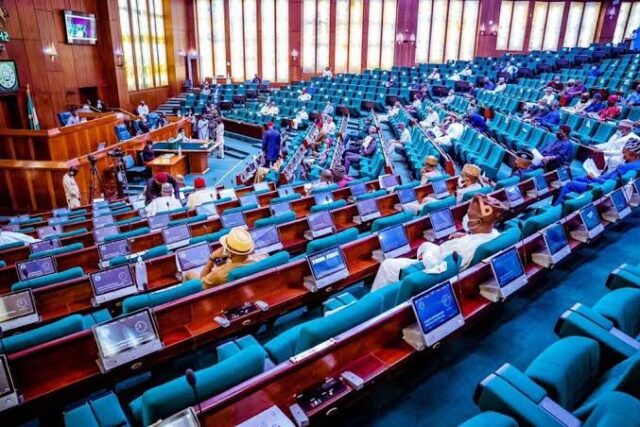
 

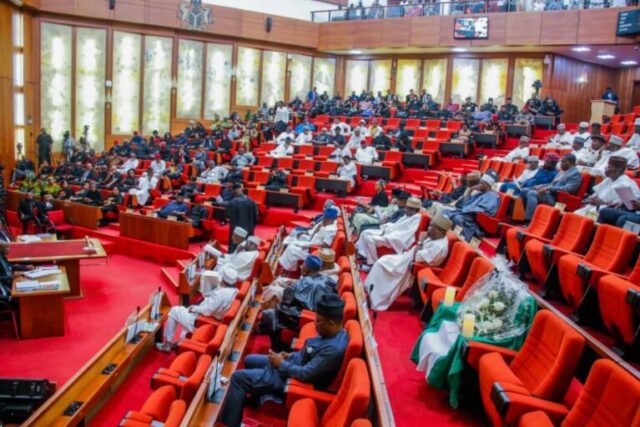
The House of Representatives on Thursday passed a bill for second reading to establish a specialised medical college for the Nigerian Armed Forces.

Sponsored by Babajimi Benson, Chairman of the House Committee on Defence (APC, Lagos), the bill seeks to create a military-run medical institution to train doctors, specialist physicians, and allied health professionals specifically for the Armed Forces and other uniformed services.

Benson highlighted several reasons for the proposal, including the ongoing exodus of Nigerian doctors abroad, frequent strikes disrupting civilian medical education, and the need for military-specific training in areas such as trauma care, tropical medicine, chemical, biological, radiological and nuclear (CBRN) response, and austere-environment medicine.

“Reliable medical support is crucial for the Army’s operational readiness, casualty management, preventive medicine, and the welfare of troops and their families,” Benson said.

He noted that despite the efforts of the Nigerian Army Medical Corps (NAMC), the national healthcare sector faces shortages of doctors, uneven specialist distribution, and a continued outflow of medical professionals.

Between 2016 and 2018, over 9,000 doctors reportedly left Nigeria for opportunities abroad, with estimates suggesting about 16,000 doctors emigrated over five years, leaving roughly 55,000 practicing in the country.

Benson added that the situation is even more severe within the Armed Forces, with only 21 doctors commissioned into the Army between 2019 and 2025 due to low interest from civilian medical professionals.

Currently, the Army has 189 doctors, nearly 40% of whom are pursuing specialist training in civilian institutions.

The proposed Nigerian Military Medical College (NMMC) aims to create a stable pipeline of physicians trained for military service, insulated from strikes and academic disruptions common in civilian medical institutions.

International models, such as the Armed Forces Medical College in India and the Uniformed Services University of the Health Sciences in the U.S, demonstrate the benefits of military-controlled medical education, combining clinical competence with leadership and operational readiness.

Benson explained that the college would operate under the Ministry of Defence, in collaboration with the National Universities Commission (NUC) and the Medical and Dental Council of Nigeria (MDCN).

Governance would include a Board of Governors chaired by the Chief of Defence Staff, an academic council with NUC and MDCN representatives, and a Medical Education Unit responsible for curriculum and quality assurance.

While acknowledging the high initial costs, Benson emphasized long-term benefits, including reduced reliance on emergency medical recruitment, lower medical evacuation expenses, improved troop health, and enhanced operational capacity.

Google search engine

Soludo Seeks Approval For 2025 Budget Adjustments From Anambra Assembly


Anambra State Governor Chukwuma Soludo has written to the State House of Assembly seeking approval for a virement in the 2025 budget.

The request was read during Thursday’s plenary by the Speaker, Somtochukwu Udeze, who referred it to the House Committee on Finance and Appropriation for review and report back next week.

The plenary was subsequently adjourned to Tuesday, December 11, 2025.

In his letter, Governor Soludo requested authorisation to adjust capital and recurrent expenditures as well as capital receipts in the approved 2025 fiscal plan.

While full details of the proposed changes were not made public, the governor explained that the adjustments were necessary due to emerging priorities, limited resources, and prevailing economic challenges.

Soludo emphasized that the revisions aim to address urgent needs across the state and ensure maximum impact and value for residents.

He wrote, “It would be greatly appreciated if the draft virement for the 2025 Appropriation Bill is placed before the House at the earliest time for consideration and passage into law.”

The governor also highlighted that his administration’s 2025 budget achieved over 60 per cent performance, despite being an election year, and stressed that the adjustments are intended to deliver improved service outcomes.

Earlier, on November 25, Punch Online reported that Soludo presented a N757 billion budget proposal for 2026, titled “Changing Gears 3.0: Solution Continues”.

The proposal allocates N595.3 billion (79%) for capital expenditure and N161.6 billion for recurrent spending, with a projected deficit of N225.7 billion, expected to be financed through hybrid funding, public–private partnerships, enhanced internally generated revenue, concessions, and support from financial institutions.

Soludo assured that “every kobo will be prudently utilised to maximise value for the people of Anambra.”

Google search engine

Drama In Senate As Oshiomhole, Ndume Clash During Omokri’s Ambassadorial Screening


Senators Adams Oshiomhole (APC, Edo North) and Ali Ndume (APC, Borno South) engaged in a heated exchange on Thursday over the ambassadorial nomination of former presidential aide Reno Omokri in Abuja.

The confrontation occurred on the second day of the ongoing screening of President Bola Tinubu’s 65 career and non-career ambassadorial nominees submitted to the Senate last week.

Omokri watched silently from Room 301 as the two senior legislators traded sharp procedural and political remarks.

Tensions rose when Oshiomhole began addressing Omokri’s nomination, declaring, “I cannot be intimidated by people who go here and there. After all, we see people on television questioning this list.”

Ndume interrupted, stressing that Senate procedure must be followed: “If there is a motion on the ground, it should be seconded. If it is not seconded, it’s dead.”

Oshiomhole refused to yield, appealing to the Committee Chairman, Senator Abubakar Bello (APC, Niger North), to let him continue in the public interest.

Ndume fired back, insisting, “There is no such petition before us. The Senate is not a joke!”

The exchange escalated into political jabs. Oshiomhole said, “When I talk, those who have not been governors should listen… President Tinubu has shown real quality—that criticism during the election does not prevent appointment.”

Nudume shot back, “You have never dreamed of being a senator when I became one.” The Committee Chairman intervened to restore order, reminding Oshiomhole of the pending motion.

Omokri remained composed but tense as the debate unfolded, uncertain how it might influence the Senate’s perception of his nomination.

Thursday’s drama came a day after controversy over Emmanuel Adeyemi, a career diplomat nominee from Ekiti State, who struggled to name all three senators representing his home state, prompting outrage.

Adeyemi’s team attempted to look up the answer on a phone, drawing criticism from lawmakers including Senator Asuquo Ekpenyong, while some colleagues pleaded for leniency.

Adeyemi is among three nominees from Ekiti, alongside Erelu Angela Adebayo and Olumilua Oluwayemika.

Google search engine

Reps Slash Airfares Ahead Of Yuletide


The House of Representatives has expressed concern over the steep rise in domestic airfares as Nigerians prepare for the 2025 Yuletide season, warning that the trend could pose serious security risks due to increased road travel.

During Thursday’s plenary, lawmakers urged the Federal Government to provide tax reliefs for airlines and implement a 50 per cent reduction in airport charges during the festive period to ease the financial burden on travellers.

The resolution followed amendments to a motion of urgent public importance titled “The exorbitant rise of airline ticket cost and the consequential impact on security of lives, air ambulance cost,” sponsored by Abia State lawmaker Obinna Aguocha.

For years, domestic air travel in Nigeria has been affected by frequent fare spikes, especially in the weeks leading to Christmas.

These increases are driven by rising demand, high jet fuel costs, foreign exchange scarcity for aircraft maintenance, and a limited number of operational airlines.

Many travellers are forced to abandon air travel for road journeys due to last-minute fare hikes, despite widespread security concerns on major highways.

Aguocha noted that while Christmas is a time for family reunions and celebration, rising airfare costs are effectively pricing many Nigerians out of travel.

He acknowledged the operational challenges airlines face, including high Jet A1 fuel costs and exchange-rate volatility, but urged operators to consider the broader national implications of their pricing strategies.

He said, “The pursuit of profit should not come at the expense of the cultural bonds that unite Nigerians. Temporarily reducing fares during this critical period would demonstrate social responsibility and national solidarity, ensuring that the journey home remains accessible to every citizen.”

The lawmaker further warned that the sharp increase in air travel costs threatens national cohesion during a culturally significant season.

Following the adoption of the motion, the House directed the Central Bank of Nigeria to prioritise foreign exchange allocation to airline operators at concessionary rates.

The House Committee on Aviation was also mandated to engage with operators and the executive branch, and to report back within seven days for further legislative action.

Google search engine

Court Dismisses ‘No Case Submission’, Orders Ex-Minister Mamman To Open Defence In N33.8bn Fraud Suit


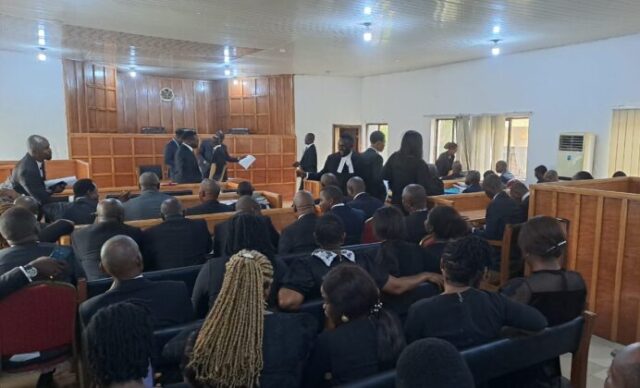
The Federal High Court in Abuja on Thursday dismissed a no-case submission filed by former Minister of Power, Saleh Mamman, in a N33.8 billion fraud trial.

Delivering the ruling, Justice James Omotosho held that the Economic and Financial Crimes Commission (EFCC) had established a prima facie case against Mamman, requiring him to respond or mount a defence.

The judge stressed that Mamman remains innocent until proven guilty.

Mamman, who served as Minister of Power from August 2019 to September 2021 under former President Muhammadu Buhari, faces a 12-count amended charge alleging he conspired with ministry officials and private companies to misappropriate funds intended for the Zungeru and Mambilla Hydro Electric Power projects.

He pleaded not guilty when arraigned in July 2024.

The EFCC presented 17 witnesses and 43 exhibits before closing its case.

Mamman’s counsel filed a no-case submission on November 19, arguing that the prosecution had failed to present credible evidence.

The EFCC countered, asserting the evidence was sufficient to establish a prima facie case.

Justice Omotosho ruled that the court’s role is to determine whether a prima facie case exists, not to assess guilt.

He stated, “The evidence all points to the establishment of a prima facie case against the defendant. This ensures he is afforded his right to a fair hearing and to put in his defence.”

The judge emphasised that prima facie case does not imply guilt and that Mamman’s right to defend himself under Section 36 of the 1999 Constitution remains intact.

The court adjourned the matter to February 23, 2026, for Mamman to open his defence.

Google search engine

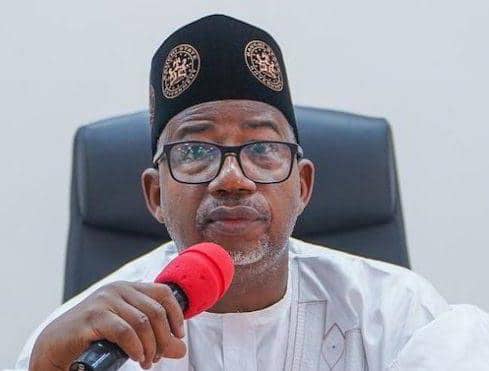
No Plans To Join PRP, I Remain A PDP Member – Governor Bala Mohammed


Bauchi State Governor and Chairman of the Peoples Democratic Party (PDP) Governors’ Forum, Bala Mohammed, has refuted reports suggesting he is considering defecting to the Peoples Redemption Party (PRP).

The clarification comes amid a string of high-profile defections shaking the PDP, including the recent moves by Rivers State Governor Siminalayi Fubara to the APC and Osun State Governor Ademola Adeleke to the Accord Party.

In a statement issued Wednesday, Mohammed’s Special Adviser on Media and Publicity, Mukhtar Gidado, dismissed as “mischievous and completely false” a claim attributed to the PRP’s Publicity Secretary in Bauchi that the governor was not welcome in the party.

Gidado described the remark as “the rantings of an attention-seeker desperate for relevance,” adding that the governor felt compelled to address it to prevent unnecessary speculation.

He stressed that Mohammed has never contemplated leaving the PDP, nor has he engaged in any form of discussion about joining the PRP.

Instead, the governor has remained deeply involved in efforts to stabilise the PDP, which he said is facing “contrived crises orchestrated by individuals intent on undermining multiparty democracy.”

The statement also highlighted Mohammed’s political influence in Bauchi, noting that his repeated electoral victories over PRP candidates reflect his strong grassroots support and track record of performance.

According to Gidado, Bauchi State has recorded significant progress under Mohammed’s leadership, particularly in infrastructure development, empowerment programmes, rural transformation and institutional reforms.

He dismissed PRP’s criticism of the governor’s ongoing reforms, such as restructuring traditional institutions and devolving powers, as evidence of the party’s disconnect from modern governance priorities.

Gidado concluded that no amount of misinformation or political mischief would distract the governor from his commitment to the development of Bauchi State.

He added that while Mohammed reserves the constitutional right to make political decisions, such choices will never be driven by “falsehood, malice or the machinations of political turncoats.”

Google search engine

Deputy Governor Collapses, Dies


Bayelsa State has been thrown into mourning following the sudden death of its Deputy Governor, Senator Lawrence Oborawharievwo Ewhrudjakpo, who reportedly slumped on Thursday. He was 60.

Although full details remain sketchy, multiple sources confirmed that the deputy governor collapsed in his office and was immediately rushed to the Federal Medical Centre (FMC), Yenagoa, where he was later pronounced dead.

As news of the incident spread, security personnel cordoned off the hospital premises, while senior government officials arrived in a visibly tense atmosphere.

Efforts to obtain official comments from his media aide, Mr. Doubara Atasi, were unsuccessful, heightening public apprehension.

A senior medical official at FMC, speaking off the record, initially said the deputy governor was receiving intensive care and was “stable.”

However, reliable sources later confirmed that all attempts to revive him failed.

Senator Ewhrudjakpo, born on September 5, 1965, was a former member of the National Assembly before being elected deputy governor in 2020.

His sudden passing has created a significant vacuum in the state’s leadership and left residents in deep shock.

As of press time, the Bayelsa State Government had not released an official statement on the deputy governor’s death.

Google search engine

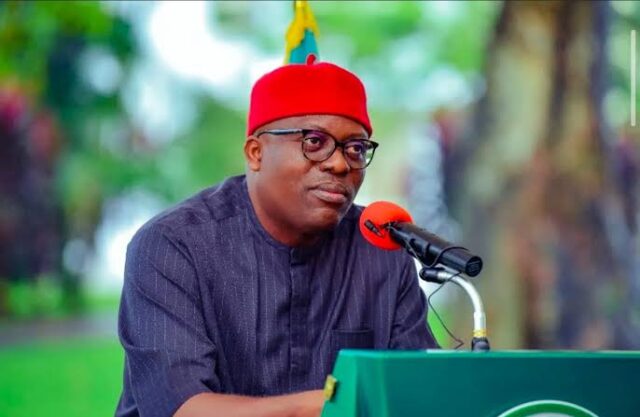
Wike Yet To Convene Reconciliation Meeting With Rivers Assembly – Fubara


Rivers State Governor, Siminalayi Fubara, says he has no personal issues with members of the State House of Assembly, insisting that a reconciliation meeting has stalled only because the Minister of the Federal Capital Territory (FCT), Nyesom Wike, has not convened it as agreed.

Speaking on Wednesday during the inauguration of the dualised Ahoada–Omoku Road, the governor said he had made several attempts, through the Rivers State Elders Council led by Chief Ferdinand Anabraba, to initiate dialogue with the lawmakers.

He dismissed claims that he had been reluctant to engage the Assembly, explaining that he was ready to meet them at any time for the sake of peace and the state’s stability.

Fubara said the reconciliation framework clearly assigned Wike the responsibility of bringing all sides together, but the expected meeting had not been called.

He added that he deliberately refrained from making direct contact with the lawmakers to avoid misrepresentations that he was trying to bypass or manipulate the process.

The governor also addressed his recent political alignment with the All Progressives Congress (APC), saying the move was intended to strengthen peace efforts and support President Bola Tinubu’s Renewed Hope Agenda, which he said has helped stabilise his administration.

Google search engine

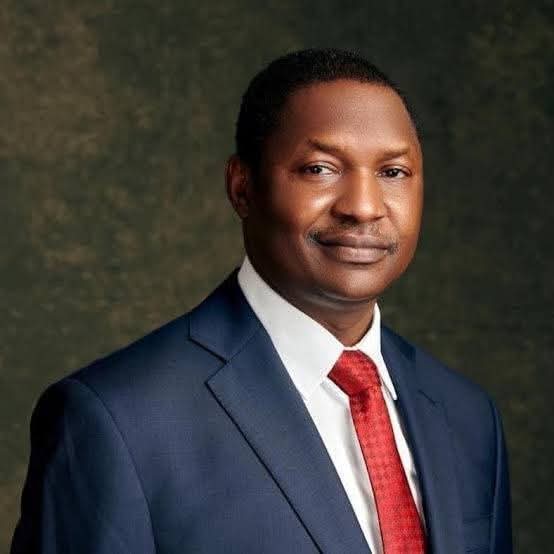
Why I’m Still In EFCC Custody – Former AGF Malami


Former Attorney-General of the Federation and Minister of Justice, Abubakar Malami (SAN), has revealed why he remains in the custody of the Economic and Financial Crimes Commission (EFCC) despite voluntarily honouring the agency’s invitation on Monday.

Malami is currently being interrogated over several allegations, including terrorism financing, the ownership of 46 bank accounts, the engagement of multiple law firms in the recovery of the $322.5 million Abacha loot, and the disbursement of funds under the conditional cash transfer scheme.

However, in a statement issued on Wednesday by his Special Assistant on Media, Mohammed Bello Doka, the former minister said he was detained without being informed of any new offence.

He noted that the EFCC simply told him his previous administrative bail had been revoked, even though he never violated its terms.

Malami said he had been given fresh bail conditions and was ready to meet them once the EFCC authorises the process.

He firmly dismissed the allegations of terrorism financing and ownership of 46 bank accounts, describing them as “false, baseless, and part of a coordinated media smear campaign.”

According to Doka, Malami has never been questioned by any security or intelligence agency, locally or internationally, regarding terrorism financing.

He added that the retired military officer whose comments were recently cited in the media had already clarified that he never accused Malami of such acts.

The statement also highlighted Malami’s contributions during his time as Attorney-General, including strengthening Nigeria’s anti-money laundering and counter-terrorism financing systems.

Doka listed the establishment of an independent NFIU, and the enactment of the Money Laundering (Prevention and Prohibition) Act, 2022, and the Terrorism (Prevention and Prohibition) Act, 2022, reforms that helped remove Nigeria from the FATF grey list.

Addressing concerns about duplicated legal representation in the recovery of the Abacha funds, Doka explained that the Buhari administration had rejected the terms proposed by Swiss lawyer Enrico Monfrini, who allegedly demanded a $5 million upfront payment and a success fee of up to 40 percent.

He said Malami later negotiated a 5 percent all-inclusive success fee with Nigerian lawyers, saving the country between ₦76.8 billion and ₦179.2 billion, depending on the exchange rate.

He clarified that the recovered funds were repatriated in phases and deployed strictly according to agreements with international partners.

These included the 2017–2018 $322 million from Switzerland, released through the National Social Investment Programme under World Bank supervision, and the $321 million repatriated from Jersey in 2020, which funded major infrastructure projects such as the Second Niger Bridge, the Lagos–Ibadan Expressway, and the Abuja–Kano Highway.

Malami, who served as AGF from 2015 to 2023, had previously confirmed on November 28 that he received EFCC’s invitation and would honour it as a “law-abiding and patriotic citizen.”

Meanwhile, the EFCC has maintained that Malami is being detained for failing to meet his bail conditions and because of ongoing investigations into multiple cases linked to him.

Google search engine

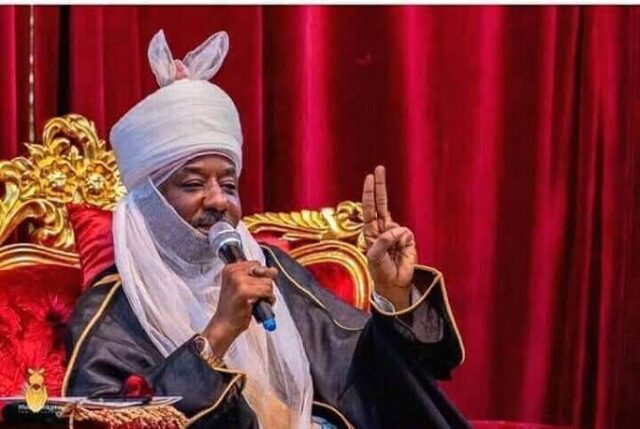
Nigerian Leaders Run Public Office Like A Family Business – Sanusi


The 16th Emir of Kano, Muhammadu Sanusi II, has taken a swipe at Nigeria’s political elite, accusing them of treating public office as a private or family enterprise rather than a responsibility to serve citizens.

Speaking in Lagos at the 15th anniversary of Enough is Enough (EiE) Nigeria, Sanusi said the country continues to miss vital opportunities for progress because many leaders prioritise personal gain over national interest.

“We have done enough damage and maybe we need to stop,” he said.

“We miss opportunities not just by accident but sometimes deliberately, because many in public office think it’s about themselves, their families, or those close to them, not the country.”

Sanusi, a former Governor of the Central Bank of Nigeria (CBN), said Nigeria’s governance challenges are deepened by ethnic divisions, religious tensions and self-serving political structures that undermine unity and development.

He urged young Nigerians to take ownership of the country and challenge systems that promote dysfunction.

“The nation belongs to us. It does not belong to the government or politicians,” he said.

“Wherever we find ourselves, we must remember we hold a small part of Nigeria and have a duty to contribute our quota.”

The Emir called on youths to rally around a common vision for a new Nigeria, one that breaks away from longstanding tribal, religious and political rivalries.

“What we need is a clear, achievable ideological direction,” he said.

“It has to be a Nigeria different from the one that has been manufactured for us, a Nigeria free from ethnic competition, religious conflict, and the pursuit of personal aggrandizement.”

Sanusi stressed that Nigeria can only take its rightful place globally when citizens collectively reject divisive politics and embrace a shared national purpose.

Google search engine

MOST COMMENTED

- Advertisement -
Google search engine