Home Blog Page 235

APC Seeks To Testify As US Congress Debates ‘Christian Genocide’ Allegations Today


The United States chapter of the All Progressives Congress (APC) has asked to appear before the US House Subcommittee on Africa on Thursday as American lawmakers prepare to review former President Donald Trump’s recent redesignation of Nigeria as a Country of Particular Concern (CPC) over alleged religious persecution.

The request was contained in a letter to the Subcommittee Chairman, Rep. Chris Smith. According to APC USA Chairman, Prof. Tai Balofin, the group is ready to send a high-level delegation capable of providing “firsthand intelligence” and verified data on Nigeria’s security realities.

His statement was made available to journalists in Abuja.

Balofin said while the party supports religious liberty for all Nigerians, the global debate often oversimplifies the country’s security challenges.

He argued that Nigeria’s crisis is shaped by banditry, climate pressures, resource conflicts and transnational crime—not merely religious hostility.

He said the delegation is prepared to appear before Congress “at short notice,” adding that APC USA intends to highlight what it sees as key security improvements under President Bola Tinubu.

These include efforts to disrupt terrorist networks, wider community-based early-warning systems, and initiatives supporting interfaith cooperation.

According to him, reductions in attacks across several hotspots have been acknowledged by both Nigerian authorities and independent monitors.

The group also plans to recommend deeper US–Nigeria cooperation in security, intelligence, and humanitarian programs, arguing that inclusive engagement is essential for protecting all religious groups.

Balofin praised Chairman Smith’s record on global religious freedom and appealed for APC USA to be granted an opportunity to contribute “accurate, fair and solution-driven insights.”

The APC USA letter comes shortly after Nigeria criticised the United States for excluding Nigerian officials from a UN event on alleged killings of Christians.

Nigeria’s chargé d’affaires to the UN, Syndoph Endoni, described the exclusion as making decisions about Nigeria “in our absence.”

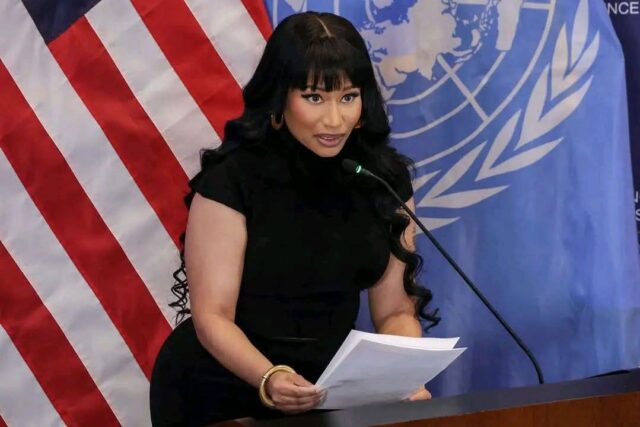
Endoni said the UN programme, which was backed by the US Mission and attended by American rapper Nicki Minaj, sidelined Nigerian officials even though the allegations directly concern the country.

US officials reportedly said the event was “private” and that organisers feared “reprisals” if Nigerian government representatives were present.

The envoy warned that such unilateral actions could inflame tensions and insisted that Abuja remains committed to working with Washington to address extremist violence.

The US House Subcommittee on Africa is scheduled to convene its hearing at 11:00 am in Room 2172 of the Rayburn House Office Building. The session will also be streamed live.

Two panels of witnesses are expected:
Panel 1:

  • Jonathan Pratt, Senior Bureau Official, Bureau of African Affairs
  • Jacob McGee, Deputy Assistant Secretary, Bureau of Democracy, Human Rights and Labor

Panel 2:

  • Nina Shea, Director, Center for Religious Freedom
  • Bishop Wilfred Anagbe of the Makurdi Catholic Diocese
  • Oge Onubogu, Center for Strategic & International Studies

The hearing will examine religious freedom in Nigeria, evaluate the scope of reported persecution, and consider potential US policy responses, including sanctions, humanitarian support and security cooperation.

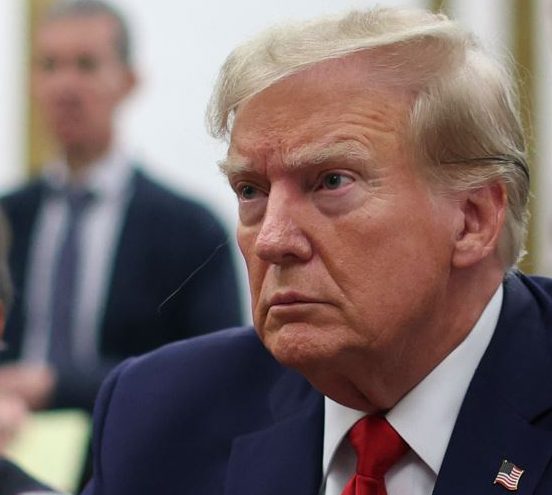
On October 31, 2025, President Donald Trump redesignated Nigeria a Country of Particular Concern, accusing Nigerian authorities of failing to protect Christians from extremist violence.

He claimed Christianity faces an existential threat in Nigeria, alleging thousands of Christians have been killed by “radical Islamists.”

Trump warned that the US is prepared to impose sanctions, halt all assistance, and even consider military action if Nigeria does not act decisively.

He also directed the Department of War to prepare for “possible action.”

President Bola Tinubu has strongly rejected Trump’s claims, describing them as a distortion of Nigeria’s religious situation.

In a statement on his X handle, Tinubu reaffirmed Nigeria’s constitutional protections for religious freedom and insisted the country does not encourage or tolerate religious persecution.

He stressed that Nigeria’s diversity and religious pluralism remain core national values that the government is committed to upholding.

Google search engine

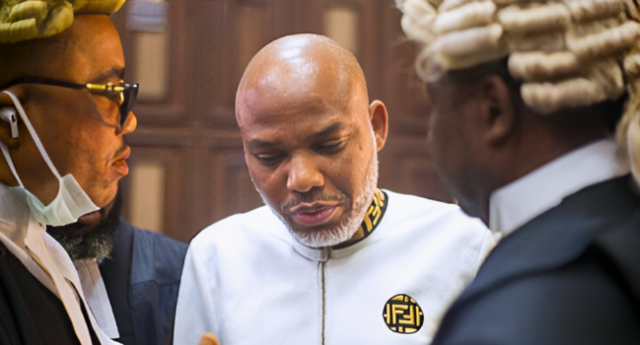
Judgment Day: Police Heighten Security In South-East As Court Decides Kanu’s Fate Today


The Federal High Court in Abuja will today deliver a crucial ruling in the long-running legal battle between the Indigenous People of Biafra (IPOB) leader, Nnamdi Kanu, and the Federal Government.

Justice James Omotosho is expected to rule on multiple applications filed by both sides, including Kanu’s challenge to the validity of the terrorism charges against him and his request to be released on grounds of alleged unlawful detention and breach of fundamental rights.

Kanu has been held by the Department of State Services since June 2021 following his controversial return from Kenya, an episode his legal team insists amounted to “extraordinary rendition.”

He is currently facing seven terrorism-related counts, which include allegations of incitement, operating an unlawful organisation, and threatening national security. Kanu denies all accusations.

Justice Omotosho fixed today’s date on November 7 after Kanu failed to open his defence within the six days allocated to him.

Although the prosecution closed its case on June 19, 2025, having called five witnesses and tendered numerous exhibits, Kanu did not proceed with his defence, instead filing new motions contesting the legality of the proceedings.

He argues that the terrorism law under which he is being tried has been repealed, rendering the charges invalid.

Kanu also asked the court to strike out the plea of “not guilty” earlier recorded on his behalf, alleging it was entered under misleading circumstances and contrary to a Supreme Court decision.

He wants all subsequent court proceedings nullified.

However, Justice Omotosho ruled that Kanu was given ample opportunity to defend himself.

The judge noted that the matter, originally filed in 2015, had suffered many delays, mostly at the defendant’s request, before being transferred to his court for an accelerated hearing.

He emphasised that while the court cannot compel a defendant to present a defence, a refusal to do so amounts to waiving that right.

Having abandoned his defence, the court concluded that it would proceed to judgment.

Kanu’s legal odyssey has been marked by numerous adjournments and appeals.

In 2022, the Court of Appeal discharged him and ordered his release, declaring that his rendition from Kenya violated international law.

The Federal Government appealed, and the Supreme Court later reversed the ruling, sending the case back to the Federal High Court for trial.

The IPOB leader’s continued detention has remained deeply contentious, sparking regional, national, and international calls for his release.

Many groups in the South-East argue that freeing him would help ease rising security tensions, but the Federal Government insists he must face trial.

As anticipation builds, security agencies have increased surveillance and patrols across the South-East.

In Abia, Kanu’s home state, Police spokesperson ASP Maureen Chinaka said the Commissioner of Police, Danladi Isa, has deployed officers statewide to prevent any breakdown of law and order.

She stressed that the police, working with other security agencies, are prepared “24/7” to maintain peace regardless of the judgment’s outcome.

Despite the heightened vigilance, there was no noticeable security presence around Kanu’s hometown of Afaraukwu as of the time of reporting.

In Enugu, police spokesman Daniel Ndukwe declined to speculate, asking, “Have you seen the judgment that he is going to be convicted?”

At the national level, the Force Public Relations Officer, Benjamin Hundeyin, did not respond to inquiries.

In a related development, Kanu has submitted a criminal complaint to an Abuja Chief Magistrate’s Court accusing two DSS witnesses, known in court as TAA (PW1) and BBB (PW2), of giving false evidence during his trial.

In the complaint dated November 13, Kanu alleges that both witnesses committed perjury between May and July 2025 during proceedings concerning the admissibility of statements he made in 2015 and 2021.

He cites several laws, including sections of the Penal Code, the Administration of Criminal Justice Act, and constitutional provisions.

Kanu claims that TAA lied when he said he did not know Mr Brown Ekwoaba, a senior DSS investigator who Kanu says oversaw his detention and interviews in 2015.

He supports this with affidavits from his brother and another defendant, as well as public records showing Ekwoaba’s role at the time.

He also accuses BBB of contradicting himself, claiming in court that he had never met Kanu except during trial, despite having earlier testified that he conducted Kanu’s video interview at the DSS Headquarters in July 2021.

Kanu argues that the alleged falsehoods were used to conceal the true chain of custody behind his statements, which are central to the prosecution’s case.

Google search engine

Trump Signs Law Permitting Release Of Epstein Files


US President Donald Trump announced Wednesday that he has signed legislation compelling the Justice Department to publish all documents from its investigation into the late financier and convicted sex offender Jeffrey Epstein.

Under the new law, the department must make the files available within 30 days in a “searchable and downloadable” format.

The materials to be released include internal DOJ communications, evidence seized from Epstein’s properties, interviews with victims and witnesses, flight logs, and records of individuals and entities connected to Epstein.

Although Trump could have directed the release on his own, lawmakers in the House voted 427–1 to pass the bill, and the Senate approved it unanimously the next day.

Trump initially resisted such disclosures but shifted position after criticism from Epstein’s victims and members of the Republican Party.

In a post on Truth Social, Trump accused Democrats of championing the release to divert focus from his administration.

He suggested the documents may expose Democratic ties to Epstein, saying, “I HAVE JUST SIGNED THE BILL TO RELEASE THE EPSTEIN FILES!”

The files covered by this legislation differ from the more than 20,000 pages of Epstein estate documents released by Congress last week.

Those documents included remarks Epstein made in 2018, claiming he could “take down” Trump and suggesting he knew damaging information about him.

Trump and Epstein were once acquaintances, but Trump says they cut ties in the early 2000s and denies any involvement in Epstein’s crimes.

Speaking to reporters Monday, Trump asserted that Republicans had no connection to Epstein and argued that Democrats were more closely associated with him.

Epstein died by suicide in a New York jail in 2019 while awaiting trial on federal sex-trafficking charges.

He had previously been convicted in 2008 for soliciting a minor.

His network included numerous well-known figures across politics, academia, business, and media, including Andrew Mountbatten-Windsor, Trump, and former Trump adviser Steve Bannon.

On Wednesday, former Harvard president Larry Summers stepped back from teaching duties as the university examines his previously undisclosed communications with Epstein.

Under the new law, Attorney General Pam Bondi must release “all unclassified records, documents, communications, and investigative materials” related to both Epstein and his associate Ghislaine Maxwell, who is currently serving a 20-year sentence for sex trafficking.

Certain information, however, can be withheld to protect the privacy of victims, avoid compromising ongoing investigations, or prevent disclosure of sensitive personal material.

Representative Thomas Massie, one of the lawmakers behind the bill, cautioned that the administration might invoke new investigations to justify holding back files.

“I’m concerned they may try to use those investigations as a basis not to release the documents,” he said.

Google search engine

Tinubu To Assent Police Pension Board Bill, Retirees May Receive Up To 85% Of Emoluments – Reps


President Bola Ahmed Tinubu is expected to soon sign a landmark bill establishing the Nigeria Police Force Pension Board, a development that will remove police personnel from the Contributory Pension Scheme (CPS) under the Pension Reform Act and grant them a pension structure similar to that of the military and DSS.

The Chairman of the House of Representatives Committee on Police Affairs, Hon. Abubakar Makki Yalleman, disclosed this on Wednesday in response to the ongoing protest by retired police officers at the National Assembly.

Yalleman confirmed that the House had concluded all legislative processes on the bill and forwarded it to the Senate for concurrence.

“We have interacted with the retirees several times. All their concerns were considered. The bill passed all its readings and was transmitted to the Senate on October 28,” he stated.

“By next week, God willing, the bill will be forwarded to the President for assent. Their agitation has been fully addressed.”

He urged protesting retirees to vacate the National Assembly gate, insisting that legislative work on their demands had been completed.

Similarly, the Chairman of the House Committee on Police Pensions, Hon. Husaini Mohammed Jallo, described the legislation as a major breakthrough for police personnel who have long demanded a dedicated pension board.

“The police want out of the contributory pension scheme to run their own board like the military and DSS. That is exactly what this bill provides,” Jallo said.

He added that the Inspector General of Police, the Director General of Pension, and other stakeholders were already working on a seamless transition process.

The bill, HB 979, Nigeria Police Pension Board (Establishment) Bill, seeks to amend Section 5(1)(a) of the Pension Reform Act to exempt police personnel from the CPS.

It establishes a standalone Police Pension Board empowered to manage pensions, gratuities, and benefit payments.

Key provisions include:.

Minimum Pension: Retired police officers will earn not less than 85% of their total emoluments as pension (Section 17).

Injury Benefits: Where additional pension is granted for injury, combined benefits shall not exceed 100% of pensionable emoluments.

Funding: Pensions and gratuities will be paid from the Consolidated Revenue Fund (Section 14).

Retirement Criteria: Full benefits apply after 35 years of service or at age 60, while voluntary retirement is allowed after 10 years.

Death-in-Service Provision: If a retiree dies within five years of retirement, their next of kin will continue to receive the same pension until the five-year period lapses (Section 19).

Protection of Benefits: Pensions remain non-transferable, non-assignable, and protected from seizure except for debts owed to the Federal Government or by court order (Section 21).

With the House having completed its work, the bill now awaits Senate concurrence before being transmitted to the President.

Yalleman expressed confidence that President Tinubu would sign the bill without delay.

“Very soon, this matter will be concluded. There is no controversy. The Senate will pass it, and it will go to Mr. President for assent,” he assured.

Google search engine

FG Losing Grip On Northern Security, Says Olawepo-Hashim


Former presidential candidate, Gbenga Olawepo-Hashim has warned that the Federal Government is steadily losing operational control over security in northern Nigeria, following a string of deadly attacks in Kwara and Kebbi states.

In a statement released to journalists in Kaduna on Wednesday, Olawepo-Hashim said the latest incidents, including the killing of two security operatives in Rogun Village, Kpada District of Patigi LGA in Kwara State, show that terrorists now operate across the northern region “without fear of the state.”

According to him, gunmen stormed a police outpost in Rogun on Sunday night, engaging security operatives in a prolonged firefight before eventually overpowering them.

The assault came just days after 25 schoolgirls were abducted, a vice principal murdered in Kebbi State, and a senior Customs officer killed in Bagudo LGA.

“These coordinated attacks are evidence of a nation sliding toward total collapse,” he said.

“From Niger to Zamfara, Kaduna to Plateau, Bauchi to Kebbi, and now Kwara, terrorists determine the rhythm of life in too many communities. The Federal Government has lost control.”

Olawepo-Hashim described the Patigi attack as particularly troubling, noting that the Middle Belt corridor had long been considered relatively stable.

The spread of attacks into this area, he warned, signals a dangerous expansion of militant activity and a “total failure of intelligence and policing.”

He added that northern communities are “under siege,” with rural areas increasingly engulfed by criminal elements while state authority remains largely confined to major urban centres.

“What we are witnessing is a quiet surrender of northern Nigeria to non-state actors. Schools are unsafe, police posts have become battlefields. This is not governance, this is abandonment,” he lamented.

Referencing recent reports that a serving military general was ambushed after terrorists allegedly intercepted his communication, he insisted the development shows that insurgents now possess advanced capabilities and unprecedented boldness.

“If terrorists can attack a police outpost in Kwara and kill officers without consequence, what hope is left for villagers? If 25 girls can be taken in Kebbi without immediate rescue, what does government still mean?” he asked.

Olawepo-Hashim said many rural dwellers are now forced to pay taxes to armed groups, warning that sovereignty in large swathes of the North has collapsed.

He extended his condolences to families affected by the Kwara and Kebbi tragedies and called for an urgent national response, including a radical overhaul of Nigeria’s security architecture.

“Unless drastic measures are taken immediately, Nigeria risks slipping into a new and uncontrollable phase of disintegration,” he cautioned.

Google search engine

Nnadozie Clinches CAF Best Goalkeeper Award For Third Consecutive Year


Super Falcons goalkeeper Chiamaka Nnadozie has been crowned CAF Women’s Goalkeeper of the Year for the third year running, further cementing her legacy as one of Africa’s finest shot-stoppers.

Nnadozie received the honour on Wednesday at the 2025 CAF Awards in Rabat, Morocco, adding to her previous wins in 2023 and 2024.

The Brighton goalkeeper was instrumental in Nigeria’s triumphant campaign at the 2025 Women’s Africa Cup of Nations (WAFCON), where the Super Falcons claimed their 10th continental title.

She featured in every minute of the tournament, conceding just three goals in six matches, two in the final against Morocco and one in the semi-final clash with South Africa.

Her stellar performance earned her the Goalkeeper of the Tournament award.

The 24-year-old expressed gratitude to CAF, the Nigeria Football Federation (NFF), her teammates, and her coaches at both club and national levels for their continuous support.

In the men’s category, Morocco’s Yassine Bounou emerged as the Best Goalkeeper of the Year.

Nnadozie’s honour adds to an impressive year in which she also finished fourth in the women’s Yachine Trophy rankings at the 2025 Ballon d’Or.

During the awards’ review period, she also lifted the Coupe de France Féminine with Paris FC.

Meanwhile, the Super Falcons were named Women’s National Team of the Year following their outstanding WAFCON campaign.

Nigeria triumphed over strong competition from Ghana’s Black Queens and Morocco’s Atlas Lionesses to secure the prestigious award.

Morocco’s Ghizlane Chebbak won the CAF Women’s Player of the Year, beating teammate Sanaa Mssoudy and Nigeria’s Rasheedat Ajibade.

Chebbak was the top scorer at this year’s WAFCON, despite Morocco losing to Nigeria in the final.

In the men’s national team category, Morocco’s U-20 World Cup–winning team claimed top honours.

Google search engine

Nicki Minaj Makes History As First Female Rapper To Address The United Nations


American rap star Onika Maraj-Petty, widely known as Nicki Minaj, has become the first female rapper to speak at a United Nations forum.

Minaj delivered her remarks on Tuesday at an event hosted in New York by the United States Mission to the United Nations.

Her speech, broadcast on the Mission’s official YouTube channel, focused on rising attacks against Christians in Nigeria and in other parts of the world.

In her address, Minaj said:

“In far too many places, including Nigeria, Christians are being targeted, driven from their homes and killed. Churches have been burned, families torn apart, and entire communities forced to live in constant fear simply because of how they pray.”

Calling for global attention, she emphasized that the situation demands urgent action, stressing that the issue is not confined to Nigeria alone but spans multiple countries.

Minaj clarified that her advocacy should not be seen as divisive:

“Protecting Christians in Nigeria is not about taking sides. It is about uniting humanity. Nigeria is a beautiful nation with rich faith traditions, and many beautiful Barbz that I can’t wait to see.”

Addressing the repeated attacks on places of worship, she added:

“When a church, mosque, or any place of worship is destroyed, everyone’s heart should break a little. And the very foundation of the United Nations, built to uphold global peace and security, should shake.”

Minaj also applauded the interfaith and peacebuilding advocates present at the event, noting that their work inspires her hope for stronger solidarity in promoting religious freedom worldwide.

Her speech coincided with recent comments by U.S President Donald Trump, who had warned of possible military action against terrorist groups in Nigeria if the attacks on Christians continued.

The U.S. recently listed Nigeria among countries of particular concern.

Earlier that same Tuesday, Nigerian police confirmed an attack on a church in Kwara State that left two worshippers dead.

Meanwhile, 25 schoolgirls were abducted in Kebbi State, though two later escaped. A Muslim teacher and a security guard were also killed in the incident.

Also speaking at the UN forum, U.S. Congressman Mike Waltz commended Minaj for using her global influence to highlight the ongoing violence against Christians in Nigeria.

In a related development, President Bola Tinubu said on Wednesday that the abduction of the Kebbi schoolgirls and the killing of Brigadier General Musa Uba and other soldiers in Borno State had left him deeply saddened.

“Their families, and the families of the kidnapped schoolgirls, are in my prayers,” Tinubu said in a post on X (formerly Twitter).

“As Commander-in-Chief, I am depressed by the tragic loss of our soldiers on active duty. May God comfort the families of Brigadier General Musa Uba and other fallen heroes.”

Google search engine

Senator Okey Ezea’s Death A Painful Void, Says Enugu Reps Caucus


The Enugu State Caucus in the House of Representatives has expressed deep shock and sorrow over the sudden passing of Senator Okey Ezea, who represented Enugu North Senatorial District.

In a statement made available to DAILY GAZETTE on Wednesday which was signed by the Caucus Leader, Rt. Hon. Nnolim Nnaji, the lawmakers described Senator Ezea’s death as a tragic and heartbreaking loss, noting that he was a vibrant and dedicated member of the 10th Senate.

The caucus noted that his passing is a major setback for Enugu State and the Southeast region, especially in light of the ongoing advocacy for the creation of Adada State, an effort in which Senator Ezea played a prominent and passionate role.

“We acknowledge Senator Ezea’s unwavering dedication and his immense contributions to the development of Enugu State,” the statement read, emphasizing that his death has created a vacuum that will be difficult to fill.

The caucus extended its heartfelt condolences to the family of the late senator, the people of Enugu North Senatorial District, the Nigerian Senate, and the Enugu State Government.

Google search engine

Kebbi: Names Of 25 Kidnapped Schoolgirls Released


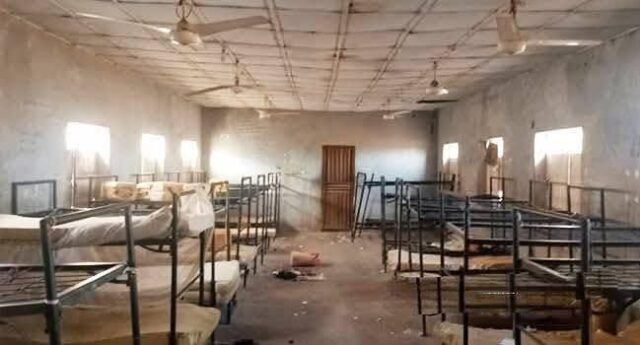
Three days after 25 schoolgirls were abducted from their hostel at the Government Girls Comprehensive Senior Secondary School (GGCSS) in Maga, Kebbi State, Hussaini Aliyu, Chairman of Danko-Wasagu Local Government Area, where the incident happened, released the names of the kidnapped students.

Google search engine

ISWAP Leader Sentenced To 20 Years In Prison For Terrorism


Hussaini Ismaila, a key commander of the Islamic State West Africa Province (ISWAP), has been convicted of terrorism and sentenced to 20 years in prison by a Federal High Court in Abuja.

The Department of State Services (DSS) had prosecuted him for multiple terrorist offenses.

Justice Emeka Nwite delivered the judgment after Ismaila, also known as Mai Tangaran, pleaded guilty to a four-count terrorism charge.

The charges included his role as coordinator of attacks on the Police Headquarters in Bompai, the Mobile Police Base on Kabuga Road, Pharm Centre Police Station, and Angwa Uku Police Station in Kano State, among other locations.

These attacks in 2012 left many injured.

Arrested on August 31, 2017, in Tsamiyya Babba Village, Gezewa LGA, Kano State, Ismaila was initially arraigned on a four-count charge under the Terrorism Prevention Amendment Act, 2013.

His trial experienced delays due to appeals and a trial-within-trial to determine the voluntariness of his extra-judicial statements.

During the trial, the prosecution presented five witnesses, including two DSS officials and two eyewitnesses to the attacks.

Originally pleading not guilty, Ismaila changed his plea to guilty after the testimony of the fifth prosecution witness.

His lawyer, P. B. Onijah of the Legal Aid Council (LAC), requested leniency, stating that Ismaila was remorseful and wished to avoid wasting court time.

Justice Nwite sentenced Ismaila to 15 years for the first count and 20 years each for counts two, three, and four, ordering the sentences to run concurrently, effective from his arrest date, August 31, 2017.

The court also instructed the Controller-General of the Nigerian Correctional Service to confine Ismaila in any prison of their choice.

The judge further mandated that Ismaila undergo rehabilitation and deradicalization after serving his sentence before being reintegrated into society.

Google search engine

- Advertisement -
Google search engine

MOST COMMENTED