Home Blog Page 245

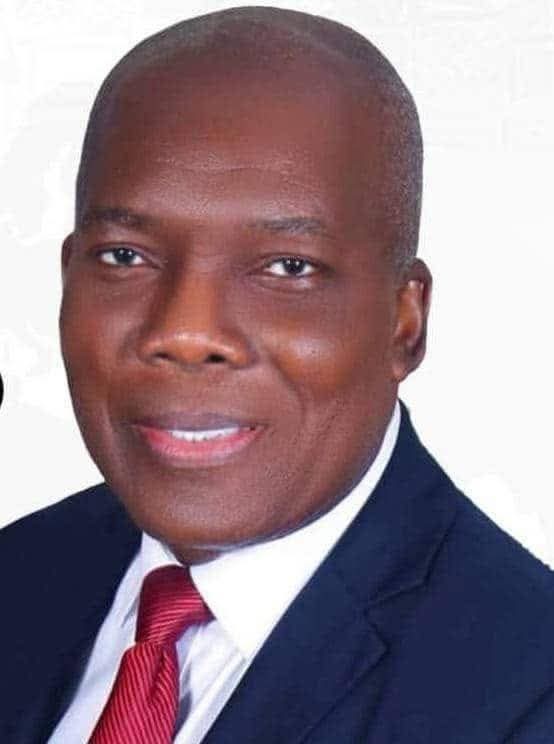
Udeh‑Okoye Quits PDP, Decries Loss Of Core Values

 

Former PDP National Secretary, Rt. Hon. S.K.E. Udeh‑Okoye has formally resigned from the Peoples Democratic Party, asserting that it has abandoned the founding principles that once gave it meaning and purpose.

In a resignation letter dated October 13, 2025, addressed to the PDP Ward Chairman in Agbogugu, Awgu Local Government Area of Enugu State, Udeh‑Okoye said he arrived at the decision after “deep reflection and careful consideration.”

He lamented that the party he once believed in “strayed far from the ideals of its founding fathers.”

“PDP once stood for hope, democracy, accountability, and genuine service to the people. Today, it has lost its moral direction,” he wrote.

Udeh‑Okoye, who previously served as PDP National Youth Leader and as a member of the Enugu State House of Assembly, declared his intention to pursue a path devoted to restoring democratic values and public accountability, principles he argues have been neglected.

His departure comes at a time of intense internal turbulence within the PDP, especially over leadership legitimacy.

The party has been mired in conflict following the reinstatement of Senator Samuel Anyanwu as National Secretary, a move Udeh‑Okoye strongly contested.

Earlier in 2025, a Court of Appeal recognized Udeh‑Okoye as the rightful National Secretary, only for the Supreme Court to later rule that leadership disputes within political parties are matters internal to the party and not subject to judicial adjudication.

This left both Udeh‑Okoye and Anyanwu laying claim to the same post.

In April, PDP governors recommended that a Deputy National Secretary temporarily fill the role until a permanent appointment could be made from the South East Zone.

Despite this, Anyanwu resumed operations at the PDP National Secretariat in Abuja in October, deepening the schism.

When contacted, the PDP’s National Publicity Secretary, Debo Ologunagba, downplayed the resignation, asserting that Senator Anyanwu’s current responsibilities are limited to administrative oversight, such as logistics and facility matters.

Google search engine

BREAKING: Enugu Labour Party Lawmaker Dumps Party, Backs Gov Mbah’s Move To APC

Hon. Raymond Ugwu, the member representing Enugu East Rural Constituency in the Enugu State House of Assembly, has officially dumped the Labour Party (LP) and defected to the All Progressives Congress (APC).

Speaking exclusively to DAILY GAZETTE on Sunday, Hon. Ugwu said his decision was largely influenced by Governor Peter Mbah’s leadership style, which he described as transformative and progressive.

“Governor Mbah’s governance approach is practical, people-centered and focused on real development. As someone elected to serve my constituents, I can no longer remain in a party that is not aligned with the direction I believe Enugu should go. I’m joining him in this journey for the good of our state,” Ugwu stated.

He also cited internal crises, persistent infighting and ongoing litigations within the Labour Party as major reasons for his decision to seek a new political home.

Hon. Ugwu, who was elected on the LP platform in 2023, told DAILY GAZETTE that he consulted with critical stakeholders and constituents before making the switch.

He insists his defection is in the best interest of his people.

“This is about effective governance and being on the side of progress. Enugu deserves leaders who are not afraid to make bold choices,” he added.

Efforts to reach the Labour Party leadership in Enugu for comments were unsuccessful as of the time of filing this report.

Google search engine

JUST IN: Enugu PDP Chairman Dumps Party, Set To Join APC

In a dramatic political turn, the Chairman of the Peoples Democratic Party (PDP) in Enugu State, Dr. Martins Chukwunweike, has resigned from the party and is set to join the All Progressives Congress (APC) alongside Governor Peter Ndubuisi Mbah, DAILY GAZETTE can authoritatively report.

Dr. Chukwunweike, a former commissioner for health and long-standing figure in the PDP ’s dominance in Enugu State, confirmed his resignation in a statement on Monday morning.

Detail shortly…

Google search engine

ASUU-FG Talks Collapse In Deadlock As CONUA Breaks Ranks


Negotiations between the Federal Government and the Academic Staff Union of Universities (ASUU) have ended without agreement, with ASUU declaring a fresh strike and the Congress of University Academics (CONUA) distancing itself from the conflict.

At the heart of the impasse is ASUU’s dissatisfaction over what it says are unfulfilled promises by the government.

ASUU President, Prof. Christopher Piwuna, announced the start of a two‑week “total strike,” effective from 12:01 am Monday, October 13, citing persistent neglect of their seven‑point demands.

The Ministers of Education, Dr. Tunji Alausa and his State counterpart, Prof. Suwaiba Sai’d Ahmad, counter that a “comprehensive offer” has already been made to the union.

According to their statement, the government’s proposal addresses key issues such as staff welfare, institutional governance, and conditions of service.

Among the reforms is an enhanced teaching allowance intended to better remunerate lecturers.

Yet, ASUU insists the offer falls short, and that meaningful engagement has been lacking. The union claims the government is merely engaging in delay tactics.

Amid the flare-up, CONUA, another national body of university academics, declared it has not joined the strike.

Its President, Niyi Sunmonu, stressed there is no basis for industrial action on its part, especially given ongoing dialogue and the negotiations via the Yayale Ahmed Renegotiation Committee.

Sunmonu said CONUA members were not part of the ASUU strike decision and remain committed to institutional engagement rather than disruption.

In its statement, the Federal Government reaffirmed that the “No Work, No Pay” clause in Nigerian labor law remains valid.

The ministers warned that any prolonged disruption would force the government to enforce this policy to maintain accountability and protect the academic calendar.

The government also reiterated its respect for university autonomy, noting that issues such as promotions, internal governance, and appointments rest with each institution’s governing council, not the federal authorities.

This strike would mark ASUU’s 18th since 1999, and underscores the recurring tension between lecturers and government over funding, working conditions, infrastructure deficits, and the implementation of past agreements.

Sources suggest that the breakdown in talks may stem from communication failures, or withdrawal by ASUU, rather than a lack of regulatory will from the government.

One government insider claimed that the negotiating panel, led in the absence of Dr. Yayale Ahmed by Senator Lekan Tejuoso, was ready to convene a face‑to‑face meeting, but that ASUU allegedly declined.

If true, this move is being interpreted by government officials as a deliberate sabotage of the negotiation process.

With the strike underway, universities face interruptions in academic schedules.

Observers now watch whether ASUU will reconsider and return to the negotiating table, or dig in its heels.

Meanwhile, CONUA’s decision to remain apart adds a layer of complexity, raising the possibility of competing narratives in the academic labor landscape.

Google search engine

FG Warns ASUU Against Strike, Reiterates ‘No Work, No Pay’ Policy


The Federal Government has cautioned the Academic Staff Union of Universities (ASUU) against proceeding with its planned industrial action, urging the union to embrace dialogue over disruption.

In a joint statement released by the Minister of Education, Dr. Maruf Tunji Alausa, and the Minister of State for Education, Professor Suwaiba Sai’d Ahmad, the government expressed disappointment over ASUU’s strike plans despite what it described as a “comprehensive offer” presented to the union.

“We have addressed the core issues, ranging from staff welfare and institutional governance to improved teaching allowances. The only outstanding matters lie within the purview of university governing councils, and these are already being looked into,” the statement read.

The ministers stressed that President Bola Tinubu’s administration has demonstrated a genuine commitment to revitalising the education sector through policy reforms and financial interventions.

They noted that the government’s offer includes an enhanced Teaching Allowance, reflecting the critical role of lecturers in nation-building. Yet, they said ASUU has not officially responded, raising concerns about the union’s intentions.

The government reiterated that it would enforce the “No Work, No Pay” provision under Nigerian labour law if ASUU proceeds with the strike, noting that continued disruption of academic activities harms students and undermines educational progress.

“While we remain committed to engagement, we will not hesitate to uphold the law to protect our education system,” the statement warned.

The government also reaffirmed its respect for university autonomy, stating that issues like internal governance, staff promotions, and appointments fall under the jurisdiction of university governing councils, not the federal government.

Highlighting the importance of keeping students in school, the ministers appealed to ASUU to reconsider its stance and return to the negotiation table.

“The future of our children must not be held hostage by unresolved disputes. We urge ASUU to work with us to consolidate the progress made in infrastructure, welfare, and academic stability,” they said.

Google search engine

BREAKING: 23 Out Of 24 Enugu Assembly Members Join APC, Only One Lawmaker Holds Out As Political Tide Shifts

A major political shake-up is unfolding in Enugu State. 23 out of the 24 members of the State House of Assembly have declared their full support for Governor Peter Mbah’s move to the All Progressives Congress (APC), DAILY GAZETTE reports.

Only one lawmaker is holding out. Hon. Harrison Ogara, who represents the Igbo-Eze South state Constituency.

Ogara, a member of the Labour Party, has chosen to remain with his party, for now, in what appears to be a sweeping realignment of political loyalties across the state.

Sources within the Assembly told DAILY GAZETTE that the lawmakers’ decision was not sudden, but the result of weeks of closed-door consultations and high-level political manoeuvring.

One of the lawmakers, who asked not to be named, said the governor’s leadership style, particularly his focus on infrastructural development and economic reform, has inspired renewed confidence among legislators.

“Governor Mbah has shown capacity. What we’re doing is aligning with progress, not just playing politics,” the lawmaker said.

Official statements from the defecting members are expected on Tuesday.

“This is unprecedented. In a state like Enugu, which has long been dominated by opposition parties, seeing 23 lawmakers cross over to the ruling party signals a political earthquake,” another Assembly member added.

For now, Ogara remains the lone figure holding out, a solitary voice in a chamber that has overwhelmingly embraced the governor’s new direction.

Whether he can withstand the political pressure in the coming weeks remains to be seen.

Governor Mbah is expected to make the switch official on Tuesday.

Google search engine

Uncertainty Hangs As Africa’s Oldest President, Biya, Faces Tough Test In Cameroon’s High-Stakes Poll After 42 Years in Power

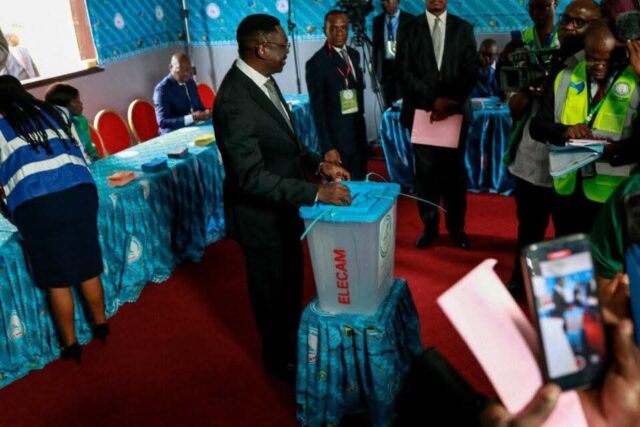
Ferdinand Ngoh Ngoh, secretary general of the presidency, casts his ballot at a polling station in Yaounde on October 12, 2025 during Cameroon's presidential election. (Photo by Daniel BELOUMOU OLOMO / AFP)


Voting has concluded in Cameroon’s presidential election, where 92-year-old incumbent Paul Biya, the world’s oldest sitting president, is seeking an eighth term after 43 years in power.

Biya, who assumed office in 1982, faces 11 challengers this time, including some of his former allies. His most prominent rival is Issa Tchiroma Bakary, 79, a former employment minister who resigned from government earlier this year after over two decades of service under Biya.

Bakary’s candidacy has gained momentum, especially following the disqualification of prominent opposition leader Maurice Kamto by the Constitutional Council, a move widely condemned by rights groups such as Human Rights Watch, who say it casts doubt on the integrity of the electoral process.

Reports indicate that Bakary has received strong support, particularly in his home region of Garoua, where he was warmly welcomed by thousands of supporters during campaign rallies.

In contrast, Biya’s rare campaign appearance in Maroua, the capital of the strategic Far North region, attracted a modest turnout.

Despite his advanced age, Biya appeared publicly for the first time in months just days before the vote.

He cast his ballot in Yaoundé, telling reporters, “Let’s wait until the results are in before making any statements.”

This election is a single-round vote, with the candidate receiving the most votes declared the winner.

Of Cameroon’s 8 million registered voters, many have known no other leader besides Biya, who has won every presidential election since 1990 with landslide margins.

“Things have to change,” said Cheukam Ginette, a 34-year-old first-time voter in Yaoundé.

“Life is hard, healthcare is poor, the roads are terrible. That’s why I voted for the opposition. I don’t have much confidence in the process, but I still hope.”

According to political analyst Stephane Akoa, the campaign has been unusually energetic, raising the possibility of surprises.

However, he cautions that the ruling establishment has the tools to steer outcomes in its favor.

“Young people want change,” Akoa said, “but not enough to risk mass protest like we’ve seen in other African or Asian countries.”

Beyond the political contest, the country continues to grapple with serious socioeconomic issues.

The World Bank estimates that 40% of Cameroonians live below the poverty line, and urban unemployment hovers at 35%. Complaints about poor infrastructure, lack of clean water, inadequate healthcare, and low-quality education dominate public discourse, mostly online.

Despite these frustrations, widespread street protests remain unlikely for now.

Over 55,000 domestic and international observers, including those from the African Union, were accredited to monitor the elections.

The Constitutional Council is expected to announce the official results by October 26.

Meanwhile, some digital platforms have announced plans to tally votes independently, raising concerns within the government about misinformation and attempts to influence public sentiment.

The vote also takes place against the backdrop of a long-running separatist conflict in the Anglophone regions of Cameroon, which began in 2016.

Turnout in those areas was reportedly low, as was the case in the 2018 election.

As the nation awaits results, uncertainty hangs over whether this election will mark a shift in leadership or extend Biya’s decades-long rule.

Google search engine

Fubara Retains Eight Commissioners, Readies New Nominees List


Rivers State Governor Siminalayi Fubara is preparing to submit a fresh list of commissioner nominees to the State House of Assembly, following the lifting of emergency rule in the state.

Meanwhile, eight existing commissioners will be retained despite court rulings that necessitated cabinet changes.

Sources in Government House, speaking on condition of anonymity, confirmed that the retained commissioners include: Dr. Adaeze Oreh (Health), Charles Amadi (Chieftaincy Affairs), Christopher Green (Sports), Joe Johnson (Information & Communications), Chisom Gbali (Youth Development), Victor Kii (Agriculture), Dr. Roseline Uranta (Women Affairs) and Nwafor Maximus (Energy & Natural Resources).

The sources added that some commissioners may be reassigned to new portfolios, but Dr. Adaeze Oreh is the only one whose role is certain for now, given her performance in the health sector.

Governor Fubara had dissolved his cabinet immediately upon resuming full executive powers, following the expiration of the six‑month emergency rule imposed by President Tinubu.

The dissolution came after a Supreme Court decision affirmed Martin Amaewhule as the legitimate Speaker of the Rivers State House of Assembly, a judgment that triggered political realignments.

One government source disclosed that the presentation of the new nominees to the Assembly will happen very soon, as the governor aims for a full and stable cabinet.

He also noted that, as part of a peace accord struck with the Assembly, some allies of FCT Minister Nyesom Wike may be included in the new cabinet to promote unity and inclusiveness in the state.

“Every affected party has now accepted the new reality,” the source said.

“Governor Fubara remains in control of affairs. In the coming weeks, you will begin to see strides forward for Rivers State.”

Google search engine

ADC Slams Tinubu Over Clemency For Drug Convicts, Labels It A ‘National Disgrace’


The African Democratic Congress (ADC) has strongly condemned President Bola Ahmed Tinubu’s recent pardon of convicted drug traffickers, describing the action as a “pathetic” misuse of presidential powers and a blow to Nigeria’s anti-drug efforts.

In a statement issued by its National Publicity Secretary, Mallam Bolaji Abdullahi, the ADC said granting presidential clemency to dozens of individuals convicted of serious offences such as drug trafficking, smuggling, and gun running, is “a national disgrace” and undermines the credibility of the country’s justice system.

“This act amounts to an irresponsible abuse of the power of mercy,” the party said, “especially as many of those pardoned had served less than two years for offences carrying life sentences.”

The party questioned the rationale behind such clemency, arguing that it does not meet the criteria of social utility, correction of judicial errors, or rehabilitation.

Instead, the ADC accused the Tinubu administration of setting a dangerous precedent that may embolden criminals and diminish the efforts of frontline agencies battling drug trafficking and related crimes.

“What does Nigeria stand to gain by pardoning traffickers who barely served their time?” the statement read.

“This sends a troubling message that all it takes to escape justice is to ‘show remorse’ and acquire a few vocational skills.”

The ADC reminded the public that Nigeria remains a major transit point for illicit drugs and is grappling with a serious internal drug crisis, with reports indicating that drug use in the country is at 14.4%, almost triple the global average of 5.5%.

“Our security agencies, particularly the NDLEA, have risked their lives dismantling drug networks, arresting and prosecuting offenders,” Abdullahi noted.

“Granting mass pardons mocks their sacrifices and weakens our legal and moral stance against narcotics.”

The opposition party warned that the implications of such clemency go beyond Nigeria’s borders, potentially damaging the country’s international reputation and partnerships in global anti-narcotics efforts.

“This move paints Nigeria as soft on drug crime and may be interpreted as official sympathy for traffickers. It sends the wrong message to global partners that Nigeria is becoming a safe haven for drug offenders,” the statement added.

The ADC further accused the All Progressives Congress (APC) and President Tinubu of eroding the moral fabric of governance and trivialising serious crimes.

“With this mass amnesty for drug offenders, the Tinubu administration is dangerously redefining morality and justice in Nigeria. We are becoming a nation where even the gravest crimes come with only minor consequences—if any.”

The party concluded by reaffirming its mission to challenge what it sees as growing impunity under the APC-led government.

“The ADC remains committed to rescuing Nigeria from a ruling party that values power over accountability, and impunity over justice,” Abdullahi stated.

Google search engine

Kudus Strike Sends Ghana To 2026 World Cup


Mohammed Kudus’ 47th‑minute finish secured a 1‑0 victory for Ghana over Comoros in Accra on Sunday, booking the Black Stars a spot at the 2026 FIFA World Cup.

This marks Ghana’s fifth appearance at the grand stage.

In front of a packed house of 40,000 supporters, Ghana controlled possession during the first half.

But it took only minutes after the restart for magic to happen: Comoros could only partially clear a cross, and Kudus was first to react, tapping home from close range.

This win carried extra weight—Comoros had stunned Ghana at the Africa Cup of Nations and even in earlier World Cup qualifying rounds. Redemption, then, tasted sweet.

With 25 points from 10 matches, Ghana finished top of Group I. Madagascar came in second with 19 points, even after losing 4‑1 to Mali.

This qualification is vindication for officials who stuck by coach Otto Addo.

Despite calls for his head after a tough AFCON qualifying campaign, he has now delivered a historic result.

Meanwhile, other African groups remain undecided. Benin, Cape Verde, Ivory Coast, and Senegal lead their respective pools, with the four best second‑place teams entering a playoff in November in Morocco, hoping to snatch the remaining spots.

Elsewhere, Egypt beat Guinea‑Bissau 1‑0 in Cairo without Mohamed Salah, thanks to an early strike by Mohamed Hamdy.

Niger upset Zambia 1‑0 to finish as runners-up in Group E. They now sit behind Gabon and Burkina Faso in the runner‑ups’ table.

In a twist of drama, the Super Eagles’ plane returning from their win over Lesotho made an emergency landing in Angola due to a cracked windscreen.

All safely transferred onward, the team is now in Uyo preparing for a crucial match at home.

Nigeria sits third in Group C, trailing Benin and South Africa, but still has a shot at finishing first, if results fall in their favor.

Meanwhile, South Sudan’s coach Nicolas Dupuis was reportedly suspended for 15 days after a 5‑0 home defeat to Senegal.

Google search engine

MOST COMMENTED

- Advertisement -
Google search engine