Home Blog Page 3

GROK Analysis, Screenshots Useless In Amupitan’s X Probe – INEC

The Independent National Electoral Commission (INEC) has stated that it will not rely on artificial intelligence-generated analysis or social media screenshots in its ongoing investigation into alleged digital impersonation involving its chairman, Joash Amupitan.

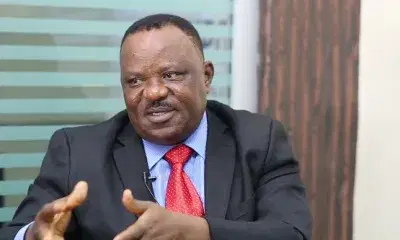
Speaking during an interview, INEC’s ICT Director, Lawrence Bayode, explained that the commission is prioritising credible and verifiable evidence as it probes claims linked to a social media account purportedly associated with the chairman.

According to Bayode, the commission has already engaged security agencies and plans to involve independent forensic experts to ascertain the authenticity of the account and the content circulating online.

“We rely strictly on evidence. Screenshots alone cannot form the basis of our conclusions,” he said, stressing that unverified digital materials would not guide the outcome of the investigation.

He disclosed that the commission is also conducting internal technical reviews as part of efforts to establish the facts surrounding the controversy.

Bayode further noted that the issue highlights broader concerns about digital impersonation and misinformation, particularly as INEC prepares to deploy more technology in the 2027 general elections.

He warned that emerging digital threats must be addressed early to safeguard the integrity of the electoral process.

On the use of artificial intelligence tools such as Grok in analysing the situation, Bayode cautioned against drawing firm conclusions from AI-generated outputs, noting that such systems can produce inaccurate or misleading results.

“Artificial intelligence can sometimes generate false interpretations. That is why every output must be independently verified,” he said.

The controversy stems from resurfaced social media activity linked to a 2023 post by APC National Youth Leader, Dayo Israel, which some critics alleged received engagement from an account believed to belong to the INEC chairman.

INEC, however, has consistently denied the claims, maintaining that the chairman does not operate any personal account on X (formerly Twitter) and has never engaged in partisan political commentary.

The commission described the allegations as part of a coordinated misinformation effort and reaffirmed its commitment to working with security agencies to identify those responsible for the impersonation.

Google search engine

Enugu LG Polls: ENSIEC Not In Violation Of Supreme Court Ruling – Analysts


Legal experts have dismissed claims that the Enugu State Independent Electoral Commission (ENSIEC) is acting in breach of the 2024 ruling of the Supreme Court of Nigeria on local government autonomy, insisting that the commission remains within the ambit of the law.

The clarification follows concerns raised by some interest groups opposing the proposed conduct of local government elections in Enugu State, alleging that the move contradicts the Supreme Court’s position on the independence of local governments as the third tier of government.

However, legal opinions made available to DAILY GAZETTE argue that ENSIEC is fully justified in fixing September 26, 2026, for the council elections.

According to the analysts, the apex court’s decision in the case of Attorney-General of the Federation v. Attorney-General of Abia State & 35 Ors (2024) affirmed the autonomy of local governments but did not stipulate a uniform tenure for elected council officials.

They further explained that under existing Enugu State laws, local government chairmen and councillors operate a two-year tenure, which remains valid and enforceable.

“ENSIEC’s decision to conduct elections upon the expiration of the current tenure is consistent with the legal framework guiding local government administration in the state,” the analysts noted.

The experts maintained that the planned elections do not violate either the Constitution or the Supreme Court ruling, but rather demonstrate adherence to democratic principles and constitutional order.

The development comes amid ongoing debate by some groups allegedly pushing for tenure elongation for current council officials elected in 2024.

The groups have questioned whether the planned elections are an attempt to shorten their tenure or undermine the authority of the apex court.

They insist that electoral bodies must strictly comply with judicial pronouncements and protect the tenure of elected officials as part of efforts to safeguard democratic integrity at the grassroots level.

Despite these concerns, legal analysts maintain that ENSIEC’s actions are lawful and in line with both judicial interpretation and extant state legislation.

Google search engine

Enugu LG Polls: ENSIEC Not In Violation Of Supreme Court Ruling – Analysts

Legal experts have dismissed claims that the Enugu State Independent Electoral Commission (ENSIEC) is acting in breach of the 2024 ruling of the Supreme Court of Nigeria on local government autonomy, insisting that the commission remains within the ambit of the law.

The clarification follows concerns raised by some interest groups opposing the proposed conduct of local government elections in Enugu State, alleging that the move contradicts the Supreme Court’s position on the independence of local governments as the third tier of government.

However, legal opinions made available to DAILY GAZETTE argue that ENSIEC is fully justified in fixing September 26, 2026, for the council elections.

According to the analysts, the apex court’s decision in the case of Attorney-General of the Federation v. Attorney-General of Abia State & 35 Ors (2024) affirmed the autonomy of local governments but did not stipulate a uniform tenure for elected council officials.

They further explained that under existing Enugu State laws, local government chairmen and councillors operate a two-year tenure, which remains valid and enforceable.

“ENSIEC’s decision to conduct elections upon the expiration of the current tenure is consistent with the legal framework guiding local government administration in the state,” the analysts noted.

The experts maintained that the planned elections do not violate either the Constitution or the Supreme Court ruling, but rather demonstrate adherence to democratic principles and constitutional order.

The development comes amid ongoing debate by some groups allegedly pushing for tenure elongation for current council officials elected in 2024.

The groups have questioned whether the planned elections are an attempt to shorten their tenure or undermine the authority of the apex court.

They insist that electoral bodies must strictly comply with judicial pronouncements and protect the tenure of elected officials as part of efforts to safeguard democratic integrity at the grassroots level.

Despite these concerns, legal analysts maintain that ENSIEC’s actions are lawful and in line with both judicial interpretation and extant state legislation.

Google search engine

BREAKING: Court Adjourns Judgment In Suit Challenging ADC Leadership

The Federal High Court in Abuja has postponed judgment in a fresh suit seeking to restrain former Senate President, David Mark, and former Osun State Governor, Rauf Aregbesola, from parading themselves as National Chairman and Secretary of the African Democratic Congress (ADC), respectively.

The judgment, which was initially scheduled for Monday, was shifted by 24 hours, leaving party members and supporters from both factions stranded at the court premises.

As early as 8 a.m., the courtroom was already filled with loyalists aligned with the contending groups, all awaiting the court’s decision on the matter.

The suit was instituted by a member of the House of Representatives from Kogi State, Hon. Leke Abejide.

Presiding over the case, Justice Musa Suleiman Liman announced the adjournment due to other pressing official engagements.

The decision was later formally conveyed to parties through the court registrar, a development that sparked visible frustration among supporters.

The leadership crisis within the ADC has continued to deepen, with the Independent National Electoral Commission (INEC) recently withdrawing recognition from the party’s leadership factions.

Details shortly..

Google search engine

El-Rufai Petitions CJN, Seeks Removal Of Trial Judge Over Alleged Bias


Former Kaduna State governor, Nasir El-Rufai, has formally petitioned the Chief Justice of Nigeria, Kudirat Kekere-Ekun, requesting the reassignment of Justice R.M. Aikawa from the Federal High Court, Kaduna, from handling his ongoing criminal trial.

Justice Aikawa is currently presiding over a 10-count charge filed by the Independent Corrupt Practices and Other Related Offences Commission (ICPC), which includes allegations of abuse of office, money laundering, and fraud involving N579.6 million and $1.1 million.

In a petition dated April 9, 2026, El-Rufai urged the Chief Justice to direct the transfer of the case to another judge within the Kaduna division, citing concerns over fairness and judicial integrity.

He argued that the continued handling of the case by Justice Aikawa raises serious questions of bias and undermines confidence in the judicial process.

The former governor maintained that multiple complaints alleging bias against the judge are still pending before the Chief Judge of the Federal High Court and the National Judicial Council.

He added that the circumstances surrounding the case present compelling grounds for reassignment.

According to El-Rufai, even the perception of bias is sufficient to compromise the credibility of the proceedings, warning that allowing the judge to continue could expose the case to potential reversal on appeal.

He further noted that the matter involves overlapping issues with earlier proceedings within the same judicial division, reinforcing his call for the case to be reassigned in the interest of justice.

El-Rufai also urged the CJN to take administrative steps to protect the integrity of the judiciary and ensure public confidence in the legal system.

Meanwhile, a bail hearing in the case has been scheduled for April 14, 2026, as the legal battle continues.

Google search engine

2027: Awkunanaw Leaders Declare No Vacancy In Enugu Lion Building, Back Mbah’s Re-Election


The people of Awkunanaw clan, cutting across several communities in Enugu South and Nkanu West Local Government Areas of Enugu State, have endorsed the governor of the state, Dr. Peter Mbah, for a second term in office come 2027.

The people, who trooped out en masse at the Civic Centre, Akpasha, for a mega rally in support of Mbah on Saturday, also presented him with an Ofo (symbol of authority and justice) saying he had set a record in less than three years that would be difficult for anyone to break in eight years.

They advised any son or daughter of the Awkunanaw clan – Akegbe Ugwu, Obuofia, Amechi, Amodu, Obeagu, Umueze, Akwuke, and Ugwuaji –
interested in the state’s governorship seat to perish the thought until the office rotates to Enugu East Senatorial Zone again.

Akegbe Ugwu, Obuofia, Amechi, Amodu, Obeagu, Umueze, Akwuke, and Ugwu
Articulating the stand of the mammoth crowd, elder statesman and former President of the Senate, Senator Ken Nnamani, noted that Mbah had become a poster boy for subnational governance in Nigeria.
“We want to make it clear that the people of Awkunanaw are solidly behind Peter Mbah to complete his second term. His good works in Enugu are earning him public acclaim throughout the country.

“The high point of our coming here today is that we want to bequeath him with an Ofo, and it is rarely given. So, nobody in Nkanu land should use Governor Mbah’s remaining four years to play with us.

“Again, if anyone feels he has an issue with him, we are going to settle it indoors as brothers. But the truth remains that we are not going to joke with his second term.

“Besides, Awkunanaw does not go to fight and come back defeated. No! We go into a just fight we will win and be proud that we fought. He has, in barely three years, done what other governors could not do in eight years. That is why we trooped out here en masse to show him explicit support. We are standing tall with him without hiding, and we are ready to defend him everywhere,” Nnamani declared.

Reinforcing Nnamani’s remarks, former governor of old Anambra State, Senator Jim Nwobodo, said, as a forthright people, Awkunanaw clan, having presented the Ofo staff to Governor Mbah, could not renege on their support for him.

Nwobodo, who was represented by the Enugu State Commissioner for Local Government Affairs, Deacon Okey Ogbodo, declared that Mbah remained the best hands for the state come 2027.

“The point is that we have given the Ofo to him, and it is not something you give to two individuals at the same time because our ancestors are also involved, and it is tantamount to endorsing two persons for the same office. So, Mbah is our governorship candidate come 2027,” he declared.

Secretary to Enugu State Government, Prof. Chidiebere Onyia, reiterated that Mbah had set Enugu as a benchmark for good governance, commending his revolutionary transportation strides across all sectors.

Invoking their ancestors, the traditional rulers of the entire Awkunanaw clan in a process led by HRH Igwe Obi Igwesi, jointly presented an ofo to Mbah, declaring that any Awkunanaw son or daughter, who goes against Mbah’s reelection would be inviting the wrath of their forefathers.

Speaking, Governor Mbah fired back at the opposition, saying no one could diminish or distort the achievements recorded by his administration in less than three years.

“Three years ago, there were no Smart Schools and Type-2 Hospitals in all our political wards; the International Conference Centre, Hotel Presidential, Nigergas, the Enugu United Palm Products Limited, and several other prized assets were still skeletal shells and moribund.

“Three years ago, there was no Enugu Air; no state-of-the-art transport terminals; no CNG buses; and our dear capital city was not the conferencing hub that it has become today,” he stated.

He warned the people of Awkunanaw and Nkanuland against selfish politicians sowing seeds of discord in desperate bids for power to feather their nests.

“We must come together to resist forces of falsehood and division.

“How can you claim to love Nkanu people and yet act in ways that hurt their interests? That tells you one thing: they are driven by selfish interests.

“Besides, could they have recorded even a tiny fraction of what we have achieved so far?” he queried.

Meanwhile, other Awkunanaw leaders at the event include Hon. U.S.A Igwesi, Amb. Gordi Agbo. Hon. Offor Chukwuegbo, Hon. Chimaobi Atu, Hon. Iloabuchi Aniagu, Chief Nwabueze Nnamani, Hon. John Egbo, Dr. Amaka Ngene, Hon. Nwabueze Ugwu, Igwe Dr. Greg Ugwu and other traditional rulers from within and outside the Awkunanaw clan.

Also present were Prof. Oguejiofo Ujam, Hon. Ken Nyamah, Hon. Sam Ngene, Hon. Caleb Ani, among a host of those who spoke to endorse the governor.

Other dignitaries present include Dr. Ben Nwoye, Dr. Martin Chukwunweike,
Senator Kelvin Chukwu, Hon. Nnolim Nnaji, Hon. Hon. Chijioke Edeoga, Hon. Uchenna Ugwu, Barr. Victor Udeh, Hon. Eugene Odoh, Prince Lawrence Ezeh, Hon. Okechukwu Edeh, host Council Chairman – Hon. John Ogbodo – and many other Council Chairmen, among a host of others.

Google search engine

El-Rufai Petitions CJN, Seeks Removal Of Trial Judge Over Alleged Bias

Former Kaduna State governor, Nasir El-Rufai, has formally petitioned the Chief Justice of Nigeria, Kudirat Kekere-Ekun, requesting the reassignment of Justice R.M. Aikawa from the Federal High Court, Kaduna, from handling his ongoing criminal trial.

Justice Aikawa is currently presiding over a 10-count charge filed by the Independent Corrupt Practices and Other Related Offences Commission (ICPC), which includes allegations of abuse of office, money laundering, and fraud involving N579.6 million and $1.1 million.

In a petition dated April 9, 2026, El-Rufai urged the Chief Justice to direct the transfer of the case to another judge within the Kaduna division, citing concerns over fairness and judicial integrity.

He argued that the continued handling of the case by Justice Aikawa raises serious questions of bias and undermines confidence in the judicial process.

The former governor maintained that multiple complaints alleging bias against the judge are still pending before the Chief Judge of the Federal High Court and the National Judicial Council.

He added that the circumstances surrounding the case present compelling grounds for reassignment.

According to El-Rufai, even the perception of bias is sufficient to compromise the credibility of the proceedings, warning that allowing the judge to continue could expose the case to potential reversal on appeal.

He further noted that the matter involves overlapping issues with earlier proceedings within the same judicial division, reinforcing his call for the case to be reassigned in the interest of justice.

El-Rufai also urged the CJN to take administrative steps to protect the integrity of the judiciary and ensure public confidence in the legal system.

Meanwhile, a bail hearing in the case has been scheduled for April 14, 2026, as the legal battle continues.

Google search engine

Kwankwaso Opens Up On ADC Sharing Formula


Leader of the Kwankwasiyya Movement and former Kano State governor, Rabiu Musa Kwankwaso, has disclosed that his political bloc accepted a reduced share in the power-sharing arrangement within the African Democratic Congress in order to promote unity and inclusiveness.

Speaking to supporters in Kano over the weekend, Kwankwaso revealed that although his group—comprising former members of the New Nigeria Peoples Party—was initially offered up to 80 per cent of positions within the party structure, they opted instead for a 60–40 arrangement.

According to him, the decision was deliberate and aimed at encouraging broader participation and accommodating other stakeholders within the party.

He noted that the move aligns with a similar approach adopted in the past when his group transitioned from the Peoples Democratic Party to the All Progressives Congress, where a comparable sharing formula was implemented.

Kwankwaso further stated that members of the Kwankwasiyya Movement currently occupy key leadership positions across the 44 Local Government Areas in Kano State, including chairmanship roles.

However, he acknowledged that some positions were later relinquished following concerns raised by other party stakeholders.

He disclosed that the group had conceded 10 out of the 44 local government positions to address complaints and maintain internal balance.

The former governor urged members to exercise patience and avoid unnecessary pressure in the allocation of positions, stressing that inclusiveness and stability remain critical to the party’s growth ahead of future elections.

Google search engine

ADC Crisis: Supreme To Hear David Mark’s Appeal Tuesday

The leadership crisis within the African Democratic Congress is set to take a decisive turn as the Supreme Court has scheduled April 14, 2026, to hear an appeal filed by David Mark over the party’s disputed leadership.

The appeal challenges a March 12 ruling of the Court of Appeal, which has fueled the ongoing tussle between Mark and Nafiu Bala.

Through the suit, Mark is seeking an order to halt the enforcement of the judgment pending the final determination of his appeal.

Court documents indicate that hearing notices were issued to all parties involved, signaling the apex court’s readiness to address the matter.

Represented by his counsel, Realwan Okpanachi, Mark is also asking the court to restrain the Independent National Electoral Commission from recognizing or implementing any changes to the party’s leadership structure outside his faction until the case is resolved.

Additionally, he is requesting the suspension of proceedings in a related case currently before the Federal High Court in Abuja.

The respondents listed in the appeal include Bala, the ADC, Rauf Aregbesola (National Secretary), INEC, and Ralph Nwosu.

Meanwhile, the Federal High Court, presided over by Justice Emeka Nwite, has also fixed the same date—April 14—to hear a separate suit filed by Bala, contesting Mark’s claim to the party’s leadership.

With both cases slated for the same day, legal analysts suggest the lower court may defer proceedings in recognition of the Supreme Court’s overriding authority.

Google search engine

Evidence-Based Governance: Governor Mbah’s Example

By Dr. Malachy Chuma Ochie

In a political environment often dominated by party loyalty, structures, slogans, and shifting alliances, Gov Peter Mbah is gradually and intentionally charting a different course; a course where governance itself has become the most persuasive campaign tool in a turbulent political system.

This emerging reality is simple yet profound in the sense that in Enugu State, performance is beginning to outweigh party identity or loyalty in determining electoral outcomes.

Governor Peter Mbah’s administration has, in a relatively short period, redefined public expectations of leadership through a deliberate focus on measurable results.

Across critical sectors such as education, infrastructure, security, and economic development, his reforms have not only been ambitious but visibly impactful.

Roads are being constructed and rehabilitated at a pace that reconnects communities and stimulates commerce.

Investments in smart schools signal a forward-looking commitment to human capital development, while security interventions have strengthened public confidence.

As a participant observer of Enugu’s political landscape, I have engaged citizens across party lines; supporters, skeptics, and even traditional opposition voices.

A striking pattern emerges from these interactions: their growing support for Mbah is not anchored on party loyalty but on the tangible outcomes of his reform-driven governance style.

This cross-partisan validation underscores a deeper shift in public sentiment, one that privileges evidence over affiliation.

What distinguishes this governance model is not merely the scale of projects but the consistency of execution. Citizens are not being asked to trust promises; they are witnessing outcomes.

This transition from rhetoric to results is steadily reshaping voter psychology, encouraging a more discerning electorate that evaluates leadership based on impact.

The implication is significant. If elections are, at their core, a referendum on performance, then Mbah’s political strength lies less in party machinery and more in public perception of effectiveness.

Even in a hypothetical independent bid, a leader whose policies translate into visible progress can sustain a direct, trust-based relationship with the electorate.

Ultimately, when governance becomes campaign, the ballot becomes a verdict on results. In Enugu State, the momentum suggests that continuity, if push comes to shove, will be earned not through party allegiance, but through the enduring power of performance.

The truth is that Gov Peter Mbah’s reelection is predicted on his solid performance across all sectors.

Google search engine

MOST COMMENTED

- Advertisement -
Google search engine