Home Blog Page 2

Why I’m Still In EFCC Custody – Former AGF Malami


Former Attorney-General of the Federation and Minister of Justice, Abubakar Malami (SAN), has revealed why he remains in the custody of the Economic and Financial Crimes Commission (EFCC) despite voluntarily honouring the agency’s invitation on Monday.

Malami is currently being interrogated over several allegations, including terrorism financing, the ownership of 46 bank accounts, the engagement of multiple law firms in the recovery of the $322.5 million Abacha loot, and the disbursement of funds under the conditional cash transfer scheme.

However, in a statement issued on Wednesday by his Special Assistant on Media, Mohammed Bello Doka, the former minister said he was detained without being informed of any new offence.

He noted that the EFCC simply told him his previous administrative bail had been revoked, even though he never violated its terms.

Malami said he had been given fresh bail conditions and was ready to meet them once the EFCC authorises the process.

He firmly dismissed the allegations of terrorism financing and ownership of 46 bank accounts, describing them as “false, baseless, and part of a coordinated media smear campaign.”

According to Doka, Malami has never been questioned by any security or intelligence agency, locally or internationally, regarding terrorism financing.

He added that the retired military officer whose comments were recently cited in the media had already clarified that he never accused Malami of such acts.

The statement also highlighted Malami’s contributions during his time as Attorney-General, including strengthening Nigeria’s anti-money laundering and counter-terrorism financing systems.

Doka listed the establishment of an independent NFIU, and the enactment of the Money Laundering (Prevention and Prohibition) Act, 2022, and the Terrorism (Prevention and Prohibition) Act, 2022, reforms that helped remove Nigeria from the FATF grey list.

Addressing concerns about duplicated legal representation in the recovery of the Abacha funds, Doka explained that the Buhari administration had rejected the terms proposed by Swiss lawyer Enrico Monfrini, who allegedly demanded a $5 million upfront payment and a success fee of up to 40 percent.

He said Malami later negotiated a 5 percent all-inclusive success fee with Nigerian lawyers, saving the country between ₦76.8 billion and ₦179.2 billion, depending on the exchange rate.

He clarified that the recovered funds were repatriated in phases and deployed strictly according to agreements with international partners.

These included the 2017–2018 $322 million from Switzerland, released through the National Social Investment Programme under World Bank supervision, and the $321 million repatriated from Jersey in 2020, which funded major infrastructure projects such as the Second Niger Bridge, the Lagos–Ibadan Expressway, and the Abuja–Kano Highway.

Malami, who served as AGF from 2015 to 2023, had previously confirmed on November 28 that he received EFCC’s invitation and would honour it as a “law-abiding and patriotic citizen.”

Meanwhile, the EFCC has maintained that Malami is being detained for failing to meet his bail conditions and because of ongoing investigations into multiple cases linked to him.

Google search engine

Nigerian Leaders Run Public Office Like A Family Business – Sanusi


The 16th Emir of Kano, Muhammadu Sanusi II, has taken a swipe at Nigeria’s political elite, accusing them of treating public office as a private or family enterprise rather than a responsibility to serve citizens.

Speaking in Lagos at the 15th anniversary of Enough is Enough (EiE) Nigeria, Sanusi said the country continues to miss vital opportunities for progress because many leaders prioritise personal gain over national interest.

“We have done enough damage and maybe we need to stop,” he said.

“We miss opportunities not just by accident but sometimes deliberately, because many in public office think it’s about themselves, their families, or those close to them, not the country.”

Sanusi, a former Governor of the Central Bank of Nigeria (CBN), said Nigeria’s governance challenges are deepened by ethnic divisions, religious tensions and self-serving political structures that undermine unity and development.

He urged young Nigerians to take ownership of the country and challenge systems that promote dysfunction.

“The nation belongs to us. It does not belong to the government or politicians,” he said.

“Wherever we find ourselves, we must remember we hold a small part of Nigeria and have a duty to contribute our quota.”

The Emir called on youths to rally around a common vision for a new Nigeria, one that breaks away from longstanding tribal, religious and political rivalries.

“What we need is a clear, achievable ideological direction,” he said.

“It has to be a Nigeria different from the one that has been manufactured for us, a Nigeria free from ethnic competition, religious conflict, and the pursuit of personal aggrandizement.”

Sanusi stressed that Nigeria can only take its rightful place globally when citizens collectively reject divisive politics and embrace a shared national purpose.

Google search engine

Tinubu Orders Ministers, Top Officials To Seek Approval Before Requesting Police Escorts


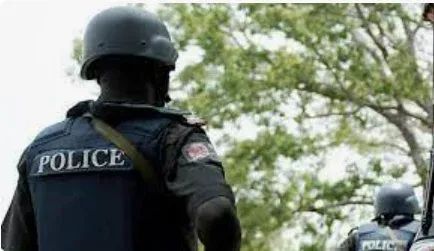
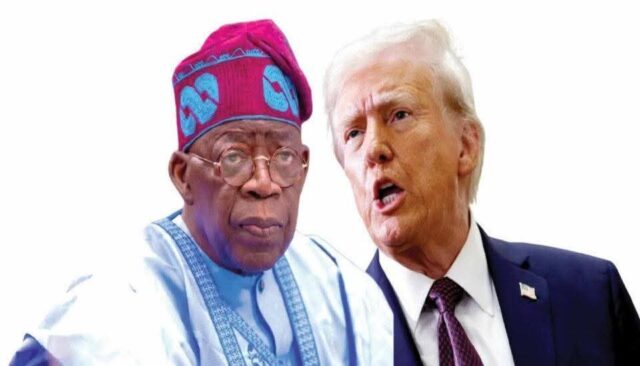
President Bola Ahmed Tinubu has directed ministers and senior government officials to obtain his approval before requesting police escorts for official assignments.

The new directive was issued during Wednesday’s Federal Executive Council (FEC) meeting at the Presidential Villa, Abuja.

The president’s instruction follows his November 23 order withdrawing police officers attached to Very Important Persons (VIPs) nationwide after a security meeting with the service chiefs.

Under the revised security framework, VIPs who require protection are expected to request armed personnel from the Nigeria Security and Civil Defence Corps (NSCDC).

To strengthen security, Tinubu also approved the recruitment of 30,000 additional police officers and pledged collaboration with state governments to upgrade police training facilities.

He noted that recent incidents including killings, abductions, and attacks on schools, necessitated a more efficient deployment of security assets.

Addressing the FEC, Tinubu insisted that the recall of police officers from VIPs, VVIPs and ministers must be strictly enforced.

“I have told the Inspector-General of Police, and I hope the Minister of Police Affairs is here to implement the directive. If you have any problem with security due to the nature of your assignment, please contact the IGP and get my clearance,” he said.

He instructed the National Security Adviser (NSA), the Minister of Police Affairs, and the Inspector-General of Police (IGP) to ensure full compliance.

The Minister of Interior was also tasked with working with the IGP and NSCDC to fill gaps created by the withdrawal.

Tinubu emphasised that police officers are primarily trained to protect the public, not individuals of privilege.

He further directed the NSA and DSS to review the country’s security architecture and make necessary adjustments.

The president also called for stronger local security structures, including forest guards, given rising threats across states.

He said the ongoing livestock reform must continue, directing the Minister of Livestock Development to identify areas suitable for ranching and reminding stakeholders that land administration rests with state governments.

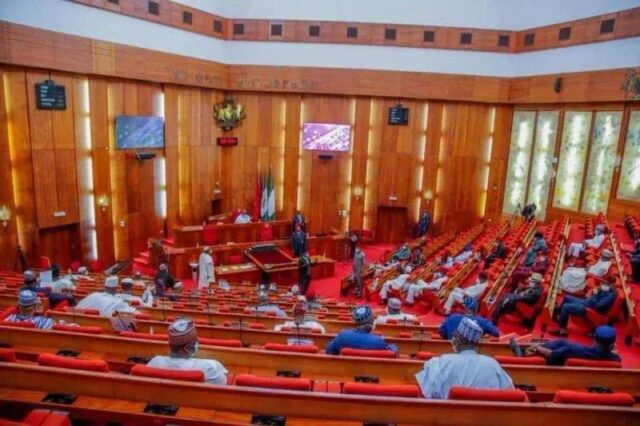
On the Senate floor, Senator Abdul Ningi (Bauchi Central) protested the withdrawal of his only police orderly, saying the policy must apply equally to all Nigerians, including top political officeholders, business elites, and celebrities.

He argued that while his security aide had been withdrawn in strict compliance with the president’s order, many individuals with no public office still moved around with heavy police escorts.

“It should be done across the board,” he said.

“Let us see what happens from the office of the President to the Vice President, the Senate President, the Speaker, ministers, governors, business concerns, even the sons and daughters of political officeholders.”

Deputy Senate President Barau Jibrin acknowledged the concern, saying Senate leadership was engaging the relevant authorities.

He asked the Senate Committee on Police Affairs to investigate allegations of selective enforcement.

Nobel Laureate Wole Soyinka also raised concerns, criticising what he described as an excessive deployment of security personnel around Seyi Tinubu, the president’s son.

Soyinka recounted an incident at a hotel in Ikoyi, Lagos, where he mistakenly assumed a film was being shot due to the large presence of armed men, only to realise it was Seyi’s security detail.

“There were at least 15 heavily armed security personnel,” he said.

“They looked sufficient to take over a small neighbouring country like Benin.”

He added that such displays distort security priorities and send the wrong message about the use of public resources.

“Children should know their place. They are not potentates. They are not heads of state,” he said, warning that excessive protection for individuals who hold no public office undermines Nigeria’s security architecture.

Google search engine

INEC Chairman Flags Poor Network As Major Hurdle To Real-Time Result Upload On IReV


The Chairman of the Independent National Electoral Commission (INEC), Prof. Joash Amupitan, has identified weak telecommunications connectivity as a major obstacle to uploading election results in real time across Nigeria.

Speaking at the Nigeria Civil Society Situation Room’s Stakeholders’ Forum on Elections in Abuja on Thursday, Amupitan said that despite technological tools like the Bimodal Voter Accreditation System (BVAS) and the INEC Result Viewing Portal (IReV), network limitations, especially in remote areas, continue to hinder full transparency.

“The deployment of BVAS has fundamentally redefined the process, ensuring only accredited voters cast ballots and reducing over-voting and manual manipulation.”

“IReV has opened up the electoral process to public scrutiny, but technology alone cannot overcome network deficiencies,” he said.

Amupitan explained that with over 176,000 polling units nationwide, many located in areas with poor connectivity, achieving real-time uploads remains one of INEC’s toughest operational challenges.

He added that the commission is collaborating with the Nigerian Communications Commission (NCC) and network providers to explore alternative transmission solutions and improve reliability.

Highlighting other election-related issues, Amupitan expressed concern about persistent voter apathy, noting that only about 27 per cent of eligible voters participated in the 2023 general elections.

He cited successes such as a significant increase in PVC collection in Anambra State, attributing it to targeted mobilisation efforts.

On the ongoing Continuous Voter Registration (CVR) exercise, Amupitan revealed that 2,685,725 registrations have been completed nationwide, with Osun State leading at 208,357, followed by Kano (159,669), Sokoto (152,650), and Imo (145,561).

Borno (123,835) and Lagos (123,484) were also highlighted for strong voter engagement.

Preparations for the February 21, 2026, Area Council elections in the FCT have already begun, with relevant information published on the INEC website.

Amupitan stressed that technological improvements must be accompanied by political accountability to curb vote-buying and electoral inducement.

“We are deploying security personnel and intelligence operations at election centres to protect voters. Civil society organisations, like the Situation Room, are crucial in ensuring compliance, promoting civic education, and holding all stakeholders accountable,” he added.

Amupitan concluded that collaboration between institutions, communities, and civil society remains key to strengthening Nigeria’s electoral system and enhancing trust in election outcomes.

Google search engine

‘Take A Bow And Go’, Senate Okays Ifeanyi Ugwuanyi’s Nomination As Ambassador


The Nigerian Senate has formally confirmed former Enugu State Governor, Ifeanyi Ugwuanyi, as Nigeria’s ambassador, bringing to a close the confirmation process for one of President Bola Tinubu’s key diplomatic nominees.

The confirmation session, held on Thursday at the National Assembly, saw a smooth and largely celebratory process.

During the proceedings, a senator reportedly quipped, “Take a bow and go,” acknowledging Ugwuanyi’s political and administrative experience before voting him through without contest.

Ugwuanyi, who served as Enugu State Governor from 2015 to 2023, is among several high-profile individuals nominated by the President for ambassadorial roles.

The Senate also confirmed several other nominees.

Google search engine

Eight UNIJOS Students Die In Early Morning Road Accident


The University of Jos (UNIJOS) community is in shock following a tragic accident that claimed the lives of eight students.

The crash occurred around 2:30 a.m. along Zaria Road, opposite Unity Bank in Jos, Plateau State, involving a trailer and a bus carrying eleven students.

According to Peter Longsan, Public Education Officer of the Plateau State sector of the Federal Road Safety Corps (FRSC), seven students were pronounced dead at the scene, while another succumbed to injuries in the hospital, bringing the death toll to eight.

The three surviving students, all male, are receiving treatment for their injuries.

An eyewitness reported that the bus was traveling at high speed and attempted an unsafe overtaking maneuver, causing the driver to lose control and collide with the trailer.

FRSC Sector Commander Olajide Mogaji confirmed that a thorough investigation is ongoing.

He also cautioned motorists, particularly commercial drivers, against night travel, speeding, reckless driving, and driving under fatigue or influence.

“The government wants you alive and urges all road users to exercise caution this festive season and beyond,” Mogaji said, reminding the public to report accidents or road emergencies via the FRSC toll-free line, 122.

Google search engine

Ngige In EFCC Custody, Not Kidnapped – Aide Clarifies


Former Anambra State Governor Chris Ngige is currently in the custody of the Economic and Financial Crimes Commission (EFCC) and has not been kidnapped, his media aide has confirmed.

Reports earlier suggested that Ngige, a former Minister of Labour and Employment, had been abducted from his residence on Justice Mohammed Bello Road in Abuja.

However, Fred Chukwuelobe, Ngige’s spokesperson, dismissed these claims.

“I have received numerous calls from friends and journalists seeking clarity,” Chukwuelobe wrote on Facebook on Thursday.

“His Excellency, Dr. Chris Ngige, has not been kidnapped. He is with the EFCC and was neither ‘abducted’ nor ‘kidnapped.’”

Chukwuelobe added that further details would be provided later.

The reason for Ngige’s appearance before the EFCC remains unclear, and the commission has yet to issue an official statement.

This development comes less than two weeks after gunmen attacked Ngige’s convoy in Anambra.

Ngige, a member of the All Progressives Congress (APC), served as Anambra State governor from May 2003 to March 2006 under the People’s Democratic Party (PDP).

He is the second former minister under the Muhammadu Buhari administration to be detained by the EFCC in recent weeks.

Former Attorney-General of the Federation Abubakar Malami is also in custody over an ongoing investigation.

Malami stated that the EFCC inquiry involves an alleged duplication in the recovery of the $310 million Abacha loot, which later accrued interest totaling $322.5 million.

He dismissed allegations of abuse of office and money laundering as “baseless, illogical, and wholly devoid of substance,” asserting that the claims would not withstand factual examination.

Google search engine

ADC Says Defeating Tinubu In 2027 Will Be Easier Than APC’s Win Over Jonathan


The African Democratic Congress (ADC) has asserted that unseating President Bola Tinubu in the 2027 general elections will be far easier than the All Progressives Congress’ (APC) landmark victory over former President Goodluck Jonathan in 2015.

The declaration came during the inauguration of the party’s new leadership team in Delta State, where former All Progressives Grand Alliance (APGA) governorship candidate Chief Great Ogboru was officially unveiled as a member.

Representing the National Chairman of the ADC, Senator David Mark, former Secretary to the Government of the Federation Babachir Lawal announced that the new leadership has been tasked with nationwide mobilisation, membership registration and validation, and the establishment of ADC offices in states, local government areas, wards, and polling units.

Lawal said the party will also intensify sensitisation campaigns to educate Nigerians on the ADC’s ideology and position it as a credible electoral alternative.

Speaking at the event, Chief Ogboru criticised the APC for underestimating Nigerians’ dissatisfaction with the current administration.

“They did not know that an obscure party like the ADC would rise to say ‘no’,” he said.

“For democracy to thrive, there must be an alternative and the people must decide.”

National Vice Chairman of the ADC, South-South, Usani Usani, dismissed any notion that President Tinubu could have an easy path to re-election.

“We have come here to assure Nigerians that defeating this government is easier than removing Goodluck Jonathan,” he stated.

Similarly, the party’s National Publicity Secretary, Mallam Bolaji Abdullahi, criticised the current political landscape, insisting that the ADC is the only viable opposition ahead of 2027.

“The mission of ADC is to rescue Nigeria. All other parties are weak. By 2027, the government wants only the APC standing,” he said, describing the ADC as the “last man standing in the opposition” and the hope of ordinary Nigerians.

Google search engine

JUST IN: Ugwuanyi, Omokri, Ikpeazu, Grace Bent, Fani-Kayode, Others Arrive Senate For Ambassadorial Screening


Several high-profile ambassadorial nominees, including Reno Omokri, Senator Grace Bent, and former Aviation Minister Femi Fani-Kayode, arrived at the National Assembly on Thursday for their Senate screening. Former Interior Minister Abdulrahman Dambazau was also present.

This comes two weeks after President Bola Tinubu submitted a 32-member list of ambassadorial nominees to the Senate on November 29 for confirmation.

The list comprises 15 career diplomats and 17 non-career nominees.

According to the Presidency, confirmed nominees will be posted to countries with which Nigeria maintains diplomatic relations, as well as international organizations such as the United Nations.

The list includes notable political figures such as former INEC Chairman Mahmood Yakubu, ex-governors Okezie Ikpeazu and Ifeanyi Ugwuanyi, former presidential aide Reno Omokri, and former Aviation Minister Femi Fani-Kayode. Among the nominees are four women in the career diplomat category and six women as non-career nominees.

Since its announcement, the nominations have generated public scrutiny and criticism, particularly over the inclusion of former political officeholders.

Non-Career Ambassadors (17)

  • Barr. Ogbonnaya Kalu – Abia
  • Reno Omokri – Delta
  • Prof. Mahmood Yakubu – Former INEC Chairman
  • Erelu Angela Adebayo – Former Ekiti First Lady
  • Ifeanyi Ugwuanyi – Former Enugu Governor
  • Tasiu Musa Maigari – Former Speaker, Katsina State Assembly
  • Yakubu N. Gambo – Former Plateau Commissioner / Former UBEC Deputy Executive Secretary
  • Prof. Nora Ladi Daduut – Former Senator, Plateau
  • Otunba Femi Pedro – Former Lagos Deputy Governor
  • Chief Femi Fani-Kayode – Former Aviation Minister, Osun
  • Barr. Nkechi Linda Ufochukwu – Anambra
  • Fatima Florence Ajimobi – Former Oyo First Lady
  • Lola Akande – Former Lagos Commissioner
  • Grace Bent – Former Senator, Adamawa
  • Victor Okezie Ikpeazu – Former Abia Governor
  • Senator Jimoh Ibrahim – Ondo
  • Amb. Paul Oga Adikwu – Former Ambassador to the Holy See, Benue

Career Ambassadors (15)

  • Enebechi Monica Okwuchukwu – Abia
  • Yakubu Nyaku Danladi – Taraba
  • Miamuna Ibrahim Besto – Adamawa
  • Musa Musa Abubakar – Kebbi
  • Syndoph Paebi Endoni – Bayelsa
  • Chima Geoffrey Lioma David – Ebonyi
  • Mopelola Adeola-Ibrahim – Ogun
  • Abimbola Samuel Reuben – Ondo
  • Yvonne Ehinosen Odumah – Edo
  • Hamza Mohammed Salau – Niger
  • Amb. Shehu Barde – Katsina
  • Amb. Ahmed Mohammed Monguno – Borno
  • Amb. Muhammad Saidu Dahiru – Kaduna
  • Amb. Olatunji Ahmed Sulu Gambari – Kwara
  • Amb. Wahab Adekola Akande – Osun

Google search engine

Accord Party Clears Governor Adeleke As Only Candidate For 2026 Osun Poll


Governor Ademola Adeleke has been cleared as the sole aspirant for the Accord Party’s governorship ticket in the upcoming Osun State elections.

The announcement was made by Ibe Thankgod, Chairman of the party’s Screening Committee and National Organising Secretary, who confirmed that Adeleke met all the requirements for nomination.

He described the governor as a “worthy gubernatorial aspirant” for the party.

The certificate of clearance was formally presented to Adeleke by the committee chairman on Wednesday in Osogbo.

Responding, Adeleke expressed gratitude to the party leadership and the screening committee, affirming his readiness to lead the Accord Party to victory in 2026.

“I am ready for the primary, and I am ready for the general elections. We are winning by God’s grace,” Adeleke stated.

The governor had officially announced his defection from the People’s Democratic Party (PDP) to the Accord Party on Tuesday, following his resignation from the PDP on December 2.

Google search engine

MOST COMMENTED

- Advertisement -
Google search engine