Home Blog Page 306

National Assembly To Finalise Electoral Act Amendment By December, Says Bamidele
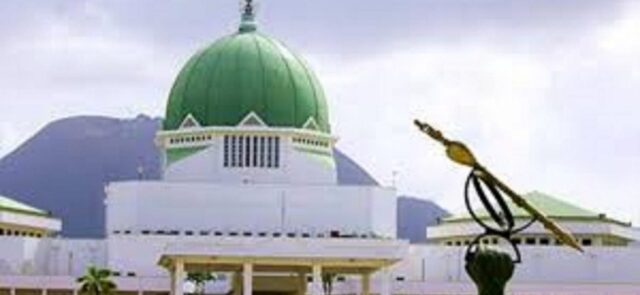
 

The Senate Leader, Senator Opeyemi Bamidele, has revealed that the National Assembly is working towards completing the amendment of the Electoral Act 2022 by December 2025, well ahead of the 2027 general elections.

Bamidele, who represents Ekiti Central Senatorial District, made the disclosure in a statement issued Tuesday.

The announcement followed the Senate’s receipt of President Bola Tinubu’s nomination of Professor Joash Amupitan (SAN) as the new INEC Chairman, succeeding Professor Mahmood Yakubu.

According to the Senate Leader’s media office, Professor Amupitan’s nomination, a legal scholar and senior advocate, was unanimously approved by the Council of State last week before being forwarded to the Senate for confirmation.

Senator Bamidele emphasized that the timeline is designed to avoid the legislative delays that marred previous electoral reforms. Reflecting on the 2022 amendment process, he noted:

“The last administration failed to sign the final version of the bill in 2022 because it was transmitted too close to the elections.”

“Although initial proposals were approved, amendments aimed at restoring the rights of statutory delegates came late, and former President Buhari hesitated to act so close to election time.”

He assured Nigerians that the current amendment process would be concluded in time to prevent any similar issues:

“We are determined to wrap up the process by December 2025, giving enough time before the 2027 elections.”

Bamidele, who also serves as Vice Chairman of the Senate Committee on the Review of the 1999 Constitution, said the constitutional amendment process is progressing smoothly.

He highlighted ongoing engagements with key stakeholders, including the Nigerian Governors’ Forum and the Conference of Speakers of State Legislatures, as essential to achieving meaningful reform.

“I do not foresee resistance. The institutions are cooperating with us. This review will also reflect global best practices, especially regarding the implementation of international treaties.”

Responding to recent criticisms from opposition parties, Bamidele dismissed them as part of the democratic process:

“Regardless of government performance, the opposition will always find faults, it’s part of politics. They are strategising for a return to power, and discrediting the ruling party is part of that plan.”

Despite the political noise, he stressed that the 10th National Assembly remains focused on its legislative goals.

“Our third legislative year will prioritize issues of national importance, including the Electoral Act amendment and constitutional review, as we continue to stabilise governance and grow the economy.”

Google search engine

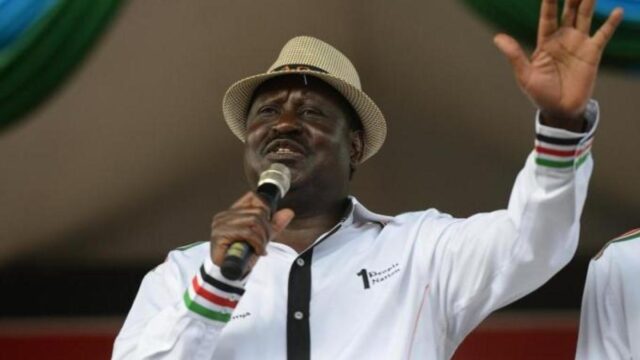
JUST IN: Kenyan Opposition Leader Raila Odinga Dies At 80 In India


Kenyan opposition leader and political titan Raila Odinga has died at the age of 80 while on a health-related visit to India, in a development that has stunned the East African political landscape.

Indian authorities confirmed that Odinga collapsed suddenly on Wednesday while walking with his sister, daughter, and personal doctor in Kerala.

According to police reports, both Indian and Kenyan security personnel were present when the incident occurred.

“He was rushed to a nearby private hospital, but despite medical intervention, he was declared dead,” a senior Indian police officer told AFP.

A representative from the Sreedhareeyam Ayurvedic Eye Hospital and Research Centre, where Odinga had been receiving treatment, also confirmed his death.

According to the spokesperson, the former Kenyan prime minister experienced breathing difficulties and collapsed.

He was administered CPR and briefly showed signs of response before his condition worsened and ultimately proved fatal.

Though his passing has been verified by a member of his political team, an official statement from his party is still awaited.

Born on January 7, 1945, Raila Odinga was a towering figure in Kenyan politics for over four decades.

Despite never clinching the presidency, he ran for office five times, in 1997, 2007, 2013, 2017, and 2022, and remained the leading voice of Kenya’s opposition.

A member of the Luo ethnic group, Odinga was the son of Jaramogi Oginga Odinga, Kenya’s first vice president.

He entered parliament in 1992 and was imprisoned multiple times during the autocratic rule of President Daniel arap Moi, earning a reputation as a defender of democracy and civil liberties.

Odinga built a broad support base across Kenya, particularly in the western region, and was known for his ability to galvanize mass movements.

Even in the face of electoral defeat, he maintained his political relevance, becoming a symbol of resistance and reform.

Reactions to Odinga’s death were swift and heartfelt. Kenyan presidential hopeful and former Chief Justice David Maraga expressed deep sorrow, calling Odinga:

“A patriot, a pan-Africanist, and a leader who made significant contributions to democracy in Kenya and in Africa.”

He added,

“Kenya has lost one of its most formidable leaders. Africa has lost a leading voice for peace and development. The world has lost a statesman.”

Ethiopian Prime Minister Abiy Ahmed also extended condolences on social media:

“On behalf of the Government of Ethiopia, I extend my sincere condolences on the passing of former Kenyan Prime Minister Raila Odinga. May he rest in peace.”

Odinga’s passing leaves a massive leadership gap within Kenya’s opposition at a critical moment.

With general elections looming in 2027, analysts say it is unclear who can step into his shoes and command the same level of influence and mobilisation across the political spectrum.

His ability to unite divided factions and challenge entrenched power structures made him a rare figure in African politics, a lifelong opposition leader who remained a national force without ever holding the country’s top office.

Google search engine

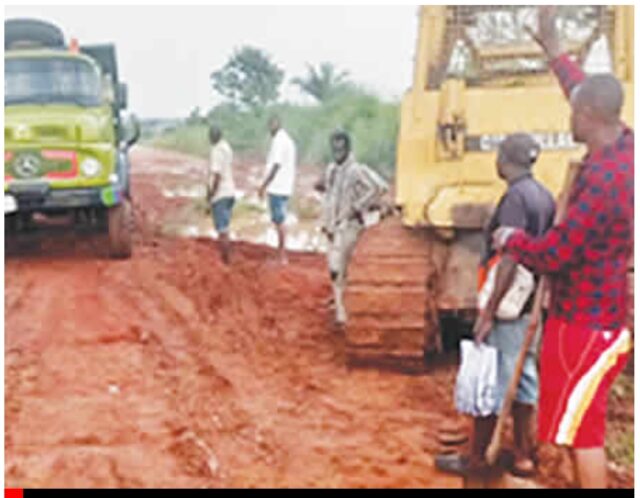
Anambra YPP Gov’ship Candidate, Paul Chukwuma Begins Palliative Repairs On Abandoned Otuocha–Anyamelum Road


In a bold move ahead of the November 8 governorship election in Anambra State, the Young Progressives Party (YPP) candidate, Sir Paul Chukwuma, has kick-started rehabilitation work on the long-neglected Otuocha–Anyamelum Road in Anambra East Local Government Area.

The road, which has been abandoned by motorists for years due to its deteriorated condition, serves as a critical transport corridor, linking farming communities to urban markets and connecting Onitsha, Anyamelum and parts of northern Enugu State. It is also key to the movement of agricultural produce from the region’s farmlands.

Chukwuma, while inspecting the site on Monday, said the palliative work marks the beginning of his broader commitment to infrastructure renewal if elected governor.

“I was personally concerned about the condition of this road. During our campaign visit to Anyamelum, I made a firm promise to act and we are now responding,” Chukwuma stated.

“This is just a palliative effort, but it sends a strong signal of what we are capable of and what lies ahead.”

The YPP candidate assured residents that, under his administration, strategic infrastructure, especially in underdeveloped LGAs, would receive “accelerated attention” for the benefit of all.

“The Otuocha–Anyamelum Road is not just a local access route. It is an economic lifeline for the people. Its abandonment has stifled agricultural trade and economic mobility in this axis of Anambra State. Our intervention reflects our broader agenda to align governance with the needs of the people,” he added.

Chukwuma also pledged to support Anyamelum LGA’s agricultural potential, saying the area deserves significant investment in rural roads and farming logistics.

“This road had been left in such a terrible state that it became impassable. That should not happen in a state like Anambra. What we are doing now is not a campaign gimmick, it’s a taste of the leadership model we intend to bring.”


Google search engine

Finance Minister Edun Flown To UK For Medical Treatment

Nigeria’s Minister of Finance and Coordinating Minister of the Economy, Wale Edun, has travelled to the United Kingdom for medical treatment, multiple reliable sources confirmed on Tuesday.

The development follows days of speculation over Edun’s health, with earlier reports suggesting he was receiving treatment in Abuja.

However, sources close to the presidency disclosed that the minister departed Nigeria on Monday night after his condition reportedly required advanced care.

According to insider accounts, Edun first flew from Abuja to Lagos aboard a commercial flight before boarding a British Airways flight to London later that same night.

While officials initially downplayed the severity of his condition, a presidential source, speaking anonymously, admitted on Sunday that Edun was indeed ill, though refuted claims that he had suffered a stroke or was incapacitated.

“Yes, he’s indisposed. He’s sick, which is a bit serious, but it’s not a stroke. As I’m talking to you, he’s in his house. He’s not been flown anywhere yet,” the source had told DAILY GAZETTE on Sunday evening.

That situation has since changed, with doctors reportedly recommending further medical evaluation abroad.

A second aide confirmed that President Bola Tinubu was closely monitoring the situation, but added there were “no plans to replace him.”

Presidential spokesman Bayo Onanuga also confirmed Edun’s illness but had earlier stated he was receiving care locally.

“Wale Edun is about 69 years old. He suddenly fell ill. As we are talking, he is in Nigeria. He is recuperating,” Onanuga said.

Despite mounting concerns, the Presidency has not issued an official statement on the minister’s condition or current location.

Due to his health situation, Edun will miss this year’s World Bank and International Monetary Fund (IMF) Annual Meetings taking place this week in Washington, D.C.

In his absence, Central Bank Governor Olayemi Cardoso is leading Nigeria’s delegation to the high-profile global finance meetings.

Appointed in August 2023, Edun has been a key architect of President Tinubu’s economic policy agenda.

He oversaw critical and controversial reforms, including Fuel subsidy removal, Foreign exchange unification as well as Fiscal tightening and monetary reforms aimed at stabilising the naira and tackling inflation.

Before his federal appointment, Edun served as Lagos State Commissioner for Finance from 1999 to 2004, under Tinubu’s administration. He later co-founded Denham Management Limited, an investment banking firm.

As of press time, the Ministry of Finance had not released any official update on his status.

Google search engine

We Remained Loyal For 26-Years, Yet Our Voices Were Ignored – Gov. Mbah Ends PDP’s 26 Year Reign In Enugu


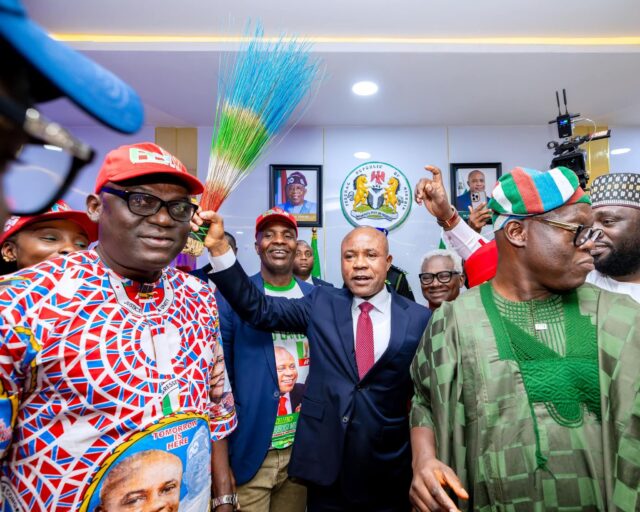
Enugu State Governor Peter Mbah officially left the Peoples Democratic Party (PDP) and joined the All Progressives Congress (APC) yesterday, bringing an end to PDP’s 26‑year rule in the state.

He didn’t go alone. Mbah led a mass exodus from PDP: national and state legislators, local government chairmen, councillors, political appointees and over 80% of state PDP leadership all aligned with him into the APC.

The move effectively handed the ruling party full control of Enugu’s political structure.

As the last PDP governor left in the South‑East, Mbah’s switch gives the APC a major symbolic and strategic victory.

Before the defection, the PDP governed 13 states and the APC 23. Post defection, the balance shifts further in favor of APC: now 24 to PDP’s 10.

At a large rally held at Michael Okpara Square, Mbah signed the APC membership form and was formally welcomed by top national leaders.

The event filled the 30,000‑capacity venue and marked a pivotal moment in Enugu’s political history.

Vice President Kashim Shettima led the delegation to the ceremony.

He heralded Mbah’s arrival as a turning point for the South‑East, declaring that the region would now be more central to national development efforts.

Shettima praised the Igbo people for their industriousness and lamented their exclusion from national policy in past years.

“Now with Governor Mbah’s joining and with Governors Uzodimma (Imo) and Nwifuru (Ebonyi) also active, I believe the Igbo have come fully into the mainstream of Nigerian politics,” he said.

He also made a playful remark: “I believe you had a broom hidden in your umbrella all these years, waiting for the moment to use it.” (The broom is APC’s symbol; the umbrella, PDP’s.)

Shettima affirmed that, according to party rules, the governor automatically becomes the state party leader.

“From convention and constitution, you are now the leader of the APC family in Enugu State,” he declared.

Senate President Godswill Akpabio predicted increased development for the South‑East following the shift.

He claimed that “all Southeast senators have turned to APC,” and jokingly compared Enugu favorably to Abuja in infrastructure and appeal.

Speaker of the House of Representatives Tajudeen Abbas pledged fair treatment for Mbah within the party, insisting no other platform could do more for Enugu’s progress than the APC.

Governor Hope Uzodimma of Imo, who chairs the Progressive Governors’ Forum, called Mbah’s move “bold and wise,” saying it reinforced efforts toward the Igbo’s political reintegration.

APC National Chairman Nentawe Yilwatda praised Mbah’s governance, declaring that he led his people “from Egypt to the Promised Land.”

The rally was attended by 12 sitting governors, as well as former governors If­eanyi Ugwuanyi, Sullivan Chime, and Rochas Okorocha, plus prominent senators like Adams Oshiomhole, Orji Uzor Kalu, and Opeyemi Bamidele.

Mbah framed the decision as a collective move by Enugu’s political class: all 17 LG chairmen, 260 councillors, 24 state assembly members, national legislators and over 80% of PDP leadership joined the shift.

“After careful reflection, we concluded we must commit to principles and institutions that respect transparency, trust, and the people we serve,” he said.

“For decades, Enugu stayed loyal to PDP, hoping for recognition. Our voices were repeatedly disregarded, even when it mattered most. We aren’t leaving out of fear, but with conviction.”

He said this was not about power-seeking but finding a Federal platform aligned with his developmental agenda:

“President Tinubu has demonstrated willingness to make tough choices for lasting prosperity. We share a vision: roads, railways, industrialization connecting the South‑East to the rest of Nigeria. This is bigger than partisan politics; it’s about Enugu’s future in national reform.”

He applauded the president’s emphasis on grassroots projects, youth empowerment, and local inclusion, and said those values resonated with his “Tomorrow Is Here” slogan.

Observers say the defection formalizes Enugu’s shift in the national power map and sets new alignments in the South‑East and Nigeria at large.

Multiple PDP governors and legislators are reportedly in talks to switch to APC, suggesting further consolidation ahead of the 2027 elections.

“This is not just a one‑off,” an APC strategist told press.

“It signals where the political wind is blowing. By 2026, opposition might be too fragmented to mount a credible challenge.”

Google search engine

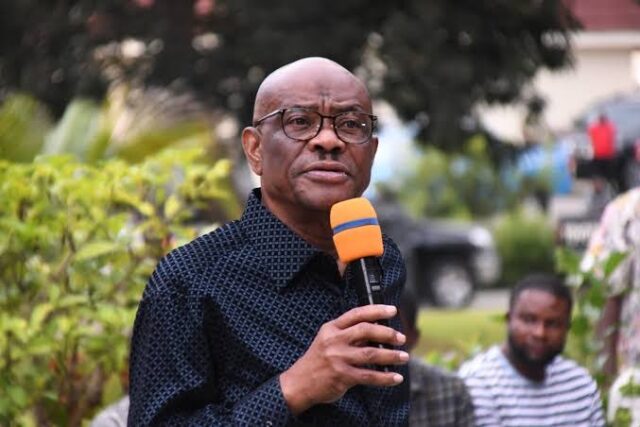
Tinubu Approved My Absence From Council Of State Meeting – Wike


Minister of the Federal Capital Territory (FCT), Nyesom Wike, has denied rumors that he skipped the recent Council of State meeting out of displeasure with the appointment of the new INEC Chairman.

He says his absence was approved by President Tinubu due to prior commitments.

Speaking at the commissioning of access roads in Sector Centre B, Dakibiyu District, Abuja, Wike explained he instructed Minister of State, FCT, Dr. Mariya Mahmoud to attend the Council meeting on his behalf.

“I had already informed Mr. President that I would not be available due to previously scheduled engagements. That is why I find it laughable when people spread propaganda and blackmail,” he said.

He rejected suggestions that his absence was a political protest, especially regarding the confirmation of Prof. Joash Amupitan as INEC Chairman.

Wike denied lobbying for Justice Abdullahi Muhammad Liman, stating his loyalty to the president remains firm.

“I work for Mr. President. His judgment has always focused on how to reposition the country. When you deliver results, critics will be silenced,” he stated.

Wike also tied recent developments in Abuja to the support of President Tinubu, crediting federal backing for the infrastructural progress in the capital, particularly the newly completed roads.

“People talk about our achievements in the FCT today because of leadership. Mr. President has provided that direction,” Wike said, also commending Dr. Mahmoud’s cooperation.

He hinted at more forthcoming projects, including the inauguration of the Abuja Division of the Court of Appeal, promising further urban development.

Wike urged detractors to separate politics from governance, arguing that the visible improvements in Abuja reflect a commitment to deliver democratic dividends.

“If something is happening in Abuja, it’s dishonest to deny it just because you opposed the election results,” he said, noting that progress should be acknowledged regardless of political allegiance.

Google search engine

Defection Isn’t Betrayal But Vision, Says Ex-Gov Chime On Mbah’s Move To APC


Former Enugu State Governor, Sullivan Chime, has described Governor Peter Mbah’s defection to the All Progressives Congress (APC) as a bold and visionary move, not an act of betrayal.

Reacting to the wave of defections in the state on Tuesday, Chime took to his social media to express support for Mbah’s decision, urging critics to understand the broader political context.

“Political realignment is not betrayal; it is the courage to follow vision when old paths can no longer carry the dream,” Chime wrote.

Governor Mbah, along with several political appointees and leaders in Enugu, officially dumped the Peoples Democratic Party (PDP) earlier this week in a move that has sparked mixed reactions across the state’s political landscape.

Chime, who also left the PDP for the APC in 2016 following the end of his second term as governor, was among the early high-profile defectors in Enugu.

He had at the time described the PDP as a “dead party,” citing deepening leadership crises.

DAILY GAZETTE reports that Mbah’s move has been followed by a string of defections involving former Governor Ifeanyi Ugwuanyi, Serving and former members of the National and State Assemblies, Local government chairmen, Former PDP executives and state commissioners.

Vice President Kashim Shettima has since affirmed Governor Mbah as the new leader of the APC in Enugu State, further solidifying the shift in political alignment within the region.

Google search engine

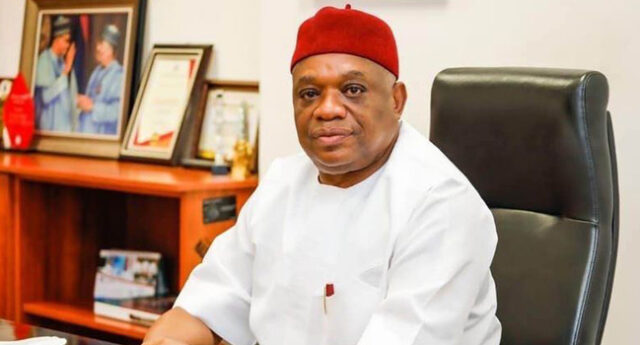
2027: APC Will Win South-East On Performance, Not Defections – Orji Kalu


Senator Orji Uzor Kalu, representing Abia North in the National Assembly, has said the All Progressives Congress (APC) will secure victory in the 2027 presidential election in the South-East based on performance and credibility, not political defections.

Kalu, who is Chairman of the Senate Committee on the South-East Development Commission, made this known on Monday during an appearance on TVC’s ‘Journalists’ Hangout’.

He emphasised that the APC’s growing influence in the region is rooted in consistency, sacrifice, and developmental strides.

“We are not banking on defections to win in 2027. We are relying on hard work and results. Politics is about performance, not noise,” he said.

The former Abia State governor expressed strong confidence in President Bola Tinubu’s reform agenda, describing the economic measures currently causing hardship as “painful but necessary,” with long-term benefits expected.

“Reforms come with pain, but the gains will follow. I’ve sponsored a bill on social welfare and investment to reduce poverty, and I’ll meet with the President to fast-track it. We must show Nigerians that we care,” he added.

Kalu highlighted major federal infrastructure projects currently ongoing in the region, including the rehabilitation of roads connecting Enugu, Lokpanta, Aba, Port Harcourt, Bende, and Arochukwu.

“Before now, those roads were death traps. Today, they’re being rebuilt. The President is doing a lot in the South-East, and I believe the 2026 budget will bring even more,” he said.

Recalling his early days in the APC, Kalu said he was mocked for joining the party in 2016, when it had no significant presence in the region. He was the first senator elected on the APC platform from the South-East in 2019.

“People laughed at me when I joined the APC. Today, we have APC governors, senators, and House members across the zone. It’s a different story now,” he said.

Kalu stressed that the party would not rely on mass defections but would instead focus on winning public trust through governance and development.

“President Buhari got over 60% of the vote in Abia North in 2019. Tinubu didn’t perform well in the South-East in 2023, but we’re working hard to change that. People can now see visible signs of progress,” he said.

Addressing concerns of marginalisation in the South-East, Kalu argued that while the region had been sidelined historically, genuine inclusion is now possible through constructive engagement.

“I didn’t start the civil war, nor did I fight it. But we must now push for sincerity and equity. That’s how to move Nigeria forward.”

On the case of IPOB leader Nnamdi Kanu, Kalu called for public respect for the rule of law.

“His case is before a competent court, and we should allow the judiciary to decide. Justice Omotosho is handling it, and no one should preempt the outcome.”

Google search engine

Drama In Senate As Lawmakers Shun Akpoti-Uduaghan’s Motion on Abused Nigerian Women In Libya


A brief but notable moment of tension unfolded in the Nigerian Senate on Tuesday after lawmakers hesitated to support a motion by Senator Natasha Akpoti-Uduaghan concerning the plight of abused Nigerian women detained in Libya.

During plenary, Senator Akpoti-Uduaghan (PDP, Kogi Central) presented a motion urging the Nigerian Immigration Service to collaborate with Libyan authorities for the repatriation of Nigerian women allegedly suffering abuse in Libyan prisons.

The senator highlighted disturbing reports that some Nigerian female detainees were sexually exploited, impregnated, and subjected to inhumane treatment while in custody abroad.

“These are our citizens. Some of them are being used and abused. The Senate must act to bring them home,” she appealed to her colleagues.

However, shortly after she presented the motion, Senate President Godswill Akpabio called for a seconder to allow the motion to proceed to debate — a standard legislative procedure.

Surprisingly, no senator stood up to second the motion, not even any of the female lawmakers in the chamber. The hesitation created a moment of awkward silence, briefly stalling proceedings.

It was only after the pause that Senate Leader Opeyemi Bamidele rose to second the motion, allowing the Senate to continue with discussions.

Google search engine

Allocate Forfeited Emefiele Estate to Low-Income Nigerians, IDPs – Reps To FG


The House of Representatives has urged the Federal Government to ensure that a recently forfeited 753-unit housing estate in Abuja is allocated to low- and middle-income earners, internally displaced persons (IDPs), and other vulnerable Nigerians.

This call followed the adoption of a motion by Hon. Jafaru Leko, who stressed the need for a transparent and equitable allocation process for the estate, which was seized from former Central Bank Governor, Godwin Emefiele, and handed over to the Ministry of Housing and Urban Development earlier this year.

Located at Plot 109, Cadastral Zone C09, Lokogoma District, Abuja, the estate spans more than 150,000 square metres and was reportedly acquired with proceeds of corruption.

Leko described the recovered property as a significant asset that, if properly managed, could help address Nigeria’s worsening housing deficit, especially in urban centres like Abuja.

“Without transparency, these houses may end up in the hands of elites, defeating the purpose of recovery and denying ordinary citizens access to decent housing,” Leko warned.

He emphasized that the estate should not become a reward for the politically connected, but a tool for social justice, aligned with the constitutional duty of the government to provide shelter for its citizens.

In response, the House passed the following resolutions:

– The Ministry of Housing must develop and publish a clear, inclusive framework for allocating the estate.

– Priority should be given to low- and middle-income earners, internally displaced persons, and vulnerable citizens.

– The ministry must submit a detailed report within 60 days outlining allocation plans, criteria, and the selection process.

– The House Committee on Housing and Habitat will monitor the process and report back within four weeks to ensure transparency and equity.

Leko concluded by stating that visible, fair use of recovered assets is crucial to restoring public trust in anti-corruption efforts.

“Nigerians must see that asset recovery leads to real benefits, not just headlines,” he said.

Google search engine

- Advertisement -
Google search engine

MOST COMMENTED