Home Blog Page 307

Pirates Abduct 17 Passengers On Oron-Calabar Waterway Amid Rising Insecurity


At least 17 passengers traveling by boat from Oron in Akwa Ibom State to Calabar, Cross River State, have been abducted by suspected pirates in yet another attack on Nigeria’s increasingly dangerous coastal routes.

The incident occurred on Thursday, shortly after the boat departed Oron, according to the Cross River State Police Command, which confirmed the development on Saturday.

Speaking in Calabar, the Deputy Police Public Relations Officer, Igri Ewa, said security personnel have launched an operation to rescue the abducted passengers.

“The command is already working to ensure the prompt rescue of the passengers,” Ewa assured.

Among the passengers, a serving police officer from Akwa Ibom and a prominent Cross River politician reportedly escaped abduction.

One eyewitness, who asked to remain anonymous, recounted the moment of the attack.

“They stopped our boat, moved some of us into their own, and once it was full, they sped off. The rest of us continued to the Inland Waterways Jetty, where the police took our statements,” the passenger said.

This latest abduction marks the second major pirate attack on the Oron–Calabar waterway in 2025.

In April, 20 passengers on the same route were similarly kidnapped.

The water route has become a dangerous alternative for travellers avoiding the Calabar–Itu federal highway, which has long been in poor condition.

Local businesses, especially in fishing communities, have suffered repeated losses.

A boat owner from Ibaka in Akwa Ibom told reporters he had lost two outboard engines, each worth over ₦3 million, to pirate attacks.

“Our youths have tried to fight back, but the more we resist, the worse it gets. This is our reality. We need the security agencies to intensify their operations on the water,” he said.

The insecurity has also led to rising seafood prices in local markets, including crayfish, a key product in Akwa Ibom.

Governor Umo Eno of Akwa Ibom has persistently called on the federal government to establish a military battalion in the Oron axis, covering local government areas such as Oron, Mbo, Okobo, Udung Uko, and Urue Offong/Oruko.

“Most of these kidnappers escape through the waterways. A military presence in Oron would make a huge difference,” the governor said in a previous meeting with then Chief of Army Staff, Taoreed Lagbaja, in 2024.

The House of Representatives had earlier passed a resolution backing the call for a military formation in the region, following a motion by Martins Esin, the lawmaker representing Oron Federal Constituency.

Despite these measures, residents say pirate attacks have continued unabated, with victims over the past two years including a High Court judge, medical professionals, traditional rulers and relatives of political figures.

Google search engine

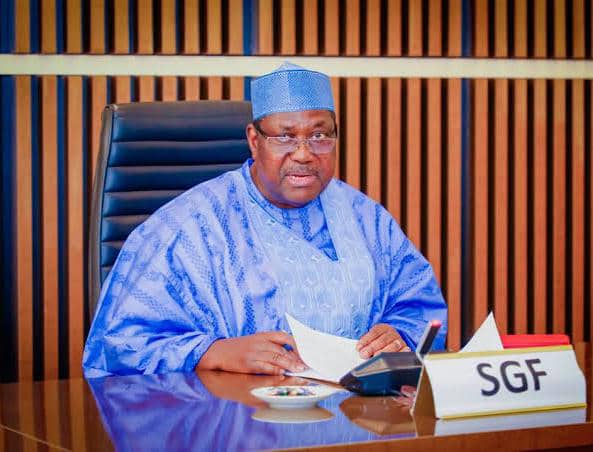
Nigeria’s Problems Didn’t Start With Tinubu, SGF Akume Defends Reforms


Secretary to the Government of the Federation (SGF), George Akume, has stated that the issues facing Nigeria today did not originate with the administration of President Bola Tinubu, but are the result of long-standing national challenges.

Speaking on Sunday, September 28, 2025, at a special service held at the National Ecumenical Centre in Abuja to mark Nigeria’s 65th Independence Anniversary, Akume emphasized that nation-building is a shared responsibility.

“Each Nigerian has a role in building the Nigeria that we deserve,” he said.

Akume praised President Tinubu for initiating what he called bold and overdue reforms, including the controversial removal of fuel subsidy, which he said should have been done decades ago.

“What President Bola Tinubu is doing today could have been done 39 years ago. But I believe that at the end of the tunnel, there is light,” the SGF added.

He called on Nigerians to rally behind the President and support efforts aimed at transforming the country.

The SGF also stressed the importance of unity and collaboration across all arms of government, the Executive, Legislature, and Judiciary, to ensure that reforms are successful and sustainable.

“We must always cooperate: the Executive, the Legislature, and the Judiciary,” he urged.

Akume noted that Independence Day is not only a time for celebration, but also a moment for reflection and appreciation of the sacrifices made by Nigeria’s founding fathers in securing freedom from colonial rule.

“Today is not just about celebrating our independence, but honouring those who made it possible,” he concluded.

Google search engine

Obi Will Defeat You In Ebonyi Anytime, Any Day – Chimamanda Adichie Slams Umahi


Renowned Nigerian author Chimamanda Ngozi Adichie has launched a strong critique of Nigeria’s Minister of Works, Dave Umahi, stating that Labour Party’s Peter Obi remains more popular, even in Umahi’s home state of Ebonyi.

In a detailed post on her verified X (formerly Twitter) account, Adichie responded to what she described as several unflattering remarks Umahi has made about Obi.

She asserted that Obi’s credibility and popularity far outweigh Umahi’s, particularly in the Southeast region.

“Even in Ebonyi, should you contest against Peter Obi, the people will choose him over you,” she wrote.

Adichie described Umahi as a “failed engineer”, criticizing his emphasis on concrete and cement infrastructure which she claimed have largely been substandard or unsuccessful.

She also pointed to what she described as political inconsistency on Umahi’s part.

Recalling his 2020 defection from the Peoples Democratic Party (PDP) to the All Progressives Congress (APC), Umahi claimed at the time it was in protest of PDP’s failure to zone the presidency to the Southeast.

However, Adichie argued that five years later, no Southeasterner has emerged as president—and Umahi now claims “it’s not yet our turn.”

The award-winning author drew a sharp contrast between Umahi and Peter Obi.

She described Obi as a symbol of accountability, fiscal discipline, and genuine leadership, while Umahi, in her view, has failed to deliver basic services.

“Leadership is not about glittering projects erected on shaky foundations; it is about systems that work, schools that function, hospitals that heal, pensions that pay, and workers who are treated with fairness. You failed at this,” Adichie said.

Adichie was also critical of Umahi’s time as governor of Ebonyi State.

She alleged that during his administration education declined, healthcare services deteriorated, pension payments were neglected and civil servants suffered poor welfare.

She described flagship projects like the Ebonyi Mall as “a graveyard of failed promises” and said the state airport remains “dormant three years after completion.”

Adichie concluded by warning that Umahi cannot deliver votes for the APC in the 2027 general elections if Obi runs again.

She said that the people remain “Obidient” and would not be swayed by concrete-heavy projects with little human impact.

“We will remind you, Senator Umahi, that in 2027 we remain Obidient,” she declared.

Google search engine

FG Denies Allegations Of Genocide Against Christians


The Federal Government of Nigeria has firmly rejected claims circulating on international platforms and social media suggesting that terrorists in the country are committing systematic genocide against Christians.

In a statement released on Sunday, the Minister of Information and National Orientation, Mohammed Idris, condemned the allegations as false, divisive, and harmful to national unity.

He emphasized that Nigeria’s security challenges are not rooted in religion and should not be framed as such.

“Portraying the security crisis as a targeted campaign against Christians is a misrepresentation of the facts,” Idris said.

He noted that terrorists attack Nigerians regardless of religious affiliation, affecting both Muslims and Christians, as well as non-religious individuals.

He explained that these violent actors are primarily driven by extremist ideologies rather than religious motivations.

Between May 2023 and February 2025, Nigeria’s security agencies neutralized over 13,500 terrorists and criminals, rescued nearly 10,000 hostages, captured top leaders of terrorist groups such as Ansaru and achieved over 700 convictions in Boko Haram-related prosecutions.

Idris also highlighted Nigeria’s inclusive leadership, noting that Christian leaders currently head both the Armed Forces and the Police.

He dismissed any narrative of Christian marginalization, citing international recognition of Nigeria’s interfaith harmony, including the 2025 Commonwealth Peace Prize awarded to Nigerian Christian and Muslim leaders for their peacebuilding efforts.

The Minister urged the international community and media outlets to verify facts, avoid sensational reporting and support Nigeria’s anti-terrorism initiatives instead of spreading narratives that fuel division.

“We call for responsible reporting and a commitment to truth,” he said.

Google search engine

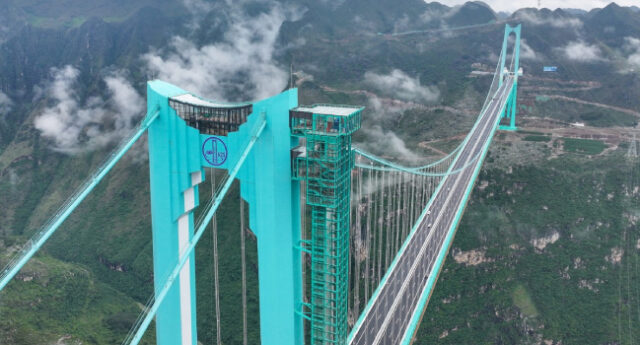
China Opens World’s Highest Bridge In Guizhou Province


China has officially opened the Huajiang Grand Canyon Bridge to traffic, claiming the title of the world’s highest bridge and surpassing another record-holder in the same region.

The newly inaugurated structure stands a staggering 625 metres (2,051 feet) above the ground, stretching across a deep gorge and river in the mountainous Guizhou province in southwest China.

It overtakes the Beipanjiang Bridge, also located in Guizhou, which previously held the record at 565 metres.

On Sunday, Chinese state media broadcast live drone footage showing vehicles driving across the bridge, with its towering blue supports piercing through the clouds.

Local officials, engineers and residents gathered to witness the opening ceremony, sharing their pride in the achievement.

Zhang Yin, head of Guizhou’s provincial transport department, highlighted the bridge’s practical benefits during a press briefing, noting that it cuts travel time between the two sides of the canyon from two hours to just two minutes.

“The Huajiang Grand Canyon Bridge marks a major improvement in regional connectivity and brings fresh momentum to economic and social development,” Zhang said.

Guizhou, known for its rugged terrain, has become a hub for ambitious engineering projects.

According to Xinhua News Agency, nearly half of the world’s 100 tallest bridges are located within the province, underlining China’s continued investment in large-scale infrastructure.

Construction of the bridge took more than three years and it features a main span of 1,420 metres, making it the longest-span bridge ever built in a mountainous area, according to Xinhua.

While the Huajiang bridge holds the record for the highest clearance from ground to deck, the title of the tallest bridge structure still belongs to the Millau Viaduct in France, which measures 343 metres from base to its highest structural point.

This project is another example of how China continues to push the limits of engineering and design to overcome geographical challenges and enhance regional development.

Google search engine

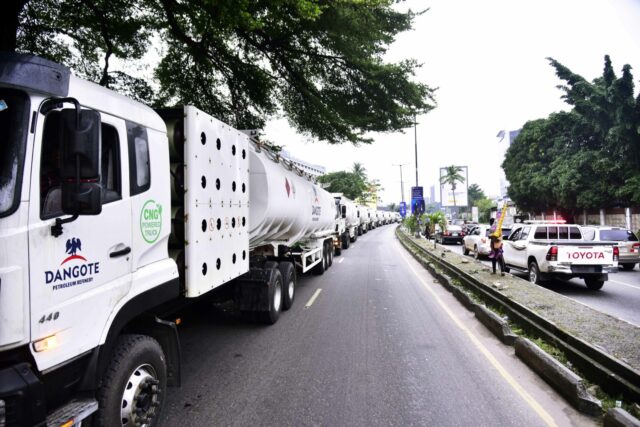
PENGASSAN Orders Nationwide Strike Over Alleged Mass Dismissal Workers By Dangote Refinery


The Petroleum and Natural Gas Senior Staff Association of Nigeria (PENGASSAN) has declared a nationwide strike following what it describes as the unjust dismissal of over 800 Nigerian employees by Dangote Refinery, accusing the company of replacing them with more than 2,000 foreign workers.

In a circular issued after an emergency National Executive Council (NEC) meeting held on Saturday, PENGASSAN announced the total withdrawal of its members’ services from all offices, companies and field locations nationwide starting Sunday, September 28 at 6am, with a complete shutdown by 12:01 am on Monday, September 29.

Signed by PENGASSAN’s General Secretary, Lumumba Okugbawa, the statement condemned the refinery’s actions as a breach of Nigeria’s labour laws, constitutional rights, and international labour standards.

“This is a clear assault on Nigerian workers. Dismissing our members for joining a legally recognized union and replacing them with expatriates is unacceptable,” the circular stated.

To enforce its stance, PENGASSAN outlined key actions which includes; Immediate shutdown of all member-operated facilities across Nigeria, Suspension of crude oil and gas supply to Dangote Refinery and its petrochemical plant, a call for International Oil Companies (IOCs) to ramp down gas production linked to the Dangote operations and 24-hour prayer chain across all branches, seeking divine intervention and urging authorities to act swiftly.

The union vowed to sustain the strike until all sacked workers are reinstated, warning,

“An injury to one is an injury to all. No company is above Nigerian law.”

PENGASSAN also alleged that the refinery had been deliberately targeting union members for transfer to unrelated subsidiaries, including Dangote Sugar, in what the union calls a tactic to weaken union presence.

In a petition sent by the Dangote Refinery Branch of PENGASSAN to its Lagos Zonal Office, the union claimed that Nigerian engineers who joined the association were being unlawfully reassigned under punitive conditions.

The petition, signed by Branch Chairman Abdulfatai Muhammed and Secretary Eseoghene Choice, also accused the refinery of:

– Failing to provide adequate Personal Protective Equipment (PPE).

– Operating in hazardous conditions without hazard allowances or health coverage.

– Offering substandard salaries to Nigerian engineers, among the lowest in the sector.

– Filling key management roles with expatriates, in violation of the Nigerian Oil and Gas Industry Content Development Act of 2010.

PENGASSAN also took issue with Dangote Refinery’s recent policy of selling petrol exclusively in U.S dollars, warning that such moves could weaken the naira, stoke inflation, and undermine national energy security.

“This refinery has enjoyed massive government incentives and tax waivers. To now sack Nigerians, import foreign labour and price fuel in foreign currency is a slap in the face of national interest,” the union said.

In response, Dangote Refinery sources dismissed the allegations as grossly exaggerated, stating that no mass layoffs had occurred.

Management said the company was merely undergoing internal restructuring to improve efficiency and that the majority of its workforce remains Nigerian.

Google search engine

Lawyer Chinedu Agu Accuses Imo Govt Of Orchestrating Arrest Using Fake Petition


Prominent activist and lawyer, Chinedu Agu, has accused the Imo State Government of being behind his recent arrest, which he claims was based on a fabricated petition and politically motivated charges.

Agu, a former secretary of the Nigerian Bar Association (NBA), Owerri branch, was recently granted bail by the Federal High Court in Owerri after being arraigned on allegations of criminal defamation, incitement and conduct likely to cause a breach of the peace, all charges he has pleaded not guilty to.

In a public statement titled “Criminal Defamation or Criminal Intimidation: Exposing Phantom Charges Against Me”, Agu alleged that the charges were engineered by the Imo State Commissioner for Information, and described the case as an act of political persecution.

“The petition that led to my arrest is fake. The so-called group behind it, the Imo Democratic Alliance, allegedly led by one Umukoro Marvis Udechukwu, is a ghost entity. It’s not registered anywhere in Nigeria and has no identifiable address,” Agu stated.

Recounting the sequence of events, Agu said he was contacted by a police officer on September 12, who informed him of a petition accusing him of defaming the Governor of Imo State.

Initially told the petition came from the Ministry of Information, he later encountered resistance when he requested a copy.

“I was told I couldn’t be given the petition unless I applied formally for a Certified True Copy from the Commissioner of Police,” he said, describing the process as a clear violation of his constitutional rights under Section 36 of the 1999 Constitution, which guarantees fair hearing and access to evidence.

When he was eventually shown the petition, Agu described it as “poorly produced,” with a suspiciously flashy letterhead, no return address and accusations based on two of his published articles “Tears From Enugu: A Lawyer’s Heartbreaking Diary” and “Imo State – Where Justice Is On Vacation During Court Vacation.”

“The complaint alleges that my writings are meant to incite rebellion. That is absurd. Everything I wrote is based on truth, and truth is a complete defense to defamation,” he asserted.

He further revealed that a search of the Corporate Affairs Commission (CAC) showed that the Imo Democratic Alliance does not legally exist, calling its use in legal proceedings a criminal abuse of process.

Agu credited his release and the attention the case has received to the massive support of the legal community and civil society, noting that 72 lawyers accompanied him to the police station in solidarity.

“If not for the principled stance of Imo magistrates and the unity shown by my colleagues and supporters, I would have been detained long before now,” he said.

In conclusion, Agu affirmed his commitment to due process but questioned the motivations behind his arrest.

“I am not afraid of facing the law. But this doesn’t appear to be about justice, it’s about intimidation,” he declared.

Google search engine

Calls Grow For Electoral Reform As INEC Chair’s Tenure Nears End


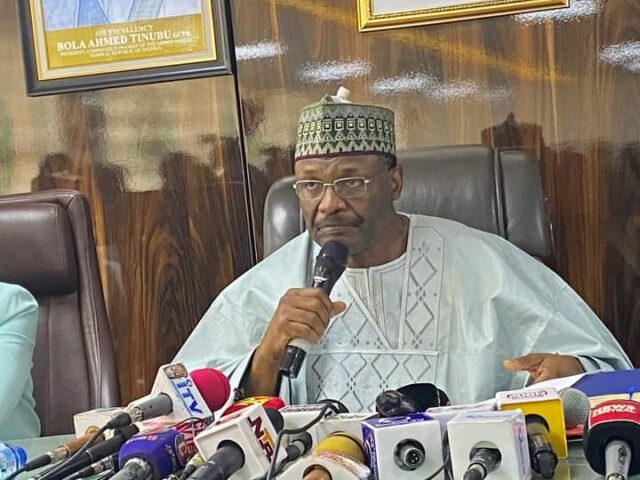
As the tenure of INEC Chairman Prof. Mahmood Yakubu and several National Commissioners winds down ahead of the 2027 general elections, a growing coalition of civil society groups is calling for a radical overhaul of Nigeria’s electoral system, starting with who appoints the INEC leadership.

A joint platform of 17 civil society organisations, including Yiaga Africa, The Kukah Centre, International Press Centre (IPC), and Policy and Legal Advocacy Centre (PLAC), has proposed a comprehensive set of electoral reforms aimed at strengthening the independence, professionalism and transparency of elections in Nigeria.

The proposals were unveiled last week in Abuja during a roundtable where the group released a document titled:

The Citizens Memo outlines 37 key recommendations across 15 strategic objectives, spanning constitutional and legislative changes, as well as shifts in electoral culture.

At the heart of the memo is the demand to remove the president’s sole authority to appoint the INEC Chairman, National Commissioners, and Resident Electoral Commissioners (RECs).

The stakeholders argue that the current system undermines public trust and leaves the electoral body vulnerable to political manipulation.

“The Constitution should be amended to introduce a multi-stakeholder process for INEC appointments,” the memo states, adding that consultation should go beyond the Council of State to include traditional rulers, religious leaders, and civil society.

The group also wants to revamp INEC appointment criteria, stating that the current focus on “non-partisanship and unquestionable character” is insufficient.

Instead, future appointees should also meet professional, gender, age, and health requirements, bringing skills in law, IT, logistics, statistics and communications to the table.

Another demand is for the Constitution to set firm deadlines for appointments to INEC, within 30 days of any vacancy, to avoid unnecessary delays that weaken the Commission’s stability.

The memo extends to the State Independent Electoral Commissions (SIECs), which have long been accused of lacking autonomy.

Recommendations include Removing governors’ control over SIEC appointments, Involving state assemblies and independent panels in selecting SIEC members, Ensuring financial independence by charging their funding to the state Consolidated Revenue Fund as well as expanding SIEC powers to include monitoring primaries, campaigns, and civic education at the local level.

To ease INEC’s burden and improve performance, the memo proposes splitting its responsibilities: Party registration and regulation should go to a new Political Party Commission while Electoral offences prosecution should be handled by a proposed Electoral Offences Commission, independent of the Attorney-General’s office.

Critically, they argue that nolle prosequi powers (used to drop charges) should not apply to electoral offences, citing the need for deterrence and accountability.

To prevent prolonged post-election disputes and ensure that winners emerge before inauguration, the memo recommends:

– Elections be held between 240 and 90 days before the end of the current officeholder’s term (currently 150–30 days).

– Election petitions be resolved within 90 days, down from 180.

– Appeals in pre-election matters should end at the Court of Appeal, especially for state and federal legislative seats.

They also propose ending forum shopping by requiring suits to be filed where the dispute originated.

In a bid to make elections more inclusive, the memo backs Out-of-country voting for Nigerians in the diaspora, Special legislative seats for women as a temporary measure to increase female political participation and Stronger representation of youths and persons with disabilities (PWDs) in the electoral process.

Alongside constitutional reforms, the Citizens Memo also outlines 16 proposed amendments to the 2022 Electoral Act, focusing on practical and procedural improvements.

Key Proposals:

– Allow other legal IDs (e.g. driver’s license, passport) in place of PVCs during voting, given the biometric BVAS system.

– Mandate a public, independent audit of the voter register.

– Introduce early voting for INEC staff, security personnel and journalists.

– Make election info accessible to PWDs (e.g., braille formats, sign language).

– Require INEC to review and adjust polling units every 5 years.

– Strengthen constituency delimitation by introducing a 15% deviation limit.

– Impose sanctions on parties that fail to submit member registers 30 days before primaries.

– Limit last-minute substitution of candidates, except in the event of death.

– Mandate electronic transmission of results, with clear legal provisions and timelines for mock tests of electoral technology.

– Require media fairness, including discounted airtime for women, youths and PWDs.

Clarify liability in media campaign breaches penalizing only the offending media houses, not their executives.

At the roundtable unveiling the memo, speakers including Cynthia Mbamalu (Yiaga Africa), Lanre Arogundade (IPC), Dr. Akin Akingbulu (CEMESO) and Tony Onyima (Paul University, Awka) called on the National Assembly and political leaders to treat the reforms as a national priority.

“Our elections need more than law, they need public trust. And that begins with genuine independence for INEC,” Mbamalu said.

The event, moderated by Ms. Anikeade Funke-Treasure Akintoye, also stressed the need for attitudinal shifts among stakeholders, beyond just legal reforms.

The coalition is now engaging with lawmakers and key institutions to push the memo into the formal amendment process.

With the 2027 elections drawing closer, they argue, the time to act is now.

“We must reform now or risk losing the people’s confidence in democracy altogether,” the Citizens Memo warns.

Google search engine

Police Rescue 4-Year-Old Girl Sold For N3.7m By Child Trafficking Syndicate


The Ondo State Police Command has successfully rescued a four-year-old girl who was allegedly sold for ₦3.7 million by a cross-state child trafficking ring.

According to the command’s spokesperson, SP Ayanlade Olayinka, the rescue marks a significant breakthrough in the ongoing crackdown on human trafficking networks operating across Ondo, Delta, and Anambra States.

The case began when Sunday Kingsley, a resident of Alagbaka Extension in Akure, reported the disappearance of his daughter, Jesinta, who went missing while under the care of her mother, Sunday Happiness.

Initial investigations led to the arrest and arraignment of some suspects before a Family Magistrate Court.

Although those suspects were later granted bail, the child remained missing.

The turning point came when Kingsley spotted a child resembling Jesinta in Asaba, Delta State.

He alerted the authorities, and detectives from the Gender Desk Team of the Ondo Police Command acted swiftly, recovering the child and reuniting her with her family.

During the operation, the police arrested Amaka Chukwuemeka, 30, who allegedly confessed to buying the child for ₦3.7 million.

She reportedly provided investigators with key information about other members of the trafficking network and claimed the child came with forged adoption documents.

Subsequent arrests were made, exposing what authorities described as a “well-coordinated trafficking syndicate” operating across state lines.

SP Olayinka assured the public that investigations are still ongoing to identify and prosecute all individuals involved, including those responsible for producing falsified legal documents.

“Ondo State cannot and will not be a safe haven for child traffickers or any criminal syndicate,” Olayinka stated.

Google search engine

Ganduje Blasts Kwankwaso, Labels Kano Govt ‘Clueless, Wasteful’


Former Governor of Kano State and ex-National Chairman of the All Progressives Congress (APC), Dr. Abdullahi Umar Ganduje, has launched a strong attack on his former political ally, Senator Rabi’u Musa Kwankwaso and the current Kano State Governor, Abba Kabir Yusuf, accusing them of inconsistency and poor leadership.

Speaking at an APC stakeholders’ meeting held in Kano on Thursday, the first such gathering since Ganduje left office, he dismissed recent speculations about Kwankwaso potentially rejoining the APC.

Citing a report by BBC Hausa, Ganduje said Kwankwaso’s previous criticisms of the party discredited any such move.

“We’ve heard the rumours, but we don’t take them seriously,” Ganduje said. “In politics, there’s little difference between a fake cleric and a thief. Kwankwaso once said only a madman would join APC.”

“He even mocked President Tinubu, claiming all he achieved was in Lagos. Now they want to come back. If they return, we’ll welcome them as madmen who have eaten their words.”

When asked about the possibility of reconciling with Kwankwaso and another former governor, Ibrahim Shekarau, Ganduje said it could be considered if unity becomes necessary, adding that all three have leadership experience that could benefit the current administration.

Turning to his successor, Governor Abba Kabir Yusuf, Ganduje was sharply critical, calling his administration directionless and focused on revenge rather than development.

“Unlike him, I didn’t start my tenure by launching probes into my predecessor’s administration,” Ganduje said. “But Governor Yusuf came in with investigations and nothing to show for it.”

“In just six months, they’ve received more federal allocations than I did in eight years. What have they achieved with that money?”

He went further to describe Yusuf’s government as “a government of vendetta, lacking in leadership and filled with confusion,” accusing it of spending public funds wastefully on low-impact projects.

On his own removal as APC National Chairman, Ganduje downplayed the matter, saying it was part of a routine political rotation based on zoning.

Google search engine

MOST COMMENTED

- Advertisement -
Google search engine