Home Blog Page 348

Mandatory Pre-Marital Medical Testing Bill Passed Into Law


Intending couples in Kebbi State may soon be required by law to undergo medical screening before marriage, following the passage of a new bill by the State House of Assembly.

The Pre-Marital Medical Examination Bill 2025, sponsored by the House Committee on Health, successfully scaled through its first, second, and third readings and was adopted during plenary by Speaker Muhammad Usman.

If the bill is signed into law, all couples planning to marry must take medical tests including genotype and blood group screening, at approved health facilities, no later than three months and two weeks before their wedding.

A valid medical certificate issued by a licensed medical doctor would become a mandatory requirement for formalizing any marriage in the state.

The bill also introduces strict penalties for non-compliance. Medical professionals who issue fake or falsified test results risk a ₦1 million fine or up to one year in prison.

Additionally, religious leaders, traditional rulers, or marriage registrars who proceed with weddings without verifying medical certificates may face a ₦200,000 fine or six months’ imprisonment.

The legislation aims to promote public health and reduce the incidence of preventable hereditary and communicable diseases among couples in the state.

Google search engine

Katsina Govt Gives Each LGA N20m For Graveyard Renovation


Governor Dikko Umaru Radda has announced the approval of ₦20 million for each of Katsina State’s 34 local government areas, earmarked specifically for the renovation and upgrading of public graveyards.

The governor disclosed this during a meeting with traditional rulers from both the Katsina and Daura Emirates, held on Thursday in Katsina.

He described the initiative as a dual-purpose effort, serving the public while also seeking divine blessings for the state.

In addition to the graveyard project, Governor Radda unveiled a series of welfare initiatives aimed at empowering traditional and religious leaders.

He said a new law passed by the Katsina State House of Assembly now ensures that District Heads will earn salaries no less than Grade Level 16.

Furthermore, the welfare package includes:

Monthly allowances for 6,652 Ward Heads across the state.

Stipends for over 3,000 Imams and their deputies serving in Friday mosques.

Monthly support for mosque sweepers from Izala and Darika congregations across all LGAs.

Reaffirming his government’s commitment to tackling insecurity, Governor Radda said that more than 1,500 youths have been trained and equipped to assist in improving security across the state.

These recruits have received uniforms, life jackets, and other operational gear as part of their deployment.

“Security remains our top priority,” the governor emphasized, urging community and religious leaders to promote awareness and community responsibility.

He added, “People must first take steps to protect themselves and their communities. Government support is more effective when citizens are actively engaged. Security is a shared responsibility.”

Speaking on behalf of the Emir of Daura, Alhaji Umar Faruq-Umar, the District Head of Baure, Alhaji Daha Umar-Farouq, expressed the Emirate’s solidarity with the governor—especially in light of the recent car accident he was involved in while in Daura.

The Wazirin Katsina, Senator Ibrahim Ida, representing the Emir of Katsina, Alhaji Abdulmumini Kabir-Usman, commended the governor for the ongoing reforms.

He said the initiatives had restored dignity to traditional institutions and enhanced their relevance in governance and community development.

Senator Ida assured that the Emirate Council would continue to support the state government through prayers, cooperation, and shared commitment to peace and prosperity.

Google search engine

How Nigeria Can Defeat Insurgency In Six Months


Retired General Ishola Williams, former Chief of Defence Training and Planning, has expressed strong belief that Nigeria’s security crisis can be resolved within six months, if the right strategies are implemented.

Speaking during an interview on Sunrise Daily, a Channels Television programme aired on Friday, Gen. Williams said Nigeria does not need to continuously invest in new weapons to win the war against insurgency.

Instead, he called for a comprehensive overhaul of the country’s security architecture.

“All these problems can be solved within six months. Reorganise the security agencies,” he said.

He advocated for improved use of existing weapons, better intelligence and counterintelligence systems, and rigorous training of military personnel.

“You must train soldiers how to fight. Ask any soldier in the North-East or South-East what they’re fighting for—has anyone even told them?” he asked.

“Without clarity of mission, they treat the battle like routine duty. And if they’re exhausted, they’ll retreat. That’s why we see cases of soldiers fleeing during Boko Haram attacks.”

Williams also criticized communities that continue to support terrorists and bandits, warning that such collaboration hampers national security efforts.

He called on traditional rulers to take an active role in educating and mobilizing their people to support government initiatives.

On arms trafficking, the retired general urged tighter coordination among Immigration, Customs, and the Police, stressing that illegal weapons still make it across Nigeria’s borders due to internal collusion.

“We need better synergy between agencies. Some officers are complicit, and that’s how arms continue to flow in,” he stated.

His comments follow the latest wave of violence in the country, including a tragic attack on a mosque in Katsina State, where over 30 worshippers were killed.

Banditry, often linked to disputes over land and scarce resources, has evolved into a lucrative enterprise involving cattle theft, kidnapping, and the extortion of rural farmers. Many affected communities lament a lack of adequate government presence and protection.

Google search engine

Four Places In The World Where Traffic Lights Don’t Exist


While traffic lights are a common sight in most parts of the world, there are a handful of countries and regions that manage traffic without relying on them.

Instead, these places use alternative methods such as police direction, roundabouts, or ingrained cultural driving habits to keep vehicles moving smoothly.

Here’s a closer look at four unique locations where traffic lights are completely absent.

Bhutan

Bhutan holds the distinction of being the only country worldwide to operate entirely without traffic lights.

Even in Thimphu, the bustling capital, where traffic has increased due to urban growth, automated signals have never been adopted. Instead, police officers manage traffic flow manually at busy intersections using hand signals.

In 1995, a brief experiment with traffic lights was scrapped after locals expressed discomfort, feeling that signals clashed with the country’s traditions and cooperative spirit. Bhutan’s system is a testament to its small population size and strong community responsibility.

Vatican City

The world’s smallest sovereign state, Vatican City, also does not use traffic lights.

Covering just 44 hectares and home to about 800 residents, the city-state has limited roads where traffic is regulated through signage and the Vatican’s own police force.

This stands in stark contrast to the heavily trafficked streets just outside its borders in Rome, where traffic lights are ubiquitous.

Niue

Located in the South Pacific, Niue is another place without traffic lights.

With fewer than 2,000 inhabitants and minimal traffic, there is simply no need for automated traffic control. Roads are quiet and the driving culture is relaxed, with drivers often exchanging friendly waves.

The absence of traffic lights in Niue reflects the island’s close-knit community and low congestion.

Tekesi County, China

In Xinjiang’s Tekesi County, urban planning intentionally avoided traffic lights to preserve cultural symbolism.

The town’s layout is inspired by the Bagua, or Eight Trigrams, an ancient Taoist symbol, featuring circular streets and radiating roads that utilize roundabouts to guide vehicles.

In 1996, plans to install traffic lights were halted to maintain this unique design. Today, Tekesi’s traffic system is not only practical but also a source of local pride and cultural identity, symbolizing harmony and balance.

Google search engine

Full List: Countries Without Prisons


In most countries, prisons are viewed as essential pillars of the justice system, places meant to ensure public safety and enforce accountability.

Yet, behind prison walls are not just criminals, but human lives often shaped by complex struggles such as poverty, poor education, and lack of guidance.

While incarceration is commonly used to uphold order, it frequently carries a heavy emotional burden, both for inmates and their families. Modern justice, however, is beginning to look beyond punishment, exploring how rehabilitation and empathy can better serve society in the long run.

Though no country has fully abolished prisons, a few have significantly reduced their dependence on traditional incarceration, particularly for non-violent offenses.

These countries opt for community service, fines, electronic monitoring, and restorative justice methods that seek to rehabilitate rather than punish.

In Europe, for instance: Germany, Finland and France use fines and community service as common alternatives to imprisonment.

France and Ukraine employ electronic tagging and house arrest to restrict offenders’ movements while keeping them out of prison.

Indonesia and others have embraced restorative justice, focusing on reconciliation between victims, offenders, and communities.

Such approaches aim to minimize the long-term damage associated with incarceration, while still holding offenders accountable.

Countries like Norway, Finland, and Iceland are often mistakenly believed to have abolished prisons.

While they do have correctional facilities, their prison systems are radically different from conventional models, prioritizing rehabilitation, humane treatment, and reintegration over punishment.

Prison conditions in these Nordic countries resemble rehabilitation centers more than high-security penitentiaries.

Inmates often have access to education, work, and therapy, with the goal of rejoining society as productive citizens.

Though many nations are reforming their justice systems, only two countries in the world currently operate without permanent prisons:

1. Vatican City

As the world’s smallest independent state, Vatican City does not maintain a long-term prison facility.

It has a few temporary holding cells used for short detentions, but when someone is convicted of a crime, they are transferred to the Italian penal system under the Lateran Treaty, an agreement between the Vatican and Italy. The Vatican covers the cost of imprisonment, while Italy handles the actual incarceration.

2. Liechtenstein

This small European principality, nestled between Austria and Switzerland, also lacks a permanent prison system.

Liechtenstein has basic detention facilities for minor offenses, but when serious crimes occur, it relies on agreements with neighboring countries to house prisoners.

Offenders serve their sentences abroad, while the government maintains its focus on rehabilitation and reintegration.

Though rare, the models used by Vatican City and Liechtenstein demonstrate that justice systems don’t always need to revolve around incarceration.

With an emphasis on alternative sentencing, international partnerships, and rehabilitation, these countries highlight innovative approaches to crime and punishment that challenge the global norm.

Google search engine

Online Voter Pre-Registration Data Not Unusual, INEC Refutes ADC’s Claims


The Independent National Electoral Commission (INEC) has dismissed allegations of irregularities in its online pre-registration data amid the ongoing nationwide Continuous Voter Registration (CVR) exercise, describing the figures as nothing “extraordinary.”

INEC’s Chief Press Secretary, Mr. Rotimi Oyekanmi, made this clarification in a statement issued in Abuja, responding to concerns raised by the African Democratic Congress (ADC).

The ADC, through its National Publicity Secretary Mallam Bolaji Abdullahi, had flagged the numbers from Osun State as “suspicious” and inconsistent with “historical patterns and demographic realities.”

Abdullahi pointed out that the nearly 400,000 new registrations recorded in Osun within just seven days exceeded the total new voters added in the state over the last four years.

He also highlighted that the South West zone accounted for an overwhelming 67 percent of all national pre-registrations.

Reacting to these claims, Oyekanmi said the allegations were unfounded, explaining that Osun’s high online registration figures were consistent with previous patterns.

He cited recent data showing that, within a week, INEC recorded 1,379,342 online pre-registrations nationwide, with Osun leading at 393,269, followed by Lagos with 222,205, and the Federal Capital Territory (FCT) with 107,682.

He further recalled data from the 2021 CVR exercise, demonstrating that Osun has consistently led in online pre-registrations:

Within the first 24 hours of portal launch on June 28, 2021, 59,331 accounts were created.

By July 12, 2021 (second week), 456,909 accounts were active, with Osun topping at 154,893.

By the third week, 752,011 persons had pre-registered, Osun leading with 232,880.

By the eighth week (Aug 23, 2021), 2,215,832 had pre-registered, Osun still leading with 365,412.

By the eleventh week (Sept 13, 2021), 2,953,094 individuals had pre-registered, Osun ahead with 402,619.

By April 18, 2022, 8,271,647 Nigerians had pre-registered, with Osun topping the list at 708,782.

Oyekanmi advised that a simple review of public records would have clarified the facts for the ADC.

He also emphasized the stringent verification procedures in place post-online registration, which require all applicants to visit designated centres for in-person registration and biometric capture.

INEC’s Automated Biometric Identification System (ABIS) screens out duplicate registrants to maintain the integrity of the voters’ register.

“Following all verification processes, over 14 million Nigerians were added to the National Register of Voters ahead of the 2019 General Election, increasing the total from nearly 70 million to 84,004,084 voters.”

“Similarly, over 9.4 million new voters were added after the 2021/2022 CVR exercise, bringing the total to 93,469,008 for the 2023 general election,” he added.

INEC reiterated its commitment to registering only genuine voters who meet the constitutional and legal requirements, regardless of their state of origin.

Oyekanmi urged citizens to rely on verified data from official INEC sources rather than speculation.

The News Agency of Nigeria (NAN) recalled Abdullahi’s skepticism about Osun’s figures, highlighting that the state recorded only 275,815 new voters between 2019 and 2023 and never had more than 823,124 votes cast in a governorship election.

He also noted the disproportionate distribution of pre-registrations, with the South West accounting for 848,359 (67%) of the national total, while the South East recorded just 1,998.

To further illustrate the disparity, Abdullahi pointed out that Osun, Lagos, and Ogun states accounted for over half (54.2%) of all pre-registrations nationwide, while Ebonyi, Imo, Enugu, Abia and Adamawa combined had only 4,153 (0.2%), and the entire North East recorded 6.1 percent.

The ADC called for a comprehensive forensic audit of the data, alleging the possibility of either a technical glitch or deliberate data manipulation.

They also urged opposition parties and electoral monitoring groups to demand transparency and accountability from INEC.

Google search engine

Anambra Assembly Denies Soludo’s Involvement In Lawmaker’s Suspension


The Anambra State House of Assembly has denied claims that Governor Chukwuma Soludo had any role in the suspension of Hon. Abuchi Udemezue, the representative of Ayamelum Constituency.

In a statement released by the Chairman of the House Committee on Media and Publicity, Hon. Ejike Okechukwu, the Assembly dismissed the allegations as “false, baseless, and mischievous.”

The response follows criticism from some federal lawmakers from Anambra North Senatorial Zone, under the Labour Party, who had questioned the reasons behind Udemezue’s suspension.

Okechukwu clarified that the disciplinary action against Udemezue stemmed solely from internal legislative matters.

According to him, the suspended lawmaker used offensive and unparliamentary language, including calling fellow lawmakers “mad men” on social media, prompting the House to act after inviting him to explain his behavior.

“The decision to suspend Hon. Udemezue was made independently by the legislature and had no input from the Executive,” the statement read.

“Every member is subject to the constitution and House rules. No one is above discipline.”

He noted that Udemezue was given multiple chances to defend himself and apologize but repeatedly disregarded the Assembly’s procedures and authority.

The Assembly also criticized the involvement of federal lawmakers in the issue, calling it unnecessary interference in the internal affairs of a state legislature.

“While their counterparts in the National Assembly are focused on attracting federal projects and creating opportunities for their constituents, some lawmakers from Anambra North have chosen to meddle in state-level issues,” the statement continued.

The Assembly reaffirmed its dedication to upholding legislative order, saying that disciplinary actions are meant to maintain decorum and mutual respect, not silence opposition.

It urged federal legislators to focus on their national duties and allow the Anambra State Assembly to carry out its constitutional responsibilities without disruption.

Google search engine

Senator Marafa Quits APC, Labels Tinubu A ‘Use And Dump’ Leader


Former Senator representing Zamfara Central, Kabiru Garba Marafa, has officially resigned from the All Progressives Congress (APC), citing what he described as President Bola Tinubu’s “use-and-dump” style of leadership.

Marafa, who coordinated the Tinubu/Shettima Presidential Campaign in Zamfara during the 2023 election, made his decision following a two-day meeting of the Senator Kabiru Marafa Consultative Forum.

The meeting, held on August 27–28 in Kaduna, brought together key supporters from all 14 local government areas of Zamfara State.

In a communiqué issued at the end of the meeting, signed by Forum Chairman Comrade Bashir Muhammad Mafara and Secretary Dr. Mannir Bature Tsafe, the group expressed disappointment over the perceived marginalization of Zamfara State despite its support for President Tinubu during the last election.

The Forum recalled that under Marafa’s leadership, Zamfara delivered a decisive win for Tinubu, with the senator assuring the President that his visit to the state wouldn’t be necessary. That promise was kept.

However, the group lamented that despite this loyalty, Zamfara has suffered continued neglect under the current administration.

Zamfara reportedly led the nation in kidnappings in 2024, with 1,203 cases out of 4,722 nationwide.

In just one week following a bye-election, 25 villages were attacked, resulting in 145 kidnappings and 21 deaths.

The Forum criticized the deployment of security forces to influence the Kaura Namoda bye-election, contrasting it with the government’s failure to protect lives in the same region.

Marginalization in Appointments: While other Northwest states received two ministerial slots, Zamfara was only given a Minister of State position.

The Forum pointed out that states where Tinubu lost, including Lagos, were rewarded with more federal presence and appointments.

Unlike other violence-hit states that received presidential visits and relief, Zamfara has allegedly been overlooked.

The group also accused the APC national leadership of dismantling Marafa’s political structure, in violation of the party’s founding principles of fairness and inclusion.

Following what they called “exhaustive consultations and a critical review of current realities,” the Forum announced the formal resignation of Marafa and his entire political structure across Zamfara’s 147 wards from the APC.

They stated that their next political move would be announced soon and would reflect the collective interest of the people of Zamfara.

Google search engine

2027: I’m Not Eyeing VP Slot – Gov. Bala Mohammed Dismisses Speculation


Governor Bala Mohammed of Bauchi State and Chairman of the PDP Governors’ Forum has debunked claims that he is angling for the vice-presidential position ahead of the 2027 general election.

He maintained that choosing a running mate lies solely with the eventual presidential candidate of the Peoples Democratic Party (PDP).

Speaking during an interview on Channels TV’s “Politics Today”, Mohammed addressed growing speculation about his political intentions and discussed the PDP’s zoning decisions and strategy moving forward.

“I’m not stepping down because I want to be vice president,” he said.

“If, however, the party leadership and the presidential candidate consider me suitable, I will be ready. But if not, I’ll fully support whoever is chosen.”

Responding to rumours about a possible joint ticket with Oyo State Governor Seyi Makinde, Mohammed dismissed the idea as pure speculation.

“Seyi and I have never discussed running together. What we’ve spoken about is reclaiming power to deliver good governance in 2027.”

Governor Bala emphasized that the PDP’s decision to zone the presidential ticket to the South was informed by the party’s experience in the 2023 elections, which he said were a “not pleasant experience.”

“The presidency is a consensus arrangement. I’ve learned that despite leading the governors’ forum, I’m working with equals,” he noted.

To avoid a repeat of the APC’s Muslim-Muslim ticket controversy, he advocated for religious and regional balance.

“We need a Christian presidential candidate from the South, who can choose a Northern Muslim running mate. That balance is important.”

Mohammed revealed that the PDP is already reaching out to political heavyweights as part of broader alliance talks.

“I’ve spoken with former President Goodluck Jonathan and told him that if he runs, I’ll step aside. I’ve also met with Peter Obi and Rotimi Amaechi. The PDP is open to any credible leader who can help us win.”

He admitted some party members in the North were uneasy about the zoning decision, but said those concerns were manageable.

“Some supporters were unhappy, but they must understand that mutual respect and sacrifice are necessary. Yes, there were complaints, but nothing unmanageable.”

Mohammed also addressed the idea of a one-term agreement for the PDP’s eventual flagbearer, saying the issue would be determined by the party caucus.

“If a one-term agreement is reached, it could reassure regions that feel left out. But that’s a collective decision for later.”

On the issue of perceived cracks within the PDP and rumours that some members are collaborating with the APC and President Bola Tinubu, Mohammed pushed back.

“People may point fingers because of someone like Wike working with Tinubu. But we are not part of that. The PDP is focused, united, and determined to provide Nigerians with a credible alternative in 2027.”

Addressing his personal relationship with Nyesom Wike, he noted that while they are no longer close, there is no hostility between them.

“We had our disagreements, but elders intervened. We’ve moved on. We’re not as close as before, but there’s no bad blood.”

The governor concluded by stressing the importance of a strong opposition in sustaining democracy.

“Our democracy thrives when opposition parties are strong and focused. That’s what we’re building in the PDP.”

Google search engine

Intrigues Behind Enugu Labour Party Lawmaker’s Incarceration

Barr. Bright Ngene,

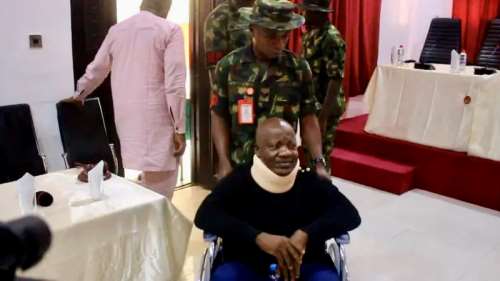
Despite being behind bars, Bright Ngene remains the chosen representative of his people.

Declared the winner twice for the Enugu South Urban 1 State Constituency seat, the Labour Party lawmaker’s imprisonment widely dismissed by supporters as politically motivated, has ignited protests, judicial controversies and raised serious questions about the independence of Nigeria’s judiciary.

On Monday, August 25, 2025, a large crowd of residents from Enugu South Urban 1 stormed the International Conference Centre in Enugu, where the Nigerian Bar Association (NBA) was holding its international conference, to protest Ngene’s continued detention.

The protesters accused the Peter Mbah-led administration of orchestrating what they termed a politically motivated imprisonment of Ngene, who was elected under the Labour Party but allegedly declined to defect to the ruling Peoples Democratic Party (PDP) in Enugu State.

Ngene was sentenced on July 28, 2024, by Magistrate E. D. Onwu of the Enugu South Magistrate Court to seven years in prison over a scandal related to a community development fund.

His supporters believe this incarceration is a ploy to remove him from the state Assembly after he rejected Governor Mbah’s alleged offer to switch allegiance to the PDP.

At the NBA conference venue, protesters chanted slogans demanding justice and judicial independence, holding placards that read: “NBA Please Save Our Democracy,” “Enugu State Judiciary Must be Independent from Executive,” “Oppression is injustice, free Barr Bright Ngene,” “NBA, It’s Bright Ngene today. It could be any Lawyer Tomorrow,” and “Injustice to one Lawyer is injustice to all Lawyers.”

Benedict Kachukwu, spokesperson for the protesters, said, “We are here to register our peaceful protest to tell the world what has been happening in Enugu State for the past one year. Since the 28th of July, 2024, Hon Bright Emeka Ngene, who won the House of Assembly seat for Enugu South Urban 1, was unjustly incarcerated.”

He added, “Charges that were placed on him were baseless, the judicial process was not followed, and in less than two weeks judgment was dispensed in a criminal matter. And the man has been in detention since then.”

Kachukwu also highlighted the difficulties in pursuing legal remedies: “Efforts to get the matter to the High Court have proved abortive because somehow judges are now recusing themselves from the case. The Chief Judge has refused to assign the case to a new judge or take up the case.”

He continued, “So ever since then, this man, Hon Bright Ngene, has been in detention for no just cause, the powers that be in the state have denied him judicial process, all because he won an election, an election he won on a free ground where the people of Enugu South Urban 1 gave him their mandate freely.”

Kachukwu stressed that Ngene’s mandate was reaffirmed during a by-election on August 16 in some polling units.

“We are not afraid of due judicial process,” he said, “and we have repeatedly urged the state’s Chief Judge to assign the case, regardless of what the eventual judgment might be.”

“But up till now we have not seen, we have not heard anything, and the case has been in a comatose state at the State High Court.”

He recalled a specific incident: “Several judges have recused themselves. I recall on the 11th of March 2025, one of the judges called for the judgment from the Magistrate Court, but on the day of the sitting, he said that he was recusing himself from the case. He did not give any reason for that.”

He lamented, “And ever since then, the case has not been assigned to any judge. That means the man has been languishing in jail for nothing.”

“We have written to every organ of the NBA as we speak, but there has not been any kind of response from them. So, we have done all we can do; we decided to resort to coming here (NBA conference venue) to beg. We are not here to fight, we are not here to quarrel, we are here to beg, please let this man be freed so that he can represent the people that voted him in the House of Assembly,” he concluded.

On March 23, 2023, the Independent National Electoral Commission (INEC) declared Bright Ngene of the Labour Party the winner of the Enugu South Urban 1 State Constituency seat with 5,862 votes, defeating PDP’s Samuel Ngene, who scored 2,098 votes, a margin of 3,764 votes.

The PDP candidate challenged this result at the State Assembly Election Petition Tribunal, which nullified the election and ordered reruns in eight polling units with 4,257 eligible voters where the election was not held during the March 18 poll.

INEC attempted to conduct the rerun elections thrice on February 3, February 14, and June 8, 2024, but the Labour Party resisted what they alleged were attempts to manipulate the process.

Meanwhile, the PDP, despite support from the state government, struggled to mobilize voters.

Shortly after this resistance, Ngene’s old community dispute was revived, widely viewed as an attempt to sideline him and pave the way for the PDP in future reruns.

After spending 15 months in detention, INEC held a by-election on August 19, 2025, for the constituency.

Despite a heavy security presence, no voters turned out before polls closed.

Still, INEC declared Bright Ngene the winner of the rerun.

Sam Olumekun, INEC’s National Commissioner and Chairman of the Information & Voter Education Committee, said, “Two re-run elections by order of the Election Petition Appeal Tribunals were held in Enugu and Kano states.”

“After previous disruptions of the elections in the two states by violence and thuggery, the elections have now been concluded. Declaration and return were made by the Returning Officers. For the Enugu South 1 State Constituency of Enugu State, Ngene Bright Emeka of the Labour Party was declared winner.”

Ngene served as secretary and legal advisor for a sub-committee managing finances for his community, Akwuke, known for sand excavation in Enugu State.

The community collected tolls from tipper drivers, but road dilapidation became an issue.

To fix the road, Ngene was tasked with paying about N11 million to a contractor, according to handover documents.

However, in 2017, a petition accused Ngene and his associate John Ewoh of theft and conspiracy, likely stemming from a faction within the community leadership.

Police investigations led to charges being filed against Ngene. Initially, the case received little attention until mid-2022 when Ngene emerged as a candidate for the state House of Assembly.

The case was initially handled by Chief A.O. Eze but was later transferred to Magistrate E.D. Onwu following Eze’s retirement.

As Ngene’s political ambitions grew, the case took on a new urgency.

Ngene’s legal counsel petitioned the state Chief Judge to transfer the case to another magistrate, which was granted, moving the case to Magistrate I.M. Mamah, who recommended alternative dispute resolution (ADR).

Confusion arose when another letter from the Deputy High Court Registrar, N. Chijioke Agbo, purportedly approved by the Chief Judge, ordered the case back to Onwu’s court.

The Chief Judge later clarified that Mamah was in charge, but in December 2023, another letter again returned the case to Onwu, with no further clarification.

Things accelerated after Onwu resumed hearing the case, with increasingly shorter adjournments.

This prompted Ngene’s counsel to petition the Chief Judge about the magistrate’s conduct, but the plea was ignored.

An ex parte order from the High Court compelled Onwu to recuse himself, but Onwu demanded to see the actual order before complying.

The order was delayed under various pretexts, with the file reportedly taken by Deputy Registrar N. Chijioke Agbo.

Ngene’s counsel petitioned the National Judicial Council (NJC), which requested the magistrate’s recusal, but Onwu allegedly refused.

Even after the Akwuke Town Union, the complainant, sought to withdraw the case, Onwu insisted the trial continue, claiming only the state’s Attorney General could drop the charges.

“The blind could see what was about to happen,” said Okechukwu Ogbodo, an observer of the case.

Ngene’s counsel filed a suit asking Onwu to step aside. On June 28, 2024, Onwu abruptly delivered judgment without allowing time for written submissions, sentencing Ngene and Ewoh to seven years imprisonment, four years for theft and three for conspiracy.

Governor Mbah’s Senior Special Assistant on Media, Uche Anichukwu, said Ngene’s community held a counter-protest disassociating the government from interference.

Anichukwu promised a formal response to the allegations but had not provided one at the time of this report, stating, “We are at a function and will proceed to Niger Gas from there. I’ll try and do a written response in the course of the programmes.”

Google search engine

MOST COMMENTED

- Advertisement -
Google search engine