Home Blog Page 349

El-Rufai Petitions Police Commission, Accuses CP, Others Of Misconduct
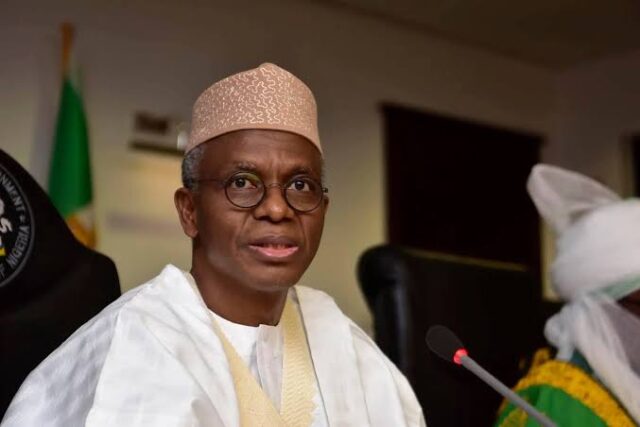
 

Former Kaduna State governor, Mallam Nasir El-Rufai, has petitioned the Police Service Commission (PSC), accusing the Kaduna State Commissioner of Police and several senior officers of misconduct, abuse of office, and violations of the Police Act 2020.

In a letter dated September 8, El-Rufai described the actions of the officers as “unlawful and unconstitutional,” calling on the PSC to investigate what he claimed was a politically motivated probe targeting him and the African Democratic Congress (ADC), a party he supports.

“I am motivated by concern for the Nigerian Police Force, which, despite its challenges, remains the primary law enforcement institution in the country,” El-Rufai stated in the petition.

The petition comes amid mounting political tensions in Kaduna State. On August 30, a meeting of ADC stakeholders was violently disrupted.

According to opposition leaders, thousands of hired thugs allegedly connected to the ruling All Progressives Congress (APC) attacked the gathering.

The meeting had been convened to strategize for upcoming by-elections in the Chikun/Kajuru federal constituency, as well as in Sabon-Gari and Zaria state constituencies.

In the days following the attack, police officers sealed the ADC’s state office and issued summonses to El-Rufai and several senior party officials.

They were accused of criminal conspiracy, incitement, and public disturbance.

El-Rufai, however, dismissed the accusations, insisting they were part of a wider effort to silence dissent.

He further noted that his earlier complaints to the Inspector-General of Police had been ignored.

In a series of social media posts dated September 1, 2025, El-Rufai also took aim at the administration of Governor Uba Sani, accusing it of concealing crucial security data and paying ransoms to bandits.

He claimed that law enforcement agencies were being used for political purposes.

He extended his criticism to the Office of the National Security Adviser (ONSA) and the Kaduna State Government, saying they were more interested in targeting critics than solving real issues.

“Insecurity is the menace they ought to eliminate, not opposition voices and platforms,”
El-Rufai wrote in one of the posts, linking the disruptions to what he described as “a broader pattern of state-sponsored thuggery.”

Google search engine

2027: Zoning Debate A Political Blackmail To Cripple Opposition – Dele Momodu


Former presidential aspirant and media entrepreneur Dele Momodu has sharply criticised the zoning of presidential tickets ahead of the 2027 general elections, describing it as a calculated strategy to weaken Nigeria’s opposition parties.

Speaking on Channels Television’s Sunrise Daily programme on Monday, Momodu argued that zoning, while not backed by the constitution, is being manipulated to serve the interests of the ruling All Progressives Congress (APC) and President Bola Tinubu.

“There is nothing in the Nigerian Constitution that stops anyone, whether you are a northerner or a southerner, from contesting,” Momodu said.

He labelled the renewed zoning conversation as a “reward of blackmail” from forces working to suppress electoral competition, particularly against the incumbent.

“Because they know that if you zone all other parties to the South in the presidency, none of them will be able to beat Asiwaju (Tinubu),” he added.

Momodu urged political parties, especially the opposition, to reject restrictive zoning arrangements and open up their platforms for all regions.

“That is the strategy. That is why any right-thinking political party should throw its door open,” he stated.

Turning to his former party, the People’s Democratic Party (PDP), Momodu lamented what he described as its complete capture by individuals loyal to the ruling party.

“PDP has been completely hijacked by agents of the ruling party who insist on staying in PDP while working for APC,” he said.

According to him, some members are keeping the PDP in a politically comatose state for future strategic use:

“PDP is at a dead end. Some people are desperate; they don’t want to kill it, but they want to keep it in the ICU… Everybody is now just using PDP as a cadaver room, a place where you keep bodies that are dead or kept in the ICU. It’s a shame, but I have left,” he added.

Momodu, who is now a chieftain of the opposition coalition African Democratic Congress (ADC), clarified that no individual, including former Vice President Atiku Abubakar, has been offered a free pass to contest under the ADC platform.

“I don’t think ADC has promised to give an automatic ticket to anyone, including Atiku Abubakar. He is not the sole candidate of ADC,” he asserted.

The zoning debate was reignited after the PDP National Executive Council (NEC) met on August 25, resolving to zone its 2027 presidential ticket to the South while retaining the party chairmanship in the North.

The NEC also confirmed Umar Damagum as the PDP’s national chairman, following the earlier suspension of Senator Iyorchia Ayu in 2023.

While party leaders claim the zoning decision is meant to stabilise the PDP ahead of the next election cycle, critics, including Momodu, believe it could severely limit the party’s competitiveness against the APC, which has already endorsed President Tinubu for re-election in 2027.

Although the PDP has yet to announce a flagbearer, Minister of the Federal Capital Territory, Nyesom Wike, previously warned that zoning the ticket to the North would lead to failure.

Google search engine

NARTO, Other Petroleum Associations Back NUPENG, Threaten Nationwide Shutdown Over Dangote’s Direct Supply Plan


Three major petroleum industry associations; the Natural Oil and Gas Suppliers Association of Nigeria (NOGASA), Petroleum Products Retail Outlet Owners Association of Nigeria (PETROAN), and the Nigerian Association of Road Transport Owners (NARTO) have declared plans to join the strike action initiated by the Petroleum Tanker Drivers (PTD) branch of NUPENG.

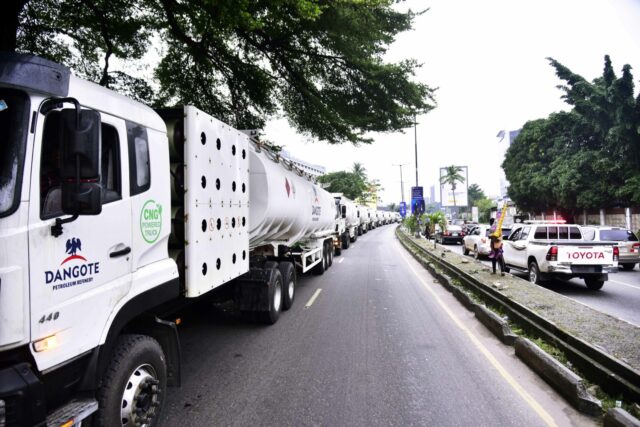
The planned industrial action is in protest against the Dangote Refinery’s decision to deploy 4,000 compressed natural gas (CNG)-powered trucks for direct fuel distribution across the country.

During a joint press briefing on Monday, NOGASA President Bennett Korie ordered all members supplying petroleum products to telecom companies, hotels, construction sites, and other end-users to halt operations by 9 am on Tuesday, September 9, if talks with the federal government fail to produce results.

Korie expressed concern that Dangote’s move could lead to massive job losses and the collapse of the traditional petroleum supply chain.

“We are proud of the refinery’s role in transforming the oil sector, but its current approach threatens the livelihood of thousands across the distribution value chain,” he warned.

He called on President Bola Ahmed Tinubu to urgently intervene and convene a meeting between Dangote Refinery and stakeholders in the downstream sector to avert a national supply crisis.

PETROAN President Dr. Billy Gillis-Harry echoed similar concerns, describing Dangote’s planned use of 4,000 trucks as a short-term solution that could destabilize the sector.

He questioned whether this model, which mirrors Dangote’s cement distribution system, had resulted in price relief for consumers.

“Energy security is at stake,” Gillis-Harry said. “We must protect the sector. Any NUPENG member at our retail outlets who joins the strike will not face disciplinary action. We fully support this resistance until a meaningful resolution is reached.”

Also speaking, NARTO President Yusuf Lawal Othman rejected the idea of direct or “free” distribution of petroleum products, saying it would destroy the business of independent transporters who operate over 30,000 trucks nationwide.

He warned that the proposed distribution model could result in massive unemployment, with ripple effects on drivers, mechanics, loaders, and service providers whose livelihoods depend on the existing supply structure.

“Our members have invested heavily, with backing from local and international financial institutions. Any move to sideline them is a direct assault on their survival,” Othman stated.

The unions are demanding immediate dialogue and cautioning that failure to act could trigger a full-scale disruption of fuel distribution across Nigeria.

Google search engine

DSS Issues One-Week Ultimatum To Sowore Over Social Media Post Calling Tinubu A Criminal


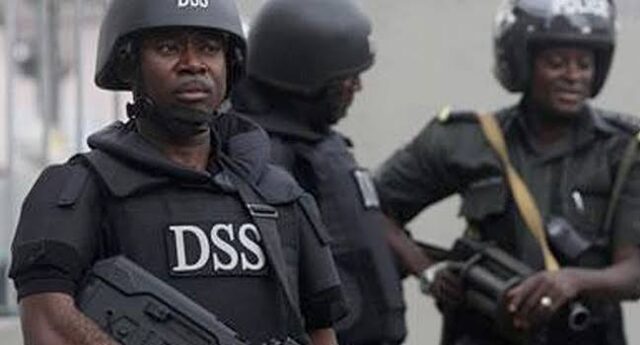
The Department of State Services (DSS) has given prominent human rights activist and former presidential candidate Omoyele Sowore a one-week deadline to retract what it describes as a “false, malicious, and inciting” social media post targeting President Bola Tinubu.

In a letter dated September 7, the DSS accused Sowore of making derogatory and criminal remarks about the President in a post published on X (formerly Twitter) on August 26.

The agency, through its Director of Legal Services, Uwem Davies, claimed the comments had the potential to “incite public disturbance, disunity, and even insurrection.”

“Failure by Sowore to comply with this request will compel the service to explore all lawful means to safeguard national security and maintain public order,” the DSS warned.

Sowore, known for his role as convener of the #RevolutionNow protests and a vocal critic of the government, had accused President Tinubu of being a “criminal,” following the President’s reported claim that corruption no longer exists under his administration.

The DSS contends that Sowore’s post has stirred public outrage and poses a threat to national stability.

On Sunday, Sowore confirmed that the social media platform X had contacted him in relation to a formal complaint from the DSS concerning the controversial post.

However, the activist made it clear that he has no intention of deleting it.

“I won’t take the post down,” Sowore said, standing by his comments and continuing to challenge the legitimacy of the DSS’s demands.

Google search engine

Speaker Abass Raises Alarm As Nigeria’s Soaring Debt Hits N149.4 Trillion


The Speaker of Nigeria’s House of Representatives, Dr. Abass Tajudeen, has voiced deep concern over the nation’s escalating debt burden, which has reached ₦149.39 trillion (approximately $97 billion) as of Q1 2025.

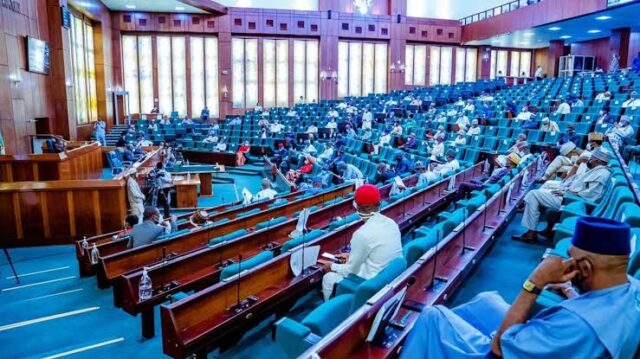
Speaking at the opening session of the 11th Annual Conference and General Assembly of the West Africa Association of Public Account Committees (WAAPAC), held at the National Assembly complex in Abuja, the Speaker described the debt situation as “worrying” and a “threat to fiscal sustainability.”

According to Dr. Abass, domestic debt accounts for 53% of the total, while external borrowing makes up 47%.

He noted that this figure marks a steep rise from ₦121.7 trillion recorded the previous year, highlighting how rapidly the debt load has grown.

“Even more concerning is the debt-to-GDP ratio, which now stands at approximately 52 per cent, well above the statutory ceiling of 40 per cent set by our own laws,” he warned.

The Speaker argued that breaching the debt ceiling signals growing pressure on Nigeria’s economic framework, and called for enhanced transparency in borrowing, as well as stronger fiscal oversight mechanisms.

He stressed that every borrowed naira must deliver tangible social and economic returns.

Shifting focus to the broader African landscape, Dr. Abass painted a troubling picture.

He said that Africa’s public debt hit $1.8 trillion by 2022, with external debt alone expected to surpass $1 trillion by 2023. Several countries, he said, are already in critical debt territory.

“Sudan’s debt-to-GDP ratio stands at 344 per cent, Angola at 136.8 per cent, Ghana at 84 per cent, Kenya is approaching 70 per cent, and South Africa is above 77 per cent,” he noted.

“In many of these countries, more is spent servicing debt than on critical areas like healthcare, thereby shrinking the fiscal space for development.”

He described the situation not just as a fiscal challenge, but a structural crisis that demands urgent and coordinated parliamentary intervention across the continent.

Dr. Abass further revealed that 35% of Africa’s government debt is currently held by Western private lenders such as banks, asset managers, and oil traders.

Another 39% is owed to multilateral institutions like the IMF and World Bank, 13% to bilateral lenders, and 12% to Chinese creditors, a figure he said is often exaggerated in public debate.

“To place this in sharper focus, in 2019, bondholders alone represented 27 per cent of Africa’s external debt, making them the single largest creditor group, ahead of China at 13 per cent,” he explained.

“The implications of this structure are far-reaching. A significant share of our national revenues is tied to debt servicing rather than being invested in the things our people need most: roads, schools, hospitals, and innovation.”

Dr. Abass warned that the high cost of commercial loans, combined with the obligation to repay in foreign currencies, leaves many African economies exposed to market shocks.

This, he said, severely limits policy flexibility and slows sustainable development.

“If Africa is to grow stronger, we must not only negotiate fairer terms of borrowing but also rethink our dependence on external finance,” he urged.

“We must channel more energy into mobilising domestic resources, fostering intra-African trade, and creating financial instruments that serve the continent’s own development priorities.”

The Speaker concluded with a rallying call for public financial accountability:

“Effective oversight of public debt demands vigilance, knowledge, and institutional strength,” he said, stressing the need to empower Public Accounts and Finance Committees.

He encouraged conference participants to share ideas and experiences that could lead to responsible debt governance, and urged for reforms that strengthen fiscal discipline across the continent.

Google search engine

JAMB Panel Exposes Over 4,000 Fingerprint Manipulations, 190 AI Cheating Cases In 2025 UTME


The Joint Admissions and Matriculation Board (JAMB) has received a damning report from its Special Committee on Examination Infractions (SCEIi), detailing thousands of technology-driven malpractices uncovered during the 2025 Unified Tertiary Matriculation Examination (UTME).

Presenting the report in Abuja, the Chairman of the Committee, Jake Epelle, revealed that the investigation uncovered 4,251 cases of “finger blending”, a form of biometric fraud used to bypass identity verification as well as 192 confirmed instances of AI-assisted impersonation, achieved through image morphing.

The panel, which was inaugurated on August 18, was tasked with investigating growing exam malpractices, reviewing existing JAMB systems, and recommending necessary reforms to protect the integrity of the examination process.

Beyond biometric and AI-related fraud, the committee also identified 1,878 cases of false disability claims, use of forged documents, multiple NIN registrations, and extensive collusion between candidates and organized exam syndicates.

Epelle expressed deep concern over the sophistication and normalization of malpractice in Nigeria’s education system.

“Malpractice has become highly organised, technology-driven, and dangerously normalised,” he said, highlighting the role of parents, tutorial centres, schools, and even some Computer-Based Test (CBT) centres in facilitating the fraud.

He also pointed out that weak legal enforcement frameworks continue to hamper accountability, allowing the practice to persist with little consequence.

In response, the committee urged JAMB to adopt a multi-layered strategy to tackle exam fraud.

Among the key recommendations were; Deployment of AI-driven biometric anomaly detection tools, Real-time examination monitoring systems and Establishment of a centralised Examination Security Operations Centre.

The panel stressed that only through coordinated technological investment and legal reform can the credibility of Nigeria’s admission process be fully restored.

Google search engine

2027: Ebonyi PDP, LP, APGA, YPP, Others Back ADC Coalition


Key opposition leaders from various political parties have thrown their support behind the African Democratic Congress (ADC) in preparation for the 2027 general elections.

At a Coalition Stakeholders’ Meeting held on Sunday in Abakaliki, leaders from the Peoples Democratic Party (PDP), Labour Party (LP), All Progressives Grand Alliance (APGA), Young Progressives Party (YPP) and a faction of the All Progressives Congress (APC) joined forces under the ADC banner, pledging to work together to take over the state government.

Speaking at the gathering, Chief Linus Okorie, a former Labour Party senatorial candidate for Ebonyi South, said the coalition was driven by a shared vision for good governance, not personal rivalry or political attacks.

“We are not here to attack or castigate anyone,” Okorie stated.

“We are here to build a united front with Nigerians for real change through democratic means.”

He declared that the ADC is poised to lead Nigeria starting from 2027, based on sound ideas, intellectual engagement, and a people-oriented manifesto.

Okorie also announced that a formal unveiling of the ADC in Ebonyi would be held soon and urged party stakeholders to remain committed to growing the party’s support base.

Also addressing the meeting, Mrs. Jenifer Adibe, the ADC Chairperson in Ebonyi State, said the party’s focus on transparency, inclusivity, and accountability has attracted a growing number of supporters.

“We are building a strong base. ADC will deliver at least 3 million votes in Ebonyi State in 2027,” she declared confidently.

Former PDP Chairman in the state, Chief Silas Onu, urged Ebonyians to take charge of their political future and not be deterred by intimidation or political pressure.

“We are ready to constructively challenge the ruling party and push for better governance,” Onu said.

Among those present at the coalition meeting were Chief Fidelis Nwankwo, former Minister of State for Health and 2023 LP governorship aspirant, Chief Sunday Opoke, YPP’s 2023 governorship candidate, Chief Jerry Obasi, former Deputy National Secretary of APGA and Chief Haroun Ajah, a former PDP governorship aspirant and current APC factional leader in the state, among others.

Google search engine

Petrol Distributors Reject NUPENG’s Planned Strike, Back Dangote’s Direct Distribution Initiative


The Association of Distributors and Transporters of Petroleum Products (ADITOP) has publicly distanced itself from the planned industrial action by the Nigeria Union of Petroleum and Natural Gas Workers (NUPENG) and allied groups.

In an interview with the News Agency of Nigeria (NAN) on Monday, ADITOP’s National President, Alhaji Lawan Dan-Zaki, stated that the association had no involvement in the proposed strike and fully supports the evolving distribution framework led by the Dangote Refinery.

NUPENG had earlier announced its intention to embark on a nationwide strike starting Monday, citing alleged anti-labour practices tied to the introduction of compressed natural gas (CNG)-powered trucks for direct product distribution.

The union also warned that the action could lead to widespread fuel scarcity.

The new trucks, deployed by Dangote Refinery, are part of a broader strategy aimed at cutting down logistics costs, enhancing fuel distribution efficiency, and promoting sustainability and economic growth in Nigeria.

Dan-Zaki dismissed the strike as unnecessary and reiterated ADITOP’s endorsement of the new system:

“We, members of ADITOP, hereby inform the general public and the federal government that we dissociate ourselves from any intended strike or disruption by NUPENG and its cohorts.
We intend to continue moving petroleum products across the country without fear of molestation.”

He praised Dangote’s efforts, describing them as pivotal to transforming the petroleum distribution sector:

“Dangote’s transformational efforts would not only sanitise the industry but would further stabilise both supply and distribution, while providing jobs and new skills to millions of unemployed Nigerians.”

Highlighting the potential benefits to the nation, Dan-Zaki added:

“ADITOP is in support of any petroleum products distribution scheme aimed at distributing products to the end users seamlessly and promoting economic development.”

Google search engine

INEC Affirms Gabam As Legitimate SDP National Chairman, Alerts Police On Factional Crisis


The Independent National Electoral Commission (INEC) has formally recognized Alhaji Shehu Gabam as the legitimate National Chairman of the Social Democratic Party (SDP), bringing clarity to the leadership tussle that has plagued the party.

In a letter addressed to the Commissioner of Police, Federal Capital Territory (FCT), INEC confirmed the list of authentic national officers of the party, reaffirming the outcome of the party’s national convention held on June 8, 2022.

The correspondence, dated July 28, 2025, and signed by INEC Secretary Rose Oriaran-Anthony, was titled: “Re: Request For Names Of The National Executives Of The Social Democratic Party (SDP)”.

According to the letter, in addition to Alhaji Gabam as Chairman, other recognized party officials include:

Dr. Olu Agunloye – National Secretary

Amb. Rufus Aiyenigba – National Publicity Secretary

Hon. Ogbonna Uchechukwu – Speaker, Youth Parliament

Barr. Joseph Abuh – National Organizing Secretary

INEC’s move came in response to a request from the FCT Police Command aimed at resolving ongoing factional disputes and restoring order within the party.

Reacting to the development, Alhaji Gabam praised the Nigeria Police for seeking clarification from the electoral body rather than acting on misinformation.

He warned individuals still parading themselves as members of the National Working Committee (NWC) outside the INEC-recognized list to desist immediately or face arrest and prosecution for impersonation.

Gabam further reiterated his leadership’s commitment to building a credible political platform capable of delivering good governance to Nigerians ahead of the 2027 general elections.

The SDP has been grappling with internal divisions, with rival factions claiming control of the party’s leadership.

One faction had earlier suspended Gabam and two other members over alleged misconduct and appointed Dr. Sadiq Abubakar Gombe as Acting National Chairman.

Another faction, reportedly loyal to former Kaduna State Governor Nasir El-Rufai, dissolved the Sadiq and Agunloye-led NWC and named Comrade Abubakar Modido as Acting Chairman.

However, the main body of the party disowned El-Rufai, stating that he had been banned from party activities for over 30 years.

The deepening leadership crisis eventually prompted the FCT Police Command to seek INEC’s official confirmation of the party’s legitimate executives.

Google search engine

Councillor Appoints 18 Special Advisers


Sunusi Hashim, the councillor representing Kinkiba Ward in Soba Local Government Area, Kaduna State, has appointed 18 special advisers to support his grassroots administration.

The appointment ceremony took place on Sunday at L.E.A. Primary School, Kinkiba and was attended by key stakeholders of the All Progressives Congress (APC), traditional rulers, religious leaders, and members of the local community.

Hashim said the move was aimed at deepening governance at the ward level and acknowledged the commitment and loyalty of the appointees to the development of the community.

“I urged them to serve with respect, integrity, honesty, transparency, and compassion for the people,” he said.

“My ambition is to work collaboratively as a team for the development of our community and the advancement of our great party.”

He also expressed gratitude to Governor Uba Sani for his consistent support to councillors across Kaduna State, especially in the provision of fertiliser to farmers.

Hashim pledged that his team would align fully with the governor’s transformation agenda.

List of Appointed Special Advisers:

1. Shafiu Nuhu – Works

2. Shafiu Alhassan – Social Development

3. Shitu Ahmad – Principal Private Secretary

4. Alhaji Isiya Yusuf Danju – Finance

5. Danlarai Habibu – Stakeholders Engagement

6. Ibrahim Sufiyan – Inter-Party Relations

7. Abbas Jafar – Problem Matters

8. Jibrin Lawal – Agricultural Development

9. Aina’u Kabir – Women Affairs

10. Sale Abdurrahman – Public Affairs

11. Umar Shitu – Political Matters

12. Tasiu Umar – Media and Publicity

13. Salisu D. Tela – Health

14. Yusuf Abdulkareem – Elders Affairs

15. Buhari Abubakar – Education

16. Hamisu Salisu – Team Secretary

17. Dahiru Yau – Team PRO

18. Yahaya Kinkiba – Youth Affairs

Hashim emphasized that the appointments were based on merit and trust, adding that the new advisers are expected to play key roles in delivering people-oriented projects and strengthening political engagement at the grassroots.

Google search engine

MOST COMMENTED

- Advertisement -
Google search engine