Home Blog Page 420

Full Text: First American Pontiff Greets The World With A Message Of Peace, Unity
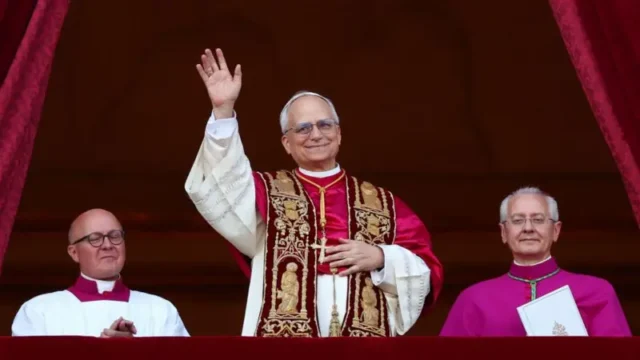
 

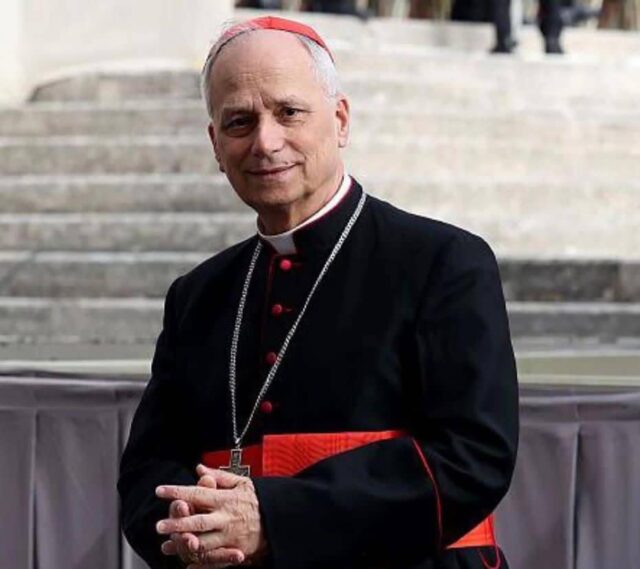
History was made today as Cardinal Robert Francis Prevost, a 69-year-old Chicago-born cleric, was elected the 267th pope of the Roman Catholic Church, taking the name Pope Leo XIV.

He is the first American in the Church’s two-millennia-long history to ascend to the papacy.

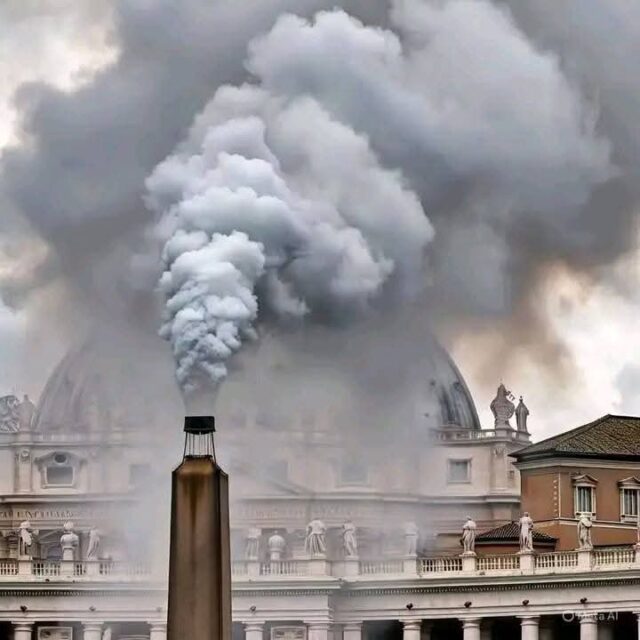
White smoke rising from the Sistine Chapel and the ringing of bells signaled the end of the conclave, sending waves of joy and anticipation through the crowds in St Peter’s Square.

Moments later, Pope Leo XIV stepped onto the Vatican balcony to the thunderous cheers of thousands of faithful gathered below.

“May peace be with all of you,” he began, speaking in confident Italian before briefly switching to Spanish to thank his former diocese in Peru, where he had served as a missionary and later as an archbishop.

“I would like this greeting of peace to reach all your hearts and families… and people around the world,” he said, his calm tone resonating with the sea of pilgrims, many of whom held candles or waved flags.

The crowd erupted into applause several times during his address, especially when he paid tribute to the late Pope Francis and called for global unity.

A passionate advocate of reform and dialogue, Pope Leo XIV emphasized the Church’s role as a beacon of hope in a divided world.

Concluding his address, the pope invited the crowd to join him in prayer.

As he began reciting the Ave Maria, the square grew still, then gradually filled with a collective hum, people praying and singing along, some in their native tongues.

With his head bowed and hands joined in reverence, Pope Leo XIV stood beneath the towering crucifix behind him, a powerful image symbolizing both continuity and new beginnings.

The new pope is expected to outline his vision and priorities during his inauguration Mass in the coming days.

But today, his first words as pontiff set the tone: a call for peace, prayer, and unity in a world that sorely needs it.

Habemus Papam: Pope Leo XIV has begun.

Google search engine

JUST IN: New Pope Unveiled, First In American History


Cardinal Robert Francis Prevost of the United States has been unveiled as the new pope, taking the name Pope Leone XIV, DAILY GAZETTE can report.

The announcement came moments after white smoke emerged from the chimney of the Sistine Chapel, signaling that the cardinal electors had reached a decision.

Cheers erupted from the crowd gathered in St Peter’s Square as Cardinal Jean-Pierre Ricard, the senior cardinal deacon, stepped onto the central balcony of St Peter’s Basilica and proclaimed the traditional Latin formula: “Annuntio vobis gaudium magnum: Habemus Papam!” — “I announce to you a great joy: We have a Pope!”

Pope Leone XIV, formerly the Prefect of the Dicastery for Bishops and a key figure in Church governance under Pope Francis, becomes the first American-born pontiff in the Church’s 2,000-year history.

His election marks a watershed moment for the global Catholic community, reflecting both the growing influence of the Church in the Americas and a continuation of efforts to address modern challenges facing the faith.

Wearing white papal vestments for the first time, the 69-year-old appeared calm and solemn as he waved to the crowd and offered his inaugural blessing, the Urbi et Orbi — “To the City and the World.”

In a brief address, the new pope thanked the cardinals for their trust and invoked the memory of his predecessor, Pope Francis, whose papacy was marked by reforms, humility, and a focus on social justice.

“I take this name, Leone, in honor of Pope Leo XIII, whose voice for the working poor and the dignity of labor inspires me still,” he said.

As the 267th successor of St. Peter, Pope Leone XIV faces a Church at a crossroads, grappling with declining vocations in the West, internal divisions between traditionalists and reformers, and the ongoing aftermath of abuse scandals.

Yet, his experience as a missionary in Latin America and administrator in Rome positions him uniquely to bridge divides.

Born in Chicago in 1955, Prevost was a member of the Order of St. Augustine and served as a bishop in Peru before being called to the Vatican.

Known for his deep spirituality, administrative skill, and quiet resolve, he has long been seen as a bridge-builder.

His papal inauguration is expected to take place within the next few days, at a Mass attended by global dignitaries and thousands of the faithful.

Meanwhile, pilgrims continue to flock to Rome, many moved by the significance of this moment.

Google search engine

BREAKING: New Pope Elected


In a historic moment for the Catholic Church and the global community, the College of Cardinals has elected a new pope following the death of Pope Francis, DAILY GAZETTE reports.

White smoke rose from the chimney of the Sistine Chapel on Thursday evening, announcing to the world that a new pope has been elected to lead the Roman Catholic Church’s 1.4 billion faithful.

The long-anticipated moment drew cheers and applause from the thousands gathered in St Peter’s Square, their eyes fixed on the Vatican skyline as the bells of St Peter’s Basilica began to toll.

This moment marks the end of a historic conclave, the largest in Church history, as 133 cardinals from across the globe cast their votes in solemn secrecy.

Their task: to choose a successor to Pope Francis, the Argentine reformer who died last month after a 12-year papacy marked by humility, inclusiveness, and bold reforms.

After two inconclusive rounds, signaled by black smoke on Wednesday and again on Thursday midday, the white smoke at just past 6:00 p.m. Rome time (1600 GMT) signified consensus.

The Church’s 267th pontiff has been chosen.

Inside the Vatican, the newly elected pope entered the traditional “Room of Tears,” where new popes often shed private emotion before donning the white cassock.

Soon after, he returned to the Sistine Chapel to receive the pledges of obedience from his fellow cardinals.

Now, the eyes of the world turn to the central balcony of St Peter’s Basilica. There, a senior cardinal will soon deliver the historic Latin phrase “Habemus Papam” , “We have a pope”, followed by the pope’s chosen name.

Then, for the first time, the new pontiff will greet the world and deliver his first Urbi et Orbi (“To the City and the World”) blessing.

The new pope assumes office at a time of global turbulence and internal Church struggles.

Alongside asserting moral leadership in an era of war, migration crises, and political extremism, he must also confront long-standing scandals of clerical abuse, waning Church attendance in the West, and the need for greater financial transparency within the Vatican.

The conclave itself reflected the Church’s diversity: a majority of voting cardinals were appointed by Pope Francis and represented 70 countries.

Yet despite the Francis-era appointments, uncertainty surrounded whether the electors would choose a candidate in his reformist image or turn toward a more conservative figure focused on traditional doctrine.

Church insiders and observers debated whether the next pope would be a pastoral leader or a skilled diplomat, someone steeped in Vatican bureaucracy or a fresh voice from the Global South, where Catholicism continues to flourish.

Before the conclave began, Cardinal Giovanni Battista Re, the dean of the College of Cardinals, urged his peers to elect someone capable of unifying a fragmented Church and providing clear spiritual leadership in an increasingly polarized world.

The new pope’s public inauguration Mass is expected within days, attended by global leaders and religious figures.

He is also expected to tour St Peter’s Square in the popemobile and deliver a homily laying out his vision for the Church’s future.

Google search engine

Second Black Smoke: Cardinals Yet To Elect New Pope As Conclave Continues


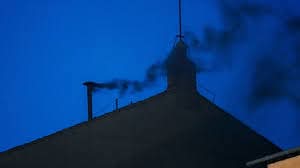
Black smoke rose once again from the chimney of the Sistine Chapel on Thursday, signalling that Catholic cardinals have yet to elect a successor to Pope Francis, who passed away on April 21 at the age of 88.

The plume of smoke, witnessed by thousands gathered in St Peter’s Square, came after the second and third rounds of voting failed to yield a winner.

According to tradition, black smoke means no candidate has received the required two-thirds majority, 89 of the 133 votes, while white smoke indicates the election of the new, 267th pope.

Among those observing the event was Barbara Mason, 50, who traveled from Canada.

“I don’t want it rushed , whatever they need to do to make the right decision,” she said, expressing hope for a pontiff who would uphold Pope Francis’s progressive values, particularly on climate and migration.

She added that she is praying the Church continues “going forward, not going backward.”

The 133 cardinal electors, all under the age of 80, entered the conclave on Wednesday evening and are now completely sequestered from the outside world.

Their only communication comes in the form of smoke rising from the chapel.

Each round of ballots is burned in a traditional cast iron stove, and chemicals added to a newer stove determine the smoke’s color.

Paolo Cabrera, 40, from the Philippines, arrived early with his wife Cynthia to secure a spot near St Peter’s Basilica.

“It is very, very exciting to be here,” he said.

The couple expressed their support for Cardinal Luis Antonio Tagle but emphasized their faith in divine guidance: “Anybody appointed by God,” they said, would be acceptable.

The cardinals are lodged in the Santa Marta guesthouse and attend private Mass each morning before beginning their voting sessions, which may include up to four rounds daily.

On Thursday, they held two votes in the morning and were expected to conduct two more in the afternoon, with additional ballots planned for Friday if necessary.

“The church has many divisions between liberals and conservatives, which are divisions that should not be, because I believe that the Church is universal,” said Juan Benitez, 37, a Colombian pilgrim reflecting on the challenges the new pope will face.

This year’s conclave is the most diverse and largest in history, drawing participants from nearly 70 countries. Roughly 80 percent of the electors were appointed by Pope Francis, suggesting his influence will loom large over the outcome.

Still, no clear frontrunner has emerged. Potential candidates include Italian Cardinal Pierbattista Pizzaballa, Hungarian Cardinal Peter Erdo, and Sri Lankan Cardinal Malcolm Ranjith.

As anticipation builds, Catholics around the world continue to wait for the moment white smoke will rise, heralding the next spiritual leader of the world’s 1.4 billion Catholics.

Google search engine

Anambra Monarchs Honour President Tinubu With ‘Dike Si Mba’ Title


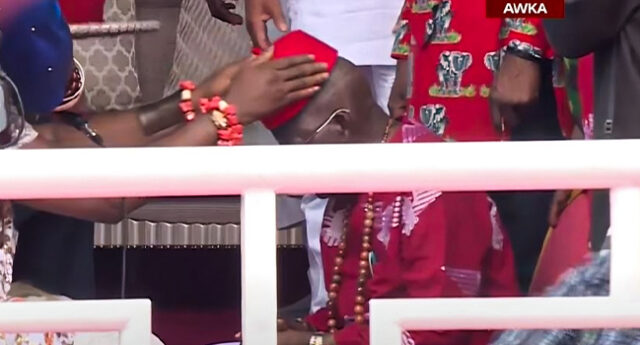
President Bola Ahmed Tinubu was on Thursday conferred with the traditional chieftaincy title of ‘Dike Si Mba’ by traditional rulers in Anambra State, recognising him as a “Hero from Another Land.”

The honour was bestowed during his official visit to the state, with the ceremony taking place in Awka.

The Chairman of the Anambra State Traditional Rulers Council, Igwe Chidubem Iweka of Obosi, led other monarchs in conferring the title, which reflects respect and acknowledgement from all the communities in Anambra.

President Tinubu arrived at Chinua Achebe International Airport, Umueri, at about 12:15 p.m. and was received by Governor Chukwuma Soludo, Deputy Governor Onyeka Ibezim, and other senior government officials.

During his visit, the President inaugurated Anambra’s first-ever Government House, a landmark achievement for the state more than three decades after its creation.

He also commissioned a number of other infrastructure projects executed by Governor Soludo’s administration.

This marks President Tinubu’s second trip to the South-East region in 2025, following his January visit to Enugu State.

Google search engine

COREN Blames Lack Of Transparency At TCN For Repeated Grid Failures


The President of the Council for the Regulation of Engineering in Nigeria (COREN), Prof. Sadiq Zubair Abubakar, has blamed the persistent collapse of Nigeria’s national power grid on the lack of transparency within the Transmission Company of Nigeria (TCN).

Speaking during a courtesy visit to the Infrastructure Concession Regulatory Commission (ICRC), Prof. Sadiq highlighted structural flaws in TCN’s operations, noting that its centralized control leaves no room for independent investigation into the causes of grid failures.

“We are not happy with the incessant failure of the national grid, what we discovered is that the TCN has been a regulator and player in a way and we have made submission that that cannot be,” he said.

Describing the situation as a systemic flaw, the COREN president pointed out that TCN acts as designer, installer, maintainer, and repairer of the grid, effectively eliminating any form of external oversight.

“It is an aberration in any country, they design, install, maintain and when it fails they are the one that repairs it which is not to be so and nobody can independently investigate,” he added.

He expressed relief that the federal government had taken steps to address the issue.

“So we are happy that the government has listened to us and split the agency to make sure that the operator and regulatory aspect comes in handy as NERC is given more power to work with relevant agencies,” he said.

Prof. Sadiq also voiced concerns over COREN’s removal from the national budget, questioning how the council could fulfill its mandate without government funding.

“In the coming of this administration, we were defunded but how does the government want us to regulate engineering, investigate infrastructures, police expatriates that are taking the fortune of our citizens without this fund,” he said.

To address funding challenges, he disclosed that COREN is exploring innovative funding models and urged the ICRC to consider the council’s Public-Private Partnership (PPP) proposal for constructing its permanent headquarters in Jabi, Abuja.

In response, ICRC Director General Dr. Jobson Oseodion Ewalefoh emphasized the importance of enhancing engineering competencies across the country.

He stated, “There is the need for Nigerians to upscale their engineering skills to reduce employment gap, so that in the overall aspect, the development of Nigeria will be based on quality and resilient engineering.”

Dr. Ewalefoh assured that the ICRC is open to collaborating with COREN to support the realization of its proposed headquarters and strengthen its regulatory capacity.

Google search engine

APC Sets Up Committee To Amend Party Constitution, Appoints Buni As Chair


The All Progressives Congress (APC) has inaugurated an eight-member committee tasked with reviewing and amending its constitution, with Governor Mai Mala Buni of Yobe State appointed as chairman.

DAILY GAZETTE recalls that the last amendment to the APC constitution was carried out in 2022.

According to an internal memo signed by the party’s National Legal Adviser, Prof. Abdulkarim Abubakar Kana (SAN), who also serves as secretary to the committee, the decision to establish the committee was approved by the party’s National Executive Committee (NEC) at its meeting held on February 26, 2025.

“This is to formally notify all members of staff that the National Chairman, Dr. Abdullahi Umar Ganduje, CON, pursuant to the approval of the National Executive Committee (NEC) at its meeting held on the 26th of February, 2025, has constituted the APC Constitution Amendment Committee,” the memo stated.

While the document did not specify the sections of the constitution slated for revision, it confirmed that members of the committee had already received their letters of appointment and commenced work earlier in February.

“Letters of appointment have already been dispatched and received by all members of the committee and work on the draft constitution commenced in the month of February 2025,” the memo added.

The memo, titled “Notification of the establishment of the committee for the review and amendment of the party’s constitution,” noted that the APC Legal Department would act as the secretariat for the committee.

“The legal department serves as the secretariat to the committee responsible for receiving all correspondences, memoranda and submissions necessary for the smooth operation and success of the amendment process,” it said.

Other members of the committee include Governor Abdullahi Sule of Nasarawa, Governor Babagana Zulum of Borno, former Katsina State Governor Aminu Bello Masari, Senate Leader Opeyemi Bamidele (APC, Ekiti Central), Miriam Onuoha, and Alphonse Ogah.

Google search engine

Suspect In Murder Of Anambra Lawmaker Re-Arrested After Escape


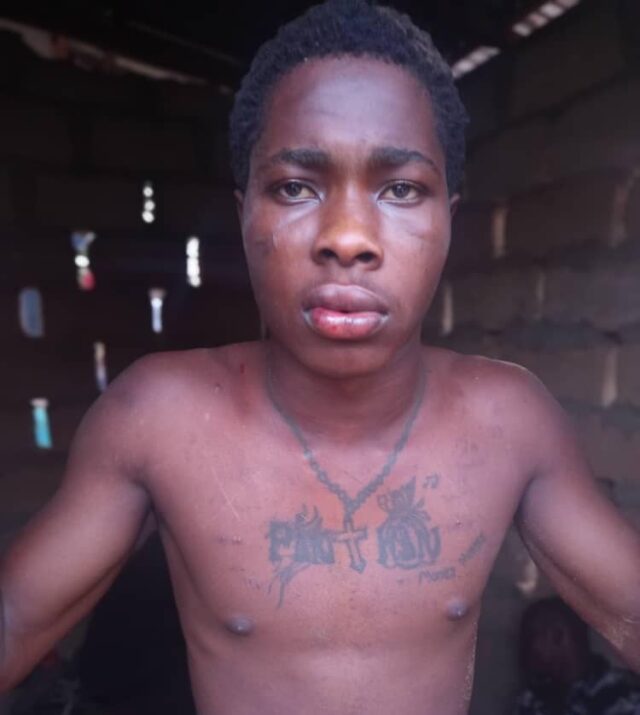
Ikem Ossai, the suspect who escaped custody after being arrested in connection with the murder of Anambra State House of Assembly member Hon. Justice Azuka, has been re-arrested.

He was apprehended in Warri, Delta State, by a police team led by Chief Superintendent of Police (CSP) Ifeanyi Iburu, a former Officer in Charge of the Anambra Special Anti-Robbery Squad (SARS).

In response to the development, the Human Rights, Liberty Access, and Peace Defenders’ Foundation (HURIDE) praised the police for their professionalism.

In a statement signed by its Executive Director, Dede Uzor A. Uzor, the group expressed satisfaction at the news of Ikem’s arrest.

“We are elated when we got the news on Wednesday 7, May 2025 at about 8:33 p.m.,” the statement read.

Ikem and his associate, Chinedu, had reportedly escaped from police custody in Obosi, Idemili North Local Government Area, when officers took them to the scene to arrest a suspected receiver of stolen vehicles used during their kidnap operations, including the one that led to the death of Hon. Azuka.

A known fugitive, Ikem is alleged to have fled from multiple police encounters linked to kidnapping and violent crimes.

He had earlier escaped during a covert operation in Inland Town, where three of his gang members were captured by the special Anti-Robbery Squad.

He also narrowly escaped lynching at Iyiowa, Odekpe in Ogbaru LGA, when an angry mob set two of his accomplices ablaze.

Years ago, Ikem managed to flee another deadly operation on Atani Road near the former Power Mike Sports Centre, where several of his colleagues were killed by a mob.

Despite these escapes, Ikem reportedly continued his violent activities, leaving a trail of terror, maiming, and deaths in his wake.

Originally from Aboh in Delta State, he had relocated with his family to Ogbe-Ukwu in Ogbaru LGA of Anambra State, where he remained a menace to residents.

While applauding the police and CSP Iburu, HURIDE called for renewed efforts to track down Chinedu, Ikem’s driver and partner in crime, who also escaped during the police operation in Obosi.

Google search engine

‘Defiant’ Ekiti PDP Holds Congresses Despite Court Order


The Peoples Democratic Party (PDP) in Ekiti State went ahead with its local government and state congresses on Wednesday, declaring the process peaceful and successful, even as a court order had sought to halt the exercise.

Earlier in the day, Justice E. B. Omotosho of the Ekiti State High Court in Ado Ekiti issued an interim injunction restraining the PDP from conducting the congresses.

The ruling was based on an ex parte motion filed by Afolabi Adedeji in suit number HAD/424M/2025.

The matter, which involves the PDP, its acting National Chairman Umar Damagun, National Organising Secretary Umar Bature, Ekiti State Caretaker Chairman Dare Adeleke, and the Independent National Electoral Commission (INEC), has been adjourned to May 14, 2025, for hearing of the motion on notice.

Adedeji is asking the court to bar the defendants and their agents from recognising or accepting any list of individuals who did not obtain nomination forms, participate in the election process, or emerge through the proper voting procedure at the PDP’s ward congresses.

He contends that only delegates elected on March 15, 2025, should be acknowledged.

He also requested the court’s permission to serve the originating summons and related documents via substituted means to defendants located outside Ekiti jurisdiction, including the Federal Capital Territory.

Granting the request, Justice Omotosho ruled, “Leave is hereby granted to the claimant/applicant to serve the 1st, 2nd, 3rd, and 4th defendants the originating process with its accompanying documents by substituted means, by pasting the same on the wall of the 1st defendant’s office located on Ajilosun Street, Ado Ekiti, Ekiti State.”

He further stated, “In addition, the claimant/applicant is granted leave to serve the 2nd, 3rd, and 4th defendants via their WhatsApp phone numbers — 08047677070, 08035961850, and 08033242822, respectively.”

The court also directed all parties to maintain the status quo pending the determination of the motion on notice.

Despite the ruling, the PDP Caretaker Committee in Ekiti proceeded with the congress, applauding the process and turnout.

In a statement issued in Ado Ekiti, the Ekiti PDP Caretaker Chairman, Dare Adeleke, thanked the party’s National Working Committee, INEC, and security operatives for ensuring a smooth exercise.

“We are thrilled that the congress commenced and concluded smoothly without any hitches. It is on record that we started ahead of schedule at 8 am and by noon, we had concluded,” Adeleke said.

He praised the Electoral Panel chaired by Dr. Eddy Olafeso for their commitment, describing their efforts as “marvellous.”

“Today’s peaceful outing shows how organised and dedicated the committee was in preparing for this congress,” he added.

Google search engine

World Awaits As Conclave Begins Another Vote Today


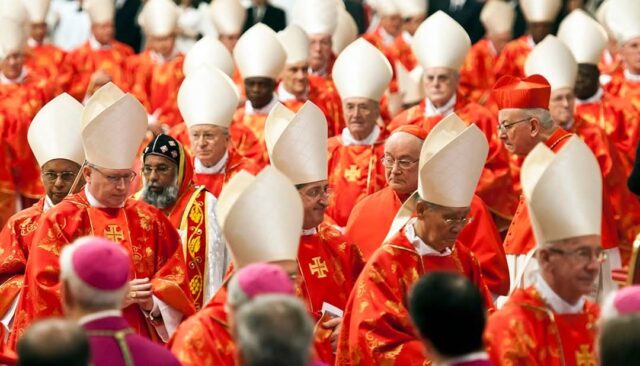
The eyes of the world turned once again to the Vatican yesterday as 133 cardinal electors were formally sealed inside the Sistine Chapel, beginning the sacred and highly secretive process of choosing a new pope.

This comes just over two weeks after the passing of Pope Francis, whose 12-year pontificate reshaped global Catholicism through progressive reforms and outspoken moral leadership.

The solemn ritual was marked at approximately 5:45 p.m. (1545 GMT) when Vatican master of ceremonies, Monsignor Diego Ravelli, intoned the Latin command “Extra Omnes”, “Everyone out”, ordering all non-electors to exit the chapel.

He then closed the large wooden doors, symbolizing the start of the conclave.

Earlier, the cardinals gathered in silent reflection at the Pauline Chapel before processing into the iconic 15th-century Sistine Chapel, where they took a collective oath of secrecy.

One by one, they approached the altar beneath Michelangelo’s towering Last Judgement fresco to make individual vows, swearing to maintain confidentiality on pain of excommunication.

This conclave is historic not only for its context but also for its diversity. Of the 135 eligible electors, 133 are participating, representing 71 countries across five continents, the largest and most international gathering in Church history.

Two cardinals, Antonio Cañizares of Spain and John Njue of Kenya, are absent due to illness, while Bosnian Cardinal Vinko Puljić will vote from his room at the Casa Santa Marta because of health issues.

Pope Francis appointed 108 of the electors, a significant factor likely to influence the ideological direction of the Church.

Twenty-two were appointed by Pope Benedict XVI, and five by Pope John Paul II.

With no clear frontrunner, speculation is intense. Among those viewed as leading candidates:

Fridolin Cardinal Ambongo Besungu (65), the outspoken Archbishop of Kinshasa, DR Congo, is seen as a powerful voice from Africa.

Pietro Cardinal Parolin (70), the current Vatican Secretary of State and seasoned diplomat from Italy.

Matteo Cardinal Zuppi (69), Archbishop of Bologna, noted for his work with peace and marginalized communities.

From Asia, Luis Antonio Cardinal Tagle (67) and Pablo Virgilio Cardinal David (66) of the Philippines are seen as contenders with deep pastoral and missionary experience.

Other prominent names include Jean-Claude Cardinal Hollerich (66) of Luxembourg, Joseph Cardinal Tobin (72) of the U.S., Tarcisius Cardinal Isao Kikuchi (66) of Japan, and Cristóbal Cardinal López Romero (72), the Archbishop of Rabat.

As the cardinals deliberate, attention turns to the future direction of the Church.

Will the next pope build upon Francis’ legacy of reform, outreach to the margins, and commitment to social justice? Or will a new leader chart a more conservative path?

In an age marked by declining church attendance in the West, ongoing fallout from abuse scandals, and shifting geopolitical realities, the next pontiff will need to command both moral authority and global vision.

Many observers believe the future of Catholicism lies in the Global South, particularly in Asia and Africa, regions where the faith is vibrant and growing.

The world now waits for the appearance of white smoke from the Sistine Chapel chimney, signaling that a new pope has been chosen.

Google search engine

MOST COMMENTED

- Advertisement -
Google search engine