Home Blog Page 43

Full List: US Set To Deport 79 Nigerians On ‘Worst-Of-The-Worst’ Criminal List

 

Findings from the DHS website on Monday showed that the Nigerians were convicted of various offences including fraud, drug peddling, assault, manslaughter, robbery, and related crimes.

The United States Department of Homeland Security (DHS) has announced plans to deport at least 79 Nigerians listed among what it described as the “worst of the worst” criminal aliens in the country.

Findings from the DHS website on Monday showed that the Nigerians were convicted of various offences including fraud, drug peddling, assault, manslaughter, robbery, and related crimes.

An accompanying note explained that the individuals were arrested as part of an intensified nationwide crackdown on criminal immigrants.

“The U.S. Department of Homeland Security is highlighting the worst of the worst criminal aliens arrested by the U.S. Immigration and Customs Enforcement,” the statement read.

“Under Secretary Noem’s leadership, the hardworking men and women of DHS and ICE are fulfilling President Trump’s promise and carrying out mass deportations, starting with the worst of the worst, including the illegal aliens you see here.”

Those listed include Boluwaji Akingunsoye, Ejike Asiegbunam, Emmanuel Mayegun Adeola, Bamidele Bolatiwa, Ifeanyi Nwaozomudoh, Aderemi Akefe, Solomon Wilfred, Chibundu Anuebunwa, Joshua Ineh, Usman Momoh, Oluwole Odunowo, Bolarinwa Salau, and Oriyomi Aloba.

Others named are Oludayo Adeagbo, Olaniyi Akintuyi, Talatu Dada, Olatunde Oladinni, Jelili Qudus, Abayomi Daramola, Toluwani Adebakin, Olamide Jolayemi, Isaiah Okere, Benji Macaulay, and Joseph Ogbara.

Also on the list are Olusegun Martins, Kingsley Ariegwe, Olugbenga Abass, Oyewole Balogun, Adeyinka Ademokunla, Christian Ogunghide, Christopher Ojuma, Olamide Adedipe, Patrick Onogwu, Olajide Olateru-Olagbegi, and Omotayo Akinto.

Others include Kenneth Unanka, Jeremiah Ehis, Oluwafemi Orimolade, Ayibatonye Bienzigha, Uche Diuno, Akinwale Adaramaja, Boluwatife Afolabi, Chinonso Ochie, Olayinka A. Jones, Theophilus Anwana, Aishatu Umaru, and Henry Idiagbonya.

Further names are Okechukwu Okoronkwo, Daro Kosin, Sakiru Ambali, Kamaludeen Giwa, Cyril Odogwu, Ifeanyi Echigeme, Kingsley Ibhadore, Suraj Tairu, Peter Equere, Dasola Abdulraheem, Adewale Aladekoba, and Akeem Adeleke.

Also included are Bernard Ogie Oretekor, Abiemwense Obanor, Olufemi Olufisayo Olutiola, Chukwuemeka Okorie, Abimbola Esan, Elizabeth Miller, Chima Orji, Adetunji Olofinlade, Abdul Akinsanya, Elizabeth Adeshewo, Dennis Ofuoma, and Boluwaji Akingunsoye.

Others listed are Quazeem Adeyinka, Ifeanyi Okoro, Oluwaseun Kassim, Olumide Bankole Morakinyo, Abraham Ola Osoko, Oluchi Jennifer, and Chibuzo Nwaonu.

President Donald Trump’s administration has continued its aggressive crackdown on criminal and illegal immigrants across the United States, with many Nigerians reportedly affected by the policy.

It was widely reported that  some Nigerians have gone into hiding while others are quietly returning home amid the intensified deportation drive led by the Immigration and Customs Enforcement (ICE).

The sweeping enforcement actions — including house-to-house raids — have triggered fear, controversy and protests in several parts of the country, particularly following a series of high-profile incidents involving federal immigration officers.


Google search engine

Snakebite Tragedy: Abuja Singer Ifunanya Nwangene’s Body Moved To Enugu


The body of Abuja-based singer, Ifunanya Nwangene, who died after a snake bite, has been transported to her father in Enugu State, the Abuja Metropolitan Music Society Choir has said.

The choir, in a detailed account released on Monday and signed by its director, Sam Ezugwu, provided a timeline of events leading to Nwangene’s death, amid public debate over the availability of antivenom and allegations of medical negligence.

According to the statement, the incident began at 10:13am on Saturday when a member of the choir, Stephanie, sent an urgent message to the Amemuso Choir WhatsApp group asking for assistance around Jabi and the Federal Medical Centre, Abuja.

“I immediately called her to ask what was wrong. She informed me that Ifunanya had been bitten by a snake,” Ezugwu said.

In a copy of the statement issued, he said emergency arrangements were made as members of the choir, including Vincent, proceeded to FMC, while others also made their way to the hospital.

Upon arrival, Ezugwu said doctors were already attending to the singer.

“She was struggling to breathe, had been placed on oxygen, and was unable to speak, though she tried to communicate using hand gestures,” the statement read.

The choir director said a doctor at the emergency ward confirmed that Nwangene arrived at the hospital on her own and had explained that she was bitten by a grey snake.

He added that her uncle, identified as Joseph, was also present at the hospital.

Nwangene was placed on a drip and administered antivenom alongside other treatments. However, the statement said doctors later informed the team that additional medication, including Neostigmine, was urgently required, as the hospital’s supply had been exhausted.

After confirming availability at a pharmacy near the National Hospital, Ezugwu said he and Vincent immediately went to purchase the medication.

“As we were leaving the emergency ward, I noticed that Ifunanya appeared no longer to be breathing.

“However, since the doctors were still actively checking her blood pressure and administering interventions, I left with cautious hope,” he said.

While they were on their way back to FMC, Ezugwu said they were informed that doctors had commenced resuscitation efforts. Moments later, they received confirmation that the singer had been pronounced dead.

“We returned to the hospital to find Ifunanya’s lifeless body on the bed. We cried, prayed, screamed, but she could no longer hear us,” the statement added.

The choir further disclosed that inquiries revealed Nwangene was bitten on the wrist by a snake while sleeping in her room at Lugbe, Abuja, between 8:00am and 9:00am.

According to the account, neighbours tied her hand to slow the spread of the venom and attempted to help her get to the hospital.

A neighbour’s vehicle reportedly failed to start, forcing her to run about 500 metres to the estate gate before taking a motorcycle to Divine Health Hospital, where she was referred to FMC due to the non-availability of antivenom.

While en route to FMC at about 9:40am, Nwangene reportedly contacted friends, family members and the choir for help.

Ezugwu said her father, Mr Nwangene, who was in constant communication with those on ground, later requested that arrangements be made to transport his daughter’s body to Enugu.

The body was subsequently moved to the mortuary, embalmed and conveyed by ambulance to Enugu after prayers were said at Guardian Angel Catholic Chapel, Lugbe, by the Assistant Parish Priest, Fr Stephen Biodun.

Following her death, a snake handler was engaged to inspect her residence.

“A medium-sized cobra was found inside her room, another smaller snake near her doormat, and a third in a nearby compound. It was concluded that the cobra was responsible for the fatal bite,” the statement said.

Meanwhile, DAILY GAZETTE had earlier reported that the Federal Capital Territory Administration assured residents that antivenom is fully stocked and accessible in all FCTA-owned hospitals and public health centres.

The Mandate Secretary of the FCT Health Services and Environment Secretariat, Adedolapo Fasawe, said the territory maintains sufficient supplies of polyvalent and multivalent antivenoms.

“Different forms and types of anti-snake venom are widely available across FCTA-owned hospitals and public health facilities,” she said, adding that stocking decisions are guided by collaboration with veterinary doctors to identify common snake species in the FCT.

She said the antivenoms are centrally stored at the Abuja Central Medical Stores and managed to ensure quality and cold-chain integrity.

Also reacting, the Federal Medical Centre, Abuja, denied allegations of negligence, saying all necessary medical interventions were administered.

“Our medical staff provided immediate and appropriate treatment, including resuscitation efforts, intravenous fluids, intranasal oxygen, and the administration of polyvalent snake antivenom,” the hospital said.

FMC added that Nwangene suffered severe neurotoxic complications and deteriorated suddenly while being prepared for transfer to the Intensive Care Unit.

“Despite all efforts to stabilise her condition and provide CPR, we were unable to revive her,” the statement said.

The hospital dismissed claims of non-availability of antivenom as unfounded.

The Amemuso Choir described Nwangene’s death as a major loss to Abuja’s music community, noting that burial arrangements would be announced later.

Google search engine

NECO Releases 2025 SSCE External Results As Over 80% Record Five Credits

The National Examinations Council has released the results of the 2025 Senior School Certificate Examination External, with more than 80 per cent of candidates recording five credits and above.

The announcement was made on Tuesday by the Registrar and Chief Executive of NECO, Prof. Dantani Wushishi, during a press briefing at the council’s headquarters in Minna, Niger State.

Speaking in a video shared on NECO’s official X handle, Prof. Wushishi formally declared the results released and urged candidates to check their performance on the council’s website using their examination registration numbers.

According to him, a total of 96,979 candidates registered for the examination, comprising 51,823 males, representing 53.43 per cent, and 45,156 females, accounting for 46.56 per cent.

Out of this number, 95,160 candidates eventually sat for the examination across sixteen subjects.

In English Language, 93,425 candidates participated, with 73,167, representing 78.32 per cent, obtaining credit passes and above.

For Mathematics, 93,330 candidates sat for the subject, out of which 85,256, or 91.35 per cent, achieved credit and above.

Overall performance showed that 68,166 candidates, representing 71.63 per cent, obtained five credits and above including English Language and Mathematics.

A total of 82,082 candidates, or 86.26 per cent, recorded five credits and above irrespective of English and Mathematics.

On examination malpractice, the NECO Registrar disclosed that 9,016 candidates were booked for various offences, marking a 31.7 per cent increase compared to the 6,160 cases recorded in 2024.

He added that five supervisors from the Federal Capital Territory, Kano, Adamawa, and Ondo states were recommended for blacklisting for their roles in aiding and abetting malpractice.

Four examination centres—two in Niger State and one each in Yobe and Kano—were also recommended for de-recognition due to whole-centre malpractice.

The SSCE External examination is designed mainly for private candidates who missed the internal examination or seek to improve their previous results, providing an alternative certification pathway outside the regular school system.

Google search engine

Court Sentences Man To Death By Hanging For K!lling Of Herdsman

A High Court of Nasarawa State sitting in Lafia has sentenced Saidu Idi to death by hanging after finding him guilty of armed robbery and culpable homicide.

The verdict was delivered on Monday by the Chief Judge of the state, Justice Aisha Muhammed Usman, in a case linked to an incident that occurred in 2015.

Idi was arraigned on a three-count charge bordering on criminal conspiracy, armed robbery and culpable homicide.

While the court discharged him on the charge of conspiracy, it held that the prosecution proved the offences of armed robbery and culpable homicide beyond reasonable doubt.

According to the court, the victim, identified as a herdsman, was attacked in the Kopuna area of one of the local government areas in the state.

Evidence presented before the court showed that the victim was first shot before his money and other valuables were taken.

The Attorney-General of Nasarawa State and Commissioner for Justice, Isaac Danladi, who led the prosecution, described the judgment as a landmark, noting that the case had lasted for about 11 years.

He said both the prosecution and the defence were given adequate opportunity to present their cases, stressing that the court delivered its judgment without fear or favour.

Danladi added that the ruling would serve as a deterrent to criminals in the state.

However, counsel to the defendant, Chidi Okorie Kanu, faulted the judgment and announced plans to challenge it at the Court of Appeal.

Kanu said the defence was dissatisfied with the decision and would carefully study the judgment before filing an appeal.

He cited alleged inconsistencies in the prosecution’s case, particularly the testimony of one of the witnesses, whom he said could not clearly recall making a statement to the police.

According to him, the appellate court would be asked to review the propriety of the conviction and sentence.

Google search engine

No Scripture Bans Tattoos, Christian Faith Not About Body Marks – Pastor Kingsley Okonkwo

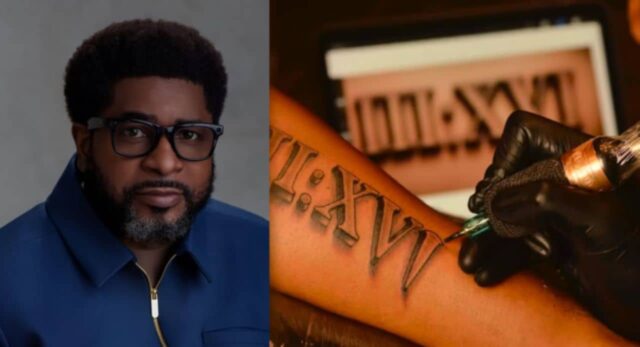
Founder of the David Christian Centre and relationship coach, Pastor Kingsley Okonkwo, has defended his decision to get a tattoo, insisting that there is no scriptural basis forbidding Christians from having tattoos.

The cleric recently sparked debate on social media after unveiling a tattoo on his arm bearing the Roman numeral “3:16,” a reference to John 3:16 of the Bible.

Critics faulted the action, citing Leviticus 19:28, which warns against marking the body.

Responding to the backlash, Okonkwo dismissed the criticisms as rooted in personal preferences and outdated religious traditions rather than clear biblical instruction.

He argued that nowhere in the New Testament is there an explicit prohibition against tattoos for Christians.

“There is no scripture that says a child of God cannot have a tattoo,” he said.

“People are projecting their personal convictions, church culture, or what they believe the Holy Spirit told them onto others. That is not how faith works.”

The pastor challenged his critics to provide either scriptural or scientific evidence showing that tattoos negatively affect a person’s character or spirituality.

“Someone must explain how ink on the skin suddenly makes a person immoral or ungodly. There must be proof, not assumptions,” he added.

Okonkwo also questioned the selective moral outrage surrounding tattoos, noting that practices once condemned in churches, such as wearing makeup, earrings, jeans, or human hair, are now widely accepted.

In a TikTok video addressing critics, he argued that eyebrow tattoos and microblading, commonly practised by many Christians, fall within the same category of body markings.

“People criticising tattoos are doing eyebrow tattoos and wearing human hair to church. If painting eyebrows is acceptable, then tattoos should not suddenly be treated as evil,” he said.

He further likened the stigma around tattoos to the church’s historical aversion to politics, arguing that shunning certain spaces only leaves them to those perceived as immoral.

Okonkwo acknowledged that tattoos are sometimes associated with negative stereotypes but maintained that character, not appearance, defines a person’s values.

According to him, many responsible and morally upright individuals have tattoos.

Google search engine

JUST IN: NLC, TUC Call Off FCT Protest After Meeting With Wike, Workers Resume Duties

The Nigeria Labour Congress (NLC) and the Trade Union Congress (TUC) have suspended their planned protest in the Federal Capital Territory, directing workers under the Federal Capital Territory Administration (FCTA) to resume their duties immediately.

The decision followed an overnight engagement between labour leaders, the Minister of the FCT, Nyesom Wike, and members of the Senate Committee on the FCT.

The meeting, which began late Monday and continued into the early hours of Tuesday, resulted in an agreement that led to the unions halting the protest and restoring normal operations across FCTA offices.

Details shortly…

Google search engine

Wike-Backed PDP Announces Dates For National Convention, Vows Party Stability

The Abdulrahman Mohammed-led National Caretaker Committee of the Peoples Democratic Party (PDP) has announced March 28 and 29, 2026, as the dates for its long-awaited National Convention in Abuja.

The Board of Trustees (BoT), during an emergency National Executive Committee (NEC) meeting on Monday, reaffirmed its commitment to constitutional order, party unity, and the rule of law.

The 105th NEC meeting extensively discussed the state of the party, recent judicial developments, and preparations for internal democratic processes.

According to a communiqué issued at the end of the meeting, the convention will elect members of the National Working Committee (NWC) and other statutory organs of the party.

NEC described the exercise as a critical step to stabilise the PDP and strengthen it ahead of future elections.

NEC also approved a timetable for congresses nationwide leading up to the convention, with ward and local council congresses scheduled for February, followed by state congresses in March.

Party sources said these exercises are intended to ensure a smooth transition into the national convention, which leaders believe will be a turning point in the party’s prolonged leadership crisis.

The committee has directed the National Caretaker Committee to activate convention sub-committees immediately and commence full logistical and administrative preparations to guarantee a transparent, inclusive, and credible convention.

NEC also extended the tenure of the National Caretaker Committee as well as state and zonal caretaker committees pending the conduct of the national and state congresses.

In reaffirming the authority of the caretaker leadership, NEC emphasized that the Abdulrahman Mohammed-led committee, with Senator Samuel Anyanwu as secretary, remains the only lawful administrative organ of the party until a substantive NWC is elected.

Referring to the Federal High Court, Ibadan’s declaratory judgment in favour of the Caretaker Committee, Mohammed described the ruling as “clear and unambiguous,” assuring that the committee would continue to pursue justice and stability within the law.

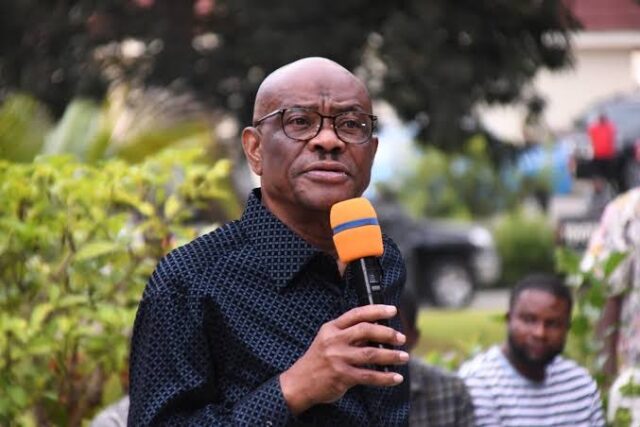
Meanwhile, Minister of the Federal Capital Territory (FCT), Nyesom Wike, expressed active interest in the activities of the Oyo State PDP, stressing that his focus is on the survival, stability, and success of the party nationwide.

“Let me declare my interest clearly: I am interested in the survival and success of this party. I am also interested in all the happenings in the Oyo PDP. That is all I am interested in,” Wike stated.

Google search engine

I Got N958m As Gifts, N374m Salary, Allowances – Embattled Malami Tells Court

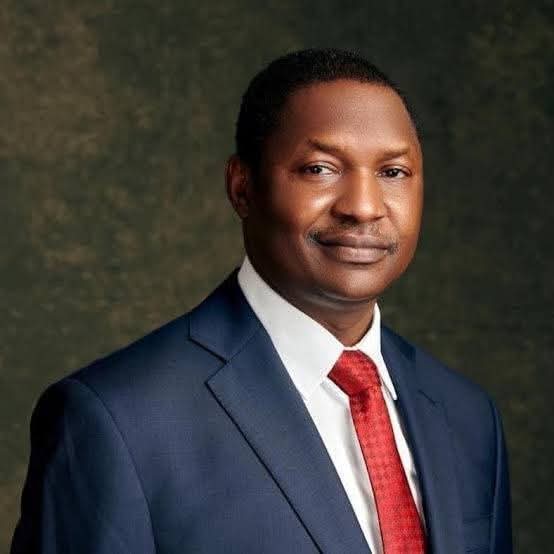
Former Attorney-General of the Federation (AGF), Abubakar Malami, has filed a motion challenging the interim forfeiture of some of his properties seized by the Economic and Financial Crimes Commission (EFCC).

The properties, 57 in total, were temporarily forfeited to the federal government on January 6 by a Federal High Court in Abuja, presided over by Judge Emema Nwite, following an ex parte application by the EFCC.

The properties are allegedly linked to Malami and two of his sons, Abdulaziz Malami and Abiru Rahman Malami.

Malami, through his counsel Joseph Daudu (SAN), argued that the EFCC obtained the order by misrepresenting facts and suppressing material information.

He asked the court to dismiss the forfeiture to prevent “conflicting outcomes and duplicative litigation,” claiming the proceedings violate his right to property, presumption of innocence, and family life.

The former AGF specifically challenged the interim forfeiture of three properties, including a plot on Lamido Crescent, Kano; a duplex in Wuse II, Abuja; and the ADC Kadi Malami Foundation Building, purchased for N56 million and held in trust for his late father’s estate.

Daudu outlined Malami’s declared sources of income, including N374 million from salaries, allowances, severance, and sitting allowances from board memberships; N574 million from disposal of assets; N10.02 billion from business turnover; N2.52 billion in business loans; N958 million in traditional gifts; and N509.88 million from proceeds of a book he authored.

He argued these legitimate sources demonstrate that the properties were lawfully acquired.

Legal experts, however, have noted that public officers in Nigeria are prohibited from accepting gifts that could influence their official duties.

Obioma Ezenwobodo, former NBA Garki Branch chairman, said such gifts could constitute corruption.

Similarly, civil society groups and activists have questioned the legitimacy of the sums claimed by Malami, highlighting potential violations of anti-corruption laws.

The Revenue Mobilisation Allocation and Fiscal Commission (RMAFC) notes that ministerial salaries in Nigeria are approximately N7.8 million annually, raising further scrutiny over Malami’s claims of N374 million in salary and N958 million in gifts.

The court has yet to schedule a hearing on the matter, and the case was returned to the Chief Judge for reassignment after being handled during the court’s vacation.

Malami is also facing a separate EFCC money laundering charge and is currently detained by the Department of State Services over allegations of terrorism financing.

Google search engine

ADC’s Claims Against Enugu APC Baseless, Political Hysteria – Dr. Ochie

Dr. Malachy Chuma Ochie has dismissed recent allegations by the African Democratic Congress (ADC) against the Enugu State Government and the All Progressives Congress (APC) as unfounded, alarmist, and devoid of evidence, describing them as “political hysteria masquerading as moral outrage.”

In a strongly worded response to a press release signed by Dr. Alex Obiechina on behalf of the ADC, Ochie said the claims were a mix of conjecture, exaggeration, and outright fabrication aimed at provoking fear rather than informing the public.

According to him, there is no policy, directive, circular, or administrative instruction issued by the Enugu State Government under Governor Peter Ndubuisi Mbah requiring civil servants, teachers, or local government workers to submit their Permanent Voter Cards (PVCs), Bank Verification Numbers (BVNs), National Identification Numbers (NINs), or bank details for political purposes.

“None exists,” Ochie stated, stressing that no civil servant, ministry, department, or official memo has been identified to support the allegations.

He challenged the ADC to produce at least one verifiable victim or authenticated instruction if its claims were genuine.

He described the press release as neither whistleblowing nor civic vigilance, but a fictional narrative presented as resistance politics.

“This is not opposition; it is puerile propaganda,” he said, adding that likening routine governance in Enugu State to “economic hostage-taking” and “institutional terror” amounted to what he called rhetorical vandalism.

While acknowledging the legitimacy of multiparty democracy and political pluralism, Ochie noted that belonging to different political parties, including the ADC, APC, or others, was healthy for democratic balance, particularly in areas such as Greater Awgu.

However, he warned that pluralism does not justify dishonesty or the manufacture of unverified claims.

“Oversized accusations without evidence do not strengthen opposition politics; they diminish it,” he said, arguing that credible opposition should focus on policy interrogation, budget scrutiny, timelines, and measurable alternatives rather than sensational allegations.

Ochie further contended that the ADC’s statement deliberately ignored what he described as the tangible performance record of Governor Peter Ndubuisi Mbah, citing infrastructure delivery, institutional reforms, fiscal discipline, urban renewal, and ongoing reforms in education and healthcare.

“These are not press statements; they are visible and measurable realities,” he said, adding that governance in Enugu State was driven by execution rather than propaganda.

He noted that Enugu residents and civil servants were discerning and politically conscious, insisting that democracy in the state was not as fragile as the ADC’s claims suggested.

“Opposition is welcome. Lies are not. Criticism is necessary. Falsehood is corrosive,” Ochie said, urging political actors to engage with facts, ideas, and credible alternatives rather than fear-mongering.

Google search engine

Gov Alia Loses In Court As Judge Nullifies Order Restricting Public Gatherings In Benue

A Benue State High Court sitting in Makurdi has set aside an executive order issued by Governor Hyacinth Alia restricting public gatherings across the state.

The executive order, signed by the governor in February 2024, imposed restrictions on public events, banning gatherings such as wakes, ceremonies and religious activities beyond 10pm, alongside other limitations.

The order was challenged by a former Publicity Secretary of the Peoples Democratic Party, Bemgba Iortyom, and a human rights activist, Adebayo Ogorry, who approached the court seeking its nullification.

Delivering judgment last Friday, Justice Theresa Igoche held that the executive order had no lawful foundation and accordingly quashed it in its entirety.

According to a statement issued by the plaintiffs on Monday, the court found that the Executive Order Act relied upon by the governor had earlier been nullified by the Supreme Court, rendering the order “without lawful basis or justification whatsoever.”

The court granted all the reliefs sought by the plaintiffs and issued a perpetual injunction restraining Governor Alia, his agents and privies from enforcing or giving effect to the executive order.

Justice Igoche further declared the order, signed on February 28, 2024, null and void, describing it as illegal, unreasonable, ultra vires the powers of the governor, and inconsistent with the provisions of the 1999 Constitution (as amended).

Reacting to the judgment, the plaintiffs described the ruling as a victory for the rule of law and constitutional democracy, saying it reaffirmed that citizens could defend their fundamental rights through the courts.

The suit, filed in June 2024, challenged the legality of the executive order, arguing that it violated the fundamental rights of residents of Benue State and amounted to an abuse of executive authority.

The plaintiffs contended that the order represented an attempt by the governor to exercise law-making powers not granted to him under the Constitution.

Among other reliefs, they sought a declaration that the requirement for organisers of rallies, wakes and other public gatherings to obtain permits from the Department of Public Order at the Ministry of Justice and Public Order, Benue State, was unconstitutional.

They argued that the requirement violated Sections 40, 41 and 45(1) of the 1999 Constitution, as well as Article 11 of the African Charter on Human and Peoples’ Rights.

The plaintiffs also challenged the Public Order Act, Cap. 382, Laws of the Federation of Nigeria, 2004, upon which the executive order was based, contending that it was inconsistent with constitutional provisions and the African Charter.

They further maintained that neither the governor nor any of the defendants had the legal authority under the Act or any other law to issue permits or impose restrictions on public gatherings, including events held after 10pm.

Google search engine

MOST COMMENTED

- Advertisement -
Google search engine