Home Blog Page 517

Soldiers, IDPs Among Over 200 Killed In Fresh Attacks On Benue Communities
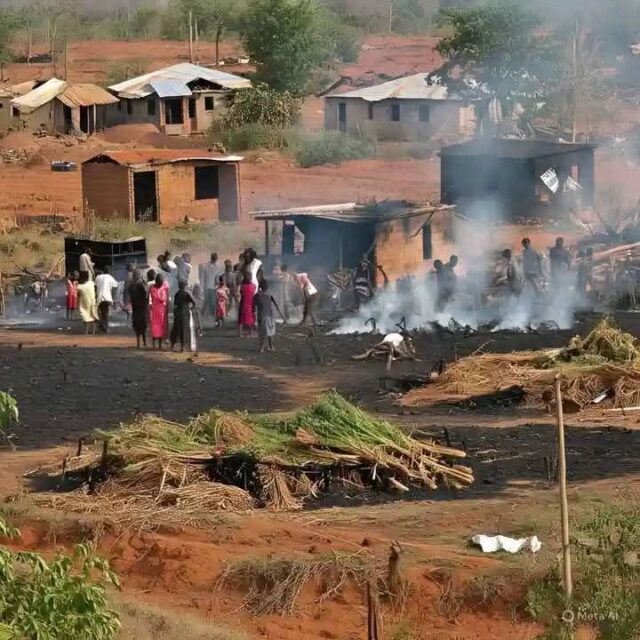
 

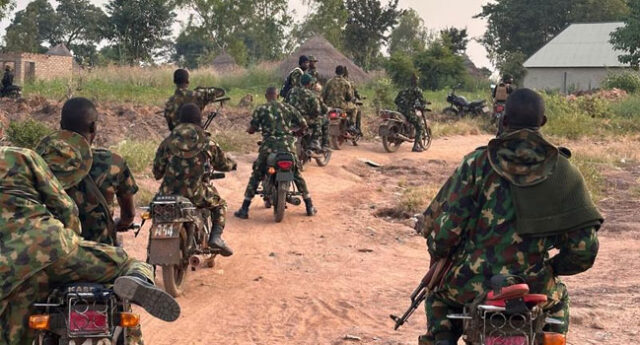
A fresh wave of violence swept across Benue State on Friday night, leaving more than 200 people dead, including Internally Displaced Persons (IDPs), security personnel, women, children, and residents of Yelewata and Daudu communities in Guma Local Government Area.

Eyewitnesses reported that the assaults were launched simultaneously by suspected armed herdsmen from both the eastern and western axes of Yelewata, catching local defenders and security operatives off guard.

In the chaos that followed, homes and market stalls sheltering displaced persons were set ablaze, and numerous victims, among them infants, were brutally killed.

According to community accounts, the Yelewata attack began around 11:00 pm.

Mr. Matthew Mnyan, a prominent figure in the community and former Acting Chairman of the Benue State Universal Basic Education Board (SUBEB), described the horror.

He stated:

“It began around 11 pm when they emerged from the western side, opening fire. Our youths and police resisted. Then another group attacked from the east and overwhelmed them.
They killed people, set stalls ablaze with petrol, and burnt homes.”

“Displaced individuals from Branch Udei and surrounding villages were inside those stalls. Shockingly, none of the soldiers intervened to protect them.”

“We’ve recorded over 200 fatalities, families of 12, 15 people, including husbands, wives, and children, have all been consumed by fire. About 46 wounded were taken to hospital; so far, 20 have died.”

Mnyan emphasized that the incident was clearly coordinated:

“We had prior alerts from Nasarawa State regarding attacks on Yelewata, Ukoho, Ortese, Yogbo, and Daudu. This was carried out simultaneously.”

In nearby Daudu, another wave of assailants launched an attack.

Despite a strong response from local youth and security forces, five personnel, including soldiers and police officers, lost their lives.

“Daudu’s defenders managed to repel the herd, but five soldiers and police personnel died. One was a Captain.”

“We understand that over 300 assailants had camped near Daudu.

The assailants seek to seize land. On Yelewata’s east side, Fulanis have occupied farmland and are refusing entry to others. That coordination from east and west was deliberate,” Mnyan added.

He also mentioned that the grieving community had briefly considered a public demonstration involving the display of bodies but reconsidered to avoid worsening tensions:

“The community briefly considered moving corpses to the main road in protest but abandoned the plan after recalling past incidents that resulted in additional fatalities.”

Chief Dennis Gbongbon, President of the Association of United Farmers Benue Valley (AUFBV), attributed the massacre to “Lakurawa bandits” and suspected herders.

“Reports indicate over 62 IDPs and farmers were killed in Yelewata; several homes and shops were burnt. As I speak, about 85 percent of victims are IDPs who fled from places such as Antsa, Dooka, Kadarko, and Giza, now hospitalised or missing.

These IDPs are still farmers at heart. Even when displaced, terror found them. This is a terrifying escalation.”

Confirming the dual attacks, Chief Joseph Har, Special Adviser to the Benue State Governor on Internal Security, said:

“I cannot give exact numbers yet as I was not on ground, but two separate incidents happened yesterday in Yelewata and Daudu.”

A military official, speaking anonymously, disclosed that two soldiers were among the casualties:

“We lost two military personnel in that attack.”

Meanwhile, the Benue State Police Command, through a statement by spokesperson DSP Udeme Edet, confirmed the assault and noted that tactical units were deployed swiftly to confront the attackers.

“Some attackers were killed.
It is with deep regret that we confirm civilian deaths and injuries. We are actively pursuing the attackers and will continue efforts to protect the public.”

Benue State has suffered frequent deadly confrontations between armed herders and local farming communities over the past decade.

The Guma, Logo, and Agatu local government areas have borne the brunt of this violence, leading to thousands being displaced and a chronic humanitarian emergency.

Despite numerous calls for federal support and military intervention, the attacks have continued, with land disputes and grazing rights at the heart of the conflict.

Google search engine

Why President Tinubu Withheld Fubara’s Reinstatement On June 12


For many Rivers State residents and supporters of Governor Siminalayi Fubara, June 12 was supposed to mark a turning point, a symbolic moment of democratic restoration.

Instead, hopes of reinstating Fubara, his deputy Prof. Ngozi Odu, and the state House of Assembly, suspended since March 18 under emergency rule, were dashed.

The anticipation had been building. Many believed President Bola Ahmed Tinubu would seize the occasion of National Democracy Day to restore full civil governance in Rivers.

That hope was fueled by his earlier decision to declare a state of emergency in response to escalating political conflict between Governor Fubara’s loyalists and lawmakers aligned with Federal Capital Territory Minister Nyesom Wike.

Political analysts had predicted May 29 or June 12 as potential dates for Tinubu to end the emergency rule, restoring democratic order in the state. So, what changed?

What Went Wrong?

Insiders say the president had indeed put mechanisms in motion to recall Fubara to office.

According to sources, key meetings in London and Lagos hinted that Tinubu was ready to announce Fubara’s return, despite political consequences.

However, news of this plan allegedly leaked too early.

Jubilations by the governor’s supporters ahead of the official announcement reportedly angered Wike’s camp, which then mounted serious opposition.

The move was delayed, and conditions were allegedly imposed before reinstatement could proceed.

One source disclosed that Governor Fubara himself hinted at his imminent return during public engagements.

“The announcement of the governor’s return was to be made by Tinubu on June 12. The process of the handing over of power would have taken one or two weeks,” a notable activist revealed.

Still, the governor’s path to reinstatement remains fraught with political traps laid by rivals intent on pushing him out entirely.

Only days ago, Chief Tony Okocha, factional APC Chairman in Rivers, warned that Fubara’s problems were far from over, even if he joined the ruling party.

“If Fubara decides to join the APC, it has nothing to do with the state of emergency in Rivers State. His sins cannot be forgiven because he came to our party. It is not true,” Okocha said.

“He has not spoken to me. He will enter the party through the door, not the window. Not only him.”

Okocha added that the governor had failed to carry out the president’s instruction to restore peace at home:

“I can confirm that there is no reconciliation effort currently underway in Rivers. The suspended Governor Fubara has not made any move to reconcile with the lawmakers. Only genuine reconciliation can save him from impeachment, as the Supreme Court judgment stands.”

In a recent media appearance, Nyesom Wike accused Fubara of not being serious about reconciliation.

He claimed that after a meeting arranged at his Abuja residence involving two prominent Yoruba leaders, Fubara failed to follow up.

“He has the yam. He has the knife. If you want genuine peace, we will know. If you don’t want genuine peace, it is still your choice,” Wike stated.

Ironically, just a day after those remarks, photos of Fubara with Tinubu surfaced online, showing the two together during the Salah holiday at Tinubu’s Bourdillon residence.

Meanwhile, Vice Admiral Ibok-Etteh Ibas, the Sole Administrator of Rivers, has reportedly received a direct order to conduct local government elections before his term ends in September.

According to insiders, this is intended to lock down Wike’s political influence across the state and ensure control of the grassroots ahead of the 2027 elections.

The presidency’s nomination of members to the Rivers State Independent Electoral Commission (RSIEC) and local commissions just last Thursday is seen as part of this broader plan.

The implications? Fubara might be reinstated only after the elections, returning to a weakened and volatile political landscape.

Some believe this tactic is designed to render the governor powerless even if he’s brought back.

At the heart of Wike’s refusal to back down, sources say, is his lost shot at the PDP’s 2027 presidential ticket, a move allegedly derailed by Oyo State Governor Seyi Makinde, once his ally, now rival.

According to one insider:

“Wike’s scheme was to ensure that once the ticket gets into his kitty, he would step down for Tinubu to complete his second term in the spirit that the presidency still remains in the South for eight years.”

With ex-Governor Rotimi Amaechi poised to rally opposition forces against Tinubu in Rivers ahead of 2027, the state may become a fierce political battlefield.

Public resentment over the ongoing emergency rule could work against the President, especially with Amaechi in the race.

Still, Tinubu clearly values Wike’s political capital. During the inauguration of the renovated International Conference Center (ICC) in Abuja last Tuesday, he openly encouraged Wike to formally join the APC:

“Wike is an asset that no party would love to lose.”

With the state in limbo, many political observers now question whether Governor Fubara has any real chance of returning to office with authority intact.

Civic groups are silent. Protests have cooled. Even elder statesmen seem resigned to the ongoing power tussle.

Yet, some continue to press for resolution. Notably, PDP elder Chief Bode George issued a heartfelt appeal to the President:

“I also appeal to him, in the spirit of my maternal grand uncle who founded the first political party in Nigeria in 1922, Herbert Macaulay, to please reinstate Fubara. Tinubu should listen to, and honour this appeal in memory of all those who died in the journey to our democracy.”

Google search engine

Family Identifies 13-Year-Old Boy Allegedly Shot Dead By Operation Udo Ga-Achi Operatives In Onitsha

Late Fabian Ugo

The family of a 13-year-old boy allegedly shot dead by operatives of Operation Udo Ga-Achi in Onitsha South Local Government Area, Anambra State, has revealed the victim’s identity as Fabian Ugo.

Speaking to newsmen on Sunday, the boy’s grieving relatives expressed outrage over the circumstances of his death, vowing to pursue justice.

Acccording to the family, Fabian was shot while he was merely trying to relieve himself, not committing any crime.

“If he was killed following involvement in any crime, they will not feel the pains so much,” said his uncle, Nnamdi Ugo, the immediate younger brother of Fabian’s late father.

“But for the fact that he was killed while easing himself, they will ensure that he gets justice.”

Fabian, a Junior Secondary School 2 student at Comprehensive Secondary School, Igidiagu, Abakaliki Local Government Area of Ebonyi State, was in Onitsha for the holidays.

According to the family, he would visit during school breaks to do vacation jobs, and had been scheduled to return to Ebonyi on Sunday, June 16, 2025, to resume classes the next day.

‘They Shot Him, Then Took His ATM Card’

The family’s anguish deepened when, after Fabian’s body was recovered, they discovered that the operatives had taken personal belongings from his corpse.

“Our pain is that the operatives of Operation Udo Ga-Achi did not only kill him, but they had the audacity and were so shameless to collect his Automated Teller Machine, ATM, card from his pocket when they were forced to evacuate his corpse from the gutter he fell into, when they shot him dead,” Ugo said.

“It was at the Fegge Police Station that they were forced by the police to bring out his ATM card, which was handed to me. I am yet to check his account to know if any withdrawal has been made from the bank account.”

Ugo also described the treatment his niece and nephew allegedly received when they went to the Fegge Police Station to formally report Fabian’s death.

He claimed that police personnel physically assaulted them, further compounding the family’s grief.

Despite this, he acknowledged the efforts of a female Divisional Police Officer (DPO) at the Onitsha Main Market Police Post, who he said had been instrumental in ensuring the case wasn’t ignored.

“The woman DPO with low haircuts tried for us, he encouraged us and even followed us to Fegge Police Station,” Ugo added.

Google search engine

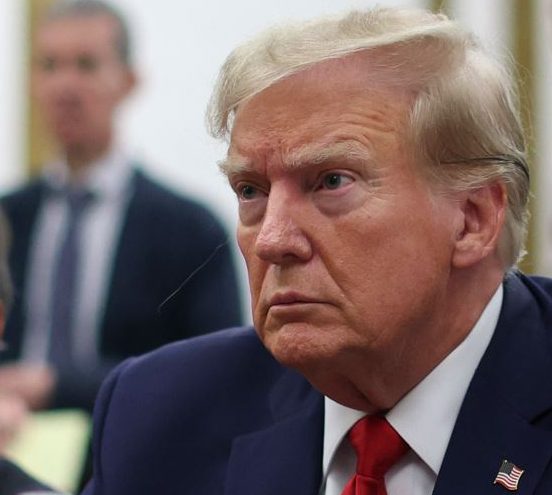
Trump Considers Expanding US Visa Ban To Include Nigeria, Others


United States President Donald Trump is reportedly weighing the possibility of expanding the U.S travel ban list to include Nigeria and a number of other nations, primarily from Africa.

According to a memo obtained by The Washington Post and signed by Secretary of State Marco Rubio, as many as 36 countries could be newly affected by the visa restrictions if President Trump signs off on the proposal.

The justification given by the administration is rooted in national security concerns, particularly regarding countries that lack sufficient governmental transparency or reliable systems to screen travelers.

The memo cited challenges such as the absence of robust databases to verify individuals’ backgrounds, an issue that has raised red flags for U.S immigration authorities.

Among the African nations reportedly under consideration are Nigeria, Angola, Benin, Burkina Faso, Cameroon, Côte d’Ivoire, Democratic Republic of the Congo, Djibouti, Egypt, Ethiopia, Gabon, Gambia, Ghana, Liberia, Malawi, Mauritania, Niger, Sao Tome and Principe, Senegal, South Sudan, Tanzania, Uganda, Zambia, and Zimbabwe.

The list also includes countries beyond Africa, such as Antigua and Barbuda, Dominica, Saint Kitts and Nevis, Saint Lucia, Bhutan, Cambodia, Kyrgyzstan, Syria, Tonga, Tuvalu, and Vanuatu.

According to U.S. authorities, the nations mentioned face several issues, including lacking competent central government authorities capable of issuing reliable identity and civil documentation.

Additionally, some of these countries were said to be plagued by “widespread government fraud,” and a number have citizens with high rates of U.S. visa overstays.

The internal directive reportedly instructs affected countries to submit an initial compliance plan to the State Department by the coming Wednesday.

Governments will then have a 60-day window to meet the outlined benchmarks and avoid potential sanctions.

“The governments of listed nations were being given 60 days to meet new benchmarks and requirements established by the State Department,” the memo stated.

This latest move follows a similar travel ban enacted earlier in June, which affected 12 other countries, including Afghanistan, Myanmar, Chad, Republic of Congo, Equatorial Guinea, Eritrea, Haiti, Iran, Libya, Somalia, Sudan, and Yemen.

Once again, the bulk of the countries on the expanded list come from Africa, sparking renewed criticism of the Trump administration’s immigration policies.

Of the 36 nations identified, 25 are African, notably including U.S strategic allies on the continent like Egypt and Djibouti.

Google search engine

COAS Urges New Recruits To Be Battle-Ready Against Terrorists, Bandits


As Nigeria continues to face evolving security challenges, the Chief of Army Staff, Lt.-Gen. Olufemi Oluyede, has called on new recruits at the Depot Nigerian Army in Zaria, Kaduna State, to be fully prepared to combat terrorism and insurgency across the country.

Speaking at the Passing Out Parade of 6,195 recruits from the 88 Regular Recruits Intake on Saturday, General Oluyede highlighted the critical importance of courage, professionalism, and resilience when dealing with adversity.

He emphasized the necessity for recruits to uphold the Nigerian Army’s core values, reinforcing that a soldier’s life is one of sacrifice and patriotism.

“The Nigerian Army is a professional institution tasked with the mandate of securing the sovereignty of our great nation, Nigeria,” he noted.

“As you pass out today and take your place in this noble profession, be aware that you will form part of our nation’s solutions to the challenges of terrorism and insurgency.”

“Therefore, wherever you are deployed, your actions must be a reflection of your training, and you must display courage in the face of adversity.

“The journey of a thousand miles begins with one step, and your journey began on January 13, 2025, when you commenced your basic training.”

“You have been prepared for anything the world will throw at you, and I assure you that you will face challenges that may initially seem insurmountable.”

“Stand by the oath you have taken and do your duty without forgetting our core values of discipline, loyalty, integrity, selfless service, courage, and respect for others.”

“These values will form the compass that will lead you to your finest hours in the face of adversity,” the Chief of Army Staff added.

Further urging the recruits to pursue excellence in their roles, General Oluyede said, “Your actions must be a reflection of your training, and you must display courage in the face of adversity.”

“You must be trustworthy and committed to a currency of excellence, determination, and selfless service.”

He also reassured the new soldiers that their welfare remains a priority, encouraging them to rest before welcoming the next intake.

“I urge you to take a quick, well-deserved break and be ready to receive the next set of recruits, as the process for the 89 Regular Recruits Intake has already reached an advanced stage. I assure you of the Army Headquarters’ support in always realising your training objectives.”

Google search engine

Investigate ‘Mysterious’ Deaths Of Dele Giwa, Abiola, Bola Ige, Others – Soyinka Urges Tinubu


Renowned Nobel Laureate, Professor Wole Soyinka, has called on President Bola Ahmed Tinubu to launch an investigation into the unresolved and mysterious deaths of notable Nigerians such as Dele Giwa, Kudirat Abiola, and Bola Ige.

Soyinka stressed that doing so would help bring closure to long-standing national grief and unanswered questions.

Speaking with a group of selected journalists in Lagos on Saturday, Soyinka noted that some Nigerians, including those in the diaspora, may hold vital clues to the assassinations.

Soyinka’s appeal came during the commemoration of Nigeria’s Democracy Day, marked every June 12.

The 2025 celebration saw President Tinubu deliver an address before a joint session of the National Assembly, during which he also conferred national honours on some heroes of the democratic struggle.

While Soyinka commended the gesture, he pointed out that several key figures were excluded.

However, he said the honorees represent a broader community of unsung participants in the fight for democracy.

He added, “I will be dedicating my honours to the memory of Late Beko Ransom-Kuti, who I described as a defender of human rights, champion of good governance, and campaigner for democracy, who was detained and jailed several times by the Nigerian military.”

Emphasizing the gravity of June 12, Soyinka remarked that the day should not be trivialized, as it stands as a solemn reminder of the bloodshed and sacrifices endured during the military era.

“He warned that no one should make light of the weight and importance of the June 12 struggle, as many people died, and many others were greatly injured by the military junta, which killed, tortured, and imprisoned Nigerians at the time.”

This statement also comes in the wake of public confusion, as the Presidency denied awarding national honours to Aisha Yesufu and 35 others, despite rumours to the contrary.

Names of the awardees were officially announced by Tinubu during the June 13 National Assembly session.

Among the posthumous recipients were Shehu Musa Yar’Adua, Professor Humphrey Nwosu, and Kudirat Abiola, who is widely regarded as a martyr of the June 12 struggle.

In a historic move, President Tinubu also granted a posthumous state pardon to environmental activist Ken Saro-Wiwa and the Ogoni Nine, whose execution in 1995 under the Abacha regime sparked international outrage.

The President stated, “I also confer posthumous national honours on Ken Saro-Wiwa (CON), the leader of the Ogoni Nine and his fellow travellers.”

He continued, “I shall also be exercising my powers under the prerogative of mercy to grant these national heroes a full pardon, together with others whose names shall be announced later in conjunction with the National Council of State.”

Each of the other Ogoni Nine was awarded the Officer of the Order of the Niger (OON), while Ken Saro-Wiwa received the Commander of the Order of the Niger (CON).

This is the first time a Nigerian president has officially acknowledged the Ogoni Nine’s contributions to democracy and environmental justice.

The honoured activists included Saturday Dobee, Nordu Eawo, Daniel Gbooko, Paul Levera, Felix Nuate, Baribor Bera, Barinem Kiobel, and John Kpuine, all tried and executed under what human rights observers widely condemned as a politically motivated process.

Google search engine

Enugu LP Suffers Another Blow As Former Edeoga’s Campaign Spokesman, Engr. George Ugwu Leads Supporters Back To PDP


The Labour Party in Enugu State has suffered yet another major setback as Engr. George Ugwu, the former spokesman of the 2023 gubernatorial campaign of Hon. Barr. Chijioke Jonathan Edeoga, officially defected to the People’s Democratic Party (PDP) alongside a large number of his supporters.

Ugwu, popularly known as Ezeudo, made the move during the PDP Local Government monthly meeting held on Saturday, June 14, 2025, at the Enugu East Local government Secretariat.

The defection, which had been hinted at during the PDP ward meeting on May 7 in his hometown of Ugwogo Ward, was formally ratified in the presence of the PDP State Executive Committee led by its Chairman, Dr. Martin Chukwubuike.

The political shift has caused the collapse of the Labour Party’s structure in Ugwogo and Mbuluiyikwu Wards, where Ugwu previously commanded strong grassroots support.

His departure further deepens the internal crisis and weakening influence of the LP in Enugu East, following the earlier exit of key figures, including Hon. Edeoga himself.

Speaking during the meeting, Engr. Ugwu explained the rationale behind his decision, expressing disappointment in the current state of the Labour Party and its failure to uphold the ideals they once campaigned on.

“We toiled day and night, ward after ward, believing in a vision that was never realised,” Ugwu said.

“What we now see is a party without focus or leadership. Since my principal, Hon. Edeoga, returned to the PDP, it became evident that the LP had lost its essence.”

Ugwu commended the performance of Enugu State Governor Barr. Peter Ndubuisi Mba, whose developmental strides he described as “people-centered, progressive, and visionary.”

He cited major achievements of the administration such as:

  • The construction of smart schools in rural areas
  • The dualisation of the Abakpa–Opi–Nsukka road
  • The establishment of Type 2 health centres
  • Youth and women empowerment initiatives

“This is not about party colours; it is about the people. As a technocrat and someone passionate about service, I cannot sit by and watch good governance from afar. I am here to support Governor Mba’s transformative agenda” he said.

In his remarks, Engr. Pastor Beloved Dan Anike, Executive Chairman of Enugu East LGA, welcomed Ugwu and praised his political relevance and influence.

“Engineer George Ugwu was a major force during the last election. Having him and his base in the PDP today is a big boost. With his grassroots support and dedication, the 2027 elections will be a much easier path for us.”

Ugwu was joined by dozens of Labour Party supporters from his stronghold.

Google search engine

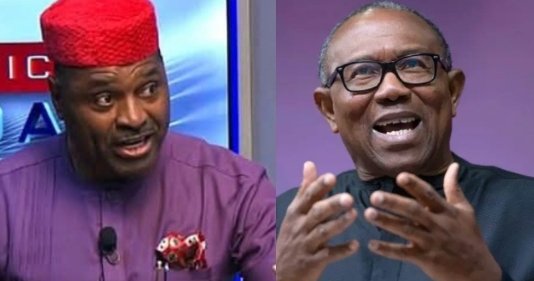
How Peter Obi Betrayed Me – Kenneth Okonkwo


Former Labour Party (LP) chieftain and spokesperson for the party’s 2023 presidential campaign, Kenneth Okonkwo, has publicly accused Peter Obi of betrayal.

In a viral video circulating on social media, Okonkwo, who officially resigned from the Labour Party in February 2025, claimed that Obi abandoned him and ignored warnings about aligning with the Julius Abure-led faction of the LP.

“If there is anybody that betrayed the other, I can say it emphatically that Peter Obi betrayed me,” said Okonkwo, a former Nollywood actor.

According to him, Abure and his supporters misled Obi by claiming that the Independent National Electoral Commission (INEC) had recognised their leadership.

“The Julius Abure-led LP members lied to Obi that the Independent National Electoral Commission (INEC) had accepted them and Obi surreptitiously went back to them,” he said.

“But I told him: ‘Sir, you have made a public statement on integrity and even if INEC has accepted them, that is not a criterion for you to go back and start dealing with them because they have shown that they are not democratic. If you go back to them, they will destroy your political career and everything you have said about integrity will die’.”

He also warned Obi that returning to the Abure camp would be detrimental:

“I told Obi that these people had become agents in the hands of the government to destabilise him. What they did was absolutely illegal and unconstitutional. I told him that if he went back to them, I wouldn’t join him in doing so.”

Okonkwo revealed that he also informed members of Obi’s inner circle of his position:

“Thereafter, I called all the people that were in the inner circle and told them the same thing about what Obi was trying to do. I told them he wanted to go back with the Abure people and if he did, I wouldn’t go back with him because I do not swallow back my words.”

Just a few days later, he said, Obi returned to the Abure faction’s office and publicly endorsed them — a move that Okonkwo said stunned and embarrassed him.

“And after saying all those things, within like 72 hours, Obi went back to Abure’s office to publicly endorse them and while he was there talking to them, one of the leaders in that executive sent me the video to mock me that the person I was fighting for against them has come to their office to endorse them.”

He added: “It was when INEC dissociated itself from Abure that Obi came out to start acting neutral but I told him he could not be neutral and something had to be done.”

Explaining his decision to leave the Labour Party, Okonkwo said he lost confidence in Obi’s ability to build the kind of political platform required to challenge the status quo.

“I believed that Peter Obi will seize the momentum and build a solid party of integrity that will have the solid base that we need to overthrow these kakistocrats and kleptocrats. He just needed to give the right directives and everyone will fall in line.”

He said he was particularly alarmed by Obi’s public admission that building the Labour Party was not his priority.

“I received my first shock when he publicly declared that he didn’t promise Nigerians to build a strong Labour Party, but to solve Nigeria problems. I was like, does it mean HE Peter Obi is not aware that without a solid party base, we are heading to nowhere politically?”

Still, he said he kept defending Obi, hoping he would privately resolve the party’s issues, but that never happened.

Okonkwo also noted that although Obi had publicly called for an all-inclusive LP convention, he failed to act when the Abure-led executive ignored that directive.

“PO also publicly demanded that the Abure-led National Working Committee must organise an all-inclusive convention that will guarantee the participation of all members of Labour Party in the choice of their leaders.”

“This didn’t happen, and surprisingly, PO refused to disassociate himself from the shenanigans and criminal activities of the former NWC as their time has expired.”

The former LP spokesperson said party members are now confused and frustrated by Obi’s silence.

“Every member of Labour Party is confused today as to the future of Labour Party because of lack of leadership from PO over the party, and unfortunately, when they look up to me to tell them about PO’s standpoint, I sincerely have nothing to tell them because I don’t know myself.”

“I cannot continue to speak on behalf of a leader that I do not know his stand on issues of great importance. I simply don’t know how to manipulate facts.”

Okonkwo concluded by criticising Obi’s failure to support the Labour Unions that founded the party:

“I was shocked that Obi could not openly support the efforts of the Labour Unions who founded the Labour Party as a base to fight for the welfare of workers to the extent that some of them are openly saying that Obi is now the problem of the party.”

“They are fighting criminals who want to hijack their party when an ordinary statement from Obi would have brought the solution.”

Google search engine

‘At No Time Did Tinubu Recognize Aisha Yesufu, Viral Honours List Fake’, Says Presidency


The Presidency has refuted claims that President Bola Ahmed Tinubu conferred national honours on prominent human rights activist Aisha Yesufu and 35 others, describing the reports as “fake news.”

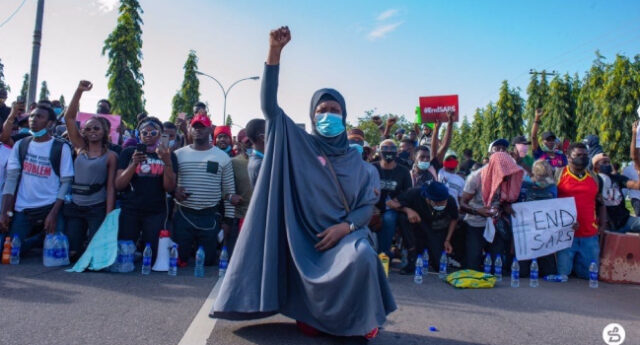
Yesufu, widely recognised for her pivotal involvement in the 2020 End SARS protests, was listed in a document circulating on social media that named 102 supposed recipients of national honours.

The document sparked widespread debate, particularly among supporters of President Tinubu’s administration.

Temitope Ajayi, Senior Special Assistant to the President on Media and Publicity, issued a statement via Facebook on Friday debunking the claim.

“The story on a viral list of national honours featuring the name of Aisha Yesufu and others credited to the Leadership newspaper is fake news. It should be ignored,” Ajayi stated.

He went on to provide clarification: “The Presidency has not issued fresh names for national honour different from the ones in President Tinubu’s address to the joint sitting of the National Assembly yesterday.”

The President had announced national awards on Thursday, June 13, during his address at a joint session of the National Assembly in Abuja to mark the 2025 Democracy Day celebration. Only 66 recipients were officially named.

Among those honoured posthumously were Shehu Musa Yar’Adua, a former Chief of Staff; Prof. Humphrey Nwosu, the ex-NEC Chairman who supervised the 1993 elections; and Kudirat Abiola, wife of late MKO Abiola and a heroine of the June 12 democracy movement.

Google search engine

New Constitution Still Possible Before 2027 – Afenifere To Tinubu


As Nigeria marked the anniversary of the June 12, 1993 election, widely regarded as the freest in the nation’s history, the pan-Yoruba sociopolitical group Afenifere has renewed calls for constitutional restructuring, urging President Bola Ahmed Tinubu and Nigeria’s political elite to make it a top priority ahead of the 2027 general elections.

In a strongly worded statement, Oba Oladipo Olaitan, Afenifere’s leader, lamented the state of Nigeria’s democracy, describing it as a “pseudo democracy,” and declared that only a comprehensive reconfiguration of the country’s political structure could address the long-standing consequences of the June 12 annulment.

“Another anniversary confirming that June 12, 1993 evidently happened to Nigeria is here again.”

“Chief M.K.O. Abiola and his pan-Nigerian mandate were killed by the self-serving political wing of the military and their collaborators. Very many innocent lives were lost,”
Afenifere said in its commemorative statement.

The group argued that Nigeria has remained a “mere geographical expression” since the 1914 amalgamation and warned that without meaningful restructuring into a true federation, progress would remain elusive.

It also took aim at the political system, particularly the winner-takes-all approach and the expensive governance model, blaming these for widespread injustice, ethnic tension, and national disunity.

“There must be a fundamental shift away from the ‘winner-takes-all, buy-and-sell modality of capturing political power.”

“A new governance framework to be embodied in a new constitutional order is the silver bullet that will likely restore order to what we all know as a mere geographical territory,”
the statement added.

Afenifere expressed deep concern over what it termed the “unbridled latitude” of the Nigerian presidency under the 1999 Constitution, arguing that the office has become both excessively powerful and financially unsustainable.

“It is no longer sustainable to maintain the large paraphernalia of office and bureaucracy at the expense of the masses.”

“A new constitution has become the irreducible minimum to guarantee the shift of emphasis towards rapid infrastructural development to the benefit of ordinary citizens,”
the group declared.

Despite the daunting nature of overhauling the current political structure, Afenifere insisted that time still permits the drafting and adoption of a new constitution before the 2027 elections, calling it the most viable path toward restoring Nigeria’s democratic promise.

Google search engine

MOST COMMENTED

- Advertisement -
Google search engine