Home Blog Page 553

Supreme Court Dismisses 36 States’ Suit Against FG Over Looted Funds
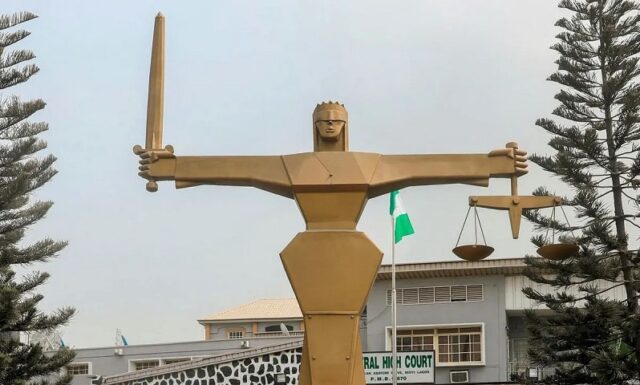
 

The Supreme Court has struck out a lawsuit filed by all 36 state governments and the Nigeria Governors’ Forum (NGF) challenging the federal government’s management and allocation of recovered looted assets.

In a unanimous decision delivered on Friday by a seven-member panel, the apex court ruled that the case was filed in the wrong court.

While Justice Chidiebere Uwa prepared the judgment, it was read by Justice Mohammed Idris.

The court found that the states had “wrongly invoked its jurisdiction,” ruling that the subject of the suit falls under the Federal High Court’s purview rather than the Supreme Court’s original jurisdiction. The case had been filed under suit number SC/CV/395/2021.

The states contended that “between 2015 and 2021 when the suit was filed, the FG has secured both international and municipal forfeiture, recovery and repatriation of ‘stolen assets’ in the sum of ₦1,836,906,543,658.73, about 167 properties, 450 cars, 300 trucks and cargoes, and 20,000,000 barrels of crude oil worth over ₦450 million,” alleging that these were not properly remitted.

They accused the Federal Government of diverting the recovered assets into accounts not recognised by the Constitution, particularly the Consolidated Revenue Accounts (CRA), instead of the Federation Account, which they argued is the only constitutionally valid repository.

The plaintiffs claimed that “the CRA is the account into which FG’s share from the Federation Account, other federal earnings and funds belonging to specific state governments are paid.”

They emphasized that other revenues payable to the CRA include “receipts from federal government licenses and land revenue, administrative fees, earnings and sales, rent of government property, interests from federal government investments, repayments from state governments, Personal Income Tax of Armed Forces and others.”

According to them, the creation of the Asset Recovery Account and Interim Forfeiture Recovery Account through which recovered assets were allegedly channeled contradicted constitutional provisions.

They said: “By establishing the Asset Recovery Account and Interim Forfeiture Recovery Account, into which revenue from recovered assets was to be paid, the Asset Recovery Regulation contradicts the provisions of the Constitution.”

The plaintiffs maintained that “numerous recoveries of illegally acquired assets have been secured through anti-corruption and law enforcement agencies,” referencing institutions such as the Economic and Financial Crimes Commission (EFCC), Independent Corrupt Practices and Other Related Offences Commission (ICPC), the Nigerian Police Force, and the Office of the Attorney General of the Federation.

They cited sections 162(1), 162(10), and 80 of the Constitution as well as section 2 of the Finance (Control and Management) Act, 1958, to support their claim that all such funds should be deposited into the Federation Account.

“It is unconstitutional to remit or divert revenue payable into the Federation Account to the Consolidated Revenue Account of the Federal Government or any other account whatsoever, or to apply the said revenue to any other purpose,” they argued.

In their prayers to the court, the states requested a declaration “that by the provisions of Section 162(1) and Section 162(10) of the Constitution of all income, returns, proceeds or receipts howsoever described derived from confiscated, forfeited and/or recovered assets constitute revenue of the federal republic of Nigeria, must be remitted to the Federation Account for the collective benefit of the federal, state and local governments.”

They also asked for an order compelling the Federal Government to return ₦1.8 trillion in cash and ₦450 billion in non-cash assets recovered since 2015 to the Federation Account.

Additionally, the plaintiffs sought a court order mandating the President and other relevant federal agencies to provide “a detailed account of the recovered assets that are not remitted into the Federation Account.”

Finally, they urged the Supreme Court to compel the Revenue Mobilisation and Fiscal Commission (RMFAC) to establish “modalities for distributing recovered assets among the federating units.”

Google search engine

UTME Mass Failure: DSS, Police Arrest 20 For Hacking JAMB CBT Server


Security operatives from the Department of State Services (DSS) and the Nigerian Police Force have apprehended at least 20 individuals in Abuja for allegedly compromising the 2025 Joint Admissions and Matriculation Board (JAMB) Computer-Based Test (CBT) servers.

The suspects are reportedly members of a larger network of more than 100 individuals who target the digital infrastructure of key Nigerian examination bodies, including JAMB and the National Examinations Council (NECO).

According to security sources, the detained individuals confessed to intentionally disrupting the CBT systems.

The aim, they said, was to “discredit JAMB and discourage the future use of computer-based examinations for WAEC and NECO.”

One source revealed that the hacking was conducted using custom-designed malicious software.

“The suspects admitted that the syndicate used specially designed attacking software to remotely infiltrate and manipulate JAMB servers at targeted CBT centres.”

The technique allegedly involved placing special routers near the CBT locations. “The strategy of these hackers involved mounting routers near targeted CBT centres.

These routers allowed remote access to JAMB systems, enabling ‘special candidates’ who had paid hefty sums to receive answers during the exam,” the source disclosed.

These attacks reportedly caused exam anomalies.

“The ghost software distorted exam data, resulting in discrepancies between the questions answered by candidates and the actual questions displayed on screen, a development blamed for the widespread failure recorded in the 2025 exams.”

Payments for these illegal services ranged widely.

“Candidates who benefitted from the illegal scheme reportedly paid between ₦700,000 and ₦2 million for high scores.

“Investigations have also revealed that several members of the syndicate are proprietors of private schools and tutorial centres, who use the proceeds to fund their so-called ‘special centres,’” the source added.

The suspects were picked up in a series of coordinated raids in states including Lagos, Edo, Anambra, Kano, and Delta.

Their names are being withheld pending formal charges and arraignment in court.

Regarding internal staff, another source clarified the role of JAMB officials at the affected centres.

“No case of complicity had been established against the seven JAMB staff who supervised the Service Providers at the two locations,” the source stated.

Google search engine

‘Atiku Is Ours; Tinubu Will Fail In 2027,’ Aregbesola’s Supporters Chant


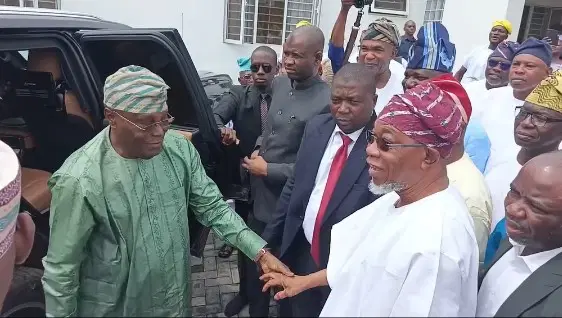
Supporters of former Osun State Governor Rauf Aregbesola have sparked political buzz following a public display of support for former Vice President Atiku Abubakar.

The group, during Atiku’s visit to Aregbesola’s residence in Osun on Friday, sang songs in his praise and declared their opposition to President Bola Tinubu’s anticipated re-election bid in 2027.

Atiku, who shared footage of the visit on his X account, was greeted by Yoruba praise singers dressed in coordinated white outfits and yellow caps.

The musical welcome quickly evolved from a cultural performance to an overt political message.

“Atiku is Aregbesola’s ally. Atiku is our father. Atiku is our person,” they chanted, with the rhythmic beat of the talking drum. The chorus then shifted to a direct political message: “In 2027, Tinubu will fall down.”

This public show of support comes as talks of a united opposition front to unseat Tinubu in 2027 gain momentum.

Aregbesola, once a trusted ally of the president, fell out with Tinubu during a rift over the politics of Osun State.

Gboyega Oyetola, Tinubu’s associate and relative, succeeded Aregbesola as governor in 2018.

However, Aregbesola later opposed Oyetola’s re-election efforts, deepening the political divide.

Their strained relationship reached a low point when Aregbesola ridiculed Tinubu during a 2022 rally, saying the president was “urinating on himself.”

Although Aregbesola would later ask for Tinubu’s forgiveness and publicly referred to him as his “political benefactor,” his recent alignment with Atiku suggests a possible return to active opposition politics, potentially as part of a coalition aimed at ending Tinubu’s tenure in 2027.

Google search engine

ASUU Threatens Fresh Strike, Accuses Tinubu Govt Of Corruption, Neglect


The Academic Staff Union of Universities (ASUU) has warned that it may soon resume strike action after what it describes as exhausting all patience with the Bola Tinubu administration, which it accuses of corruption, policy failures, and neglect of the education sector.

Speaking at a press conference in Abuja on Friday, the new ASUU President, Professor Chris Piwuna, issued a stern warning to the Federal Government, citing the unresolved 2009 FGN/ASUU Agreement and other longstanding issues.

Piwuna said the union has shown restraint by holding off on strike action for nearly a year but may now be forced to act.

“We think that the Yayale Ahmed Committee has worked hard, and that we have finished the work with them, and that we need to hear from them,” Piwuna stated.

“We haven’t heard from them, and we think that they should go back. The Yayale Ahmed Committee should meet with their principals and get back to us as soon as possible. We have exhausted our patience in waiting for this renegotiated agreement.”

ASUU is demanding, among other things, the immediate release of a ₦150 billion revitalisation fund. The union has also expressed its frustration over the lack of implementation of key agreements, accusing the government of benefitting from national insecurity.

“The ordinary citizens of our country have become the victims of prolonged political manipulations and economic exploitation by the ruling class and their foreign sponsors,” Piwuna added.

He condemned the deteriorating state of Nigerian universities and the working conditions of academic staff.

“The university system has not been spared from the whirlwind of policy misadventures and orchestrated befuddlement of the polity.

“The governments of Nigeria, at the Federal and State levels, merely pay lip service to the business of education in general and the welfare of university academics in particular,” he said.

Piwuna further lamented the drawn-out nature of the agreement renegotiation process.

“It is saddening that the tortuous journey of renegotiating the 2009 FGN/ASUU Agreement has continued endlessly since 2017.”

He listed several unresolved issues: finalising the renegotiated 2009 Agreement based on the Nimi Briggs Committee’s 2021 draft; unpaid salaries from the 2022 strike period; salaries for sabbatical, adjunct, and part-time staff; third-party deductions such as union dues and cooperative contributions; the proliferation of universities; and insufficient university funding.

“It is noted that the government has made promises on some of these issues. The government agreed to mainstream the EAA into the salaries with the creation of Irregular Allowance as a budget line in the 2026 Budget, after the release of N50 billion for backlog and budgeting N29 billion for payment of 2025 Earned Academic Allowances,” he explained.

“Similarly, the government also agreed to release N150 billion as revitalisation fund within four weeks, with effect from April 2025.

“However, we are still waiting for the government to fulfil these promises. The Union has also reached an understanding with the Yayale Ahmed-led Committee, with the review of the report of the Nimi Briggs-led FGN-ASUU Renegotiation Committee in December 2024. Again, ASUU members have been left in limbo, waiting for the signing of an Agreement five months after!”

Following their recent National Delegates’ Conference at the University of Benin (UNIBEN), ASUU expressed deep concern over the government’s failure to make any meaningful progress.

“Delegates at the UNIBEN National Delegates’ Conference exhaustively evaluated the government’s disposition in resolving outstanding issues with the Union and expressed regrets that nothing has significantly changed in the last two years.”

Piwuna also accused the government of mismanaging educational resources. “Funds meant for the Tertiary Education Trust Fund (TETFUND) were being diverted to finance the Nigerian Education Loan Fund (NELFUND),” he alleged.

Google search engine

Army Raids Alleged ESN Camp In Abia, Recovers Arms, Millions In Cash, One Soldier Killed


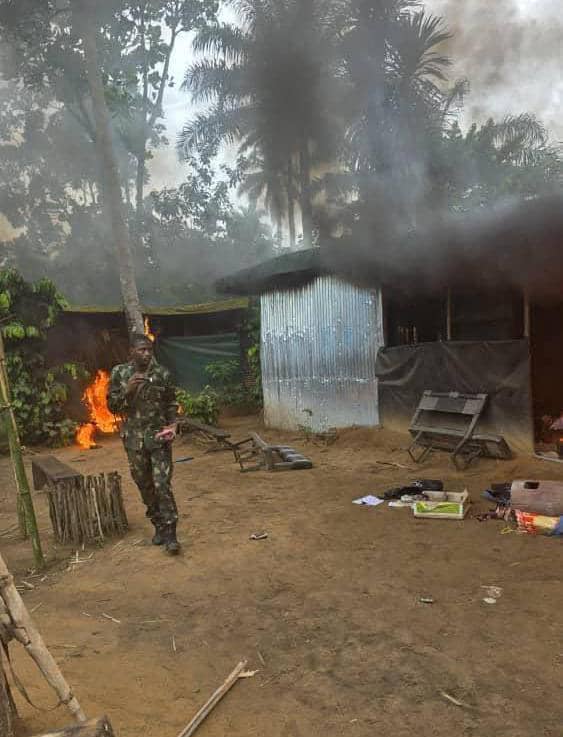
A major operation by troops of the Nigerian Army under Operation UDO KA has led to the dismantling of a camp suspected to belong to the Eastern Security Network (ESN) in Ugwunagbo Local Government Area of Abia State.

The raid, which took place in the early hours of May 23, was based on intelligence indicating a fortified militant base in the Ebubengwa/Abayi Nchokoro community.

According to a Special Situation Report (SITREP) from 144 Battalion (Rear), obtained by SaharaReporters on Friday, the coordinated mission involved six platoons, each comprising 49 soldiers, and was led by the unit’s commanding officer.

The troops were supported by one armoured personnel carrier (APC), a gun truck, and six Hilux vehicles.

The operation resulted in the full destruction and clearing of the camp, with a notable cache of weapons and logistics seized. Among the recovered items were:

  • 1 × Rocket-Propelled Grenade (RPG)
  • 1 × General Purpose Machine Gun (GPMG)
  • 4 × AK-47 rifles
  • 1 × G3 rifle
  • 3 × Pump action guns
  • 800 rounds of 7.62mm special ammunition
  • 648 rounds of 7.62mm NATO rounds

Also confiscated were two power generators, laptops, mobile phones, a Wi-Fi router, CCTV cameras, external hard drives, food stocks, ritual vests, and significant cash sums, ₦11.75 million and $27,000.

A shrine reportedly used for spiritual rituals was also uncovered and destroyed, along with several vehicles and motorcycles including:

  • 1 × Honda Pilot SUV
  • 2 × Toyota Highlander SUVs
  • 1 × Toyota Hiace bus
  • 1 × Mini bus
  • 1 × Tricycle
  • 2 × Motorcycles

The operation escalated into a firefight. “AFTER A GUN DUEL, THE TERRS WDR IN DISARRAY DUE TO HY FIRE POWER WITH BLOOD TRAILS AND UNCFM NO OF CAS,” the report stated, indicating that the militants fled, leaving signs of injury and possible fatalities behind.

However, the army also sustained losses. “OWN TPS RECORDED 1 × KIA AND 2 × WIA WHICH INCLUDE 1 X OFFR AND 1 X SLDR. THE CORPSE HAS BEEN DEPOSITED AT FEDERAL MEDICAL CENTER UMUAHIA AND THE NOK HAS BEEN CONTACTED WHILE THE WIA SLDRS WERE EVAC TO MED FACILITY IN ABA AND ARE RESPONDING TO TREATMENT.”

The troops are said to have fired 630 rounds of 7.62mm special and 235 rounds of 12.7mm ammunition during the operation. Following the raid, the area has been secured and remains under surveillance.

The SITREP detailed the scale and outcome of the action:
“OP UDO KA SPECIAL SITREP. *RAID OPERATION ON IPOB/ESN CAMP. AT ABOUT 220400A MAY 23, FOL A RELIABLE AND ACTIONABLE INTEL ON THE EXISTENCE OF NOTORIOUS IPOB/ESN CAMP IN EBUBENGWA/ABAYI NCHOKORO COMMUNITY IN UGWUNAGBO LGA, OWN TPS COMPRISING OF 6 × 49 SLDRS LED BY OWN SUNRAY USING 1 × APC EQ-SERIES, 1 × GUN TRUCK AND 6 × HILUX VEHS LAUNCHED A WELL-COORDINATED RAID OP THAT RESULTED IN THE COMPLETE DISLODGEMENT AND DESTR OF THE IPOB CAMP AND DISSEMATING OF THEIR FIRE POWER WHICH LED TO REC OF 1 × RPG, 1 × GPMG, 4 × AK-47 RIFLES, 1× G3 RIFLE, 3 × PUMP ACTION GUNS.”

“TPS ALSO DISCOVERED A BIG SHRINE USED FOR SPIRITUAL ACTIVITIES AND 5 X VEHS IN THE CAMP WHICH INCLUDE 1 X HONDA PILOT SUV, 2 X TOYOTA HIGHLANDER SUVS, 1 X TOYOTA HIACE BUS, 1 X MINI BUS, 1 X TRICYCLE AND 2 X MOTORCYCLES. THE ENTIRE CAMP INCLUDING THE SHRINE AND ALL VEHS WERE DESTR AND SET ABLAZE. DURING THE EXCHANGE OF FIRE, TPS EXPENDED QTY 630 X 7.62MM SPECIAL AND QTY 235 X 12.7MM RDS.”

Google search engine

2027: I Anticipate More People Joining the Progressives – President Tinubu


President Bola Tinubu expressed expectations of more political defections to the All Progressives Congress (APC) as Nigeria approaches the 2027 general elections.

Speaking at the APC Renewed Hope Agenda Summit held at the State House Conference Centre, Abuja, on Thursday, President Tinubu remarked,

“You don’t expect people to remain in a sinking ship without a life jacket. I am happy with what we have accomplished and expecting more people to come; that’s the game.”

The summit was attended by party leaders, the National Working Committee, the leadership of the National Assembly, and the Progressive Governors’ Forum, all of whom collectively endorsed President Tinubu for a second term.

The President highlighted the administration’s focus on long-term economic reforms, which have garnered positive reviews both domestically and internationally.

He emphasized that defection is a natural part of the political process, stating,

“A one-party system is not suitable for democracy. We are one party ruling and carrying on with the aspirations of Nigerians.”

President Tinubu acknowledged the constitutional right of citizens to choose their associations, adding,

“I thank every one of you. I am thoroughly inspired. We are just halfway through the journey that started 24 months ago.”

He expressed gratitude to members of the Federal Executive Council for their dedication to the vision of a better Nigeria and to the party leadership and National Assembly for their support.

The President reiterated the administration’s commitment to addressing Nigeria’s challenges by rebuilding trust, fostering prosperity, and restoring the nation’s economic trajectory. He stated,

“Through our Renewed Hope Agenda, our administration pledged to tackle economic instability, improve security nationwide, reduce corruption, reform governance, and lift our people out of poverty.”

Regarding economic reforms, President Tinubu noted the necessity of tough decisions, asserting,

“Yes, we encountered challenges when we assumed office in May 2023, but we have made progress by implementing difficult, long overdue but necessary economic reforms.”

He pointed to the elimination of arbitrage-driven multiple foreign exchanges and upcoming tax reforms as steps toward attracting foreign direct investments, which will ultimately create jobs and improve the standard of living for Nigerians.

In his remarks, the Chairman of the Progressive Governors Forum and Imo State Governor, Hope Uzodimma, commended President Tinubu’s inspiring and visionary leadership, expressing support for his second term bid.

Governor Uzodimma moved a motion passing a vote of confidence in the President, which was seconded by the Governor of Kaduna State, Uba Sani.

The Senate President, Godswill Akpabio, and the Speaker of the House of Representatives, Tajudeen Abbas, also lauded the President for his inclusive leadership and pledged their support for his re-election.

The APC Chairman, Abdullahi Ganduje, who led the National Working Committee members to endorse President Tinubu for a second term, urged party members to reject internal sabotage, engage communities, listen to citizens, and build a political structure beyond elections.

He emphasized the importance of rallying behind the President and supporting the party’s policies to deliver the Renewed Hope Nigerians rightfully deserve.

The summit served as a platform to review the administration’s two-year performance across key economic sectors, including health, infrastructure, and security.

Google search engine

JUST IN: Judge Blocks Trump Plan To stop Harvard Enrolling Foreign Students


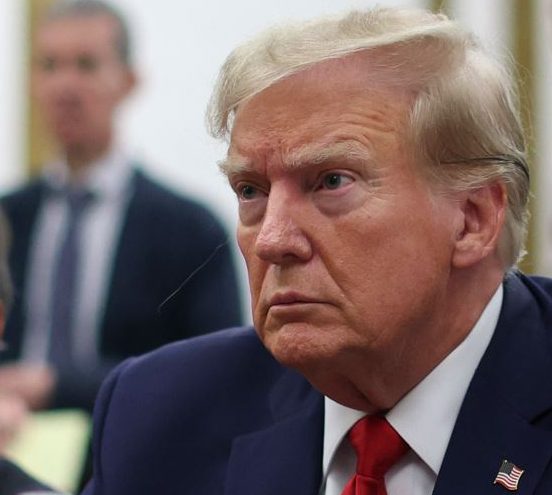
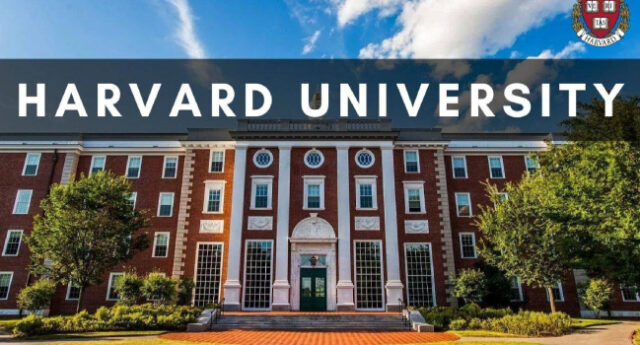
A judge has issued a temporary restraining order blocking the Trump administration’s plan to strip Harvard University of its ability to enrol foreign students.

The ruling came after Harvard filed a lawsuit – the latest escalation of a dispute between the White House and one of America’s most prestigious institutions.

The university said the [administration’s decision on Thursday was a “blatant violation” of the law and free speech rights.

The Trump administration says Harvard has not done enough to fight antisemitism and change its hiring and admissions practices – allegations that the university has strongly denied.

US District Judge Allison Burroughs issued a temporary restraining order in a short ruling issued on Friday.

The order pauses a move that the Department of Homeland Security made on Thursday to revoke Harvard’s access to the Student and Exchange Visitor Program – a government database that manages foreign students.

There are around 6,800 international students at Harvard, who make up more than 27% of its enrolments this year.

“With the stroke of a pen, the government has sought to erase a quarter of Harvard’s student body, international students who contribute significantly to the University and its mission,” Harvard argued in the lawsuit.

“We condemn this unlawful and unwarranted action,” Harvard President Alan Garber said in a letter.

“The revocation continues a series of government actions to retaliate against Harvard for our refusal to surrender our academic independence and to submit to the federal government’s illegal assertion of control over our curriculum, our faculty, and our student body,” he wrote.

In response, White House deputy press secretary Abigail Jackson said: “If only Harvard cared this much about ending the scourge of anti-American, anti-Semitic, pro-terrorist agitators on their campus they wouldn’t be in this situation to begin with.

“Harvard should spend their time and resources on creating a safe campus environment instead of filing frivolous lawsuits,” Jackson said in a statement.

Harvard relies heavily on the money that comes from international students who make up nearly a third of its student body. Many of them pay full tuition while domestic students can access assistance like scholarships and loans.

A year’s tuition at Harvard Law School, for example, costs $80,760 (£60,758). With housing, food, insurance and other expenses included, students can expect to pay around $120,000 (£90,192) for the year.

The Trump administration has taken aim at Harvard and other elite institutions, not only arguing that they should do more to clamp down on pro-Palestinian activists but also claiming they discriminate against conservative viewpoints.

It has launched investigations into dozens of universities across the country and wrung concessions from other major US institutions like Columbia University in New York.

In April, the White House froze $2.2bn (£1.7bn) in federal funding to Harvard and Trump has threated to remove the university’s tax-exempt status, a standard designation for US educational institutions.

The funding freeze prompted an [earlier Harvard lawsuit, also asking the courts to stop the administration’s actions.

Harvard, one of eight elite Ivy League universities, is located just outside Boston in Cambridge, Massachusetts. While Harvard leaders have made concessions – including dismissing the leaders of its Center for Middle Eastern Studies, who had come under fire for failing to represent Israeli perspectives – the latest lawsuit indicates the university is willing to fight the Trump administration in court.

The university has enlisted several high-profile Republican lawyers in its battle, including an advisor to the Trump Organization and Robert Hur, a former special counsel who investigated Joe Biden’s retention of classified documents.

Foreign students currently attending Harvard have expressed worries that the row between their institution could force them to return home. Chinese student Kat Xie, who is in her second year in a STEM programme, told the BBC she is “in shock”.

“I had almost forgotten about [the earlier threat of a ban] and then Thursday’s announcement suddenly came,” she said.

Google search engine

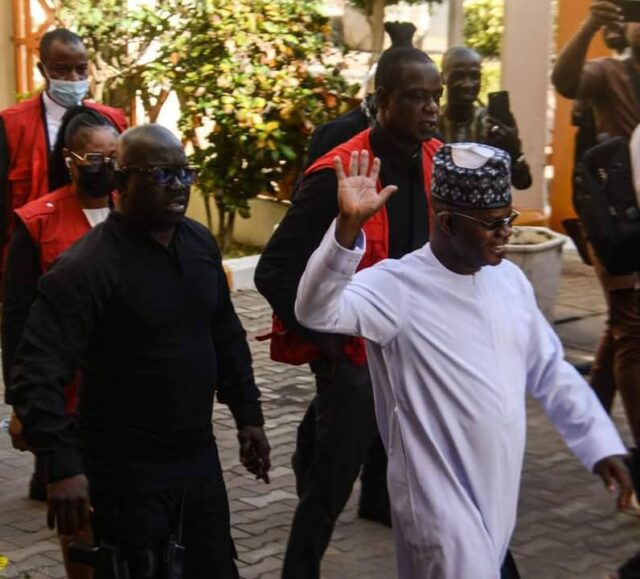
Yahaya Bello Denies 2027 Presidential Ambition, Backs Tinubu’s Re-Election


Former Kogi State Governor, Alhaji Yahaya Bello, has firmly denied any interest in contesting the 2027 presidential election, saying he has no plans to run against President Bola Tinubu.

Bello’s stance was made public in a statement released on Friday by his Media Director, Michael Ohiare.

The clarification followed the circulation of an old video from a 2022 rally, which some falsely claimed signaled Bello’s campaign against President Tinubu.

“While we state categorically, that our principal, Bello, has no 2027 presidential ambition, we want to also stress his unflinching commitment to the re-election of President Tinubu come 2027,” the statement read.

Ohiare praised the current administration, saying, “The indices cannot lie. The President and his team have done exceedingly well for the country, despite global challenges. On merit, he deserves the support of well-meaning Nigerians.”

He dismissed the circulating post as a deliberate attempt to mislead the public. “Nigerians should disregard the mischievous post insinuating a fresh presidential support rally as what it is, a senseless post by a confused, witless mind,” he said.

Highlighting the obvious timestamp on the event materials, Ohiare continued, “The fabricators forgot that the 2022 dates are boldly written on the banners on display. Yet, they expect reasonable people not to see this as the handiwork of detractors.”

He described those behind the video as mischief makers who thrive on spreading falsehoods.

“The fabricators have tried so hard in their ‘bring-him-down-at-all-costs’ mission against Bello but have always failed woefully,” he added.

Ohiare also noted this was not the first attempt to pit Bello against President Tinubu.

“But this latest slant of reposting a 2022 rally afresh and insinuating that it is just happening, connotes nothing but sheer mischief.”

He concluded by warning Nigerians to remain alert against disinformation.

“Nigerians should be wary of witless persons who concoct stories without thinking, just to satisfy the interests of their paymasters.”

According to him, the video is simply a desperate effort to create a crisis where none exists.

Google search engine

Harvard Drags Trump To Court Over Ban On International Students


Harvard University has taken legal action against the Trump administration following an unexpected order blocking the enrollment of international students, a move that has especially affected Chinese nationals at the prestigious institution.

According to a report by USA Today, the federal directive accuses Harvard of working in coordination with the Chinese Communist Party.

The policy threatens to strip legal status from foreign students, forcing many to transfer or face deportation.

In response, Harvard filed a lawsuit, describing the policy as “unlawful” and reaffirming its dedication to global education.

Chinese students, who constitute the largest group of foreign nationals at Harvard, are among the most affected.

The sudden policy shift has caused widespread distress within the university community.

Zhang, a 24-year-old physics PhD student, voiced deep concern over safety and immigration enforcement.

“I think the Chinese community definitely feels like a more targeted entity compared to other groups,” he said.

He further revealed, “Some friends gave me advice that I should try not to stay in my current accommodation if things escalate, because they think it’s possible that an Immigration and Customs Enforcement agent can take you from your apartment.” Zhang declined to provide his first name for security reasons.

Another student, Zhang Kaiqi, a 21-year-old studying public health, shared how the development derailed her travel and career plans.

“I was sad and irritated. For a moment, I thought it was fake news,” she said, having canceled a return flight to China at the last minute.

The directive comes amid heightened tensions between the U.S. and China and reflects growing scrutiny of Chinese nationals in American academic institutions.

The number of Chinese students in the U.S. has already dropped significantly, from 370,000 in 2019 to about 277,000 in 2024.

Harvard has reassured its students that it is actively working on both legal and diplomatic solutions.

“Our teachers have sent us an email saying the school is actively working hard on a response within the next 72 hours and aims to negotiate with the government,” said Teresa, a student at the Harvard Kennedy School.

Her social media post titled “Harvard refugee” has drawn attention on Chinese platforms.

The Chinese Foreign Ministry issued a strong rebuke, stating the move “will only damage the image and international credibility of the United States,” and vowed to “firmly safeguard the legitimate rights and interests” of Chinese students abroad.

As uncertainty grows, some students are weighing options like deferring their admission or transferring to other universities in countries such as Australia or Singapore.

Institutions like the Hong Kong University of Science and Technology have already stepped in with offers of expedited admission and academic support.

Incoming student Zhao summed up the sentiment of many.

She noted that the policy shift had “severely disrupted her life plans” and left her in a state of confusion about her visa status.

The Trump administration indicated that the ban might be lifted provided Harvard complies with demands for information on foreign student visa holders.

Google search engine

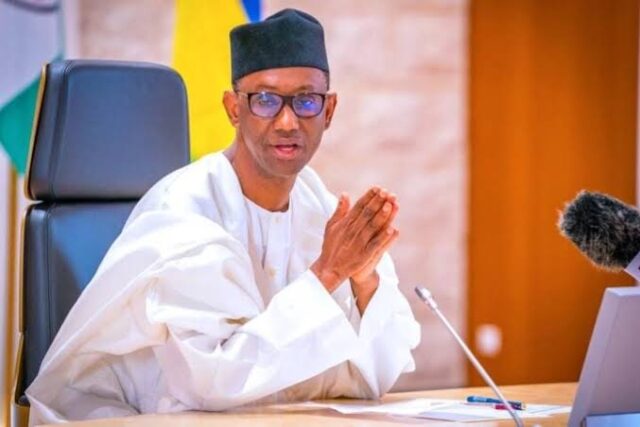
Sit-at-Home Orders Losing Grip In Southeast – Ribadu


National Security Adviser Nuhu Ribadu announced on Thursday that the influence of sit-at-home directives issued by terrorist elements in the South-East is steadily weakening.

He made the remarks during his address at the All Progressives Congress national summit, where he presented a report on the security achievements under President Bola Tinubu’s administration.

According to Ribadu, the government inherited several major security issues, ranging from Boko Haram activities in the North-East and rampant banditry in the North-West to separatist campaigns led by the Indigenous People of Biafra (IPOB) and the Eastern Security Network (ESN) in the South-East.

He also listed instability in the Niger Delta and herder-farmer conflicts in the North-Central zone.

He credited security agencies for making considerable progress in tackling these challenges, particularly through measures that have curtailed widespread killings, kidnappings, and destruction orchestrated by criminal networks.

In his report, Ribadu highlighted significant strides in the battle against insurgency, stating that more than 13,543 Boko Haram militants have been eliminated over the past two years, and over 11,000 weapons seized and destroyed.

He added, “124,408 Boko Haram fighters and their family members have surrendered to security forces since the commencement of the Tinubu administration.”

Despite acknowledging ongoing confrontations in volatile zones like the Timbuktu Triangle and the Tumbu Islands, Ribadu emphasized gains made in the South-East.

“In the South-East, a welcome development is that the sit-at-home orders are becoming increasingly ineffective,” he said.

“Key IPOB/ESN figures have been captured or neutralised. Over 50 police stations and numerous police posts have been rebuilt. Attacks on security forces have significantly reduced, and social and economic activities are normalising.”

Turning his focus to the North-West, Ribadu described the year as pivotal in counter-banditry efforts, revealing the rescue of 11,250 hostages and noting a decline in mass abductions.

“Decisive blows have been dealt to top warlords such as Ali Kachalla, Boderi, Halilu Sububu, Dangote, Isuhu Yellow, and Damuna,” he declared.

Google search engine

MOST COMMENTED

- Advertisement -
Google search engine