Home Blog Page 659

Tinubu’s Corrupt Decree In Rivers Proves Lord Lugard’s Point About Nigeria – Odinkalu

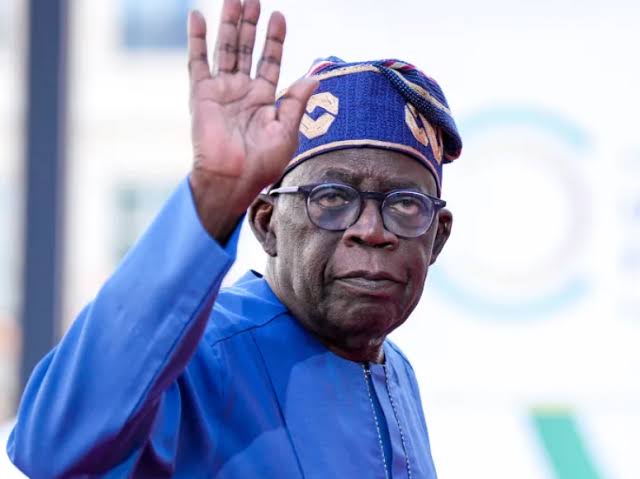
Nigeria’s President, Bola Tinubu, 

In Nigeria, history tends to repeat itself with unerring accuracy and tiresome syntax. When he wrote his Report on the Amalgamation of Northern and Southern Nigeria and Administration in 1919, Frederick Lugard described Nigeria as an “anomaly…. of a country with aggregate revenue practically equal to its needs, but divided into two by an arbitrary line of latitude.” While one portion was fiscally viable, he suggested, the other “was dependent on a grant paid by the British taxpayer.”

Through the Amalgamation in 1914, Lugard created a Customs Union in which extraction could be sustained by administering mechanisms of fiscal compensation to smooth over these disparities.

From the get-go, the invention of Nigeria was about the exploitation of resources and property. Rivers State is at the centre of these resources.
Towards this goal, the powers of government have historically been mobilised.

More than 111 years after the Amalgamation, this raison d’être of the Nigerian estate remains resilient. It is both evident and explicit in the machinations that have now eventuated in the declaration of a state of emergency over Rivers State.

When he addressed the country on March 18, 2025, to proclaim a state of emergency in Rivers State, Bola Ahmed Tinubu, Nigeria’s president, claimed that he acted on “security reports made available to him” showing “disturbing incidents of vandalization of pipelines by some militant without the governor taking any action to curtail them.”

Importantly, he had not bothered to speak to the state governor to hear his own side of the story, nor did he indicate that any humans had been injured or killed.

The State Security Service (SSS) provides security reports in such situations. It is [currently headed as Director-General by Oluwatosin Ajayi, whose stint as state director of security (SDS) in Rivers State coincided with the tenure as governor of Nyesom Wike, a principal belligerent in the political conflict in the state.

As a result, the president continued, “no good and responsible president will stand by and allow the grave situation to continue without taking remedial steps prescribed by the Constitution to address the situation in the state, which no doubt requires extraordinary measures to restore good governance, peace, order and security.”

These words were not new. When he moved the motion in the federal parliament on May 29, 1962, to declare a state of emergency in the old Western Region, Prime Minister Abubakar Tafawa-Balewa uttered the original version of the same sentence. After rendering his version of the events in the regional parliament in Ibadan the previous week, the Prime Minister declared “No responsible Government of the Federation could allow an explosive situation such as that which now exists in Western Nigeria to continue without taking adequate measures to ensure that there is an early return to the Region of peace, order and good Government.”

Then in the Western Region, as today in Rivers State, there was a political dispute between a predecessor and his successor, both of them of the same party. The predecessor was Chief Obafemi Awolowo, leader of the Action Group, who had transitioned from the office of regional premier to being leader of the opposition in the federal parliament. His successor as Premier was Ladoke Akintola. Although both lawyers, these men had fundamental differences in both provenance and ideology. Awolowo was Ijebu from the south of Yoruba land. Akintola, who grew up in Northern Nigeria, was from Ogbomosho in the north of Yoruba land. Ideologically, Akintola’s politics tended towards conservative populism; Awolowo was more towards democratic socialism.

In May 1962, the National Executive Committee of the Action group resolved to request Akintola to resign as both deputy leader to Chief Awolowo in the party and as premier of the Western Region. Rival factions emerged in the party claiming a majority in the regional parliament. Akintola sought to have the parliament convened for the purpose of procuring a vote of confidence on his government. Both the regional governor and the Speaker of the parliament rebuffed his overtures. Instead, outside the parliament, some party officials led by Bola Ige, secured the signatures of a majority of elected members withdrawing support from Akintola’s administration.

The party presented these signatures to the Governor, Oba Adesoji Aderemi, then the Ooni of Ife who thereafter invited Alhaji Dauda Adegbenro to form a new government as regional Premier. Attempts to re-convene the regional parliament ended in fracas. As [recalled by Chief Awolowo “one Mr. Oke, a supporter of Chief Akintola, a Member from Ogbomosho, jumped on the desk and was running about on the desk and then lifted a chair and struck somebody on the head. That is how it started, and then thereafter, a certain Mr Ebubedike, the member from Badagry who lives in Ajeromi, took the Mace and then, in an attempt to strike the Speaker with the Mace, the Mace struck the table and broke into two.”

On receiving notification of the governor’s decision to remove him and designating Alhaji Adegbenro as regional premier on May 21, 1962, Akintola began proceedings at the High Court of the Western Region. The Chief Justice of the Region – they were called Chief Justice then –Samuel Okai Quashie-Idun, had acted as Chief Justice of Ghana under the government of Kwame Nkrumah.

He headed to Nigeria after resigning from Ghana’s judiciary in 1958 over disagreements with the Nkrumah government in the first flush of post-colonial authoritarianism. In 1960, Quashie-Idun became Chief Justice of the Western Region in succession to Robert Yorke Hedges. As Chief Justice, he was said to enjoy the support and patronage of Premier Akintola.

The expectation of Akintola was reportedly that the Chief Justice would afford him an expedited hearing and a favourable verdict, handing him under colour of law the boost he needed in this battle of his political life. Instead, Chief Justice Quashie-Idun decided to distil the legal issues and, rather than rule on them, transmitted those to the then Federal Supreme Court for decision.

The case eventually travelled to [the Privy Council, where Akintola lost the legal dispute. It is said that a disappointed Ladoke Akintola withdrew patronage from Quashie-Idun, and their relationship never recovered. The following year, Quashie-Idun left the judiciary of the Western Region to East Africa, becoming the President of the East African Court of Appeal, where [he died in 1966

It is thought that Quashie-Idun tried, albeit unsuccessfully, to recover the relationship. In June 1963, he dismissed the action by Alhaji Adegbenro of the Action Group, seeking to invalidate the appointment of Odeleye Fadahunsi as regional governor. He denied Adegbenro leave to appeal to the federal Supreme Court.

The disagreement between Quashie-Idun and Akintola was, in reality, unbridgeable. As Chief Justice, he saw a legal dispute which deserved judicial dispassion. For Akintola, it was a political dispute in which the role of the judiciary was to serve as his instrument. In 1962, Quashie-Idun chose to stick with his judicial brief. Today in Nigeria, judges at the highest levels have chosen to discard judicial robes and purchase sides in the political dispute in Rivers State,becoming shamefully complicit in instrumentalizing the highest courts for a proverbial mess of political pottage.

When he addressed the country this past week, therefore, the president was not content with merely plagiarising Tafawa-Balewa; he found comfort in the partisanship of a willful judiciary. On February 28, the Supreme Court restrained the Central Bank from releasing the federal allocations of Rivers State until the State House of Assembly had passed a lawful budget. In his address declaring the state of emergency, the president said his newly appointed military administrator in Rivers State would not be able to make any laws. In effect, he could not pass a budget to implement the Supreme Court judgment.

Yet, the day after he was installed, the Central Bank released the withheld allocation to the military administrator. On the same day, the National Assembly approved the emergency proclamation on an unlikely voice vote after what was reported to be a [splurge of money to sweeten that outcome. If the statutory allocation of Rivers State was used to purchase an emergency proclamation over the state, it is entirely in keeping with the project originated by Frederick Lugard to preserve Nigeria as a proposition in extractive anomaly.

A lawyer and a teacher, Odinkalu can be reached at chidi.odinkalu@tufts.edu

Google search engine

BREAKING: Gunmen Kidnap Navy Officer Attached To Defence Headquarters, Two Others, Demand N100m Ransom


Gunmen have kidnapped a Nigerian Navy officer attached to the Defence Headquarters, Navy Lt. Cynthia Akor, along with two others in the Mpape area of Abuja.

The abduction took place on Friday night at the victims’ residence, raising fresh concerns over the growing insecurity in the Federal Capital Territory.

A source familiar with the incident, who spoke on condition of anonymity, confirmed that the kidnappers contacted the victims’ families on Saturday, demanding a ransom of N100 million for their release.

“Three individuals were abducted on Friday night in the Mpape area, including a DHQ official, Lt. Akor. The kidnappers have contacted their families and are insisting on a N100 million ransom,” the source said.

Efforts to obtain a response from the Director of Defence Media Operations, Maj. Gen. Markus Kangye, and the Director of Defence Information, Brig. Gen. Tukur Gusau, were unsuccessful, as both officials had yet to reply to messages as at the time of filing this report.

When contacted for a reaction, the spokesperson for the Federal Capital Territory Police Command, Josephine Adeh, said she would verify the incident and provide updates.

“I will confirm and get back to you shortly,” she said.

Google search engine

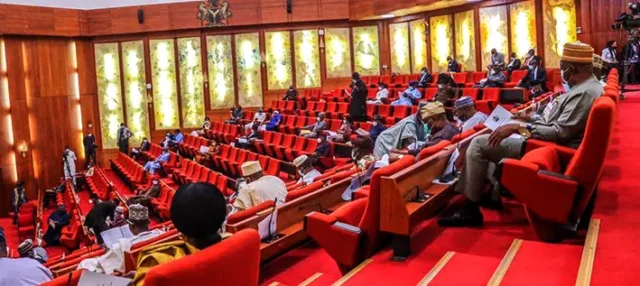
Court Upholds Recall Process Against Senator Natasha


A Federal High Court in Lokoja, the capital of Kogi State, has set aside an earlier ruling that barred the Independent National Electoral Commission (INEC) from receiving recall petitions initiated by constituents of the Kogi Central Senatorial District against Senator Natasha Akpoti-Uduaghan.

In a landmark judgment delivered on Friday, the court affirmed that the recall process is constitutionally valid and consistent with the civic rights of the constituents.

The court urged voters to continue exercising their rights in an orderly and peaceful manner.

This development follows the court’s interim injunction issued on Thursday, which had restrained INEC, its staff, agents, and privies from receiving, accepting, or acting on any petition containing signatures of registered voters from the Kogi Central Senatorial District.

The court also prohibited INEC from conducting any referendum on such petitions pending the determination of the motion on notice.

The judgment was issued following an ex-parte application supported by an affidavit of extreme urgency, together with other sworn court processes by Anebe Jacob Ogirima, a registered voter and constituent of the district, on behalf of himself and four others.

Counsel for the applicant, Smart Nwachimere, argued that the recall petitions in question contained fictitious signatures from purported constituents.

The court’s injunction specifically restrains INEC and its associates from receiving or accepting any recall petitions with fake signatures and from conducting any referendum based on those petitions.

The case has been adjourned to May 6, 2025, for further mention.

Google search engine

Doctor Extracts 3 Litres Of Pus From Abia Farmer’s Abdomen As Police Probe Suspicious Death


The Abia State Police Command has launched an investigation into the death of Joseph Urum, an employee at Do Good Farm in Abiriba, Ohafia Local Government Area, Abia State, vowing to uncover the truth behind his demise.

According to reports, the doctor who treated Urum before his death revealed that “about three litres of pus were extracted from his abdomen.”

This startling detail emerged amid growing controversy over the circumstances surrounding his death.

Meanwhile, HRM Eze Kalu Kalu Ogbu (Enachoken Abiriba IV), the paramount traditional ruler of the Abiriba ancient kingdom, has called for peace and demanded justice for both the deceased and the owner of the multi-million piggery farm.

“I want justice for the deceased; I want justice for the owner of the farm. After police investigations, whoever is at fault, we will know, and start addressing the fault. We don’t want another person to die. We will continue to do our best to ensure there is peace. I want peace in my community. Both parties are my subjects,” he stated.

Abia State Police Public Relations Officer, Maureen Chilaka, told Vanguard that some suspects had already been taken into custody.

She added, “We are aware of the matter. Investigations are on-going. We have been to the hospital where he died and dropped a letter with the doctor on treatment history before and after his death. Once we gather reasonable facts, we shall know if there is need for autopsy.”

Joseph Urum died on February 26, 2025, following allegations that he died under questionable circumstances. His fellow workers, Oko Ukaegbu, Pastor Ejemole Ukaegbu, Maduka, and Bassey were arrested and detained by the police amid these claims, while local youths reportedly threatened to burn down the piggery farm.

The owner of the farm, Mrs Onyinye Urum Ukaegbu Ibe, who is based in the United States and also Joseph’s step-aunt, has petitioned the Inspector General of Police.

She called for a thorough investigation into the matter, dismissing the allegations as false and a veiled attempt to destroy her investments.

Distancing herself from the incident, she insisted that an autopsy is needed to ascertain the true cause of death.

Joseph’s family has also voiced its concerns.

His mother, Mrs Jane Agwu Nmaju (née Urum), along with his elder sister, Mrs Nne Ejituru, and younger sister, Mrs Ruth Uchechukwu, have demanded justice.

“We don’t know what killed him. Those who were taking him round hospitals should explain to us. We want justice for him. How can he be sick at Abiriba only to be taken to Mbaise hospital to die?” they said.

One daughter further added, “They ought to have called to inform us and seek our consent before the surgery.” Mrs Ejituru fumed, “My mother said they contacted her and asked her to agree so that Joseph could be operated on.

“They knew she lives in Bayelsa and it would take some time for her to arrive. Then when she told them that her daughter (Ruth) lives in Umuahia, and would join them soon, they said they were at Mbaise. The next they said was that he was dead. Then, when my mother came with some family members they said he had been deposited in the mortuary and that his corpse cannot be seen until after seven days. So, we became surprised and suspicious. How can our brother be that sick and surgery conducted on him without our consent? Ejimole who is my mother’s step-brother ought to have told us before taking my brother to Mbaise.”

Ruth described her experience at the hospital in Mbaise: “When my mother told me Joseph was sick, I got to the hospital at Mbaise around 9am on February 26 and saw him on a surgical table and knew he was already lifeless. The hospital was like a shop. I saw that my brother already had a tear in his abdomen. I inquired from the doctor what happened. He said they didn’t run any test on him. I said: Why will they operate on him just like that? By mere looking at him, he was just lifeless. I knew he was already dead but it wasn’t I that would pronounce him dead.”

“The doctor said his intestines were like something that was cooked. I told the doctor it was unfortunate he could do that kind of surgery without test or scan. I became angry and stepped out. Within 15 minutes the doctor came out and said he was done and that the operation was successful. After the operation, he left for about three hours. We became worried and I asked the nurse, and she said the doctor was coming. Ejimole was busy making calls.”

When Vanguard visited Evergreen Hospital & Maternity in Onicha Ezinihitte Mbaise, Imo State, Proprietor Dr Alexander Ohanyere said he did all he could to save Urum but ultimately failed.

“I tried to give him the best services; I took some desperate measures to save him but, unfortunately they didn’t work,” he explained.

Dr Ohanyere detailed the emergency: “I got a call from a patient I had treated before, saying they had an emergency situation. So, when they came, it was already a contaminated case. I told them that the patient can’t go to the theatre due to his condition. He lacked blood, and the scan result he came with showed the intestines were perforated. He also had low blood pressure. We needed to stabilize him first before any surgery could be conducted on him. After some times the kidneys stopped working. As we kept making efforts to revive him, I noticed massive water in his abdomen. Then the quick intervention was to drain the massive water in his abdomen. I was amazed to see pus in his abdomen. For the abdomen to be that rotten, it means it had been bad for some weeks. So, I removed about 10 milligram of fluid and he reacted positively to show he had relief. Then I brought a bucket and removed about three litres of pus from his abdomen.”

Asked about rumours of further surgical intervention on his organs, Dr Ohanyere stated he did not proceed beyond “extracting the mass fluid in his abdomen” and urged anyone in doubt to call for an autopsy.

Dr Joshua Okereke from Abiriba General Hospital, where Joseph was first attended to, said he recognized the seriousness of his condition and promptly referred him to FMC Umuahia.

“We don’t have the facility to handle him here. So, within 20 minutes, I had referred him to the FMC that has everything needed to manage his situation. Acute abdomen means something is wrong inside the abdominal cavity. It could be intestinal obstruction or a hole, or ulcer that has eaten the stomach. The sickness was not like something that came suddenly. Looking at him you will see he has been sick,” he explained.

Dr Okereke expressed surprise at the police involvement, noting, “I’m surprised that police are involving us. The patient left here alive but very sick. Whatever happened to him later, I was not aware.”

An employee of Do Good Farm, Mrs Confidence Nduka, told Vanguard that the deceased had a habit of skipping meals, often substituting them with tea, and had no conflicts with co-workers that would suggest foul play.

Other staff members confirmed that their frantic efforts to get him medical help contradict any murder allegations.

Regarding the decision to take Joseph to a clinic in Mbaise rather than FMC Umuahia, sources said he was allegedly told at FMC “to come back in the morning due to lack of space.”

Detained co-workers reported that when they arrived at FMC, they were not attended to, prompting them to seek help at Mbaise hospital based on a recommendation from a friend of a former Enugu doctor.

FMC Umuahia’s Public Relations Officer, Chief Darlington Madubuko, acknowledged that while bed space constraints sometimes force patients to return later, the management is investigating the matter.

“Remember that there was no record to prove that the person you are referring to was our patient since he was not admitted. But we will investigate the matter. If the time they arrived was too late, and there was no bed space at the emergency unit, there is no way he would be admitted. We were admitting before even when there was no bed space but people started posting photos of patients on the floor to blackmail us,” he said.

Madubuko added that the hospital, often overcrowded due to patients from neighbouring states, is constructing a new emergency unit.

“We are building a new emergency unit and it will soon be ready. There’s massive infrastructural development with new equipment by the current management to make sure we give the best of services,” he explained.

Chief Medical Director, Professor Azubuike Onyebuchi further noted that the new emergency building, “which is triple the existing one,” is scheduled to open in the first week of April, along with the engagement of 35 new nurses to ease current pressures.

In a bid to restore calm, HRM Eze Kalu Kalu Ogbu (Enachoken Abiriba IV) intervened to defuse rising tensions in the community.

He explained, “When I heard of the matter I invited all the parties. The siblings of the deceased told us that their brother died in questionable circumstances. So, I invited the police, and told the police: This is your area. Go and investigate and find out what happened. I’m very sure police know what to do.”

The monarch also halted local threats to burn down the farm, advising, “By then, tension was already rising in the community. They were thinking of how to burn down the farm but I said it was not proper to destroy somebody’s investment because of allegations.”

“So, in the interim, I asked them to put palm fronds there to allow for partial operations in the farm. We learnt there are animals in the farm and if you lock it down they will all die. There are no more threats. Once we handed over the matter to the police, both families have been cooperating.”

On rumours that youths might force the burial of Joseph on the farm to seize control of it, Enachoken dismissed the claim: “We don’t address rumour. But if there is any reason for that the family will come to the community. They can’t decide that on their own. The issue of where to bury him has not arisen. If at the end of the day, he died of natural cause, why should anyone go and bury him in the farm? If the police are through with investigation, we will call all the parties again at the palace and tell them what to do.”

Google search engine

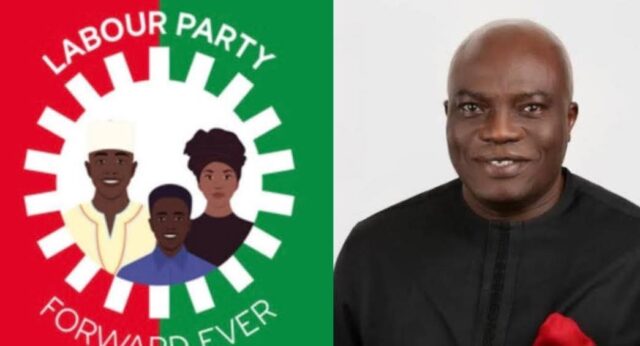
Abia 2027: Gov. Otti’s Likely Challengers And Their Chances


As Abia State gears up for the 2027 general elections, emerging aspirants with governorship ambitions have begun subtle maneuvers and behind-the-scenes activities to secure their political futures.

Although no one has officially declared an interest in contesting for the Abia top job, body language and insider reports suggest that several key figures are positioning themselves to challenge Governor Alex Otti of the Labour Party.

Governor Alex Otti’s Record:

Governor Otti, who came to power in 2023 riding the wave of change after widespread disenchantment with the previous PDP-led administration, has consolidated his chances for a second term with a string of signature projects. Among his accomplishments are:

The near-completion reconstruction of the long-abandoned Port Harcourt Road in Aba.

The expansion of the Umuahia main entrance road into a six-lane thoroughfare.

The reconstruction of key roads such as Umuahia-Uzuakoli-Akara-Abiriba-Ohafia and Abam-Ndioji-Ndiokereke-Arochukwu.

Revitalization efforts in the health sector, notably turning around the Abia State University Teaching Hospital (ABSUTH) in Aba and the reconstruction of 200 primary health centers across 184 political wards.

Resolving long-standing salary arrears for Abia workers and pensioners, with the recent approval of a jumbo pay for traditional rulers boosting his grassroots support.

These initiatives have won him many supporters, although some critics argue he should step down, citing concerns over project costs, transparency in awarding contracts, and allegations of political mismanagement within the Labour Party.

Challenges Facing Otti:

A significant hurdle for Governor Otti is the internal crisis in the Labour Party.

Despite his public claims that party disagreements have been resolved, dissent remains. Some party members who feel “used and dumped” after their hard work in 2023 may seek to exact revenge in 2027.

Additionally, critics contend that Otti has not invested enough in “stomach infrastructure” to meet the growing demands of the state, and some argue he lacks a robust personal political structure, choosing instead to bank on his achievements.

Another point of contention is the controversy surrounding the alleged forfeiture of gratuities owed to pensioners when Otti cleared their salary arrears.

Despite appeals for him to revisit the Memorandum of Agreement (MoA) signed with the Nigeria Union of Pensioners (NUP), the governor has refused to budge, a stance that may be exploited by his opponents.

Several prominent figures are emerging as potential challengers, each with distinct profiles and political backgrounds:

Chief Ikechi Emenike:
A seasoned APC chieftain, Chief Emenike has a history of contesting the governorship with the necessary financial muscle and both local and foreign connections.

Once a dominant figure in Abia politics during President Buhari’s tenure, his critics describe him as “strong-willed, unbendable and highly opinionated,” though allies regard him as humble.

However, his Umuahia origins, an area that has already produced a governor for eight years, might work against his chances.

Deputy Speaker Ben Kalu:
Currently the highest-ranking political office holder from the South East and a prominent member of the APC, Ben Kalu has made significant strides since his debut in the Green Chamber in 2019.

Known for his sagacity and effective networking, Kalu has played a key role in mobilizing defections of prominent Abia politicians to the APC.

He has also been instrumental in establishing the South-East Development Commission (SEDC) and organizing initiatives such as the Peace in the South-East (PISE-P) project.

Though he has not formally declared his intention to run, his recent comments and body language have fueled speculation about a potential bid for the governorship.

Okey Ahiwe:
The PDP’s former governorship candidate in 2023, Okey Ahiwe, hails from Isiala Ngwa in Abia Central, the same region as Governor Otti.

Despite finishing second in 2023, Ahiwe continues to nurse governorship ambitions, buoyed by the backing of his political godfather, ex-Governor Okezie Ikpeazu.

However, the PDP’s ongoing leadership crisis and a lingering perception that the party has long underdeveloped the state could hinder his prospects.

Chief Henry Ikoh:
A well-known figure in Abia politics and a former commissioner for Industry, Chief Henry Ikoh of the APC has aspired to governorship in previous attempts.

With a successful business venture, Harmony Foam, and a diversified portfolio in hospitality, Ikoh is viewed as financially capable of implementing a robust political agenda.

Yet, despite his reputation, doubts remain about his ability to rally the necessary statewide support to unseat Otti.

Uche Ogah:
Former Minister of State for Solid Minerals, Mines, and Steel Development, Uchechukwu Sampson Ogah has repeatedly shown interest in governing Abia State.

Although he supported Governor Otti in 2023, some political analysts believe Ogah is biding his time for 2031, particularly when power may rotate back to Abia North. For now, he appears content to stay on the sidelines.

Chief Emeka Atuma:
A former House of Representatives member and a chieftain of the APC, Chief Emeka Atuma has signaled his intention to challenge Governor Otti.

At a recent stakeholder meeting at his Ntalakwu Oboro Ikwuano palatial home, he took a clean sweep of Gov. Otti, accusing him of “performing below expectations,” and vowed, “I will retire him in 2027.”

An ex-lawmaker and affluent contractor, Atuma promises to deliver “good governance” if elected.

He claims that under the current LP-led administration, “the governed are blindfolded on the affairs of the state,” and pledges that the APC would “run on transparency, good governance and human capital development” if given the mandate.

He describes Otti’s tenure as “an accidental government,” setting the stage for a contentious contest.

Google search engine

PDP Governors Head To Court Over Tinubu’s Emergency Rule In Rivers


The Peoples Democratic Party’s state governors have directed their Attorneys General to challenge President Bola Tinubu’s declaration of a state of emergency in Rivers State, arguing that “Section 305(3) of the Constitution is subject to judicial interpretation.”

Following a Zoom meeting held on Wednesday, the PDP Governors released a communiqué signed by the Forum’s Chairman and Bauchi State Governor, Bala Mohammed on Saturday.

In the statement, they expressed solidarity with Governor Siminalayi Fubara and the people of Rivers State during this challenging period.

Rivers State has been mired in political turmoil for nearly two years as former Governor Nyesom Wike and his successor, Siminalayi Fubara, have been locked in a power struggle, resulting in a prolonged governance impasse.

In an attempt to restore order, President Tinubu declared a state of emergency in the state on Tuesday evening, suspending Governor Fubara, his deputy Ngozi Odu, and all elected members of the state assembly for six months.

Retired Vice Admiral Ibokette Ibas was subsequently appointed as the new administrator.

The PDP governors stated, “the Forum employed the occasion to review the unfortunate proclamation of a State of Emergency in Rivers State by President Bola Ahmed Tinubu in his nationwide broadcast of Tuesday, March 18, 2025; and frowned at the purported suspension by the President of the Governor of Rivers State, the Deputy Governor, and the Members of the Rivers State House of Assembly.”

“The Forum reaffirmed its commitment to upholding the Constitution, defending democratic governance, and ensuring that the rule of law prevails in Nigeria, therefore we have resolved to instruct our Attorneys General in the PDP-controlled States to challenge Section 305 (3) of the Nigerian Constitution as amended and subject it to judicial interpretation.”

“The Forum stands in solidarity with His Excellency, Sir Siminalayi Fubara of Rivers State and the good people of Rivers State at this very difficult and trying moment of the state’s political history.”

Google search engine

Trump Revokes Security Clearances For Biden, Harris, Other Top Former Officials


US President, Donald Trump, on Friday followed through on his threat to revoke the security clearances of his predecessor, Joe Biden, and several other senior former White House and national security officials.

The action targeted a wide range of individuals, including Biden himself, members of his family, and former Vice President and Trump rival Kamala Harris.

Also on the list were high-profile figures such as former Secretary of State and presidential candidate Hillary Clinton, Biden’s current Secretary of State Antony Blinken, and national security advisor Jacob Sullivan.

In a memorandum issued to agency heads and disseminated by the White House communications office, Trump ordered that the listed officials be stripped of their access to classified information.

He stated, “I hereby direct every executive department and agency head … to revoke any active security clearances held by the aforementioned individuals,” adding, “I also direct all executive department and agency heads to revoke unescorted access to secure United States Government facilities from these individuals.”

Traditionally, former presidents and senior national security officials maintain security clearances as a courtesy, often aiding them in future roles with private contractors.

However, Trump who continues to falsely claim that Biden conspired to steal the 2020 election has repeatedly expressed his fury at his predecessor by taking such drastic measures.

It is worth noting that Trump himself was once under investigation for allegedly breaching security protocols by storing classified White House documents at his Mar-a-Lago resort, though that inquiry was closed after he returned to office.

Along with many of Biden’s key appointees, the list also names former Republican lawmaker and vocal critic Liz Cheney.

Additionally, British-born intelligence analyst Fiona Hill—who served under both Democratic and Republican administrations, including in Trump’s own White House—is included, along with former colleague Alexander Vindman, a Kyiv-born retired senior officer of the US Army who came under fire from Trump after raising concerns about the White House’s contacts with Russia.

Google search engine

Ebonyi Varsity Suspends Ex-Gov’s Aide Over Alleged Involvement In Cult-Related Activities

Governor Nwifuru, 

The Alex Ekwueme Federal University, located in Ndufu-Alike Ikwo, Ebonyi State, has suspended Felix Okemini, a former aide to Ebonyi State Governor Francis Nwifuru, over alleged involvement in cult-related activities.

Okemini, who previously served as the Senior Special Assistant to the Governor on Security for Ebonyi North, was relieved of his duties on Tuesday.

Recently admitted to study Political Science at the university, he was photographed during the matriculation ceremony wearing an insignia believed to be linked to a secret cult.

The image, which quickly circulated on social media, sparked widespread outrage and prompted calls for his removal from both government service and the institution.

Governor Nwifuru, via the Secretary to the State Government, Grace Umezuruike, announced Okemini’s dismissal earlier in the week.

In response to the controversy, the university took decisive action.

In a letter signed by its Registrar, Dr. Ifeanyi Igwe, the institution suspended Okemini indefinitely, citing a violation of the matriculation oath. The letter stated:

“The Vice-Chancellor has considered the report on the allegation of cult-related behaviour levelled against you based on the display of cultism as shown on March 14, 2025, during the matriculation ceremony of the university.

“You are hereby informed of your matriculation oath and the fact that cultism and cult-related activities are unacceptable and against the rules and regulations governing students’ activities in the university as well as a security and moral threat to the University Community.

“Consequently, the Vice-Chancellor, on behalf of the Senate, has directed that you be suspended indefinitely from the university pending the outcome of the investigation of this matter by the Students’ Disciplinary Committee of the university.

“You are, by this letter, hereby suspended from the university.

“This letter conveys the vice chancellor’s directive.”

Google search engine

Wike’s Aide Slams PDP Elders Over 28-Year Non-Payment Of Ground Rent


Senior Special Assistant to the Federal Capital Territory (FCT) Minister on Public Communication and New Media, Lere Olayinka, has blamed PDP elders, including Chief Bode George, for the party’s failure to pay Ground Rent for 28 years.

In a statement in Abuja on Saturday, Olayinka cautioned George against blaming FCT Minister Nyesom Wike.

Olayinka recalled that Chief Bode George, a former member of the PDP’s National Working Committee (NWC) responsible for the stalled purchase of the Wadata Plaza National Secretariat, had claimed on national television that “Wike has crossed the red line by revoking the PDP’s national secretariat in Abuja.”

George had warned that Wike’s action was an open declaration of war against the PDP.

In response, Olayinka expressed disappointment that elders like George would “play the ostrich on a matter so glaring as the revocation of 4,794 land titles for not paying Ground Rent for as much as 43 years.”

He questioned, “Why didn’t the PDP pay Ground Rent for 20 years on its Plot No. 243 national secretariat (under construction), which is the only property belonging to the party among the 4,794 revoked titles? How’s government’s enforcement of the consequences of land title owners’ refusal to pay Ground Rent declaration of war? Should the FCTA under Wike have treated PDP differently from the 4,794 owners of land titles that were revoked over failure to pay Ground Rent?”

Olayinka clarified that the Wadata Plaza property used as the PDP national secretariat is not owned by the party but by Senator Samaila Mamman Kurfi, who purchased it from Wadata Enterprises Nigeria Limited.

He explained, “The PDP offered to buy the Wadata Plaza property in 2005 and when the Minister’s Consent was sought, the party was asked to pay N26.9 million. The money was never paid. The party wrote a letter to Malam Nasir El-Rufai, the FCT Minister then, to waive the payment, claiming that it lacked the financial capacity to pay, but he (El-Rufai) insisted the party must pay.”

Olayinka continued, “El-Rufai, who insisted PDP must do the right thing by paying the necessary fees to the government was a member of the party then, and Chief Bode George, who was in the PDP NWC, did not go to national television to accuse him (El-Rufai) of declaring war against the party. And if the owner of did not pay ordinary N2.8 million as 28 years Ground Rent, who is to blame? On the PDP national secretariat at Central Area, is it the fault of Wike that a mere N7.6 million was owed as 20 years Ground Rent despite that over N21 billion was raised in 2014 for the completion of the building?”

While urging George to act as an objective elder, the FCT Minister’s spokesperson added, “what should have been done was to seek information, rather than going on television to advertise hatred against a Minister who is simply doing his jobs without looking at people’s faces.”

“If Chief Bode George had sought necessary information and refrained from acting out of hatred for Wike, it would have been known to him that also affected by the revocation were government-owned institutions like the Central Bank of Nigeria (CBN), Independent National Electoral Commission (INEC), Nigerian National Petroleum Company Limited (NNPC), Borno State Government, Nigerian Television Authority (NTA), Niger Delta Development Commission (NDDC), National Universities Commission (NUC), Kaduna State Government, Nigerian Port Authority (NPA), News Agency of Nigeria (NAN), Federal Ministry of Environment, Nigerian Security Printing and Minting Company, University of Calabar and Nigerian Postal Service and Power Holding Company of Nigeria (PHCN). And like I asked earlier, if Chief Bode George were to be the FCT Minister, would he have treated PDP differently from the other 4,793 land title owners?”

On loyalty and commitment to the PDP, Olayinka noted that the results in Wike’s Rivers State and George’s Lagos State were already speaking volumes.

Google search engine

Nollywood Star, Nkechi Nweje Is Dead


Movie star Nkechi Nweje has passed away after battling a brief illness.

Her demise was confirmed on Saturday by movie producer Stanley Ajemba, also known as Stanley Ontop, who paid heartfelt tribute to his dear friend and esteemed Nollywood actress.

Ajemba, reflecting on their close bond, recalled their last conversation during the filming of the Queenth saga, when Nweje advised him to “stop.”

He shared his sorrow on social media, writing:

“Nollywood in tears as we lost one of our vibrant Nollywood actresses, @nkechi.nweje, after a brief illness.

“Couldn’t post since morning because it was like a dream to me. Ezigbo Nwanyi Onitsha.

“Rest in peace, ma’am. My best friend, she always called me on the phone, advising me. The last time we spoke was during the Queenth saga. She said, ‘Ontop, stop.’ I’m still speechless.”

Nweje, celebrated for her compelling performances especially in motherly roles leaves behind her husband, Dr. Azuibuike Nweje, and six children.

Her remarkable legacy in Nollywood endures as fans and colleagues mourn the loss of a vibrant talent.

Google search engine

MOST COMMENTED

- Advertisement -
Google search engine