Home Blog Page 73

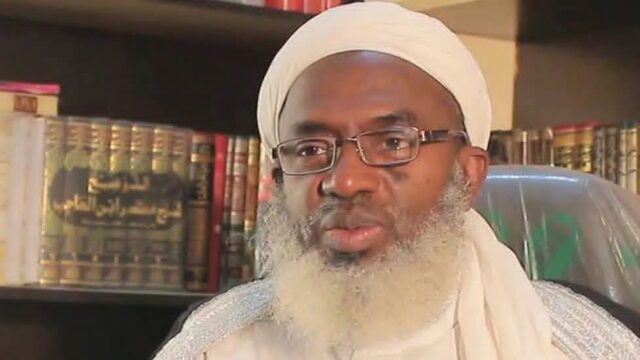
Defence Minister Cautions Controversial Islamic Cleric Gumi, Others Against Sympathising With Bandits

Controversial Islamic Cleric, Gumi

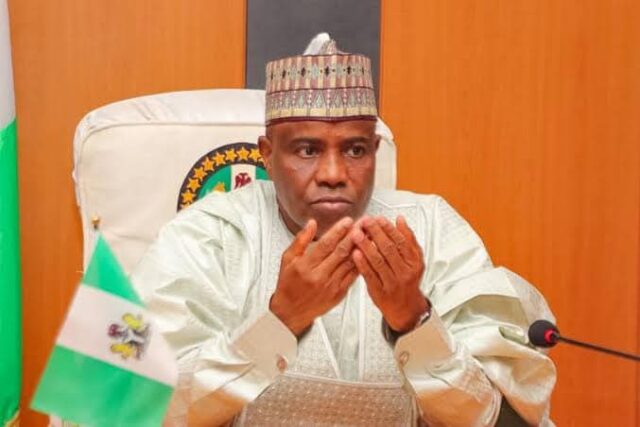
The Minister of Defence, Lt. Gen. Christopher Musa (rtd), has issued a strong warning to Islamic cleric Sheikh Ahmed Gumi and other Nigerians against portraying bandits and terrorists as part of any form of northern brotherhood.

In a statement released on Wednesday in Maiduguri, the defence minister stressed that any form of sympathy, justification or moral defence of criminal groups amounts to complicity.

“A friend of a thief is a thief,” Musa declared, warning that Nigerians who lend support, directly or indirectly, to terrorists and bandits would be treated accordingly.

He explained that the statement was deliberate and pointed, describing it as a direct response to narratives previously advanced by Sheikh Gumi, who had referred to bandits hiding in the forests as “our brothers” and suggested that society could not exist without them.

According to the minister, such rhetoric dangerously blurs the line between compassion and collaboration, noting that while empathy may be a human virtue, legitimising or normalising criminal violence only emboldens armed groups responsible for widespread killings, displacement and destruction across the country.

Musa said banditry and terrorism have devastated communities, uprooted families and claimed countless innocent lives, adding that attempts to rationalise the actions of such groups weaken national security efforts and undermine the sacrifices of security personnel.

He warned that terrorism does not survive on weapons alone but also on the moral cover provided by influential voices who excuse or defend criminality.

“Anyone who shields criminals through words, influence or silence shares responsibility for the consequences,” he said, stressing that neutrality in matters of national security is no longer an option.

The defence minister concluded that Nigeria cannot defeat banditry and terrorism if dangerous narratives continue to obscure the distinction between victims and perpetrators.

“The choice is clear: stand with the law and the nation, or be counted among those enabling crime,” he said.

Google search engine

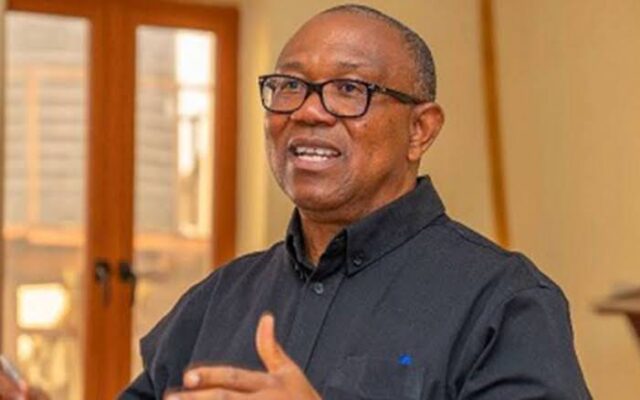
Obi Turned Undemocratic After 2023 Polls, Says LP Chieftain

The National Publicity Secretary of the Julius Abure–led faction of the Labour Party, Obiora Ifoh, has accused the party’s former presidential candidate, Peter Obi, of acting in an undemocratic manner after the 2023 general election, following his recent defection to the African Democratic Congress.

Speaking in an interview, Ifoh dismissed claims that the Labour Party regretted presenting Obi as its presidential candidate, saying the party initially believed he met its ideological and leadership standards.

“At the time, we considered him suitable because he appeared to understand social democracy, equal opportunity and justice, which form the core of our ideology,” he said.

However, Ifoh noted that the party’s relationship with Obi deteriorated after the election, accusing him of attempting to impose undemocratic processes on the party’s leadership.

“What we later saw was not what we expected. He wanted us to take actions that were clearly undemocratic, and that was where the problem started,” he said.

He alleged that rather than rally party members after the election and court cases to build on the more than six million votes recorded in 2023, Obi sought the removal of the party’s elected executives.

“After the elections and court processes, we expected him to lead a post-election review, appreciate party leaders who campaigned across the country and bring everyone together. Instead, he demanded that our executive step down, even though we were duly elected and he supported the convention that produced us,” Ifoh said.

According to him, Obi allegedly mobilised loyal members of the National Assembly and the Abia State governor to forcefully remove the party leadership, contrary to the provisions of the party’s constitution.

Ifoh rejected allegations that the rift between Obi and the party stemmed from financial demands, insisting that Obi neither funded the party nor its campaign.

“No one ever asked Obi for money. During the campaign, he funded his own operations and did not give the party anything. He did not donate a vehicle, a bicycle or any financial support,” he said.

He explained that the Labour Party relied largely on proceeds from the sale of nomination forms and pro bono legal services to fund its campaigns and court cases.

“Thirty per cent of our forms were sold, while 70 per cent were given out. With what little we earned, we ran the party, funded campaigns and handled legal battles. Nobody has enriched himself in this process,” he said.

On the spate of lawsuits involving the party, Ifoh said Obi’s loyalists instituted multiple court cases after setting up a parallel leadership structure in Abia State in September 2024, claiming the party’s tenure had expired.

He described the move as ironic, noting that the same individuals had organised and endorsed the convention that returned Abure and his team to office.

Ifoh also accused the Independent National Electoral Commission of interfering in internal party affairs by refusing to upload Labour Party candidates for the FCT Area Council elections, despite court orders in favour of the Abure-led leadership.

On whether internal divisions influenced Obi’s decision to defect to the ADC, Ifoh said Obi had a long history of moving between political parties, contrary to his earlier public claims.

“He moved from PDP to APGA, back to PDP, then to the Labour Party, and now to ADC. Despite promising never to leave the Labour Party, he has done so,” he said.

He added that Obi preferred aligning with former governors and senators, whom the party had deliberately avoided in favour of youth-driven and reform-oriented leadership.

“These are the same people he once campaigned against. We told him our movement was not about men of yesterday who looted Nigeria,” he said.

Ifoh argued that the Labour Party’s 2023 performance was not solely dependent on Obi’s popularity, noting that the party existed and had elected officials before his emergence.

“Obi’s presence boosted our visibility, no doubt. But we handed over too much of the party’s structure to him, and that mistake has taught us important lessons,” he said.

On the Obidient movement, Ifoh described its members as loyal primarily to Obi rather than the Labour Party, claiming many of them never formally registered as party members.

“They were a support group for Obi, not for the party. Many of them caused internal crises, spread falsehoods and lacked grassroots electoral strength,” he said.

He concluded that the Labour Party was better positioned without internal conflict, stressing that Nigeria’s political future should not be tied to one individual.

“It is not about one man. One man cannot make a forest. The Labour Party has moved on, and we wish Obi well wherever he goes,” Ifoh said.

Google search engine

ASUU–FG Pact: FG Begins Implementation Ahead Of Signing Ceremony

The Federal Government has commenced the implementation of key aspects of its agreement with the Academic Staff Union of Universities ahead of the formal signing ceremony scheduled for Wednesday, January 14.

The agreement, reached on December 23, 2025, effectively resolved a 16-year stalemate between the government and the university lecturers’ union.

According to official correspondence from the National Salaries, Income and Wages Commission, relevant Ministries, Departments and Agencies have been directed to begin implementing the components relating to academic allowances.

In a letter signed by the commission’s chairperson, Ekpo Nta, and addressed to bodies including the Office of the Head of Civil Service, the Ministry of Finance and the Office of the Accountant-General of the Federation, the government confirmed approval of revised remuneration for academics, with effect from January 1.

Under the directive, university lecturers are now entitled to increased Consolidated Academic Tools Allowance, secretarial allowance for professors and readers, as well as Earned Academic Allowances.

Although these allowances have existed since 2009, ASUU has repeatedly accused successive governments of failing to release the funds.

The union also insisted that the allowances should have been reviewed upward from 2012 in line with the 2009 agreement.

The revised structure places the Consolidated Academic Tools Allowance at N952,412 annually for Graduate Assistants, rising to N3,790,676 for professors.

Professors are also entitled to N1.74 million annually as secretarial allowance, while readers will receive N840,000 per year.

Under the Earned Academic Allowances framework, lecturers are eligible for payments covering postgraduate supervision, industrial training and teaching practice supervision, oral examination honoraria, study grants, responsibility allowances and compensation for excess workload.

Beyond allowances, the agreement provides for a 40 per cent salary increase for academics and the establishment of a National Research Council with statutory funding pegged at a minimum of one per cent of Nigeria’s Gross Domestic Product.

The agreement further stipulates that professors will earn a pension equivalent to their final annual salary upon retirement at the age of 70.

Reacting to the development, ASUU President, Prof. Chris Piwuna, expressed cautious optimism that the current administration would honour the agreement.

Piwuna, a consultant psychiatrist at the University of Jos Teaching Hospital, said the union expects a clear departure from the pattern of non-implementation that characterised previous governments.

“We have reached an agreement, and we expect this government to demonstrate fidelity to its commitments, unlike past administrations,” he said.

The formal signing of the agreement is expected to take place on Wednesday, January 14.

Google search engine

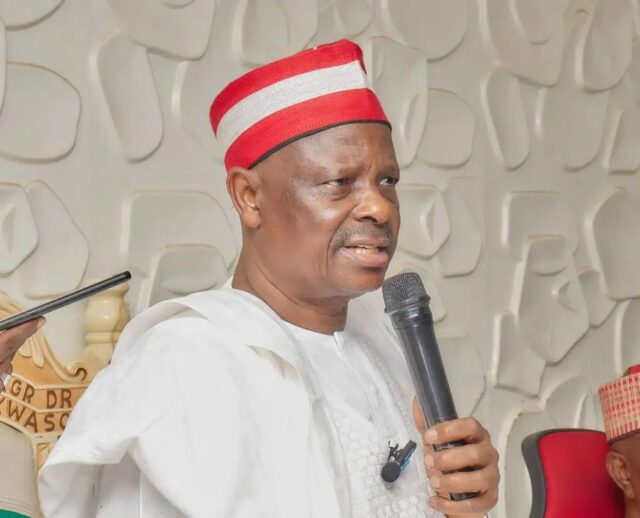
Kwankwaso Urges Loyalists To Temporarily Align With Gov Yusuf’s Move To APC


Former Kano State governor and senator, Rabiu Musa Kwankwaso, has advised his associates serving in Governor Abba Kabir Yusuf’s administration to temporarily align with the governor’s reported move to the All Progressives Congress in order to ease mounting political tension in the state.

Kwankwaso made the appeal on Tuesday in a short video message shared on Facebook by his media aide, Saifullahi Hassan.

Governor Yusuf’s reported plan to defect to the APC has strained his relationship with Kwankwaso, who is widely regarded as his political mentor.

While Kwankwaso has resisted pressure to join the APC himself, he expressed concern over claims that elected officials were being compelled to formally declare allegiance to either the Kwankwasiyya or Gandujiyya political camps.

He described reports that local government chairmen, councillors, secretaries and other officials were being asked to sign documents declaring their loyalty as troubling and unacceptable.

“On my arrival in Kano on January 13, 2026, I observed some disturbing developments, particularly the policy forcing elected officials to openly state whether they belong to Kwankwasiyya or Gandujiyya. This is unfortunate and unacceptable to our supporters,” Kwankwaso said.

Efforts to obtain a response from the Kano State Government were unsuccessful. The Commissioner for Information, Ibrahim Waiya, and the governor’s spokesman, Sanusi Bature, could not be reached at the time of filing the report.

Kwankwaso recalled that the Kwankwasiyya Movement endured years of political opposition before returning to power in 2023 through strong grassroots mobilisation.

He said the movement’s objective has always been to improve the lives of Kano residents through education, employment opportunities, infrastructure and improved welfare.

He described Kano’s political contest as a clear choice between progress and regression, insisting that the Kwankwasiyya Movement operates on a defined ideological blueprint.

“Our movement has a clear direction. If you belong to it, you must follow its principles. In Kano, the choice is between light and darkness, and the people understand this clearly,” he said.

The former governor also reflected on the selection process for local government chairmen and councillors during the 2023 elections, noting that a broad-based committee oversaw the process and expressing confidence in the performance of those elected.

Addressing the reported defection crisis, Kwankwaso said many elected officials had expressed anxiety, fear and frustration since talks of a move to the APC began.

“Since the defection discussions started, many officials have been under serious pressure. Some have called me in distress, while others have experienced sleepless nights and serious health challenges,” he said.

Following consultations with key stakeholders, Kwankwaso said he decided to allow officials under pressure to temporarily declare allegiance to the governor as a practical step to reduce tension and protect them from threats.

He stressed that the move does not signal the collapse of the Kwankwasiyya Movement, noting that preparations for the 2027 elections have not yet begun.

“Our supporters should remain calm and alert. This decision is meant to douse tension and protect those under pressure. We know where everyone stands, and the time for full political engagement is still ahead,” he said.

Kwankwaso also thanked members of his caucus, many of whom he said were enticed with promises that remained unfulfilled over the past three years.

He further acknowledged Governor Yusuf for publicly recognising the achievements of his administration.

Political analyst Kabiru Sufi described Kwankwaso’s directive as a calculated long-term strategy rather than a sign of weakness.

According to Sufi, allowing supporters to temporarily align with the governor gives the movement flexibility while preserving its core strength ahead of the 2027 elections.

“Even if more people appear to follow the governor, observers will see it as a tactical move rather than a loss of support. It allows Kwankwaso to maintain influence while giving his followers room to navigate political pressure,” he said.

Meanwhile, the Kano State chapter of the APC says it has concluded preparations to receive Governor Yusuf and other political actors and is only awaiting a date from the Presidency.

The party’s state secretary, Ibrahim Zakari Sarina, said the issue was discussed at a recent APC stakeholders’ meeting, which also reviewed progress on the ongoing electronic membership registration exercise.

According to Sarina, the party has no objection to the governor’s planned defection and is optimistic about the political advantage it would bring.

“All arrangements have been concluded. We are only waiting for the Presidency to fix a date,” he said.

Sarina added that the APC’s primary objective remains electoral success, stressing that any development that strengthens the party is welcome.

Commenting on Kwankwaso’s position, he said the APC would not compel him to join the party, adding that while he would be welcomed if he chose to defect, the party would not tolerate internal crises.

With the APC in control at the federal level, Sarina said Kwankwaso would have limited capacity to destabilise the political environment in Kano State.

Google search engine

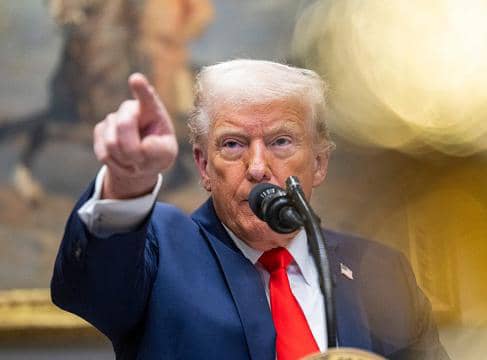
US Labels Muslim Brotherhood Branches In Egypt, Lebanon, Jordan Terrorist Groups

The United States has designated branches of the Muslim Brotherhood in Egypt, Lebanon and Jordan as terrorist organisations, marking a major policy shift long advocated by key Arab allies and conservative groups in the US.

The designation was announced on Tuesday by Secretary of State Marco Rubio, who said the move aligns with President Donald Trump’s commitment to dismantle what Washington describes as the operational and financial networks of Muslim Brotherhood chapters that threaten US security.

“Today, as a first step in support of President Trump’s commitment to eliminate the capabilities and operations of Muslim Brotherhood chapters that pose a threat to the United States, the United States is imposing terrorist designations against the Lebanese, Jordanian and Egyptian chapters of the Muslim Brotherhood,” Rubio said in a statement.

He described the action as the beginning of a sustained campaign to disrupt the activities, financing and influence of the group across the region.

Under the designation, any assets linked to the affected Muslim Brotherhood chapters within the United States will be frozen, while financial transactions with them will be criminalised.

The move also significantly restricts the ability of members to travel to the US.

Egypt welcomed the decision, describing it as recognition of the threat posed by the group’s ideology.

In a statement, the Egyptian foreign ministry said the designation underscored the danger of the Muslim Brotherhood and its destabilising impact on regional and international security.

Founded in Egypt in 1928, the Muslim Brotherhood evolved into a transnational Islamist movement with branches across much of the Arab world.

Its influence, however, has waned in recent years amid coordinated crackdowns by several Arab governments.

The group briefly rose to power in Egypt following the 2011 uprising, when Mohamed Morsi won the 2012 presidential election.

His government was overthrown a year later in a military coup led by then army chief Abdel Fattah al-Sisi, who subsequently launched an extensive crackdown on the movement.

Egypt, along with Saudi Arabia and the United Arab Emirates, has long regarded the Muslim Brotherhood as a threat, citing its political ambitions and call for a unified Islamic caliphate.

US officials said the latest designation was partly based on alleged links between the Muslim Brotherhood and Hamas, the Palestinian militant group designated as terrorist by Washington.

The Treasury Department said the Egyptian and Jordanian branches had coordinated with Hamas, particularly following the October 7, 2023 attack on Israel, which sparked a major Israeli military offensive in Gaza.

In Lebanon, the State Department said the Muslim Brotherhood had aligned itself with Hezbollah, the Iranian-backed Shiite group, in launching rocket attacks against Israel.

According to US officials, the Lebanese chapter has increasingly pushed for formal alignment with what they described as the Hezbollah-Hamas axis.

The Muslim Brotherhood had also gained political traction in Jordan, where its political wing functioned as the main opposition party in parliament.

However, Jordan banned the group in April last year, confiscating its assets after accusing it of stockpiling weapons and plotting to destabilise the country.

In the United States, conservative politicians have for years pushed for the designation of the Muslim Brotherhood, arguing it would cut off funding and international support for the movement.

Some of these efforts were accompanied by claims that the group was seeking to infiltrate US institutions, allegations experts have widely dismissed.

Washington had previously hesitated to take the step, partly out of concern over relations with Turkey, whose president, Recep Tayyip Erdogan, has long expressed ideological sympathy for the Muslim Brotherhood.

President Trump maintains a generally cordial relationship with Erdogan, despite Ankara’s strong criticism of Israel’s military campaign in Gaza.

Google search engine

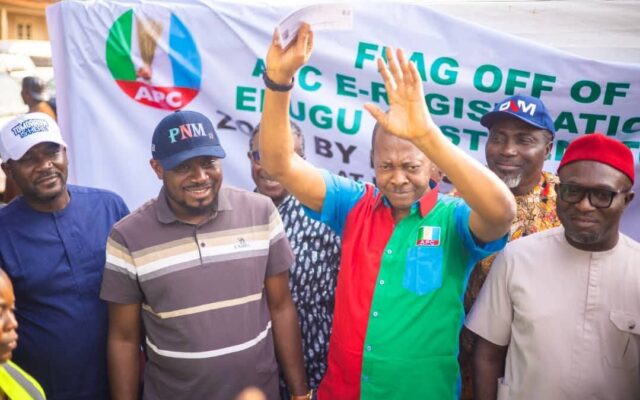
2027: Ex-Governor Chime Backs Tinubu’s Re-Election, Says APC Southeast’s Best Bet


Former Governor of Enugu State, Barr. Sullivan Chime, has endorsed President Bola Tinubu for a second term in 2027, aligning himself with the recent adoption of the President by South East governors, APC leaders and stakeholders in the region.

Chime said he was fully involved in the endorsement from the outset and expressed confidence that Tinubu and the All Progressives Congress would record a decisive victory in the South East in the next general election.

He spoke on Tuesday in Udi during the flag-off of the APC electronic membership registration exercise in Enugu West Senatorial District, where he described President Tinubu’s performance as commendable, given prevailing global and regional economic realities.

“I am from the South East, so it goes without saying that I was part of the endorsement. It was a collective decision and we stand by it. I have no doubt that it is achievable,” Chime said.

According to him, the challenges currently facing Nigeria are not peculiar to the country alone but reflect broader global and African economic pressures.

“The President has done well. Considering what is happening globally and across Africa, he is doing well under the circumstances,” he stated.

The former governor said he would speak more extensively on the 2027 elections when the campaign season officially begins.

“With elections approaching next year, there will be time to talk. When campaigns start, we will engage fully,” he added.

Chime also expressed satisfaction with the growing acceptance of the APC in the South East, particularly in Enugu State, noting that his decision to leave the Peoples Democratic Party after the 2015 elections had been vindicated.

He said APC leaders in the state were determined to exceed the two-million membership target set for them in the ongoing electronic registration exercise by Governor Peter Mbah, the party’s leader in Enugu State.

“We are here to appreciate our people. You can see the enthusiasm. APC is now the dominant political party in Enugu State,” he said.

“Ten years ago, when I joined the APC, we already saw where things were headed. PDP was on the decline, and today it is clear that APC remains the viable option. Exceeding the two-million membership mark in Enugu is achievable and we will go beyond it,” he added.

Chime described the renewed energy within the party as encouraging, insisting that those still hesitant would eventually come to terms with political realities.

Meanwhile, chairmen of Udi, Aninri, Awgu, Ezeagu and Oji River local government areas pledged to mobilise aggressively at the grassroots to ensure the registration of over two million APC members across the state.

Speaking on behalf of the council chairmen, the Chairman of Udi LGA, Hon. Hyginus Agu, praised Governor Peter Mbah’s performance, saying his developmental projects across wards had strengthened public support for the APC.

“Our governor has performed exceptionally well. There are visible projects in every ward, and the people are happy. For many of them, Governor Mbah represents their political party.

He has chosen the APC, and the people stand firmly with him and President Tinubu,” Agu said.

It will be recalled that Governors Peter Mbah of Enugu, Hope Uzodimma of Imo and Francis Nwifuru of Ebonyi, alongside other APC leaders and stakeholders in the South East, at the weekend unanimously adopted President Tinubu as their sole presidential candidate for the 2027 election.

Google search engine

Police Grill Pastor Chris Okafor Over Rape, Sexual Misconduct Allegations

The Lagos State Police Command has questioned Pastor Chris Okafor, Senior Pastor of Mountain of Liberation and Miracles Ministries, over allegations bordering on rape and other forms of sexual misconduct.

Sources familiar with the investigation said the cleric honoured a police invitation and was interrogated for several hours at the State Criminal Investigation Department (SCID), Panti, Yaba, Lagos.

The police action followed petitions from several individuals who accused the pastor of committing multiple offences, including sexual assault.

After the interrogation, Pastor Okafor was released on self-recognition, meaning he was not required to meet any bail conditions or provide sureties.

Confirming the development, the Lagos State Police Public Relations Officer, SP Abimbola Adebisi, said the cleric was released to enable him respond to a similar matter already pending at the Zone 2 Police Headquarters, Onikan.

“Yes, Pastor Okafor honoured our invitation and was questioned. He was later released on self-recognition,” Adebisi said.

She added that the pastor would be invited again after issues surrounding the case at Zone 2 had been resolved.

“Our findings showed that he has a related case at Zone 2. He will be re-invited after the matter there has been dispelled,” the police spokesperson explained.

Attempts to get a reaction from Pastor Okafor or his representatives were unsuccessful as at the time of filing this report.

Google search engine

Police Arrest Suspect, Recover Decomposing Body Of Abducted Woman

The Rivers State Police Command has arrested a 26-year-old man, identified as Goodnews Iberi, in connection with the abduction and killing of a 25-year-old woman, Rita Special Eleonu.

Iberi, who hails from Rumuakunde community in Emohua Local Government Area of the state, was arrested following investigations into the disappearance of Eleonu, a native of Rumuekini community in Obio/Akpor Local Government Area.

Police operatives also recovered the victim’s decomposing body from a forest in Emohua and deposited it at the University of Port Harcourt Teaching Hospital mortuary for autopsy.

The Police Public Relations Officer in Rivers State, CSP Grace Iringe-Koko, confirmed the development in a statement issued on Monday.

She said the arrest followed a distress report filed on December 29, 2025, by the victim’s brother, after Eleonu was declared missing.

According to the police, investigations revealed that the suspect, alongside four accomplices who are still at large, allegedly lured the victim to the Rumuakunde axis of Emohua on December 13, 2025, where she was kidnapped.

The police further disclosed that Eleonu was later taken to a forest along the East-West Road in Emohua, where she was killed after the suspects collected a ransom of N210,000 from her family.

Iringe-Koko said operatives of the command attached to the Anti-Cultism Unit, Emohua annex, acting on intelligence, arrested Iberi on January 8, 2026, at about 6:30am at his hideout.

“During preliminary interrogation, the suspect voluntarily confessed to the crime and mentioned four other accomplices,” she said.
She added that the suspect led detectives to the forest where the victim’s body was recovered.

The police spokesperson said the suspect remains in custody while investigations continue, adding that efforts are ongoing to arrest other members of the kidnapping syndicate.

Google search engine

2027: Tambuwal Backs International Support For Free, Fair Elections

Former Sokoto State governor and senator representing Sokoto South, Aminu Waziri Tambuwal, has said he is open to the involvement of the international community in Nigeria’s 2027 general elections if it would help guarantee credibility and fairness.

Tambuwal made the remark on Monday during an interview on Arise Television, where he recalled the role international engagement played in the 2015 general election that led to the defeat of then President Goodluck Jonathan by the opposition All Progressives Congress.

A prominent figure in the opposition coalition aligned with the African Democratic Congress, Tambuwal noted that diplomatic attention and global scrutiny helped shape the 2015 polls.

At the time, he was a member of the APC but has since returned to the Peoples Democratic Party while supporting the coalition-backed ADC.

“From our recent history, the intervention of the international community shaped the 2015 election, which the APC benefited from. I therefore expect similar engagement ahead of 2027,” he said when asked if he would support diplomatic pressure to ensure credible elections.

He, however, stressed that foreign involvement was not the sole solution to Nigeria’s electoral challenges but remained one of several mechanisms that could help strengthen the process.

“It’s not the only way, but it is one of the ways,” Tambuwal said.

Clarifying his position, the senator said he was not referring to any specific country but to collective action by democratic nations and global institutions.

“I’m not particular about the United States. I’m talking about democratic countries and the international community ensuring, without direct interference, that elections are free, fair and credible,” he explained.

Tambuwal also spoke on security cooperation between Nigeria and foreign partners, referencing reports of a US military intervention in Nigeria in December.

He expressed hope that such incidents would not be repeated, calling instead for a clear and transparent framework to guide bilateral security engagements.

According to him, statements by the US government and the reported missile strike appeared to have influenced the posture of the current administration, prompting a more decisive approach to governance and security.

“I think those developments had some effect on the government. They were forced to reassess the situation, and you could see some positive impact in how the administration is now thinking,” he said.

Asked whether he would support similar actions in the future, Tambuwal said he would not welcome further military attacks, preferring diplomatic and political engagement based on mutual understanding.

“I would not want to see more attacks. What we need is a clearer and well-defined framework between the Nigerian government and the US government,” he said.

He also criticised the absence of legislative oversight in such security arrangements, noting that lawmakers were not briefed on the reported interventions.

“As a senator, these issues were not tabled before us. We don’t know how some of these decisions were reached, and at this level, we should be informed,” he said.

Tambuwal added that any security cooperation involving Nigeria and foreign partners should be explicit, transparent and properly outlined, stressing that assistance should not be limited to the United States alone.

“Any country willing to help Nigeria tackle its security challenges should be welcomed,” he said.

Google search engine

Governor Mbah’s Water Promise: Courage, Constraints, And Concrete Progress By Dr. Jeff Ejiofor


When Governor Peter Ndubuisi Mbah assumed office, he made a bold and people-centred promise: that within a short period of time, pipe-borne water would flow into homes across the Enugu metropolis.

It was a promise that resonated deeply with Ndi Enugu, a people who for decades had endured the hardship of water scarcity, relying on tankers, vendors, streams, and unsafe sources to meet a basic human need.

The promise symbolised hope, urgency, and a clear intention to break with the culture of excuses that had long surrounded public utilities in the state.

However, governance, especially in a sector as technically complex and historically neglected as water supply, often confronts realities that are not immediately visible on paper.

While the six-month target for water in every home could not be fully achieved, it is important for the general public to understand that this was not due to lack of will, commitment, or action on the part of Governor Mbah.

Rather, it was the result of several deep-seated and unforeseen inhibiting factors that came to the fore only after serious work had commenced.

One of the major challenges encountered was the extensive blockage of waterways and pipelines caused by decades of indiscriminate building of houses, unregulated urban expansion, and previous road construction projects.

In many parts of Enugu city, water lines that once existed had either been built over, damaged, or completely obstructed, making reticulation extremely difficult.

These obstacles were not mere inconveniences; they required redesigning distribution paths, demolitions in some cases, and careful coordination with other infrastructure projects across the metropolis.

Even more daunting was the shocking state of the existing water infrastructure. The water pipes across Enugu were largely outdated, rusted, and dilapidated, many of them laid several decades ago.

These pipes were designed to carry far less volume of water than what the Mbah administration now generates.

As a result, once high-volume water production began, the old pipes could not withstand the pressure, leading to frequent and rampant bursting along water lines.

This significantly slowed down distribution and reticulation works, despite the availability of water.

It must be clearly stated that Governor Peter Mbah’s government did not fail in water generation; in fact, it exceeded expectations.

Before his administration, Enugu city depended almost entirely on the Ajali Water Scheme, with water generation hovering around 70 million litres.

In less than six months into his administration, Governor Mbah expanded the frontiers of water generation beyond Ajali and increased output to about 120 million litres.

This was a historic leap, representing about a 100 percent expansion in water availability within a very short period.

Since then, water generation has continued to increase and has more than doubled, laying a solid foundation for sustainable supply.

Unfortunately, while generation advanced rapidly, distribution lagged behind due to the accumulated severe decay of infrastructure over time.

Ideally, these challenges should have been fully captured during feasibility studies before the six-month promise was announced.

In this regard, it is only fair to let the public know that much of the responsibility lay with the State Water Corporation, which failed to provide accurate and comprehensive information about the true state of its infrastructure when the governor sought briefing upon assumption of office.

The scale of decay only became evident when active reticulation work began.

Notwithstanding these setbacks, Governor Peter Mbah did not retreat, shift blame, or abandon the project. Like the brave and committed leader he is, he chose to confront the reality head-on.

As a result, water availability across Enugu metropolis expanded significantly even before his first six months in office elapsed, and it has continued to improve steadily since then.

Today, areas that had not known pipe-borne water for decades are once again enjoying this basic amenity.

Communities such as Abakpa, Emene, parts of Gariki, Agbani Road, Achara Layout, and Idaw-River have all witnessed a revival of water supply, and many of them continue to enjoy it up to this day.

While the goal of water in every home within six months proved more difficult than anticipated, one undeniable truth stands firm, and water distribution in Enugu has tremendously improved.

Even the most cynical critics and hardened detractors of the administration agree on this point. More homes are connected, more taps are running, and more families are relieved of the daily struggle for water than at any other time in recent history.

In conclusion, Governor Peter Mbah deserves commendation for his aggressive infrastructural drive and his uncommon commitment to fixing the water sector in Enugu State.

Progress, though challenged, is real and visible. Ndi Enugu and the general public are therefore urged to support his administration as he works to realise the dream of a modern, self-reliant, and mega Enugu City.

He should be encouraged, not distracted by sponsored armchair criticisms and sleepless schemes aimed at undermining his efforts. Such plots will not stop the march of progress.

Undoubtedly, what Enugu needs at this moment is unity of purpose, patience, and collective support. With these, the vision of sustainable water supply and a greater Enugu State will not only be achieved, it will endure.

Google search engine

MOST COMMENTED

- Advertisement -
Google search engine