Home Blog Page 8

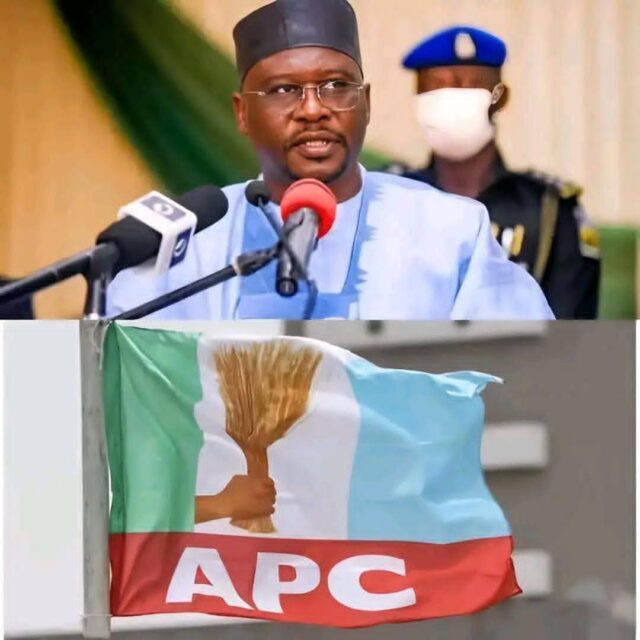
Governor Fintiri Dumps PDP, Joins APC Alongside Cabinet, Lawmakers


Governor Umaru Fintiri of Adamawa State has formally defected from the Peoples Democratic Party (PDP) to the All Progressives Congress (APC), marking a major political shift in the state.

Fintiri announced his decision in a statewide broadcast on Friday, stating that the move was taken in the overall interest of Adamawa people and in pursuit of national unity.

He explained that aligning more closely with the Federal Government would enhance the state’s access to development opportunities and strengthen collaboration on key projects.

The governor disclosed that he defected alongside all members of his cabinet, political appointees and elected local government chairmen, signaling a coordinated transition into the ruling party.

The development follows a similar move earlier in the week by the Speaker of the Adamawa State House of Assembly, Wesley Bathiya, who resigned his membership of the PDP along with 14 other lawmakers.

During plenary, the Speaker read out letters of resignation submitted by the affected legislators, formally confirming their exit from the party.

Mahmud Kallamu, Chairman of the House Committee on Information and one of the defecting lawmakers, described the action as strategic and well considered.

An APC lawmaker, reacting to the development, said the party was open to receiving the new entrants should they complete the process of joining.

Google search engine

Enugu, A City Renewed Under The Leadership Of Gov Mbah

By Andrew Chukwuemeka Odoh, Ph.D

A clean and orderly city doesn’t happen by accident. It doesn’t come from mere wishes or fine speeches.

It grows from clear vision, through careful planning, and execution by leaders who are willing to do the hard work of making things happen.

Real change in any city requires more than promise, it requires commitment, coordination, and the courage to insist that standards are kept. In recent times, Peter Ndubuisi Mbah has shown what focused and intentional leadership can achieve. Since he became governor, Enugu has experienced changes that residents can see and feel in their everyday lives.

One of the most noticeable differences is the cleanliness of the city. Streets that were once untidy now look refreshed and well cared for. The cabs are now repainted to beautify the city.

Walking or driving through Enugu today, there is a clear sense that attention is being paid to the environment.

Waste is collected more regularly, and sanitation services are better organized. Behind the scenes, there is stronger supervision of waste management vendors and a more reliable payment system, ensuring that those responsible for keeping the city clean can do their jobs effectively.

The result is simple but powerful: fewer piles of refuse, cleaner surroundings, and a healthier atmosphere for everyone.

The transformation is also visible on the roads, especially in the transportation sector. For years, many taxis operated without uniform colors or proper maintenance, which gave parts of the city a neglected look.

Today, that story is changing with the introduction of new compressed natural gas-powered buses, five smart bus terminals.

The coordinated appearance of these vehicles does more than beautify the city. It signals structure, discipline, and a renewed identity. It shows that even small details matter when building a city people can be proud of.

Road improvements have further strengthened this positive shift. Many roads have been resurfaced or rehabilitated, making movement smoother and safer.

Better roads mean less wear and tear on vehicles, shorter travel times, and fewer frustrations for commuters.

Traffic flow has improved in several previously congested areas, making daily journeys less stressful. Many residents at Abakpa Nike will have a sign of relief after the handing over of Abakpa Nike road which is now under construction.

For many residents, this translates into more productive days and more enjoyable drives. For visitors, it creates a welcoming first impression.

What truly stands out, however, is the consistency behind these efforts. The changes are not random or cosmetic; they reflect a structured approach to governance.

Plans are made, executed, and monitored. Infrastructure is not only built but maintained. Service providers are held accountable. This steady, practical style of leadership is what turns temporary improvements into lasting progress.

Today, Enugu feels different. There is a renewed sense of pride among residents and growing confidence among investors. Clean streets, organized transportation, improved roads, and better waste management together create a city that feels alive, cared for, and forward-looking.

Urban transformation is never magic; it is the product of steady work and responsible leadership. The ongoing progress in Enugu under Governor Peter Ndubuisi Mbah shows that when vision meets action, a city’s story can change for the better.

Google search engine

Nigerian Navy Commissions Multi-Million Naira Primary Healthcare Centre In Enugu Community

The Nigerian Navy has inaugurated a multi-million naira Primary Healthcare Centre (PHC) in Ugbawka community, Nkanu East Local Government Area of Enugu State, as part of efforts to enhance access to quality healthcare at the grassroots.

The project, executed under the Special Quick Impact Project initiative of the Chief of Naval Staff, was undertaken in honour of Rear Admiral Patrick Nwatu (retd).

Speaking during the commissioning ceremony on Friday, the Chief of Naval Staff, Vice Admiral Idi Abbas, said the facility underscored the Navy’s commitment to positively impacting host communities and improving civil-military relations across the country.

Represented by the Director of Veteran Affairs, Rear Admiral Raheem Taofeek, the naval chief noted that the Quick Impact Projects were designed to recognise distinguished senior officers who had served the nation meritoriously, while also delivering meaningful development to communities.

According to him, the Navy currently has 33 such projects across the country and remains committed to expanding its social intervention footprint.

He added that the initiative aligns with the Renewed Hope Agenda of President Bola Ahmed Tinubu, stressing that the health facility would not only improve healthcare delivery in Ugbawka but also attract qualified health professionals to the area.

In his remarks, Governor Peter Mbah, represented by the Commissioner for Health, Prof. George Ugwu, disclosed that the state government had equipped the centre with furniture, medical equipment and healthcare personnel.

He said the facility would operate round the clock, with accommodation for staff and solar-powered electricity to guarantee uninterrupted services.

The governor also called on political office holders and philanthropists to support residents by enrolling them in the state health insurance scheme, which costs N12,000 per person annually.

Member representing Nkanu East/Nkanu West Federal Constituency, Chief Nnoli Nnaji, commended the Navy for collaborating with the state government and the community to ensure the functionality of the centre.

He pledged to sponsor health insurance coverage for 50 persons in each of the 28 wards within his constituency and promised to explore the provision of tricycle ambulances to strengthen emergency response services.

The traditional ruler of Ugbawka, Igwe Sunday Nwobodo, expressed appreciation to the naval authorities for honouring their son, Rear Admiral Patrick Nwatu (retd), with the project.

He announced that he had paid for the pre-registration of the first 100 residents to access healthcare services at the facility and assured that the community would take full ownership and responsibility for its protection and maintenance.

In his response, Rear Admiral Nwatu (retd) thanked the Chief of Naval Staff for approving and funding the project, as well as the Enugu State Government and Ministry of Health for their partnership.

He revealed that the healthcare centre was named after his late father and former Igwe-elect, Major Emmanuel Nwatu, in recognition of his lifelong dedication to the development and wellbeing of the Ugbawka community.

Google search engine

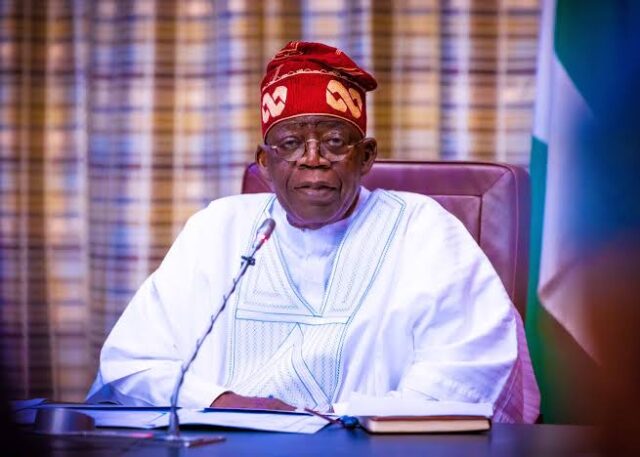
BREAKING: Tinubu Meets Lone PDP Governor In North East


President Bola Tinubu, on Friday, hosted the only Peoples Democratic Party (PDP) governor in the entire North East region.

The meeting held hours after Governor Ahmadu Fintiri of Adamawa State dumped the PDP for the ruling All Progressives Congress (APC).

Fintiri’s defection makes APC to be in control of all but one state in the North East region.

Borno, Gombe, Yobe, Taraba, Adamawa are now under APC, while Bauchi is the lone state under the PDP.

Give me another version of this, add headline

Google search engine

Court Jails ‘Akwa Okuko’ 11 Months, Orders Shrine Demolition, Public Renunciation Of Rituals

A High Court sitting in Awka, Anambra State, on Friday sentenced popular native doctor, Chidozie Nwangwu, widely known as “Akwa Okuko Tiwaraki,” to 11 months’ imprisonment over his involvement in ritual practices popularly referred to as “oke ite” and other related offences.

The trial judge, Justice Jude Obiora, delivered the judgment after upholding four out of a 10-count charge filed against the native doctor.

Six counts were struck out for lack of merit.

Nwangwu was arraigned alongside two other traditional practitioners, Eke Hit and Onye Eze, following their arrest in February 2025.

The arrests came shortly after Governor Chukwuma Soludo launched a crackdown on alleged criminal activities linked to some native doctors in the state.

The enforcement followed the signing of the Anambra State Homeland Security Law and the establishment of security outfits, Agunechemba and Operation Udo-ga-chi, aimed at tackling insecurity.

Initially, the court imposed a six-year prison term with an option of a N60 million fine, to run concurrently.

However, after a plea bargain agreement between the defence and the state government, the sentence was reduced to two years.

Justice Obiora further took into account that the convict had already spent 13 months in detention under the Agunechemba Security Squad while awaiting trial.

Consequently, the two-year term was adjusted, leaving Nwangwu to serve an effective 11-month sentence at the Awka Correctional Centre.

Beyond the custodial sentence, the court directed that his shrine be demolished and all items recovered from him forfeited to the state.

The judge also ordered Nwangwu to publicly renounce “oke ite” and similar ritual practices by posting videos across his social media platforms after completing his sentence.

He is further required to serve as a Youth Entrepreneurship Ambassador for the state, producing advocacy materials discouraging young people from engaging in ritual-based wealth-seeking activities.

Part of the ruling stated that he would no longer practise or administer charms associated with “oke ite” and must make public statements denouncing such activities upon release.

Reacting to the outcome, defence counsel Ogwuedom Iwuoba described the judgment as a mutually agreed plea bargain.

He said the agreement reflected a consent judgment reached with the state government, adding that there would be no appeal since both parties had upheld the terms of the bargain.

Google search engine

Troops Overrun ‘Mother Valley,’ Dismantle IPOB/ESN Stronghold In Anambra

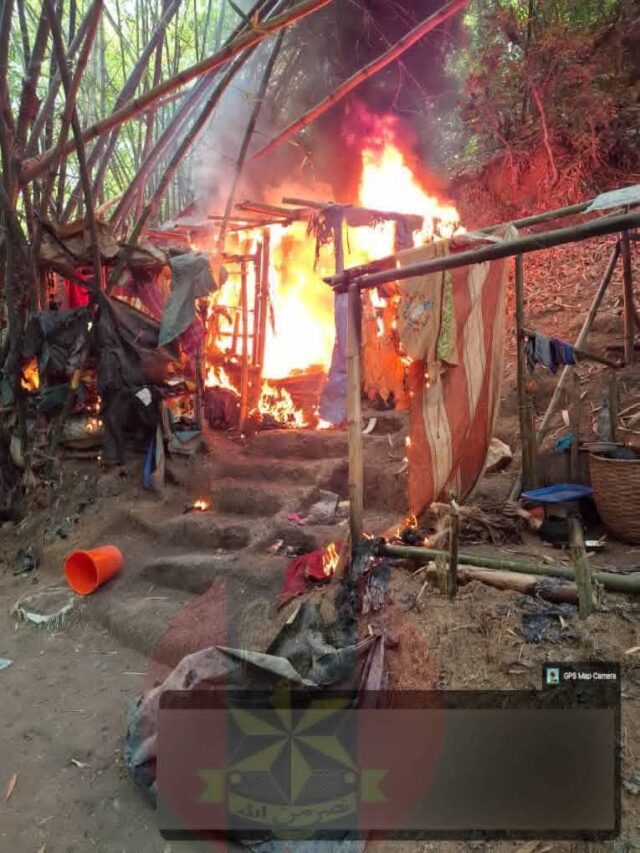
Troops under the Joint Task Force South East, operating through Operation UDO KA, have stormed and dismantled what security authorities described as a major stronghold of the Indigenous People of Biafra (IPOB) and its armed wing, the Eastern Security Network (ESN), in Mother Valley, Nkwere area of Anambra State.

The operation, carried out on February 26, 2026, involved personnel of the Nigerian Army, Nigeria Police Force and Nigeria Security and Civil Defence Corps under the Joint Task Force South East framework.

According to security sources, troops advanced on foot for over three hours through difficult terrain to access the valley, which had allegedly served as a long-standing operational base for suspected IPOB/ESN members.

During the confrontation, the armed elements reportedly deployed locally fabricated improvised explosive devices and opened heavy gunfire in an attempt to repel the advancing troops.

Security operatives, however, overpowered the group after an intense exchange. One suspect was confirmed dead, while others reportedly escaped with gunshot injuries.

The forces recovered a cache of items from the location, including two pump-action guns, one locally made firearm, a tear gas gun, seven gas cylinders, an electric kettle and flags said to be associated with separatist propaganda.

Security authorities also said they destroyed several structures within the camp, described as the group’s “Supreme Headquarters,” including solar power installations and a Mikano generator, in a move aimed at crippling the group’s logistics and operational capacity.

In a related development, an ambush team arrested two suspected members of the group.

One was apprehended while allegedly attempting to plant an improvised explosive device, while the other was said to have been monitoring troop movements.

Both suspects are currently in custody and undergoing profiling and investigation.

Troops also recovered a KIA saloon car and a black Toyota Sequoia SUV from what was described as a terrorist vehicle park within the valley.

Security officials said clearance operations are ongoing in the area to prevent any regrouping, reiterating that there will be no safe haven for criminal elements threatening peace in the South East.

They assured law-abiding residents of sustained security presence and protection, while warning that individuals engaged in violent activities would face decisive and lawful action.

Google search engine

2027: INEC’s New Timetable Designed For Tinubu’s Re-Election – ADC

The African Democratic Congress has faulted the updated 2026–2027 general election timetable issued by the Independent National Electoral Commission, alleging that the new schedule is skewed to favour the re-election bid of President Bola Ahmed Tinubu.

In a statement released on Friday by its National Publicity Secretary, Bolaji Abdullahi, the party described the revised timetable as more than a routine administrative adjustment, insisting that it introduces stringent requirements capable of shutting out opposition parties from the 2027 race.

INEC had on February 13 fixed February 20, 2027, for the Presidential and National Assembly elections and March 6, 2027, for Governorship and State Houses of Assembly polls.

However, concerns were raised by Muslim stakeholders that the dates clashed with the Ramadan fasting period.

Following the objections, the National Assembly amended Clause 28 of the Electoral Act Amendment Bill, reducing the mandatory notice period for elections from 360 days to 300 days, thereby enabling INEC to revise the timetable.

On Thursday, the electoral body, in a schedule signed by its Chairman, Joash Amupitan, rescheduled the Presidential and National Assembly elections to January 16, 2027, while Governorship and State Assembly elections were moved to February 6, 2027.

Reacting to the changes, the ADC argued that the requirement for political parties to submit a comprehensive digital membership register by April 2, 2026, effectively disqualifies many opposition parties from fielding candidates.

The party pointed to Section 77(4) of the Electoral Act 2026, which mandates the submission of digital membership registers ahead of party primaries slated for between April 23 and May 30, 2026.

According to the ADC, the roughly 34-day window to comply with the digital registration requirement makes participation nearly impossible for parties that had no prior notice.

Citing Section 77(7), the party noted that failure to submit the register within the stipulated timeline would render a party ineligible to nominate candidates.

It further referenced Sections 77(2) and 77(6), which stipulate that the digital register must contain detailed information including names, gender, dates of birth, addresses, states, local governments, wards, polling units, National Identification Numbers and photographs, and bars the use of older registers that do not meet these specifications.

The ADC alleged that the ruling All Progressives Congress had commenced a fresh membership registration drive as far back as February 2025, long before the digital requirement became compulsory, thereby giving it what the opposition party described as an unfair head start.

According to the statement, democratic competition requires a level playing field, and any framework that allows one party to leverage incumbency to secure procedural advantages undermines the integrity of the electoral process.

The party also disclosed that it has joined other opposition groups in rejecting the Electoral Act 2026 and the revised INEC timetable, maintaining that the framework appears tailored to advance what it termed a “self-succession agenda.”

It added that it would not take steps that could legitimise what it considers a flawed system and is currently reviewing its options.

The ADC called on civil society organisations, democratic actors and the general public to interrogate the revised timetable and insist on fairness, warning that democracy cannot thrive where electoral rules are perceived to predetermine outcomes.

Google search engine

Enugu: Relief For Rural Communities As Nkanu West Council Chairman Extends Infrastructure To Hinterlands

Residents of Obuno Akpugo in Nkanu West Local Government Area have expressed relief following the extension of road and basic infrastructure projects leading to Smart Schools and several hinterland areas by the council chairman, Hon. John Ogbodo.

The council boss, who recently embarked on an inspection tour of ongoing projects across the local government, said his administration, in line with Governor Peter Mbah’s agenda, is deliberately shifting focus to neglected rural communities to ensure inclusive development.

During visits to project sites in Obuno Akpugo, the chairman noted that development must not be concentrated only in urban centres while rural dwellers continue to grapple with poor access roads, erosion challenges, and lack of basic amenities.

He stated that the construction of rural access roads linking all Smart Schools in the council would ease the movement of farm produce to markets, reduce transportation costs, and improve socio-economic activities within the agrarian communities.

According to him, bringing governance closer to the people remains a core mandate of his administration, stressing that every ward in the council area would feel the impact of ongoing projects.

Some members of the community who spoke to DAILY GAZETTE during the inspection, including Mr. Chika Nwodo, Margret Nneji, and Nwabueze Nnamani, commended the council chairman for prioritising the hinterlands, noting that some of the affected roads had been in deplorable condition for years.

They expressed optimism that the intervention would not only improve connectivity but also attract further development, including small businesses and social services, to the communities.

The chairman reassured residents that more initiatives aimed at improving education, healthcare, and agricultural support would be rolled out in the coming months, maintaining that grassroots development remains the foundation for sustainable growth in Enugu State.

Google search engine

2027: INEC Reschedules Presidential, Governorship Polls Amid Protests Over Electoral Act

The Independent National Electoral Commission (INEC) has revised the timetable for the 2027 general elections following the enactment of the Electoral Act 2026 and concerns raised over a clash between the earlier dates and the Ramadan fasting period.

Under the new schedule, Presidential and National Assembly elections will now hold on January 16, 2027, while Governorship and State Houses of Assembly elections are slated for February 6, 2027.

The commission had initially fixed February 20 and March 6 respectively under the repealed Electoral Act 2022.

INEC’s National Commissioner and Chairman of the Information and Voter Education Committee, Mohammed Haruna, explained in a statement issued in Abuja that the repeal of the 2022 Act and the signing into law of the Electoral Act 2026 necessitated a realignment of statutory timelines for pre-election and electoral activities.

He said party primaries, including the resolution of disputes arising from them, will run from April 23 to May 30, 2026.

Campaigns for Presidential and National Assembly elections will commence on August 19, 2026, while Governorship and State Assembly campaigns will begin on September 9, 2026.

The commission also shifted the Osun State governorship election from August 8 to August 15, 2026, noting that outstanding activities in both Osun and Ekiti will be conducted strictly in compliance with the new law.

INEC maintained that the revised timetable aligns with the 1999 Constitution (as amended) and the Electoral Act 2026.

However, opposition parties, particularly the African Democratic Congress (ADC) and the New Nigeria Peoples Party (NNPP), have strongly criticised the new electoral framework, accusing the ruling All Progressives Congress (APC) of attempting to tilt the 2027 elections in its favour.

At a press conference in Abuja attended by prominent opposition figures including ADC National Chairman David Mark, Atiku Abubakar, Rotimi Amaechi and Peter Obi, NNPP National Chairman Ajuji Ahmed called on the National Assembly to urgently amend what he described as “objectionable provisions” in the Act.

Ahmed argued that the law, signed by President Bola Tinubu on February 18, was rushed and contains clauses capable of undermining transparency.

He faulted the amendment to Section 60(3), which grants presiding officers discretionary powers in the event of technical challenges during electronic transmission of results.

According to him, the provision weakens the gains made through the introduction of electronic transmission and could be exploited to delay uploads to INEC’s Results Viewing Portal (IReV) under the guise of network failure.

The opposition also criticised changes to party nomination procedures. While the Electoral Act 2022 permitted direct primaries, indirect primaries and consensus arrangements, the 2026 law restricts parties to direct primaries and consensus only.

They further objected to the shortening of campaign timelines and the reduction of the period within which INEC funding is released from 12 months to six months before elections.

Describing the recent FCT Area Council elections as a “dress rehearsal” for 2027, the coalition alleged irregularities and cited low voter turnout—reportedly as low as 7.2 per cent in the Abuja Municipal Area Council—as evidence of growing public distrust in the electoral system.

President Bola Tinubu dismissed claims that he was undermining the opposition, saying critics were free to express their views.

Speaking during an interfaith Iftar with senators at the Presidential Villa, he remarked that he had been accused of “killing the opposition” despite not owning a gun.

He urged political actors to prioritise unity and strengthen constitutional democracy, noting that Nigeria faces serious security challenges, including terrorism and banditry, which require collective effort rather than partisan conflict.

Meanwhile, the ADC Southwest caucus declared its readiness for the forthcoming governorship elections in Osun and Ekiti states.

In a statement issued after a zonal executive meeting in Ibadan, the party said it would intensify mobilisation, expand membership and strengthen its grassroots structures.

The caucus resolved to establish a robust campaign framework, closely monitor polling units and ensure adequate security coordination throughout the election period.

In a related development, INEC Chairman, Prof. Joash Amupitan (SAN), called for deeper collaboration with the United Nations to improve electoral credibility and inclusiveness.

Receiving the UN Resident and Humanitarian Coordinator in Nigeria, Mohammed Fall, and the UNDP Resident Representative, Elsie Attafuah, in Abuja, Amupitan reaffirmed the commission’s commitment to continuous improvement in election management.

He highlighted ongoing technological reforms, including enhancements to the IReV portal and efforts to sanitise the voters’ register by removing deceased persons and duplicate entries.

He also urged the UN to intensify support in voter education to tackle apathy and rebuild trust.

Fall congratulated the INEC chairman on his appointment and pledged sustained UN support, noting that Nigeria’s elections carry significant regional and global implications.

Google search engine

Court Jails Man 60 Years For Raping Minor In Delta 

A 55-year-old man, Collins Ika, has been sentenced to 60 years imprisonment by a Delta State High Court of Justice sitting at Orerokpe for raping an 11-year-old girl entrusted to him in the Ugolo community, Okpe Local Government Area of the state.

The offence was committed between 2021 and 2022. The trial judge, Justice Joe Egwu, while delivering the judgment in Orerokpe on Monday, also ordered the convict to pay ₦50million as compensation to the victim.

In addition, the court ordered the forfeiture of ₦111,000 brought by the defendant in an attempt to settle the matter out of court without the knowledge of the complainant, the police, or a human rights activist.

Ghe court ordered that the money be forfeited to the Delta State Government. The prosecution, led by Miss Phoebian

Onomakpome, an assistant director in the Delta State Ministry of Justice, had earlier told the court that the victim testified that the accused repeatedly had unlawful carnal knowledge of her and threatened to kill her if she opened up to anybody.

The mother of the girl also testified that she entrusted the child and her siblings to the defendant, their neighbour, during her absence.

The girl later disclosed the abuse after complaining of persistent waist pains. Following a report to the police, the defendant fled but was later arrested in a sting operation facilitated by a human rights activist.

The defendant was invited under the guise of a discussion for settlement and arrested when he arrived with ₦111,000, allegedly intended to hush the case.

During the trial, the defendant denied the allegations and called his wife as his only witness.

In his ruling, Justice Egwu held that the prosecution proved its case beyond a reasonable doubt and accordingly sentenced the defendant to 60 years’ imprisonment, stressing that the judgment should serve as a deterrent to others.

In 2025, an Ekiti State High Court, Ado Ekiti Division, sentenced a 33- year-old man, Olamilekan Ajewole, to life imprisonment for raping a 10-year-old girl.

The charge read, “That the defendants on June 29, 2024, at Ayetoro Ekiti did conspire to rape a 10-year-old girl, contrary to Section 31(2) of the Child’s Rights Law, Cap.C7, Laws of Ekiti State 2012.”

Google search engine

MOST COMMENTED

- Advertisement -
Google search engine