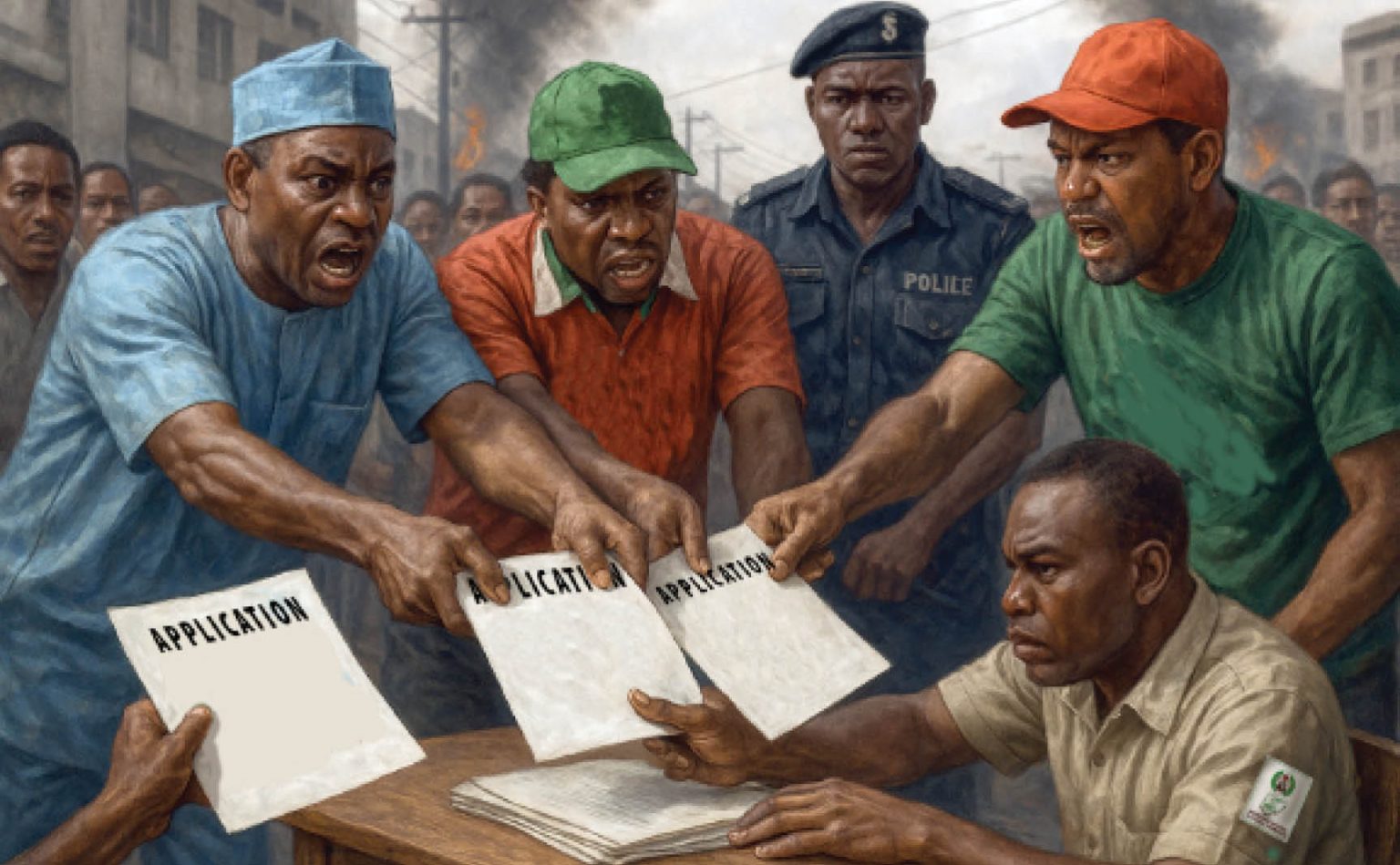

The Independent National Electoral Commission (INEC) is under scrutiny for allegedly delaying the registration of over 100 political groups, including a new opposition coalition aiming to challenge President Bola Tinubu in the 2027 elections.
Sources confirmed that 104 applications were submitted following the 2023 general elections, as various groups sought to expand the nation’s political alternatives.
However, months later, INEC has yet to act on any of them.
Among the applicants is the National Opposition Coalition Group, which plans to contest the 2027 general elections under a new platform called the All Democratic Alliance (ADA).
The group has rejected collaboration with existing parties, which it claims have been infiltrated or compromised by the ruling All Progressives Congress (APC).
Despite what applicants describe as urgency, Daily Trust reports that INEC has not moved forward with the verification process.
Some accuse the commission of intentionally stalling.
Comrade Salihu Lukman, former APC National Vice Chairman (North), voiced concern over Nigeria’s current political structure, saying it has failed to offer true representation.
“All the potential platforms are in danger,” Lukman said during an interview on Trust TV, referencing internal crises within the APC that led to his exit.
“More than 70 groups have submitted applications to INEC. But INEC is sitting on them.”
He added that the coalition has considered two strategic options, one of which is to register a new political party.
However, the delay by INEC threatens that plan.
“Acknowledgement letters are not even being issued. That’s a violation of the law,” Lukman said.
“The Electoral Act mandates INEC to act within a 90-day window after acknowledging applications.”
Lukman further linked INEC’s inaction to a broader pattern of “state capture,” where supposedly independent institutions like INEC and the National Assembly are allegedly under political influence.
Another applicant, Barrister Okere Kingdom Nnamdi, representing the Patriotic Peoples Party (PPP), confirmed he submitted the party’s application on March 28, 2025, but received only a vague response in May.
“Await the opening of the registration portal,” was INEC’s reply, which Okere described as ambiguous and lacking accountability.
In a formal letter to the commission, he asserted that the PPP had fulfilled all requirements under Sections 221–224 of the 1999 Constitution and Section 75 of the Electoral Act 2022, demanding a proper response or risk legal action.
Coalition members argue that INEC’s delay is robbing new parties of the time needed to prepare for the 2027 election cycle, with primaries expected to begin in early 2026.
But not everyone is optimistic. Barrister Kenneth Udeze, National Chairman of the Action Alliance (AA), questioned the practicality of registering new parties so close to the next election.
“Legally, no party can be registered within 12 months of a general election,” he stated, suggesting that mid-2026 could already be too late.
Unnamed INEC officials told DAILY GAZETTE that the commission is still reviewing applications and has responded to many within the legal timeframe.
They revealed that a digital portal is being developed to streamline the registration process and will launch soon.
One official dismissed rumors that INEC is hesitant due to fear of litigation from deregistered parties.
“The commission hasn’t made any decision on deregistration yet, but any action taken will follow legal guidelines,” the official said.
This comes amid memories of INEC’s 2020 deregistration of 74 political parties for failing to win at least 25% of votes in any state or local government area, or secure any elected position during the 2019 polls.
At that time, INEC Chairman Mahmood Yakubu justified the move as a way to streamline the system, leaving only 18 parties, later joined by Youth Party (YP) and Boot Party (BP) via court rulings, totaling 19.
Critics argue that many of the remaining parties are largely inactive, with only a few playing significant roles in national politics.
Mr. Rotimi Oyekanmi, Chief Press Secretary to the INEC Chairman, clarified that all applicants must meet defined standards.
“If there are issues with their documents or information, they must be resolved. Applicants are free to seek updates from the commission,” he said.
Experts remain divided on how far INEC’s powers should extend when it comes to political registration.
Prof. Adele Jinadu, a former president of the International Political Science Association, affirmed that democracy permits unlimited party formation as long as applicants meet legal thresholds.
Dr. Dauda Garuba of the Centre for Democracy and Development (CDD) concurred, arguing that compliance with the law should be the only requirement for participation.
But Mr. Ezenwa Nwagwu, Executive Director of the Peering Advocacy and Advancement Centre in Africa (PAACA), expressed concern over the growing trend of forming parties just for influence trading.
“The right to associate is constitutionally guaranteed. INEC’s responsibility should be limited to setting criteria for appearing on the ballot,” he said.
He criticized many of the aspiring parties as Special Purpose Vehicles (SPVs) lacking real political infrastructure.
“Parties don’t need to go national. They can focus on local elections. Most lack the capacity to manage a national campaign anyway,” he added.
As the 2027 elections inch closer, pressure is mounting on INEC to provide clarity and transparency on the fate of the pending applications, especially from those who see their platforms as the last hope for genuine political reform.