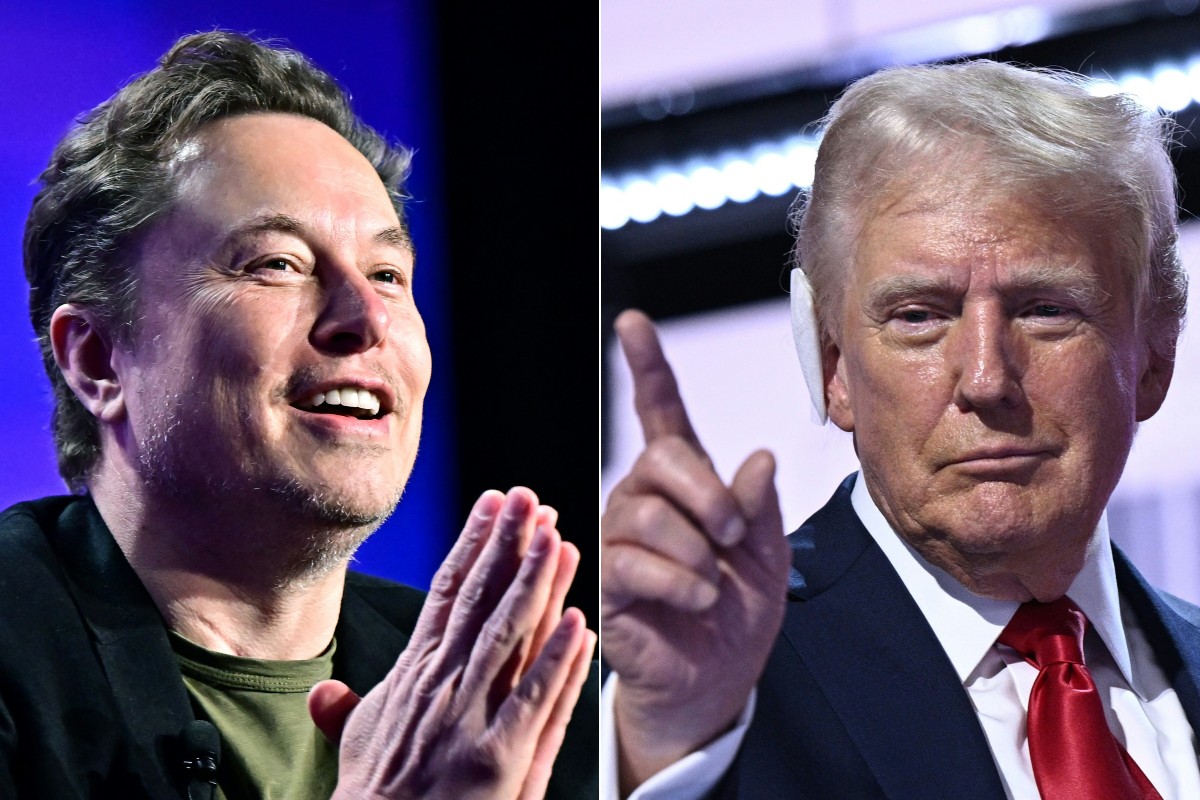

What began as a high-profile alliance between tech billionaire Elon Musk and former U.S President Donald Trump has now devolved into a public feud, casting a shadow over Musk’s companies and raising questions about the future of his influence in Washington.
Tesla, the crown jewel of Musk’s empire, has been under pressure as Musk’s political entanglements intensify.
The electric vehicle maker’s stock has dropped over 20% since the start of the year, with investor concerns mounting over Musk’s polarizing image.
That concern reached a tipping point this past Thursday when the spat between Musk and Trump escalated publicly.
Tesla’s market value plunged by more than $150 billion in a single day, and Musk saw his personal fortune shrink by $34 billion.
The rift has put a major dent in what was supposed to be a mutually beneficial relationship.
While Trump’s administration had planned to eliminate EV tax credits, Musk hoped the White House would support his long-term ambition: to deploy fully autonomous vehicles across the country.
That plan is now at risk. Regulatory agencies have historically slowed the rollout of such technologies over safety concerns. Under Trump, Musk had expected those barriers to ease.
Now, those expectations seem unlikely to materialize.
“Musk needs Trump because of the regulatory environment, and you can’t have Trump go from friend to foe,” noted Wedbush Securities analyst Dan Ives.
Tesla’s upcoming robotaxi pilot in Austin, Texas, also faces uncertainty, as the administration holds influence over vehicle design standards and production approvals.
Meanwhile, Musk’s shift to far-right politics has alienated a segment of Tesla’s core customer base, environmentally conscious, liberal-leaning buyers.
Some disillusioned customers have even placed bumper stickers on their cars reading, “before Elon went crazy.”
The company’s performance reflects the shift. In April, Tesla’s market share in Europe plunged by 50%, even as EV sales across the continent rose.
A Morgan Stanley survey revealed that 85% of investors now believe Musk’s political involvement is harming the company.
The feud also threatens SpaceX, Musk’s aerospace firm that has become integral to NASA’s operations.
The company holds lucrative contracts with the U.S government—worth tens of billions—and manages key national security responsibilities, such as satellite launches and ferrying astronauts to the International Space Station.
SpaceX’s valuation soared to $350 billion in a recent share sale, up $140 billion from just six months ago. Much of that increase was based on confidence in future government contracts under a friendly Trump administration.
But that confidence was rattled when Trump, amid Thursday’s fallout, threatened to cancel all government deals with Musk’s companies.
In response, Musk briefly announced he would shut down SpaceX’s Dragon spacecraft, which NASA relies on to transport astronauts—though he later retracted the statement.
Musk’s AI startup, xAI, is his next big frontier—pitted directly against OpenAI, which he co-founded and where his rival Sam Altman now leads.
Altman, meanwhile, has cultivated his own influence in the White House, securing backing for the Stargate Project, a massive AI infrastructure venture expanding to the Middle East.
Although Musk initially dismissed Stargate as “unrealistic,” reports suggest he lobbied behind the scenes to derail it—arguing that Trump would not approve any plan that didn’t include xAI.
Adding fuel to the fire, Musk merged X (formerly Twitter) into xAI earlier this year. Though X has become a favored platform among conservatives, Trump himself rarely uses it, preferring Truth Social, his own social network.
The Musk-Trump split is more than just a clash of egos—it’s a drama with real economic, political, and cultural consequences.
The unraveling of their relationship could reshape Musk’s businesses and diminish his influence in Washington.
And while Musk continues to position himself as a bold visionary, the fallout raises questions about whether political entanglements are undermining the very empire he’s worked to build.