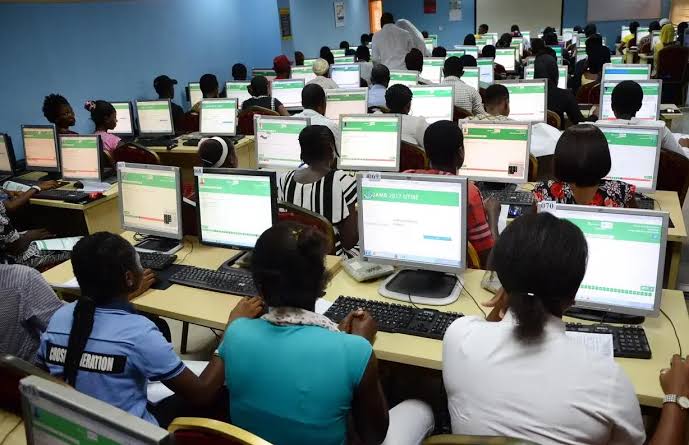

The Joint Admissions and Matriculation Board (JAMB) has confirmed that an overwhelming 80% of the 98,232 candidates registered for Saturday’s nationwide mop-up UTME failed to appear.
The low turnout is being attributed to intensified security measures aimed at cracking down on impersonators and exam cheats.
At the Technology CBT Centre, NAF Valley Estate, Abuja, JAMB Registrar Prof. Is-haq Oloyede described the attendance as “alarmingly low,” estimating that only about 12% of registered candidates showed up nationwide.
Oloyede clarified that mop-up exams are traditionally organised to serve a limited group who missed the main exam (for legitimate reasons like illness or verified technical issues). He explained:
“Every year, we do mop-up. And it is normally for about 4,000, 5,000 students; who for illness, for genuine excuse could not take the exam. Or who after review, we saw had technical problems in their centers. This is normally for about 4,000, 5,000. Every year we do that.”
Discussing the release of results, Oloyede suggested they would likely be available by Monday, as JAMB plans to delay publication to remove results that stem from fraudulent actions:
“So that may make us delay till Monday, just to be able to see how many of those criminals we have been able to arrest.”
He described the unusually high number of absentees as a strategic move that gives genuine candidates a second chance while benefiting from security intelligence:
“In the wisdom of the management and our stakeholders, we felt everybody (who missed the exam) should be given an opportunity.”
“Given the work that we have done in conjunction with the SSS and the police. We have been able to get some intelligence, some information that we could use. To really apprehend those who are impersonating in particular.”
“So we now felt that it’s better to keep the door open as wide as possible… those who even indicated coming out of the 90,000, there are about 12,000 plus… Who eventually, who indicated that they were coming.”
Oloyede also revealed that some centers expecting 250 candidates recorded fewer than 20 attendees—a predictable outcome of a crackdown on malpractice syndicates posing as tutorial centers or private school owners:
“Because what you have is a bunch of syndicates. Particularly those who say they are tutorial centers. They are some private school proprietors who have become syndicates of examination malpractice.”
A striking detail: a startling 1,787 candidates falsely declared themselves as albinos to manipulate facial recognition software—far above the usual figures:
“We have never had even up to 100 albinos in any year. But this year you have 1,787 albinos.”
The Registrar explained that declaring albino status was a scheme to confuse AI systems that scanned for unique complexion features:
“Why are they sourcing a number of albinos? …Because the AI that they were using had certain features… It makes it reddish. So… we now go after all those who claimed to be albino. And we found out that all the albinos are less than 250.”
He also warned that those caught impersonating with falsified names, phone numbers, NINs, etc., would not evade prosecution:
“They registered with their name. They have schools. They have NINs… a number of them are already being picked up.”
Oloyede indicated that parents involved in financing cheating rackets could also face legal scrutiny.
He also discussed anomalies in Direct Entry admissions, noting that 14 candidates had already been caught submitting forged certificates this year.
Commenting on these irregularities, he stated:
“A new one that we discovered yesterday… about 20, 30 students who did not go through NCE were being awarded NCE certificates in order to be able to register for Direct Entry.”
He further disclosed how a prior “condonation” scheme (2017–2020) complicated certification, noting that some graduates—even those practising medicine—lacked proper foundational credits:
“Some of them who had graduated as a medical doctor are now bringing results in chemistry and biology after graduation… You ought to have had it before going through the training.”
Oloyede stressed that the clearing of questionable certificates issued between 2017 and 2020—and the halting of faulty admissions—is underway, with institutions involved facing consequences:
“They are now validating their certificates between 2017 and 2020. There are many institutions involved. But all of them, they will have to pay for it.”