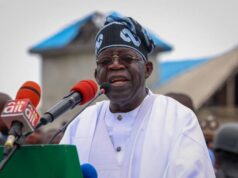
The Minister of Education, Dr. Tunji Alausa, has backtracked on his earlier statements concerning the federal government’s agreements with the Academic Staff Union of Universities (ASUU).
In a surprise turn, he confirmed that a formal agreement from 2009 does exist between the federal government and ASUU, contradicting his earlier comments where he claimed no such deal was in place.
In an initial briefing on Thursday, Dr. Alausa had insisted that the union was merely presenting a draft version of an agreement, dismissing the notion of any signed pact.
However, ASUU quickly rejected this claim, emphasizing the validity of the 2009 agreement.
On Friday, the Ministry of Education released a statement through its Director of Press and Public Relations, Boriowo Folasade, acknowledging the existence of the 2009 FGN-ASUU agreement.
The statement clarified that the 2009 agreement remains the most recent signed and binding document between the two parties.
It also highlighted the efforts made to update the agreement, including the creation of a renegotiation committee in 2017 under the leadership of former Education Minister Mallam Adamu Adamu.
This process resulted in the 2021 draft Nimi Briggs Agreement, which remains unsigned but serves as the framework for future discussions.
In the statement, the Ministry emphasized that Dr. Alausa’s initial comments about the absence of a new signed agreement referred specifically to the 2021 draft.
The statement stressed that the 2009 agreement is still in force, and the government is committed to resolving the 16-year-old dispute with ASUU in a sustainable and legally-backed manner.
The statement reassured the public that the government remains committed to ensuring that Nigerian universities stay open and functional.
ASUU President, Professor Chris Piwuna, responded to the controversy by expressing frustration over the federal government’s lack of proper documentation.
He stated, “One thing that consistently stands out in all our interactions with the government is their inability to maintain proper records. This is an ongoing issue,” he said.
Additionally, ASUU has now called on the federal government to consider extending the seven-year timeframe for establishing private universities to also include colleges of education and polytechnics, highlighting the growing need for such institutions across the country.