The Federal Government is seeking a new $1.75 billion loan from the World Bank, even as it records a significant boost in revenue performance for 2025.
According to the presidency, Nigeria generated ₦20.59 trillion between January and August 2025, a 40.5% increase compared to the ₦14.6 trillion collected in the same period last year.
Non-oil revenue now accounts for 75% of total collections, suggesting a growing shift away from oil dependence.
Presidential spokesperson, Bayo Onanuga, said the strong revenue aligns with budget projections and puts the government on track to meet its non-oil revenue targets for the year.
However, despite this improved performance, the government is turning again to borrowing to address funding gaps in critical sectors like infrastructure, agriculture, healthcare, and digital development.
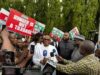
Contractors under the All Indigenous Contractors Association of Nigeria recently protested at the Ministry of Finance over unpaid debts totalling about ₦4 trillion for projects executed in 2024.
The fresh $1.75 billion loan request will be channelled into four major development projects: one focused on boosting agriculture and value chains; another on digital infrastructure development; a third aimed at improving health security; and a fourth targeting access to finance for small and medium-sized enterprises (MSMEs).
Each project is currently at various stages of the World Bank approval process, with final approvals expected between September and December 2025.
This new request comes on the heels of a broader trend.
The World Bank has already approved $8.4 billion in loans to Nigeria over the last two years, covering projects in energy, education, healthcare and governance.
These include both concessional and commercial loans from the International Development Association (IDA) and the International Bank for Reconstruction and Development (IBRD), respectively.
Yet, the federal government’s reliance on borrowing is raising questions, especially after President Bola Tinubu claimed earlier this week that Nigeria had met its revenue targets ahead of schedule and would no longer depend on loans to fund the budget.
Economists have offered mixed reactions. Adewale Abimbola, a Lagos-based economist, believes concessional loans aren’t a bad move if tied to viable, revenue-generating projects.
He argues that the focus should be on how funds are used, not just the act of borrowing itself.
On the other hand, development economist Dr. Aliyu Ilias expressed concern over the country’s rising debt, which has jumped from ₦87 trillion under President Buhari to about ₦149 trillion under Tinubu, with projections that it could approach ₦180 trillion.
He said the government’s continued borrowing, despite increased revenue and savings from fuel subsidy removal, undermines its credibility.
Dr. Muda Yusuf, CEO of the Centre for the Promotion of Private Enterprise, added that while borrowing to fund budgets isn’t unusual, the bigger issue is Nigeria’s ability to repay.
He stressed the importance of tying debt to clear development priorities and boosting the country’s revenue base to avoid falling into a debt trap.
As of March 2025, Nigeria owed $18.23 billion to the World Bank, making up nearly 40% of the country’s total external debt.
Most of that debt is from concessional IDA loans.
The figure has grown from $17.81 billion in December 2024, reflecting a continued upward trend.
Despite government assurances that the loans are necessary for development, critics argue that the increasing debt service burden is already squeezing capital expenditure, weakening the naira and crowding out essential public services.
The concern now is whether the Tinubu administration will stay true to its word about reducing borrowing or if the revenue gains are simply not enough to plug Nigeria’s financial holes.