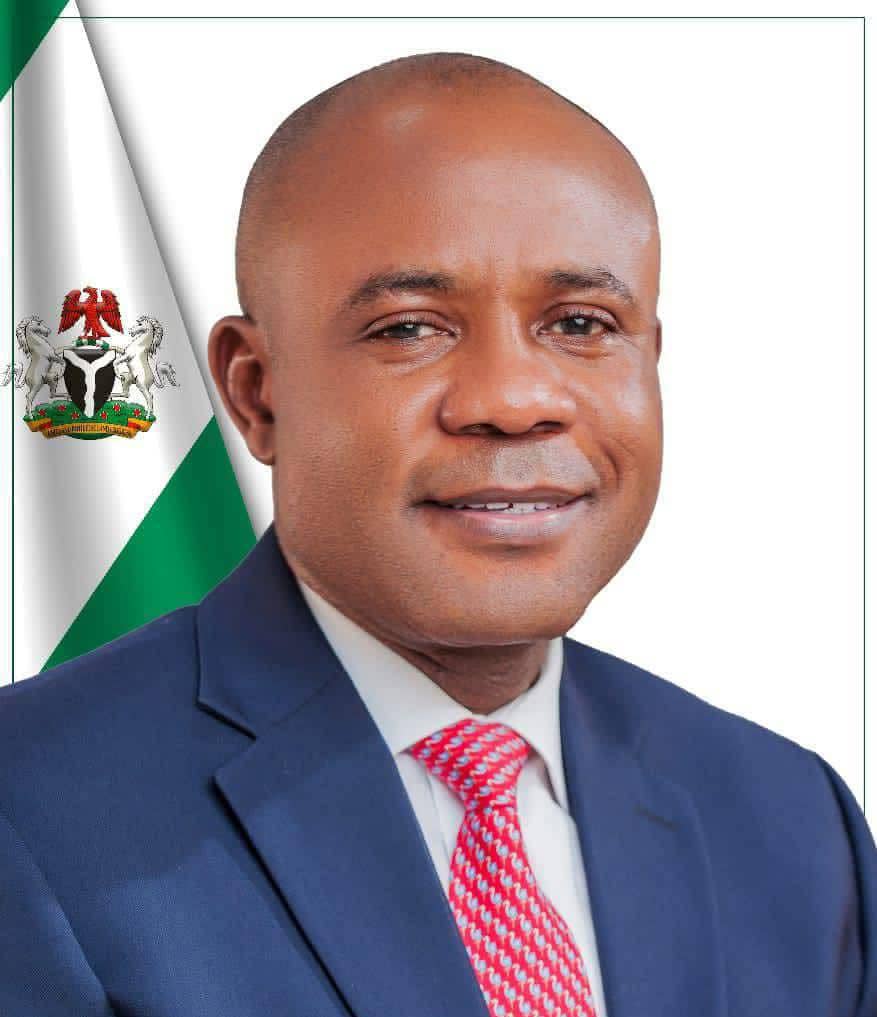

Governor Peter Mbah of Enugu State has reiterated his administration’s commitment to supporting all initiatives aimed at enhancing road safety within the state and across Nigeria.
Speaking at the opening of the 2025 National Workshop for Driving School Proprietors and Instructors, held in Enugu on Thursday, Governor Mbah emphasized the importance of continuous support through legislative backing, infrastructure development, and policy reforms to curb avoidable road accidents.
The theme of the two-day event is “Entrenching Highway Safety in Nigeria Through Standardised Drivers and Riders Training.”
Represented by the Commissioner for Special Duties, Chief Sunday Ajogwu, Governor Mbah stressed that road safety is not just a matter of technical intervention, but a fundamental moral responsibility.
“We recognise that transportation safety is not merely a technical issue – it is a moral imperative,” he said.
The governor called on stakeholders to make the workshop more than just a formal event.
“Let us not reduce this workshop to another ceremonial gathering, but rather, let it be a transformational platform that strengthens the building blocks of a safer road in Nigeria,” he added.
Mbah also extended his congratulations to the leadership of the Federal Road Safety Corps (FRSC), especially the Corps Marshal and the training department, for their vision and dedication to improving driving standards.
In his address, the FRSC Corps Marshal, Mallam Shehu Mohammed, highlighted the critical role that driving schools play in shaping road safety culture, being the first point of contact for aspiring drivers.
Represented by Deputy Corps Marshal Mr. Chidiebere Nkwonta, he said, “If the foundation at the driving school is weak, no amount of enforcement, engineering, or emergency response could sufficiently bridge gap.”
He emphasized the importance of the Driving School Standardization Programme (DSSP), which he described as a robust framework designed to ensure consistency, quality, and integrity in driver training nationwide.
“Our Driving Schools Standardization Programme (DSSP) was established as a comprehensive framework to improve the quality, uniformity, and integrity of drivers training nationwide,” Mohammed explained.
He pointed out that the initiative has led to various improvements, including better training curricula, introduction of driving simulators, enhanced compliance with standards, and a more credible licensing process.
“However, there are still significant gaps. Some schools continue to cut corners. Some prioritise profit over safety. Some struggle with infrastructural deficits, regulatory compliance, and the professional development of their instructors,” he noted.
The Corps Marshal expressed optimism that the workshop would help address these challenges.
“The selected lecture topics including the examination of the trucking industry’s impact on highway safety, the economic prospects of standardized rider training, and an honest reflection on the DSSP journey are designed to challenge our assumptions, and inspire collective action,” he said.
He also underscored the importance of the second day’s Technical Session, stating, “It acknowledges the reality that regulation without consultation often breeds resentment and non-compliance.”
Mohammed noted that the Corps’ consistent training efforts over the years have led to a gradual improvement in driving behavior, as schools are now expected to strictly follow DSSP guidelines before issuing licenses.
Also speaking at the event, Chief Felix Ajim, an Honorary FRSC Special Marshal, commended the Corps for its practical approach to addressing the issues plaguing the driving school sector.
“We appreciate the FRSC management for the humanitarian efforts to ensure that all road users are safe and the Corps is doing it in a proactive manner starting with the first point a would-be driver begins from – the approved FRSC Driving Schools,” he said.
The State Director of the Vehicle Inspection Office (VIO), Mr. Val Chime, emphasized the necessity of VIO examinations, describing them as the final step in preparing a responsible driver.
He said, “The place of VIO testing examination for all would-be drivers should never be jettisoned as it completes the training of a would-be driver before obtaining a license.”
In her response, Mrs. Gloria Ugbebo, an instructor from Integrated Automotive Services Limited, Calabar, praised the FRSC for bringing order and professionalism to the sector.
“The FRSC regulations have brought dignity and procedure in the driving school industry and the yearly training have continued to shape the industry for the better,” she said.
The ongoing workshop has brought together driving school operators and instructors from Enugu, Ebonyi, and Cross River States, offering a collaborative platform to improve standards and safety culture across the region.