
A fresh wave of violence swept across Benue State on Friday night, leaving more than 200 people dead, including Internally Displaced Persons (IDPs), security personnel, women, children, and residents of Yelewata and Daudu communities in Guma Local Government Area.
Eyewitnesses reported that the assaults were launched simultaneously by suspected armed herdsmen from both the eastern and western axes of Yelewata, catching local defenders and security operatives off guard.
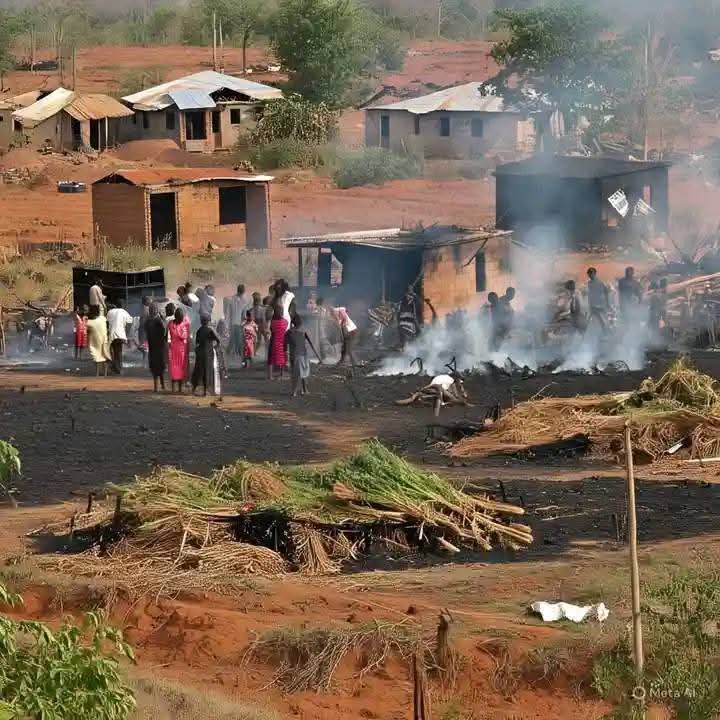
In the chaos that followed, homes and market stalls sheltering displaced persons were set ablaze, and numerous victims, among them infants, were brutally killed.
According to community accounts, the Yelewata attack began around 11:00 pm.
Mr. Matthew Mnyan, a prominent figure in the community and former Acting Chairman of the Benue State Universal Basic Education Board (SUBEB), described the horror.
He stated:
“It began around 11 pm when they emerged from the western side, opening fire. Our youths and police resisted. Then another group attacked from the east and overwhelmed them.
They killed people, set stalls ablaze with petrol, and burnt homes.”
“Displaced individuals from Branch Udei and surrounding villages were inside those stalls. Shockingly, none of the soldiers intervened to protect them.”
“We’ve recorded over 200 fatalities, families of 12, 15 people, including husbands, wives, and children, have all been consumed by fire. About 46 wounded were taken to hospital; so far, 20 have died.”
Mnyan emphasized that the incident was clearly coordinated:
“We had prior alerts from Nasarawa State regarding attacks on Yelewata, Ukoho, Ortese, Yogbo, and Daudu. This was carried out simultaneously.”
In nearby Daudu, another wave of assailants launched an attack.
Despite a strong response from local youth and security forces, five personnel, including soldiers and police officers, lost their lives.
“Daudu’s defenders managed to repel the herd, but five soldiers and police personnel died. One was a Captain.”
“We understand that over 300 assailants had camped near Daudu.
The assailants seek to seize land. On Yelewata’s east side, Fulanis have occupied farmland and are refusing entry to others. That coordination from east and west was deliberate,” Mnyan added.
He also mentioned that the grieving community had briefly considered a public demonstration involving the display of bodies but reconsidered to avoid worsening tensions:
“The community briefly considered moving corpses to the main road in protest but abandoned the plan after recalling past incidents that resulted in additional fatalities.”
Chief Dennis Gbongbon, President of the Association of United Farmers Benue Valley (AUFBV), attributed the massacre to “Lakurawa bandits” and suspected herders.
“Reports indicate over 62 IDPs and farmers were killed in Yelewata; several homes and shops were burnt. As I speak, about 85 percent of victims are IDPs who fled from places such as Antsa, Dooka, Kadarko, and Giza, now hospitalised or missing.
These IDPs are still farmers at heart. Even when displaced, terror found them. This is a terrifying escalation.”
Confirming the dual attacks, Chief Joseph Har, Special Adviser to the Benue State Governor on Internal Security, said:
“I cannot give exact numbers yet as I was not on ground, but two separate incidents happened yesterday in Yelewata and Daudu.”
A military official, speaking anonymously, disclosed that two soldiers were among the casualties:
“We lost two military personnel in that attack.”
Meanwhile, the Benue State Police Command, through a statement by spokesperson DSP Udeme Edet, confirmed the assault and noted that tactical units were deployed swiftly to confront the attackers.
“Some attackers were killed.
It is with deep regret that we confirm civilian deaths and injuries. We are actively pursuing the attackers and will continue efforts to protect the public.”
Benue State has suffered frequent deadly confrontations between armed herders and local farming communities over the past decade.
The Guma, Logo, and Agatu local government areas have borne the brunt of this violence, leading to thousands being displaced and a chronic humanitarian emergency.
Despite numerous calls for federal support and military intervention, the attacks have continued, with land disputes and grazing rights at the heart of the conflict.