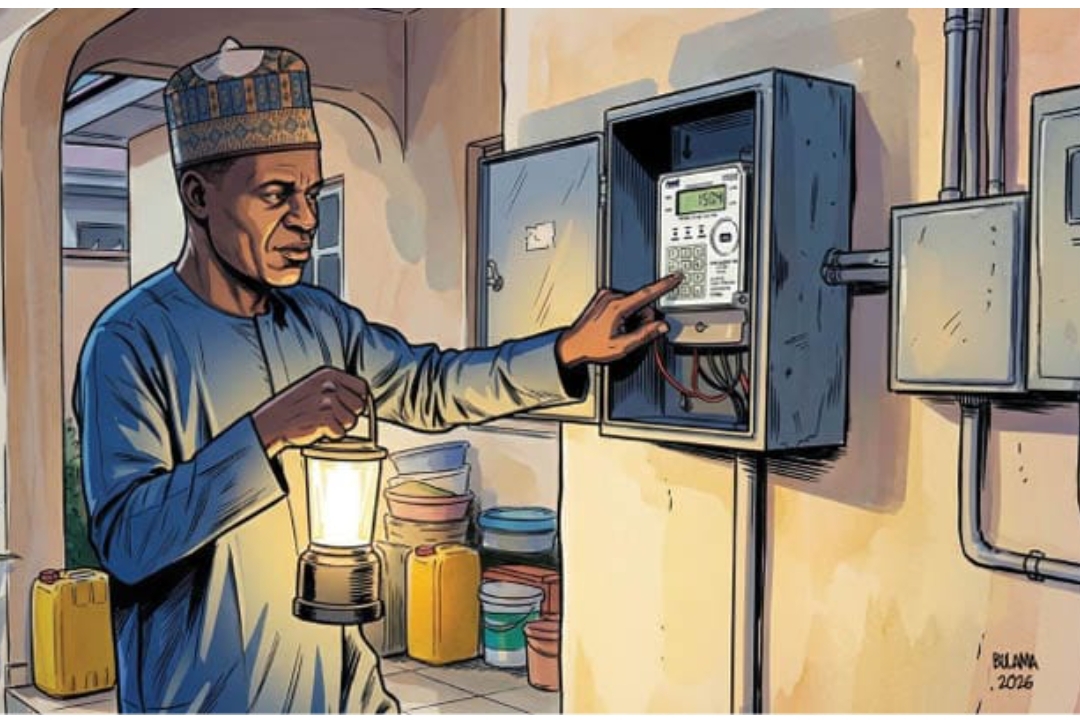

Two years after the Federal Government increased electricity tariffs for Band A consumers with the promise of a minimum of 20 hours daily supply, many Nigerians say the reality has been far from expectations, as they continue to pay more while receiving significantly less power.
The tariff hike, introduced in April 2024, was meant to stabilise the sector, reduce dependence on generators, and attract investment.
According to the Minister of Power, Adebayo Adelabu, the move was necessary to prevent a total collapse of the industry.
“The entire sector will be grounded if we don’t increase the tariff. With what we have now in the next three months, the entire country will be in darkness if we don’t increase tariffs.
“The increment will catapult us to the next level. We are also Nigerians; we are also feeling the impact. For this sector to be revived, the government needs to spend nothing less than $10 billion annually in the next 10 years… For us to attract investors and investments, we must make the sector attractive. And the only way it can be made attractive is that there must be commercial pricing,” Adelabu had said.
However, experiences from consumers across the country suggest otherwise, with many lamenting poor supply despite paying significantly higher tariffs.
In Abuja, business owner, Salisu Adam said his monthly electricity bill rose from N4 million to N25 million following the tariff adjustment, even as supply dwindled.
“We wrote to the Abuja Electricity Distribution Company (AEDC) to remove us from the band as we were only paying for the services they did not provide, but the request was turned down… Now, we are at the worst stage as the maximum supply we get is 10 hours,” he said.
Similarly, Rasheeda Dahiru, who runs a restaurant in Maitama, said unreliable electricity has forced her to cut staff due to rising operational costs.
“I own a restaurant in Maitama but we rarely get 6 hours of supply there… I had to ask some staff to go in order to meet up with the financial responsibility of maintaining the business,” she said.
Across Kano, Kaduna, and Ilorin, residents expressed frustration over receiving as little as five to six hours of electricity daily, far below the promised 20 hours.
“We were told that Band A customers should enjoy at least 20 hours of light, but in reality, I barely get six,” said Muhammad Kabiru in Kano.
“We don’t get up to five hours of electricity in a day… If they cannot give me 20 hours, they should return me to Band Z,” added Abdulganiyu Alabi in Kaduna.
In the South-South, similar complaints persist.
Residents in Yenagoa and Port Harcourt described Band A as misleading, saying supply has worsened in recent months.
“We don’t even have light up to 12 hours a day now… Sometimes it doesn’t even come,” said businessman Chukwuka Emeka in Port Harcourt.
Experts say the issue is not just poor supply but weak enforcement of consumer protection regulations by the Nigerian Electricity Regulatory Commission.
Energy analyst Odion Omonfoman argued that customers should be compensated rather than downgraded when supply falls short.
“They still paid for Band A service. If you didn’t get Band A service they should get a refund… People are paying, but they are paying for darkness,” he said.
Legal expert Bode Fadipe also maintained that customers should not be billed for services not rendered.
“Ethically, once the customer is not getting the required hours… the tariff must be adjusted accordingly as you cannot be billing the customer for what they are not consuming,” he noted.
Consumer advocate Uket Obonga added that many Nigerians are unaware of their rights to compensation.
“Are the customers even aware of this compensation?… most people don’t know that there is a provision for compensation,” he said.
Despite the growing outcry, the Federal Government insists the situation is temporary.
A technical adviser in the power ministry, Adebayo Olowoniyi, attributed the crisis to disruptions in gas supply.
“One of the major gas pipelines in Nigeria was undergoing maintenance… within the next two weeks, full gas pressure will be back,” he said.
While authorities remain optimistic about improvement, many Nigerians insist that until supply matches the cost, Band A will continue to symbolise a system where consumers pay premium prices for unreliable electricity.