Home Blog Page 152

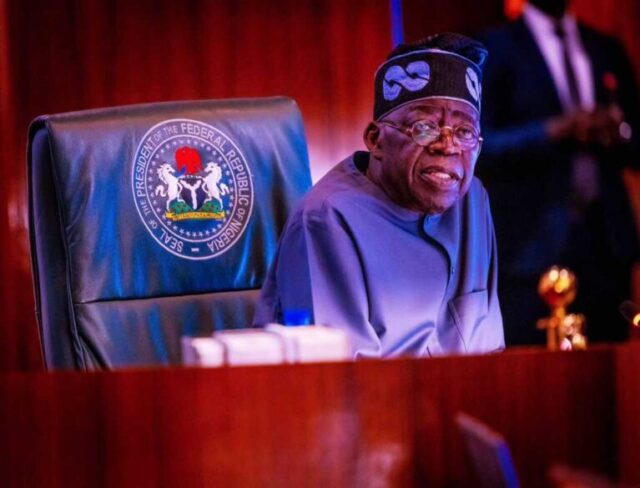
Tinubu Reads Riot Act To Terrorists


President Bola Ahmed Tinubu has reaffirmed his administration’s commitment to tackling terrorism and banditry in Northern Nigeria, emphasizing that no region will be left to suffer while the federal government acts.

Speaking at the 25th Anniversary of the Arewa Consultative Forum (ACF) in Kaduna, Tinubu, represented by House of Representatives Speaker Tajuddeen Abbas, described the North as facing one of the gravest tests in its history, marked by insecurity, erosion of communal ethics, and weakened social cohesion.

He warned that Nigeria cannot thrive if key parts of the country remain destabilized, stressing that the North’s stability is critical for national peace and progress.

Highlighting the ACF’s role over 25 years, Tinubu praised the forum as a platform of patriots, thinkers, and moral leaders that has safeguarded the region’s dignity and interests.

He urged leaders to prioritize institutional strength over individual prominence, asserting that the North’s success depends on robust institutions rather than strong personalities.

Tinubu also pledged to reverse the North’s economic decline, noting optimism over new oil prospects, including the upcoming rollout from the Kolmani fields.

He listed key development initiatives, including accelerated road, rail, and river transport projects, with the Abuja–Kaduna–Kano Superhighway slated for completion in the coming months.

The President called on Northern leaders to embrace selflessness, moral responsibility, and unity, warning that failure begins when leaders ignore hunger, insecurity, and fear faced by their people.

He said rebuilding trust across communities is essential, as insecurity, economic stagnation, and educational deficits will worsen if social harmony is not restored.

Tinubu highlighted the proposed ACF Endowment Fund as a bold initiative to secure the region’s future, focusing on girl-child education, youth skills development, peacebuilding, and conflict resolution.

Concluding his address, he urged the North to continue acting as a moral compass, asserting that with unity, the region can overcome insecurity, rebuild its economy, and remain a central pillar of Nigeria’s progress.

Google search engine

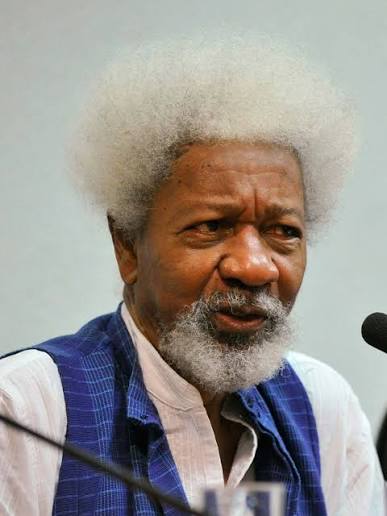
Foreign Involvement Could Aggravate Nigeria’s Insecurity, Soyinka Warns


Nobel Laureate Prof. Wole Soyinka has advised Nigerian authorities to be cautious in embracing foreign intervention, warning that external involvement could further complicate the country’s worsening security situation.

Soyinka gave the caution on Friday during a media briefing at the Government House, Makurdi, shortly after a private meeting with Governor Hyacinth Alia, which formed part of his visit to Benue State.

The internationally acclaimed writer praised Alia for the developmental projects underway in the state but recalled that Benue had become a haven for terrorists under the previous federal administration.

He faulted former President Muhammadu Buhari for failing to curb the killings in the state, noting that he was among the few who consistently challenged the administration at the time.

Soyinka said his visit also included a follow-up on educational materials he previously donated for displaced children.

He inspected several ongoing projects in Makurdi and visited internally displaced persons (IDP) camps, where he sympathised with affected families.

Governor Alia, while addressing journalists, dismissed claims that he denied the killings in the state.

He insisted that his comments were misinterpreted and taken out of context.

He stressed that discussions about genocide must align with the United Nations’ definition and historical framework, noting that the term is often misused in public discourse.

According to him, his remark that attackers were executing their plans “religiously” was misunderstood and was meant only to describe consistency and determination, not religious motivation.

“I have never denied that our people were killed,” he said.

“We have bandits and terrorists who are organised and determined to destroy, maim, and kill. I have repeatedly, yes, religiously  stated that their aim is land grabbing, not religion.”

Alia explained that the crisis in Benue originated from farmer–herder clashes but later evolved into full-blown banditry and terrorism, affecting people across different ethnic and religious backgrounds.

He warned against pushing narratives that falsely portray the violence as religiously driven.

The governor also urged journalists to avoid politicising the tragedy, advising them to seek clarification when issues arise rather than amplifying misinterpretations.

“You are not weapons of mass destruction,” he told reporters.

“One phone call for clarification can prevent confusion and unnecessary tension.”

Alia emphasised that every life lost deeply concerns his administration and called on the public to avoid trivialising the suffering of displaced persons.

He said the scale of displacement in Benue underscores the severity of the attacks, which have forced many communities from their ancestral homes.

On infrastructure, the governor disclosed that contracts for major arterial roads in Makurdi had already been awarded.

Full construction, he said, would commence next week following the completion of preliminary work.

Alia commended Prof. Soyinka for his sustained interest in the welfare of the people of Benue and for taking time to visit the state to assess ongoing developments.

Google search engine

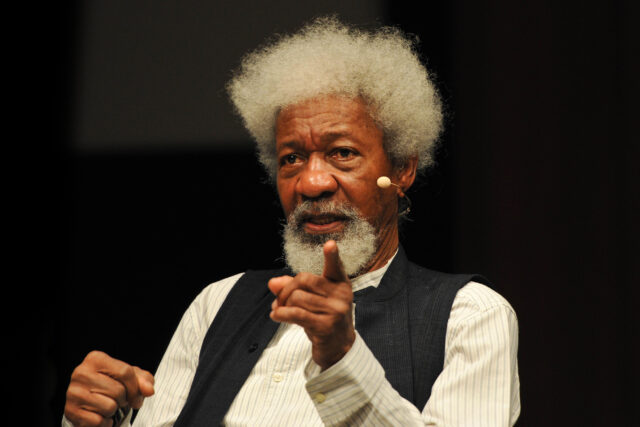
Foreign Involvement Could Aggravate Nigeria’s Insecurity, Soyinka Warns


Nobel Laureate Prof. Wole Soyinka has advised Nigerian authorities to be cautious in embracing foreign intervention, warning that external involvement could further complicate the country’s worsening security situation.

Soyinka gave the caution on Friday during a media briefing at the Government House, Makurdi, shortly after a private meeting with Governor Hyacinth Alia, which formed part of his visit to Benue State.

The internationally acclaimed writer praised Alia for the developmental projects underway in the state but recalled that Benue had become a haven for terrorists under the previous federal administration.

He faulted former President Muhammadu Buhari for failing to curb the killings in the state, noting that he was among the few who consistently challenged the administration at the time.

Soyinka said his visit also included a follow-up on educational materials he previously donated for displaced children.

He inspected several ongoing projects in Makurdi and visited internally displaced persons (IDP) camps, where he sympathised with affected families.

Governor Alia, while addressing journalists, dismissed claims that he denied the killings in the state.

He insisted that his comments were misinterpreted and taken out of context.

He stressed that discussions about genocide must align with the United Nations’ definition and historical framework, noting that the term is often misused in public discourse.

According to him, his remark that attackers were executing their plans “religiously” was misunderstood and was meant only to describe consistency and determination, not religious motivation.

“I have never denied that our people were killed,” he said.

“We have bandits and terrorists who are organised and determined to destroy, maim, and kill. I have repeatedly, yes, religiously  stated that their aim is land grabbing, not religion.”

Alia explained that the crisis in Benue originated from farmer–herder clashes but later evolved into full-blown banditry and terrorism, affecting people across different ethnic and religious backgrounds.

He warned against pushing narratives that falsely portray the violence as religiously driven.

The governor also urged journalists to avoid politicising the tragedy, advising them to seek clarification when issues arise rather than amplifying misinterpretations.

“You are not weapons of mass destruction,” he told reporters.

“One phone call for clarification can prevent confusion and unnecessary tension.”

Alia emphasised that every life lost deeply concerns his administration and called on the public to avoid trivialising the suffering of displaced persons.

He said the scale of displacement in Benue underscores the severity of the attacks, which have forced many communities from their ancestral homes.

On infrastructure, the governor disclosed that contracts for major arterial roads in Makurdi had already been awarded.

Full construction, he said, would commence next week following the completion of preliminary work.

Alia commended Prof. Soyinka for his sustained interest in the welfare of the people of Benue and for taking time to visit the state to assess ongoing developments.

Google search engine

TikTok Content Creator Arraigned For Faking Own Kidnap To Attract Views


The Edo State Police Command has arraigned a 24-year-old TikToker, Osarobo Omoyemen, popularly known online as “Madam Oil Rice,” for allegedly staging her own kidnapping to boost traffic and gain followers on her social media page.

According to police reports, Omoyemen released a viral video claiming she had been abducted along Upper Sakponba Road in Benin City and later rescued by officers who allegedly detained her at Akpata Police Station and extorted ₦10,000 as bail.

The video also featured a background voice urging viewers to follow her TikTok page—an element police say was key to uncovering her motive.

Police spokesperson CSP Moses Yamu said investigators reviewed the video and found inconsistencies, prompting a deeper probe that revealed the story was entirely fabricated.

“During interrogation, the suspect confessed to orchestrating the incident to drive online traffic and attract more followers,” Yamu said.

He described the act as dangerous misinformation capable of inciting public hostility toward the police and causing needless tension in the state.

He also noted that Omoyemen deleted an earlier version of her video where an accomplice was heard encouraging viewers to follow her page, further confirming the deliberate nature of the stunt.

The TikToker has since been arrested and charged to court, while police say efforts are underway to track down and prosecute her accomplices.

The Command warned the public against spreading false information or creating content that could compromise peace and security in the state.

Google search engine

88 More Students Reported Missing After Attack On Catholic School


The Catholic Diocese of Kontagora has reported that 88 additional students are missing following the attack on St. Mary Secondary School, Papiri, in Agwara Local Government Area, Niger State.

According to reports, many parents rushed to the school in an attempt to evacuate their children, but were unable to locate them after the raid.

The initial attack, which occurred in the early hours of Friday, saw terrorists abduct both students and staff members.

In a statement on Saturday morning, Most Rev. Bulus Dauwa Yohanna, Bishop of the Kontagora Diocese, confirmed that the total number of missing students has now risen to 303.

Previously, 215 students were reported missing, alongside four female and eight male teachers who were also kidnapped during the incident.

The school, Bishop Yohanna noted, had a total enrollment of 430 primary pupils and 199 secondary students.

Addressing claims from the Secretary to the State Government that warnings were issued prior to the attack, the Bishop categorically denied receiving any notification from either government authorities or security agencies.

He said through his aide, Daniel Atori:

“We asked the Education Secretary if he received any circular, he said no. We asked if he was verbally informed, he said no. We also checked with the National Association of Private Schools; they too did not receive any such notice. Claims that the school was shut down and recently reopened are not true. We are law-abiding, and this misinformation must be corrected.”

The Bishop’s office continues to appeal for urgent government intervention to ensure the safe return of the kidnapped students and staff.

Google search engine

Universities Shut Down As Mass School Closures Take Over Northern Nigeria


A wave of mass school closures has swept across northern Nigeria as state governments scramble to contain escalating attacks on educational institutions.

Yobe, Kwara, Kano, Kebbi, Kaduna, Plateau, Sokoto, Katsina, Niger, and Taraba states have announced sweeping shutdowns or heightened security measures following a series of violent incidents and kidnappings.

Governor Mai Mala Buni ordered the immediate shutdown of all boarding secondary schools after a state security meeting reviewed threats across all 17 LGAs.

Mohammed Mamman, the governor’s spokesperson, said the action followed a formal notice from the Ministry of Basic and Secondary Education.

He quoted the Permanent Secretary, Dr. Bukar Aji Bukar, saying all secondary schools must remain closed until the security situation improves.

Buni urged residents to pray for President Bola Ahmed Tinubu and security agencies as efforts to stabilise the state continue.

In Kwara, Governor AbdulRahman AbdulRazaq introduced enhanced security around schools and worship centres following an attack at Christ Apostolic Church, Oke Isegun, in Eruku, where six worshippers were killed and 30 abducted.

A senior government official revealed that some measures remain confidential due to their sensitivity.

The Nigeria Union of Teachers confirmed that schools in Isin, Irepodun, Ifelodun, and Ekiti LGAs were instructed to close immediately.

State NUT Chairman, Yusuf Agboola said schools were ordered to treat the directive with utmost urgency.

In Kano, Governor Abba Yusuf approved the deployment of 1,600 watchmen across public secondary schools.

The move followed the abduction of 25 girls and the killing of a vice-principal in neighbouring Kebbi State.

Yusuf’s spokesperson, Sunusi Bature, said the new recruits would help restore discipline and ensure daily school activities run safely.

Kebbi State closed schools in communities affected by recent attacks.

Special Adviser Abdullahi Idris Zuru said the government inherited serious banditry challenges but has since assisted military operations with improved logistics.

Schools in both urban and rural areas are now under continuous joint surveillance by the army, police, vigilantes, and DSS operatives.

Kaduna State sustained its implementation of the Safe Schools Policy, which includes risk mapping, community engagement, and improved coordination with security agencies.

Patrols around vulnerable communities have been enhanced, and emergency response mechanisms activated.

The Plateau State Universal Basic Education Board ordered the closure of basic schools after intelligence reports indicated potential threats.

Affected schools are to remain shut pending strengthened security arrangements.

A parent in Shendam said students were dismissed following threat reports, though local police claimed they had not received such intel.

Sokoto State reaffirmed its policy of relocating all boarding schools to urban centres.

Commissioner for Basic and Secondary Education, Prof. Ibrahim Alhassan, said the recent Kebbi abduction stalled earlier plans to return schools to their original rural locations.

Katsina State, which has recorded hundreds of abductions since 2020, has intensified physical security through community-based child protection committees.

Some schools now have fencing, guards, and trained dogs. Psychosocial support programmes and teacher training are ongoing.

Niger State shut boarding schools in insecure areas after receiving credible intelligence of impending attacks.

Secretary to the State Government, Abubakar Usman, disclosed that St. Mary’s Secondary School reopened without official clearance before Friday’s kidnapping incident, leaving pupils vulnerable.

Security agencies have launched rescue operations.

In Taraba, Governor Agbu Kefas directed all secondary schools, public and private, to close their boarding facilities due to rising abductions.

Commissioner for Education, Dr. Augustina Godwin, said the security trend has made boarding students especially vulnerable.

At the national level, the Federal Ministry of Education ordered the temporary closure of 44 Unity Colleges due to mounting security concerns.

Minister Tunji Alausa approved the directive, and a revised list corrected duplicated entries.

The shutdowns follow a series of mass abductions in Kebbi and Niger States, where dozens of students were taken in separate attacks.

The Chief of Army Staff, Lt-Gen Waidi Shaibu, has appealed for public cooperation as military operations intensify across affected regions.

Google search engine

Police Nab Pastor For Allegedly Raping Three Church Members


Delta State Police operatives have arrested a pastor from Omega Prophetic Prayer Ministry in Sapele over allegations of defilement, rape, and sexual assault.

The pastor, identified as Daniel Ololo, is accused of sexually assaulting three sisters, all members of his church.

Police spokesperson Bright Edafe confirmed that a petition was filed against Ololo, prompting an investigation.

Edafe stated that on November 17, the pastor was apprehended at his church premises.

Investigations revealed that Ololo allegedly used false prophecies to manipulate vulnerable church members, coercing them into believing that sexual relations with him were necessary for their “deliverance.”

The investigation further showed that his victims include three sisters of the same mother, with the youngest being 17 years old.

Ololo remains in police custody as the investigation continues.

Google search engine

Senate, South-West Leaders Push For Local Security Models, State Police


Seeking sustainable answers to Nigeria’s deepening security woes, the Senate on Friday gathered key stakeholders in Lagos for the South-West Zonal Security Summit, where calls for indigenous security structures, enhanced technology, and the creation of state police dominated discussions.

The meeting, organised by the 10th Senate’s Ad-hoc Committee on the National Security Summit, brought together lawmakers, security chiefs, traditional rulers, civil society groups, and religious leaders.

Senator Mukhail Adetokunbo Abiru (Lagos East), who chaired the session, said insecurity must be confronted through shared responsibility and collective action.

“Although the South-West has not witnessed the level of terrorism seen in other regions, the rise in kidnappings, banditry, and violent attacks poses serious threats to our communities and farmlands,” Abiru said.

He highlighted reports of incursions by criminal groups such as Lakurawa into Kwara and Kogi States as an urgent signal for coordinated response.

Abiru also urged the media to avoid narratives that fuel ethnic or religious division, stressing that unity is crucial to defeating insecurity.

Representing Governor Babajide Sanwo-Olu, Dr. Ayodele Ogunsan of the Lagos State Security Trust Fund called for a strengthened regional security architecture.

He proposed a unified, technology-led Amotekun command and deeper involvement of traditional institutions.

“Security is not only about safety, it is tied to the economy. When markets, farms, and transport systems are disrupted, livelihoods crumble. Our approach must rely on intelligence and community participation,” he said.

Lawmakers such as Senators Ibrahim Jimoh (Ondo South) and Gbenga Daniel (Ogun East) advocated for a hybrid strategy that blends military force with civilian-led initiatives.

Traditional leaders, including Oba Olufolarin Ogunsanwo (Alara of Ilara) and Aare Onakankanfo Iba Gani Adams, called for expanded recruitment into security outfits, improved funding, community policing, and youth empowerment as long-term stabilising measures.

Civil society organisations, religious groups, women’s associations, and youth bodies added that the welfare of security operatives must be prioritised for morale and efficiency.

At the end of the summit, attendees agreed that collaboration across all sectors, modern technology, and local involvement are essential for securing the South-West and strengthening national stability.

Meanwhile, in a related development, the Lagos State Government, through the Office of Climate Change and Circular Economy (OCCE), reaffirmed its leadership on the African climate stage following a robust outing at the COP30 conference in São Paulo, Brazil.

The state showcased landmark projects such as the 80 Million Clean Cookstoves Initiative and the LAMATA e-Mobility Programme, using the global platform to attract investments and highlight the potential of subnational governments in climate action.

Special Adviser to the Governor on Climate Change, Mrs. Titi Oshodi, said Lagos demonstrated what “true subnational leadership” looks like.

“We went to COP30 to show that African cities can deliver impactful, bankable climate solutions. The world is demanding climate ambition backed by results, and Lagos is stepping forward with both,” she said, noting that the engagements helped deepen partnerships and bolster investor confidence.

Google search engine

Police, DSS Nab Gun Technician, Food Suppliers To Bandits


In the wake of last Tuesday’s deadly bandit attack on church worshippers in Eruku, Ekiti Local Government Area of Kwara State, security agencies have arrested several individuals allegedly linked to aiding bandit operations across the state.

Among those apprehended is a man from Makurdi, Benue State, who reportedly specialised in repairing and preparing weapons for bandit groups.

The Commissioner of Police in Kwara State, Adekimi Ojo, revealed these developments while briefing journalists at the police headquarters in Ilorin.

His address followed a State Security Council meeting held at the Government House.

According to Ojo, intelligence gathered after the Eruku attack prompted intensified joint operations involving the Police, Military, and Department of State Services (DSS).

These efforts, he said, align with directives issued by President Bola Ahmed Tinubu to strengthen security across vulnerable regions.

He commended the Inspector General of Police, Kayode Egbetokun, for deploying four specialised tactical units, SWAT, the Intelligence Response Team (IRT), the Special Intervention Squad (SIS), and the Special Tactical Squads (STS), to combat further threats in the state.

Ojo disclosed that the recent meeting “harvested valuable insights from field commanders on ongoing rescue efforts, intelligence gathering, and the pursuit of those responsible for the Eruku attack.”

He added that increased air surveillance and interdictions had forced bandits out of several hideouts, particularly in Ifelodun.

The council called for continued aerial raids on locations identified as criminal camps.

“The Police and DSS have recorded several arrests, including individuals supplying food and fuel to the bandits, as well as the Makurdi man who confessed to servicing the criminals’ weapons,” he said.

The State Security Council also endorsed the government’s recent security measures around schools, especially in communities considered high-risk.

It encouraged citizens to remain vigilant and report suspicious movements promptly.

Ojo further warned about the destabilising role of social media, accusing some users of circulating unverified information that compromises security operations.

For public safety, he urged residents to avoid late-night farming or social activities that could leave them vulnerable to attacks.

Traditional rulers and community leaders were also encouraged to support intelligence sharing with security agencies.

The meeting observed a minute of silence in honour of victims of the Eruku Christ Apostolic Church attack and extended condolences to affected families.

Google search engine

Niger State Shuts All Schools Indefinitely After Fresh Kidnapping Incident


The Niger State Government has ordered the immediate closure of all public and private schools across the state following a renewed wave of insecurity involving schoolchildren in Agwara Local Government Area.

The directive, issued through a circular from the Ministry of Basic and Secondary Education on November 22, 2025, comes in response to the kidnapping of students of St. Mary Catholic Church, Papiri, in Agwara.

The circular, signed by the Permanent Secretary of the ministry, Hajiya Aishetu Nuhu, was addressed to Area Directors, Education Secretaries, principals, head teachers, and proprietors of all categories of schools, including missionary, Islamic, and private institutions, as well as Federal Government Colleges operating within the state.

According to the ministry, Governor Mohammed Umaru Bago ordered the shutdown as a precautionary measure to prevent further attacks on schools and safeguard the lives of children.

“The closure is to protect schoolchildren from being exposed to additional security breaches until the situation is brought under control,” the statement read.

The directive affects all primary and secondary schools, and the ministry emphasized that compliance is compulsory.

It further stated that no school is allowed to reopen in any form until an official clearance is issued by the state government.

The government described the measure as necessary, citing the rising cases of abductions targeting educational institutions in the region.

The latest incident has heightened fear among parents and increased pressure on the government to act decisively.

While reassuring stakeholders of its commitment to restoring safety, the Ministry of Basic and Secondary Education encouraged cooperation from school authorities as security operations continue in the affected areas.

Google search engine

MOST COMMENTED

- Advertisement -
Google search engine