Home Blog Page 154

US Secretary Of War Puts Nigeria On Notice
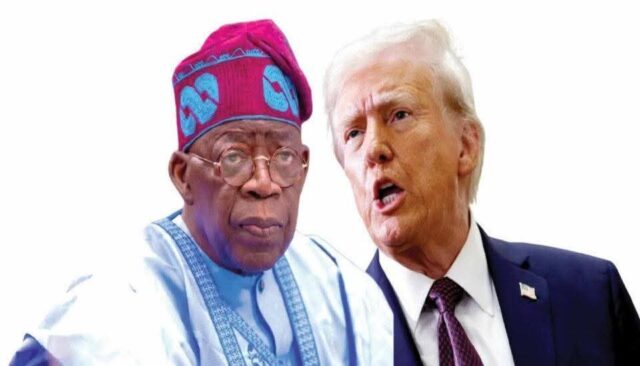
 

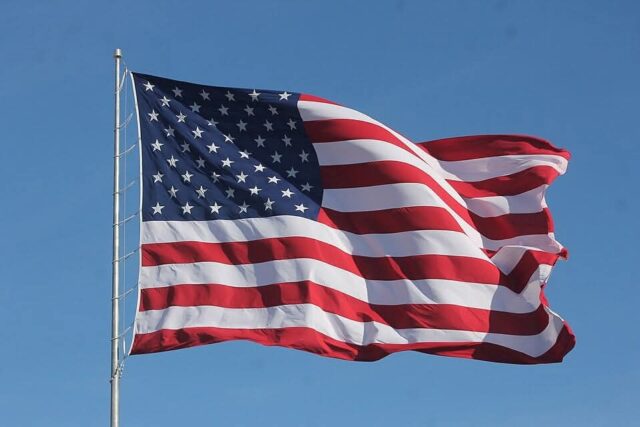
In what analysts describe as one of Washington’s most direct messages to Abuja in recent years, U.S Secretary of War Pete Hegseth has delivered a stern warning to the Nigerian government, demanding urgent, sustained action to end violence against Christians across the country.

The warning was issued on November 20 during a high-level meeting at the Pentagon with Nigeria’s delegation led by National Security Adviser Nuhu Ribadu.

According to information published on official U.S. government platforms, the discussions centered on Nigeria’s worsening religiously motivated attacks and the rising death toll in Christian communities.

A readout released by Sean Parnell, Assistant to the Secretary of War for Public Affairs, made it clear that Washington now expects measurable progress, not promises.

Parnell stated that Hegseth used the closed-door meeting to demand “concrete steps” from Nigeria to halt killings, kidnappings, and terror incidents targeting Christian populations.

He emphasized that the United States is elevating the matter to the top of its Africa security priorities.

Using language far more forceful than typical diplomatic communications, Hegseth insisted Nigeria must “demonstrate commitment” to protecting Christians and warned that the U.S expects immediate improvements.

He added that the United States remains ready to work “by, with, and through” Nigeria to combat jihadist groups and extremist networks destabilizing West Africa and posing threats to American interests.

Security experts say the meeting marks a shift in U.S, Nigeria relations, from broad cooperation to performance-based expectations, especially on issues tied to religious persecution.

Ribadu’s visit comes as international pressure mounts on the Nigerian government from rights groups, faith organizations, and members of the U.S Congress, who accuse Nigeria of failing to adequately address years of targeted killings in the Middle Belt, Northwest, and Northeast.

Some analysts suggest that the Trump administration’s new posture, blunt, direct, and public, signals a willingness to tie future security cooperation to Nigeria’s actions on religiously targeted violence.

Google search engine

Why FG Has Not Prosecuted Terrorism Financiers – Information Minister


The Minister of Information and National Orientation, Mohammed Idris, has explained why the Federal Government has not prosecuted individuals suspected of financing terrorism, saying the process involves highly sensitive and painstaking investigations that cannot be rushed.

Speaking on Channels Television’s Politics Today on Friday, Idris addressed public criticism surrounding the government’s handling of terrorism financing cases, noting that the assumption that suspects can simply be taken to court once identified is inaccurate.

His comments follow mounting concerns over worsening insecurity and the government’s perceived reluctance to bring terrorism sponsors to justice.

Over the years, Nigerians have pressured successive administrations to expose and prosecute individuals allegedly funding Boko Haram, ISWAP, and bandit networks across the North.

Although officials under former President Muhammadu Buhari hinted that several financiers had been identified, expectations of swift prosecution never materialised, fueling further public scepticism.

Idris sought to clarify the situation, saying:
“It is not a matter of having a list or not having one. It is not that simplistic. Proper investigations must be conducted. In some situations, there is merit in what is being alleged, but you cannot rush to court based only on pronouncements. There must be sufficient evidence.”

“Unfortunately, battles like this are not resolved in a day or two. This is why we continuously urge our partners within and outside Nigeria to appreciate the complexity of the security environment we are dealing with.”

The minister insisted that President Bola Tinubu’s administration is working diligently to tackle terrorism and other security threats.

He claimed that significant progress has been made since May 2023, though many Nigerians tend to overlook these achievements.

“From May 2023 till now, over 13,500 criminals have been neutralised across the country,” he said.

“More than 17,000 suspects have been arrested. Many are currently undergoing trial, and several have been convicted. These efforts deserve recognition.”

Idris also addressed concerns over the delay in appointing ambassadors.

He revealed that President Tinubu has completed the list of nominees, who are currently undergoing security clearance.

According to him, diplomatic channels between Nigeria, the United States, and other partner nations remain active, adding that some misunderstandings about Nigeria’s security situation are being clarified.

“We agree that ambassadors should be in place, and the President is set to release the list. As of now, the names have been forwarded to security agencies for checks. The appointments will be made public soon,” he said.

He emphasised that Nigeria is open to local and international partnerships aimed at ending insecurity, saying:

“There are ongoing diplomatic engagements with the U.S. and other countries. We believe there are misconceptions about the security crisis, and this is what we are communicating to them. Nigeria welcomes any form of regional or international cooperation that can help resolve these challenges.”

Google search engine

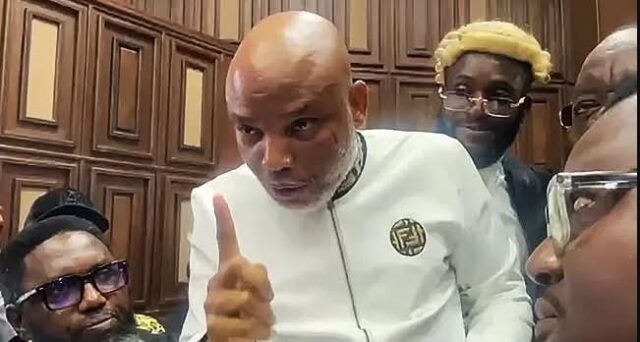
Heavy Security In Sokoto Prison As DSS Moves Nnamdi Kanu To Custodial Centre


Security operations have intensified at the Sokoto Custodial Centre following the transfer of the Indigenous People of Biafra leader, Nnamdi Kanu, who was relocated there shortly after receiving a life sentence on terrorism-related charges.

Kanu was sentenced on Thursday by Justice James Omotosho of the Federal High Court in Abuja, who also directed that he be kept in a “protective prison.”

The judge stressed that the Kuje facility, where Kanu was previously held, was unsafe due to past jailbreaks and security vulnerabilities.

Although prison authorities refused to confirm the exact location of the IPOB leader, his lawyer, Aloy Ejimakor, told DAILY GAZETTE that his client had indeed been moved to Sokoto.

Ejimakor criticised the transfer, arguing that it isolated Kanu from his legal team, family members, and supporters.

He urged the public, especially the Igbo community, to remain calm.

When our correspondent visited the Sokoto Custodial Centre, the usually quiet environment had changed dramatically.

Armed officers were seen stationed around the prison, and residents reported spotting military trucks entering the compound, a rare sight in the area.

One resident, who requested anonymity, said, “This evening, we saw trucks carrying soldiers driving inside. We’ve never seen security this heavy here.”

The spokesperson for the Nigerian Correctional Service, Jane Osuji, confirmed that Kanu remained in state custody but refused to reveal his location due to the sensitivity of the case.

Kanu’s wife, Uchechi Okwu-Kanu, later announced on X that he had indeed arrived in Sokoto.

She expressed displeasure that some supporters circulated the news publicly before she was informed.

Activist Omoyele Sowore also stated that Kanu was “secretly” moved, raising concerns that the relocation could compromise his safety.

Minister of State for Foreign Affairs, Bianca Odumegwu-Ojukwu, appealed for restraint, describing the development as unexpected and urging leaders from the South-East to avoid actions that could heighten tensions.

She emphasised that resolving the crisis required dialogue involving political, religious, and traditional stakeholders.

Prominent Igbo organisations, including Ohanaeze Ndigbo, the Igbo National Council, and MASSOB, condemned the life sentence, calling it unjust and politically motivated.

Ohanaeze’s spokesperson, Ezechi Chukwu, warned that the verdict could worsen instability in the South-East, while the group’s President-General, John Azuta-Mbata, appealed to President Bola Tinubu to initiate a political solution.

The Igbo National Council’s president, Chilos Godsent, described the ruling as part of an “ethno-political war” against the Igbo, urging President Tinubu to pardon Kanu.

Ohanaeze’s Youth Wing and MASSOB leader Uchenna Madu issued similar condemnations.

Kanu was first arrested in 2015 over treason-related accusations, fled the country, and was later re-arrested in Kenya and returned to Nigeria in 2021.

Google search engine

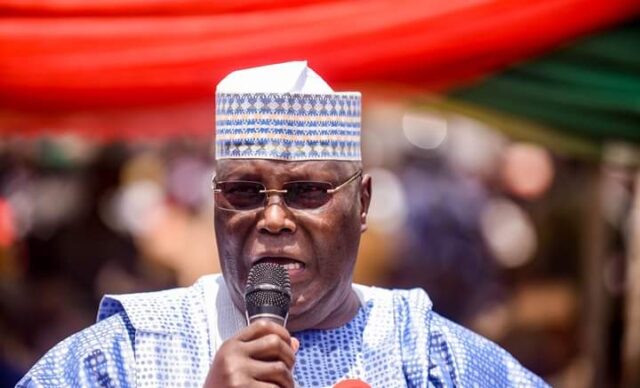
Nigeria Is Bleeding, Declare State Of Emergency On Security – Atiku Tells Tinubu


Former Vice President Atiku Abubakar has urged the Nigerian government to declare a state of emergency in response to the escalating insecurity across the country.

Reacting to the recent abduction of students at St. Mary’s Catholic School in Papiri, Agwara Local Government Area of Niger State, Atiku questioned how many more lives would be affected before decisive action is taken.

The exact number of students and staff kidnapped remains unconfirmed.

The incident comes just days after gunmen abducted 25 students from a school in Maga, Kebbi State, underscoring growing concerns over the safety of educational institutions nationwide.

In a post on his social media platforms, Atiku described the situation as “truly heartbreaking” and called on the Federal Government to act urgently.

“It is not too late for the government to finally declare a state of emergency on insecurity and confront this menace with the urgency it deserves,” he said.

The former Vice President’s statement adds to mounting calls from civil society, security experts, and community leaders for swift and robust measures to protect citizens amid rising violence and abductions across Nigeria.

Google search engine

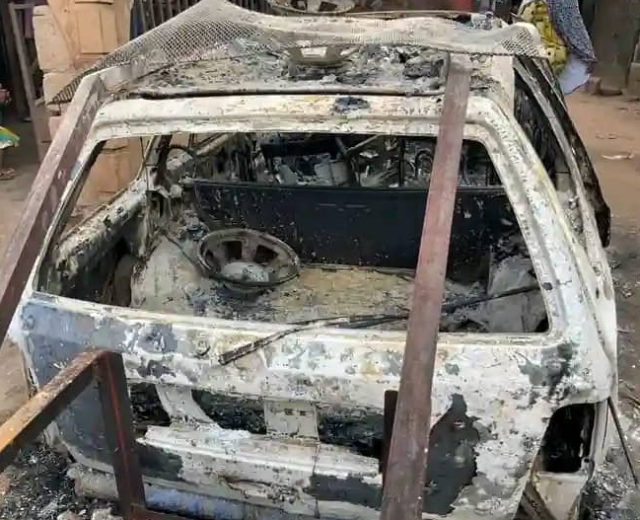
Yobe: ISWAP Attack Leaves Police Officer Dead, Patrol Vehicles Destroyed


Suspected members of the Islamic State West Africa Province (ISWAP) have launched a deadly assault on a police formation in Geidam Local Government Area, Yobe State, killing one officer and destroying police property.

According to sources, the insurgents stormed the station around 1:30 am on Wednesday, moving on foot and opening fire indiscriminately.

During the 45-minute attack, they set two patrol vehicles on fire and made off with a third.

“In what appeared to be a well-planned operation, the attackers killed one officer, freed detainees, torched two patrol vans, and took away another,” a security source said.

Intelligence indicates that ISWAP members are gathering in nearby communities, including Sukdu, Buhari, Mattati, and Bulabulin in Yunusari Local Government Area.

Yobe State Police spokesperson SP Dungus Abdulkarim confirmed the incident, noting that the assault may have been aimed at seizing police vehicles.

“We are still investigating the full circumstances,” he added.

The attack comes amid a resurgence of violent incidents across Nigeria, prompting President Bola Tinubu to postpone international trips to focus on security.

Recent weeks have seen terrorists kill soldiers and security personnel, and target schools and churches. In Kebbi State, gunmen attacked Government Girls Comprehensive Senior Secondary School, Maga, killing one official and abducting 25 students.

In Kwara State, a church was attacked, resulting in multiple casualties and 30 abductions.

Reacting to the spate of attacks, Information Minister Mohammed Idris said that the President has placed Nigeria’s security apparatus on its “highest alert.”

Google search engine

Stop The Killing Of Christians – Pentagon Chief Urges Nigeria


US Defense Secretary Pete Hegseth met with Nigeria’s National Security Advisor, Nuhu Ribadu, on Thursday, urging the country to take decisive steps to halt violence targeting Christians, the Pentagon announced on Friday.

Hegseth emphasized the need for “both urgent and enduring action” to protect Christians in Nigeria, according to Pentagon spokesman Sean Parnell.

He added that the United States is committed to working with Nigeria to “deter and degrade terrorists that threaten the United States.”

The meeting followed comments by US President Donald Trump, who described Christianity in Nigeria as facing “an existential threat.”

Trump warned that if the Nigerian government fails to stop the killings, the United States would respond with force, describing the action as “fast, vicious, and sweet.”

Nigeria, Africa’s most populous nation with over 230 million people, is divided roughly equally between a predominantly Christian south and a largely Muslim north.

The country has long been affected by violent conflicts, including jihadist insurgencies that claim victims across religious lines.

In addition, clashes between mainly Muslim herders and predominantly Christian farmers over land and resources, particularly water, have intensified in recent years.

Experts note that while religion often appears to drive tensions, the underlying causes are frequently linked to land scarcity, population growth, and climate change.

Google search engine

BREAKING: FG Orders Closure Of 41 Unity Schools Over Rising Insecurity


The Federal Government has ordered the temporary closure of 41 Federal Unity Colleges across Nigeria in response to the rising wave of student abductions nationwide.

The directive was issued in a circular by Binta Abdulkadir, Director of Senior Secondary Education at the Federal Ministry of Education.

The circular, signed by Minister of Education Tunji Alausa, emphasized the need to prevent security breaches at schools.

“Sequel to recent security challenges in some parts of the country and to prevent potential security incidents, the Honourable Minister of Education has approved the immediate closure of the listed Federal Unity Colleges. Principals of the affected institutions are to ensure strict compliance,” the circular stated.

The affected schools include FGGC Minjibir, FGA Suleja, FTC Ganduje, FGGC Zaria, FTC Kafancha, FGGC Bakori, FTC Dayi, FGC Daura, FGGC Tambuwal, FSC Sokoto, FTC Wurno, FGC Gusau, FGC Anka, FGGC Gwandu, FGC Birnin Yauri, FTC Zuru, FGGC Kazaure, FGC Kiyawa, FTC Hadejia, FGGC Bida, FGC New Bussa, FTC Kuta-Shiroro, FGC Ilorin, FGGC Omu-Aran, FTC Gwanara, FGC Ugwolawo, FGGC Kabba, FTC Ogugu, FGGC Bwari, FGC Rubochi, FGGC Abaji, FGGC Potiskum, FGC Buni Yadi, FTC Gashau, FTC Michika, FGC Ganye, FGC Azare, FTC Misau, FGGC Bajoga, FGC Billiri, and FTC Zambuk.

This decision follows a string of recent attacks on schools, including the abduction of students from St. Mary’s School in Papiri, Niger State, and the kidnapping of 25 students in Maga, Kebbi State.

Security concerns have also led to the closure of more than 50 schools in Kwara State.

President Bola Tinubu had earlier postponed his planned trips to South Africa and Angola to focus on coordinating the federal government’s response to the worsening insecurity in schools.

Google search engine

BBC Board Member Resigns, Citing Governance Issues At Top


Shumeet Banerji, a non-executive director of the BBC, has resigned from the corporation, citing “governance issues” at the highest levels.

In a letter, Banerji said he was “not consulted” about the circumstances leading to the resignations of BBC Director-General Tim Davie and BBC News chief executive Deborah Turness earlier this month.

He confirmed his departure on Friday, the BBC said.

The resignations of Davie and Turness followed controversy over a Panorama episode that edited portions of former US President Donald Trump’s 2021 speech, creating the impression he directly encouraged violence during the Capitol riot on 6 January 2021.

While the BBC has apologised for the misleading edit, Trump has demanded financial compensation, which the corporation has refused.

Banerji’s resignation highlights growing concerns about the BBC board’s operations.

The board, which oversees the corporation’s strategy and executive management, is chaired by Samir Shah.

Banerji’s statement appeared to directly criticise Shah and other board members, questioning the board’s decision-making processes.

The BBC board, which includes political appointees such as Shah and Sir Robbie Gibb, is scheduled to appear before the Culture, Media and Sport Committee of MPs on Monday.

Lawmakers are expected to question them about allegations of systemic bias in BBC coverage, including reporting on the Israel-Gaza conflict and gender-related issues.

These claims were initially rejected by Turness and Davie.

Banerji, who joined the BBC board in 2022, is the founder of a technology-focused advisory and investment firm and previously led management consultancy Booz & Company.

As a non-executive director, he was tasked with upholding the independence of the BBC and acting in the public interest.

A BBC spokesperson said:
“Shumeet Banerji today notified the BBC Board of his resignation. Mr Banerji’s term as a non-executive director was due to end at the end of December, and we thank him for his service. The search for a replacement is already underway and we will provide updates in due course.”

Google search engine

South East Governors Silent As Outrage Grows Over Kanu’s Life Sentence


DAILY GAZETTE reports that the five governors of the South East region have maintained a conspicuous silence following the life sentence handed down to Nnamdi Kanu, leader of the Indigenous People of Biafra (IPOB), by the Federal High Cort in Abuja.

The judgment, delivered by Justice James Omotosho on Thursday, has sparked widespread outrage across Igbo land and beyond.

But despite the intense reactions trailing the verdict, none of the South East governors has issued a statement, convened a regional meeting, or expressed an official position on the sentencing.

Analysts say the governors’ silence mirrors a long-standing pattern of cautious political calculation within the region, especially when handling matters related to IPOB and its detained leader.

Sources within government circles told DAILY GAZETTE that some governors fear that any public stance, either in support of or against the ruling, could inflame tensions at a time the region is trying to stabilise security.

However, critics argue that the silence is both “embarrassing and insensitive,” pointing out that groups such as Ohanaeze Ndigbo, MASSOB, and the Ohanaeze Youth Council have already condemned the ruling, describing it as a miscarriage of justice.

Some residents who spoke to DAILY GAZETTE expressed disappointment, saying the governors should show leadership at a time the region is emotionally charged.

Even if they don’t want to take sides, they should at least address their people and call for calm,” said a community leader in Enugu.

Meanwhile, security sources say additional deployments have been made in parts of the South East to pre-empt possible unrest as reactions to the judgment continue to build.

Despite the growing tension, the governors remain tight-lipped.

Google search engine

Kanu: No Igbo Man Should Expect Justice In Nigeria – Ohanaeze Blows Hot


The Ohanaeze Youth Council (OYC), the youth arm of Ohanaeze Ndigbo Worldwide, has condemned the life imprisonment verdict issued against the leader of the Indigenous People of Biafra (IPOB), Nnamdi Kanu, describing it as a grave miscarriage of justice.

In a statement issued on Friday, the National President of OYC, Igboayaka O. Igboayaka, said the ruling appears to serve the interests of “certain political oppressors and profiteers,” adding that it has further damaged public confidence in Nigeria’s judicial system.

Igboayaka said Kanu’s conviction on November 20, 2025, was “extremely provocative to Ndigbo,” comparing the implications of the judgment to events that preceded the 1967–1970 civil war.

“The verdict of Justice James Kolawole Omotosho implies that Mazi Nnamdi Kanu, the Indigenous People of Biafra, and Ndigbo are regarded as terrorists,” he said.

“But we want to inform the government that the Igbo people are not terrorists. It is common knowledge who the real terrorists are, and the world, including the United States under the leadership of Donald Trump, is aware of their identity.”

He added that OYC shares Kanu’s earlier question to the trial judge: “Where is the law? Where lies the legal foundation?” insisting that “the prosecution did not substantiate any claims against Ndigbo or Nnamdi Kanu.”

According to him, the judgment “suggests that Justice Omotosho was carrying out a national assignment to uphold a predetermined decision influenced by the Federal Government and certain British agents or individuals in Nigeria.”

He alleged that the ruling was “orchestrated to silence Ndigbo because of the voice of Nnamdi Kanu,” noting that many known individuals have used inflammatory rhetoric to incite violence, yet have never been prosecuted or convicted.

“The likes of the late President Muhammadu Buhari, El-Rufai, Gumi, and others are protected by the same law that was allegedly used to convict Mazi Nnamdi Kanu,” he said.

“Indeed, Ndigbo are potential victims in the Nigerian justice system.”

He also argued that advocating for self-determination or calling for a referendum “does not radicalize anyone into becoming a terrorist,” warning the Federal Government to avoid actions that could push the younger generation of Igbo people “to the limit.”

“The events of 1967–1970 will not be repeated against the Igbo people in this era; rather, any sudden provocation against them will be met with formidable resistance,” he cautioned.

Igboayaka maintained that Kanu’s conviction lacked constitutional backing and was “a politically written judgment designed to victimize Ndigbo through Nnamdi Kanu.”

He urged Kanu and his legal team to pursue every constitutional remedy available, including appealing the verdict at the Court of Appeal.

Google search engine

MOST COMMENTED

- Advertisement -
Google search engine