Home Blog Page 321

Get Certified Teachers Or Lose WAEC, NECO Accreditation – FG To School Owners


The Federal Government has issued a stern directive to all secondary schools in Nigeria: ensure all teachers are professionally certified or risk losing accreditation as examination centres for national exams.

This was disclosed in a memo released Thursday by the Minister of Education, Dr. Maruf Olatunji Alausa, and addressed to the Registrar and Chief Executive of the Teachers Registration Council of Nigeria (TRCN).

According to the memo, starting from 2027, both public and private secondary schools must ensure their teachers are registered and licensed by TRCN to retain their status as centres for major public examinations, including WASSCE, NECO, NABTEB and the National Business and Industrial Skills Examination (NBIAS).

“Effective from March 2027 for WASSCE, May 2027 for NABTEB, and June 2027 for NECO and SAISSCE, any school whose teachers are not duly registered and licensed with TRCN shall be disqualified from serving as an examination centre,” the minister stated.

The policy is part of the government’s broader push to professionalize the teaching profession and ensure higher standards in Nigeria’s education sector.

Dr. Alausa also called on state governments to take the directive seriously and to begin immediate preparations to meet the certification requirement within the two-year compliance window.

“Compliance will be monitored, and schools are expected to reach a 75% certification rate by 2026 and 100% by 2027,” he added.

To support compliance, the government is offering a pathway for non-education graduates with at least 12 months of teaching experience.

These teachers are encouraged to enroll in the abridged certification programme offered by the National Teachers Institute (NTI).

The programme consists of short professional courses lasting 3 to 6 months, after which participants will be eligible for TRCN registration and licensing.

The minister also urged wide stakeholder sensitisation to avoid disruptions in exam accreditation and reminded school proprietors and administrators of the risks of non-compliance.

This latest move reinforces Alausa’s earlier stance in July 2025, when he called for the removal of unqualified teachers from classrooms, describing their continued presence as detrimental to the education system.

“To rescue Nigeria’s teaching profession from mediocrity and restore its lost dignity, unqualified teachers must be removed,” he had said at the inauguration of the 5th Governing Council of the TRCN.

Google search engine

Attempt To Cause Fresh Crises In ADC Collapses In Court


A fresh legal attempt to destabilize the leadership of the African Democratic Congress (ADC) has failed, as the Federal High Court in Abuja declined to issue a restraining order against the party’s top officials.

The court, presided over by Justice Emeka Nwite, dismissed an ex-parte motion filed by Nafiu Bala Gombe, who had sought an injunction to prevent ADC’s National Chairman, Senator David Mark, and National Secretary, Rauf Aregbesola (former Minister of Interior), from continuing in their roles.

In a statement released on Thursday by the ADC’s National Publicity Secretary, Bolaji Abdullahi, the party clarified that the court did not grant any reliefs against its leadership.

Instead, Justice Nwite ordered that the defendants be put on notice and asked them to appear in court to show cause why the application should not be granted.

The matter was subsequently adjourned to September 15, 2025.

Abdullahi condemned the spread of false information suggesting otherwise, attributing the rumors to what he called “desperate political jobbers” frustrated by recent decisions of the Independent National Electoral Commission (INEC).

“Contrary to misleading publications, the court did not issue any order restraining Senator David Mark and Ogbeni Rauf Aregbesola from functioning as National Chairman and National Secretary of the ADC,” Abdullahi said.

The party urged media outlets and the public to verify information before publishing or circulating unconfirmed reports, warning against the dangers of spreading fake news.

Google search engine

2027: Obi Meets Jonathan In A Closed-Door Meeting


Peter Obi, the Labour Party’s presidential candidate in the 2023 general elections, held a private meeting on Thursday with former President Goodluck Jonathan in Abuja, DAILY GAZETTE reports.

Obi shared the news via his official X (formerly Twitter) account, describing the meeting as “fruitful” and highlighting Jonathan’s role as a respected elder statesman and national leader.

“Today in Abuja, I met with my very dear elder brother, statesman, and leader, former President Goodluck Jonathan. We had a fruitful closed-door meeting and discussed the state of our dear nation,” Obi posted.

While specific details of their conversation were not disclosed, the timing of the meeting is significant, coming amid ongoing national discussions on governance, leadership, and Nigeria’s political future under the administration of President Bola Tinubu.

Jonathan, who served as Nigeria’s president from 2010 to 2015, has remained an influential figure in both national and international politics.

He is particularly active in conflict resolution, democracy advocacy, and peace-building efforts across Africa.

Obi, known for his reformist stance and strong grassroots support during the 2023 election where he placed third, has continued to consult with influential political figures across party lines.

This visit is seen as part of his broader efforts to shape conversations around governance and national unity.

Google search engine

FULL LIST: INEC Shortlists 14 Associations For Political Party Registration


The Independent National Electoral Commission (INEC) has announced that 14 political associations have met the initial requirements to move forward in the process of becoming registered political parties in Nigeria.

This development followed a routine meeting held by the Commission, during which it also reviewed plans for upcoming off-cycle governorship elections and the FCT Area Council election.

According to a statement from Sam Olumekun, INEC’s National Commissioner and Chairman of the Information and Voter Education Committee, the Commission received 171 applications from various political groups.

However, only 14 associations met the preliminary legal and procedural criteria, as outlined under Section 222 of the Nigerian Constitution (1999, as amended), the Electoral Act 2022, and INEC’s 2022 Guidelines for Political Parties.

Olumekun emphasized that this shortlisting does not amount to full registration.

The next step will involve physical verification of the submitted documents and claims made by the associations.

Only after this verification will INEC decide whether to grant full political party status.

“The final determination of each association’s registrability will be made after verifying their compliance with the legal framework,” Olumekun said.

INEC also announced that interim leaders of the 14 shortlisted groups will attend a briefing on Wednesday, September 17, 2025, at 11:00 am at the Commission’s headquarters in Abuja.

Here are the 14 associations that passed the initial screening:

  1. African Transformation Party – Ikhane Stanley (Chairman), Emmanuel Shaibu (Secretary)
  2. All Democratic Alliance – Chief Akin A. Ricketts, Abdullahi Musa Elayo
  3. Advance Nigeria Congress – Mohammed Kabir, Chibuike Onyendilefu
  4. Abundance Social Party – Comrade Frank Oruwa, Sikiru Oripelaye
  5. African Alliance Party – Olusegun Peters, Haruna Abubakar
  6. Citizens Democratic Alliance – Engr. Muazu Magaji, Tamunotonye Inioribo
  7. Democratic Leadership Alliance – Barr. Fortune Oghenegare Aghwaretoma, Munirat Adama
  8. Grassroots Initiative Party – Nze Kanayo Chukwumezie, Mohammed Abas Kuti
  9. Green Future Party – Dr. Adebayo Adefolaseye, Peace Daful
  10. Liberation People’s Party – Hon. Alani Akinde, Douglas Aji
  11. National Democratic Party – Hon. Ada Okwori, Asuquo Edet Alexander
  12. National Reform Party – Abdulkadir Mohammed, Destiny Ormonigho Odugo
  13. Patriotic Peoples Alliance – Hon. John Ughulu, Jackie Wayas
  14. Peoples Freedom Party – Engr. Agbanifo Francis Akhigbe, Akintola Michael Alao

INEC reiterated that party registration is an ongoing process and associations that meet the legal criteria can apply at any time.

Google search engine

FG Insists Airlines Must Pay VAT Under New Tax Reforms Act


The Federal Government has affirmed its commitment to fully implement the new Tax Reforms Act, which will take effect from January 1, 2026, insisting that all airline operators must now pay Value Added Tax (VAT) on their services and operations.

This announcement comes despite objections from the International Air Transport Association (IATA), which accused the government of violating several international agreements, including the December 2024 Economic Community of West African States (ECOWAS) treaty.

This treaty prohibits member states from imposing taxes on air passengers and cargo.

At a recent business webinar themed “Nigeria Tax Act (2025) & The Aviation Industry: Aviation Sector Enlightenment Initiative”, jointly hosted by Aviation & Allied Business and the Federal Inland Revenue Service (FIRS), stakeholders described the new tax measures as a form of multiple taxation on the aviation sector.

Mrs. Nkechi Umegakwe, Assistant Director at the Nigeria Revenue Service (formerly FIRS), who was the lead presenter at the event, emphasized that the government had carefully reviewed the new tax laws before their enactment.

She stated categorically that airline operators and related businesses would be required to pay VAT on all services from the start of 2026.

Currently, airlines are exempt from paying import duties and VAT on the importation of commercial aircraft, engines, spare parts, and air tickets. Under the new law, however, these exemptions will be removed, and VAT will apply.

Umegakwe explained that the reforms aim to increase government revenue, reduce business costs through VAT recovery mechanisms, improve cash flow for businesses, and enhance tax compliance via digital invoicing and tracking.

The reforms also seek to harmonize different taxes under a unified system to improve efficiency and simplify existing tax laws.

She stated: “VAT is a consumption tax paid by the final consumer, not the supplier. Airlines must pay VAT on imported aircraft, engines, and spare parts starting January 1, 2026. However, they can request refunds within 30 days.”

The Federal Government had previously exempted airlines from customs duties and VAT in late 2021.

Dr. Samson Fatokun, Area Manager for West and Central Africa at IATA, criticized the government’s position, highlighting that airlines already face a heavy tax burden, including a 5% Ticket Sales Charge/Cargo Sales Charge (TSC/CSC). He argued this levy inflates ticket prices and deters passengers.

Fatokun also noted that President Bola Tinubu, as ECOWAS Chairman in December 2024, signed a treaty banning taxes on air passengers and cargo starting January 1, 2026. Nigeria is also bound by the International Civil Aviation Organisation (ICAO) treaties, which prohibit VAT on air transportation, since aviation is regarded as a cost-recovery industry rather than a revenue-generating sector.

He warned that reinstating VAT for airlines would contravene these international agreements.

Aviation expert Capt. Samuel Caulcrik expressed concerns that the combined impact of VAT and existing levies such as the TSC/CSC amounted to multiple taxation, which hampers growth in the sector.

He stressed that additional taxes would reduce passenger numbers and hurt the industry.

Mrs. Nkechi Onyenso, Managing Director of Pathfinder Securities, called for ongoing dialogue between the government and aviation stakeholders.

While acknowledging the potential benefits of the Tax Reforms Act, she pointed out that challenges such as foreign exchange shortages and multiple taxes continue to negatively affect the aviation industry.

Google search engine

JUST IN: NUPENG Threatens To Resume Strike, Accuses Dangote Refinery Of Breaching Union Agreement


Just two days after suspending its nationwide strike, the Nigeria Union of Petroleum and Natural Gas Workers (NUPENG) has warned it may resume industrial action, accusing the Dangote Refinery of failing to uphold a key labour agreement.

In a joint statement signed by NUPENG President Williams Akporeha and General Secretary Afolabi Olawale, the union expressed dismay over what it described as a breach of the resolutions reached with the Dangote Group, the Federal Government, and representatives of petroleum tanker drivers under the NUPENG-PTD branch.

The union said it was placing its members on “red alert” and called on the Nigeria Labour Congress (NLC), the Trade Union Congress (TUC), international labour groups and civil society organisations to support what it described as a fight against “capitalist oppression.”

The disagreement centres around the unionisation of workers at the Dangote Refinery and Petrochemicals.

NUPENG claims that although an agreement was reached and signed during a high-level meeting on Monday involving the Department of State Services (DSS), Minister of Finance Wale Edun and labour leaders, management has backtracked on the commitments made.

According to NUPENG, Dangote’s management had agreed to respect workers’ right to unionise under Nigerian labour laws.

However, the union alleges that truck drivers were recently instructed to remove NUPENG-PTD stickers from their vehicles, signaling a reversal of the agreed position.

“This is a blatant violation of the memorandum signed at the DSS office,” NUPENG said.

“We call on the Federal Government to ensure that the Navy and other security agencies are not used to suppress workers’ rights or enforce illegal directives.”

During the DSS-brokered meeting held on September 8, both sides signed a Memorandum of Understanding (MoU), affirming that employees of Dangote Refinery and Petrochemicals would be free to join labour unions if they so choose.

Key points from the MoU include Recognition of workers’ right to unionise, in line with Nigerian labour laws, Immediate commencement of the unionisation process, to be completed within two weeks (by September 22), A commitment by Dangote management not to sponsor or form a rival union as we as A guarantee that no employee would face retaliation for participating in union activities.

The MoU was signed by representatives from the Dangote Group, NUPENG, NLC, TUC, the Nigerian Midstream and Downstream Petroleum Regulatory Authority (NMDPRA), and the Federal Ministry of Labour and Employment.

The management of Dangote Refinery has denied all allegations of anti-labour practices.

In an earlier statement, company spokesman Anthony Chiejina described the union’s claims as “cheap blackmail” and insisted that operations at the refinery continued normally during the strike.

“We remain committed to dialogue and transparency,” he said.

“There is no fuel shortage, and talks are ongoing.”

The strike was initiated earlier this week by NUPENG’s Petroleum Tanker Drivers (PTD) unit, which alleged that Dangote Refinery was hiring new drivers under the condition they not join the union.

This claim was denied by Dangote’s management, but the issue escalated, prompting government intervention.

The 650,000 barrels-per-day refinery, the largest in Africa, officially launched operations last year, aiming to reduce Nigeria’s dependence on imported petroleum products.

However, its rapid growth has sparked concerns about monopoly power and strained relationships with existing fuel transport operators.

Dangote’s plan to deploy a new fleet of compressed natural gas (CNG) trucks has also met resistance from the current network of over 20,000 diesel tanker drivers, many of whom are unionised under NUPENG.

With tensions rising again, all eyes are on the Ministry of Labour, which is expected to issue a formal statement soon.

Parties are scheduled to report back to the ministry a week after the unionisation process concludes, but whether that process will even proceed as agreed remains uncertain.

Unless the current disagreement is resolved quickly, Nigeria could face renewed disruptions in fuel transportation and a deepening standoff between labour and one of the country’s most powerful industrial players.

Google search engine

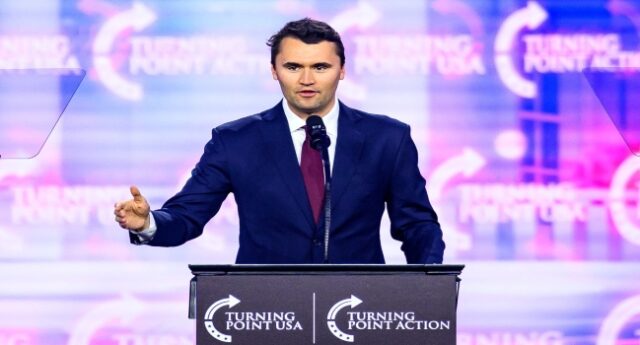
FBI Releases Images Of ‘Person Of Interest’ In Kirk’s Murder As Trump Confers National Honor Posthumously

The image of ‘person of interest’

The FBI has released images of a person of interest in the fatal shooting of conservative activist Charlie Kirk at Utah Valley University.

A high-powered rifle and physical evidence like footprints and an arm imprint were found nearby.

Authorities believe the suspect is college-aged and fled into a residential neighborhood.

No motive has been confirmed, though political motivations are suspected by some officials.

Similarly, President Donald Trump has announced that conservative activist Charlie Kirk will be posthumously awarded the Presidential Medal of Freedom, the highest civilian honor in the United States.

The announcement came during a somber ceremony at the Pentagon on Thursday, held to commemorate the victims of the September 11, 2001 terrorist attacks.

“I’m pleased to announce that I will soon be awarding Charlie Kirk, posthumously, the Presidential Medal of Freedom,” Trump said during his remarks.

Kirk, a prominent 31-year-old figure in Republican circles and founder of Turning Point USA, was shot and killed on Wednesday while delivering a speech at Utah Valley University.

The incident shocked supporters and political allies, many of whom credit Kirk with playing a major role in mobilizing young conservatives during Trump’s 2024 presidential campaign.

Often seen sharing the stage with Trump at rallies and conservative conferences, Kirk had become one of the most recognizable faces of the American right-wing youth movement.

Google search engine

Chelsea Face 74 Charges Over Alleged Breaches Of Agent Rules

Chelsea's Brazilian striker #20 Joao Pedro (C) heads in the opening goal during the English Premier League football match between Chelsea and Fulham at Stamford Bridge in London on August 30, 2025. (Photo by JUSTIN TALLIS / AFP) / RESTRICTED TO EDITORIAL USE. NO USE WITH UNAUTHORIZED AUDIO, VIDEO, DATA, FIXTURE LISTS, CLUB/LEAGUE LOGOS OR 'LIVE' SERVICES. ONLINE IN-MATCH USE LIMITED TO 120 IMAGES. AN ADDITIONAL 40 IMAGES MAY BE USED IN EXTRA TIME. NO VIDEO EMULATION. SOCIAL MEDIA IN-MATCH USE LIMITED TO 120 IMAGES. AN ADDITIONAL 40 IMAGES MAY BE USED IN EXTRA TIME. NO USE IN BETTING PUBLICATIONS, GAMES OR SINGLE CLUB/LEAGUE/PLAYER PUBLICATIONS. /


The Football Association (FA) has charged Chelsea Football Club with 74 alleged breaches of its regulations concerning payments to agents.

The alleged infractions span a 13-year period from 2009 to 2022, with the bulk of them occurring between the 2010/11 and 2015/16 seasons.

The Premier League side has until September 19 to formally respond to the charges.

The charges come more than three years after Russian billionaire Roman Abramovich sold the London club to a consortium led by Todd Boehly and Clearlake Capital in May 2022.

The sale followed Abramovich’s sanctioning by the UK government due to alleged ties to Russian President Vladimir Putin, claims Abramovich has denied.

In a statement released Thursday, Chelsea said the investigation stemmed from irregularities that were self-reported by the club’s current ownership group:

“The club’s ownership group completed its purchase of the club on May 30, 2022. During a thorough due diligence process prior to completion of the purchase, the ownership group became aware of potentially incomplete financial reporting concerning historical transactions and other potential breaches of FA rules.

“Immediately upon the completion of the purchase, the club self-reported these matters to all relevant regulators, including the FA.”

Chelsea added that it was “pleased to confirm that its engagement with the FA concerning matters that were self-reported is now reaching a conclusion,” and emphasized that the club had “demonstrated unprecedented transparency” throughout the process.

This isn’t the first regulatory response tied to Chelsea’s past financial dealings.

In July 2023, the club reached a settlement with UEFA, agreeing to pay a €10 million (£8.6m) fine over “incomplete financial reporting” linked to the Abramovich era.

UEFA confirmed that Chelsea’s new owners had “proactively” disclosed the violations.

Meanwhile, Abramovich continues to face legal disputes in the UK.

In June 2025, the British government threatened to take legal action to seize the £2.5 billion generated from Chelsea’s sale.

Officials aim to allocate the funds toward humanitarian relief in Ukraine, while Abramovich maintains it should benefit all victims of the conflict, including those in Russia.

Google search engine

Men Can Now Take Their Wife’s Surname, Supreme Court Rules


South Africa’s Constitutional Court has struck down a law that prevented men from adopting their wives’ surnames after marriage, calling it discriminatory and a leftover from colonial rule.

The ruling came after two couples challenged the Births and Deaths Registration Act, which only permitted women to take their husbands’ surnames.

The court found this practice unconstitutional, reinforcing the country’s commitment to gender equality.

“This custom also came into existence as a result of legislation that was introduced by countries that colonised African countries south of the Sahara,” the court stated.

It described the law as a “colonial import” that did not reflect indigenous African traditions, where women often kept their birth names and children took their mother’s clan name.

One of the petitioners, Henry van der Merwe, had been denied the right to adopt his wife Jana Jordaan’s surname.

Another man, Andreas Nicolas Bornman, was barred from hyphenating his name to include his wife’s, Jess Donnelly-Bornman.

Although a lower court had previously ruled in their favour, the couples sought confirmation from the highest court.

The Constitutional Court agreed, stating the current law “perpetuated harmful stereotypes” and limited men’s choices.

Neither the Minister of Home Affairs, Leon Schreiber, nor the Minister of Justice and Constitutional Development, Mamoloko Kubayi, opposed the ruling. Both acknowledged the law’s outdated nature.

The Free State Society of Advocates also supported the case, arguing that denying men the same naming rights as women reinforced patriarchal norms.

Parliament will now need to amend the Act and its accompanying regulations to align with the ruling.

Google search engine

Nepal’s President Calls For Calm, Seeks Resolution After PM Resignation


Nepal’s political crisis deepened this week following the resignation of Prime Minister KP Sharma Oli and violent protests that left at least 19 people dead and the national parliament set ablaze.

In response, President Ramchandra Paudel has urged all sides to work towards a peaceful solution.

In a statement released Thursday, President Paudel emphasized the need to address the unrest within legal and constitutional limits.

“I am consulting and making every effort to find a way out of the current difficult situation within the constitutional framework,” he said.

“I appeal to all parties to be confident that a solution is being sought to address the demands of the protesting citizens.”

Prime Minister Oli, 73, a veteran politician who had served four terms, stepped down on Tuesday following mounting pressure and violent demonstrations.

His current whereabouts remain unknown.

Under Nepal’s constitution, President Paudel, 80, is now expected to invite the leader of the largest party in parliament to form a new government.

In a rare move, Nepal’s army chief, General Ashok Raj Sigdel, convened meetings on Wednesday with key stakeholders, including representatives of the Gen Z-led protest movement.

A military spokesperson confirmed the talks were part of efforts to de-escalate tensions.

As violence escalated, a nationwide curfew was imposed in the country of approximately 30 million people, the most severe measure seen in Nepal in two decades.

President Paudel urged the public to remain peaceful:

“I call on all citizens to exercise restraint and support efforts to restore peace and stability in the country.”

The protests, which erupted over political grievances and allegations of corruption, turned deadly earlier this week.

The parliament building was torched during clashes between demonstrators and security forces.

Google search engine

MOST COMMENTED

- Advertisement -
Google search engine