Home Blog Page 417

Abductors Of Six Nigerian Law School Students Demand N120m Ransom


The kidnappers of six students from the Nigerian Law School have reportedly demanded a ransom of ₦20 million for each victim, bringing the total to ₦120 million.

DAILY GAZETTE gathered that the students were abducted in Benue State while traveling from Onitsha, Anambra State, to the Yola campus of the Nigerian Law School in Adamawa State.

The incident occurred on Saturday night, July 26, as the students were returning to campus after their court externship break, with academic activities set to resume on Monday.

A fellow student at the Yola campus, Damilare Adenola, confirmed the abduction:

“Six students of the Nigerian Law School have been reportedly kidnapped by suspected bandits while travelling to resume school after their court externship break.”

He further identified some of the victims as Rev. Ernest Okafor, Ogbuka Fabian, Nwamma Philip, Okechukwu Obadiegwu, Obalem Emmanuel, and Obiorah David.

Adenola added that the abduction reportedly took place along the route between Wukari in Taraba State and a region of Benue State, a location known for insecurity and frequent attacks on commuters.

New developments on Sunday revealed that the suspected kidnappers had made contact with relatives and colleagues of the victims to negotiate the ransom payment.

One student, Chisom, recounted how he initially dismissed the news but became alarmed after trying to reach some of the missing students:

“We heard the news this morning (Sunday) that some of our classmates were abducted. I didn’t want to believe it, so I started making a few calls because I know all of them. I tried to call three of the victims, but their numbers were switched off.”

He continued: “When I tried one of them again, he picked up the call. There was noise in the background, but when he finally spoke, he screamed that he had been kidnapped and told a colleague to send N20m for his release.”

Chisom also spoke with another classmate in Yenagoa, Bayelsa State, who had heard about the abduction days earlier.

“He told me he’d been aware of the abduction since Thursday. According to him, the wife of one of the victims reached out to inform him about it. That was when we confirmed that the kidnapping happened in Benue State,” he added.

A student leader at the Yola campus, who requested anonymity due to the sensitivity of the situation, said:

“We are currently in Yola. We have contacted the Adamawa State Police Command. We are just waiting for more updates from them. We haven’t got any concrete information yet.”

When reached on Sunday, the spokesperson for the Adamawa State Police Command, Yahaya Suleiman, confirmed that the command was aware of the abduction, but emphasized that the incident did not occur within their jurisdiction:

“The abduction did not occur inside Adamawa State. I will encourage you to contact the Benue State Police Command for more details.”

He also assured the public that efforts were underway to rescue the victims:

“We cooperate not only with the police in other states but also with other sister agencies to ensure that those coming into Adamawa are safe, without harassment or intimidation.”

“The command is collaborating with officers and men of the Benue State Police Command to ensure these students are rescued,” he added.

At the time of this report, attempts to reach Anene Catherine, spokesperson for the Benue State Police Command, were unsuccessful, as calls and messages sent to her phone had not been returned.

This incident adds to the growing list of security challenges faced by law school students.

In 2022, gunmen abducted two students from the Agbani campus of the Nigerian Law School in Enugu State.

Those students were reportedly kidnapped at Eke Agbani Market, where they had gone to buy food.

Google search engine

Senate Bill To Designate Sultan, Ooni As Co-Chairmen Of Traditional Rulers Council ‘Satanic’ – Ohanaeze Kicks


Ohaneze Ndigbo Worldwide has strongly criticized a proposed Senate bill aimed at permanently designating the Ooni of Ife and the Sultan of Sokoto as the exclusive Co-Chairmen of the Traditional Rulers Council, saying the move marginalizes other traditional rulers across Nigeria’s diverse ethnic and geopolitical landscape.

In a statement released on Sunday in Enugu, the group’s National Publicity Secretary, Dr. Ezechi Chukwu, expressed concern over what it called a disregard for fairness and constitutional principles.

According to the News Agency of Nigeria (NAN), the controversial bill has already passed second reading in the Senate.

Chukwu described the bill as deeply flawed and divisive.

“The Senate in this vein has failed in its capacity as the highest legislative carrier and custodian of the nation’s democratic mandate.
This bill is not only inequitable, discriminatory and ethnocentric, it is equally distasteful, reprehensible and objectionable.”

“It lacks all the ethical considerations, objective metrics and unbiased categories for national unity and social justice in a pluralist nation-State like Nigeria,” he said.

Ohanaeze called on the Senate to urgently withdraw the bill and undertake a review that accounts for ethnic diversity, cultural sensitivity, geopolitical balance, and inclusive governance.

“It is only by so doing shall the bill foster national unity, peaceful co-existence and social stability,” Chukwu added.

He emphasized that elevating only two traditional rulers above others would undermine the spirit of federal character enshrined in the Nigerian Constitution and erode the respect accorded to monarchs from other ethnic nationalities.

Google search engine

Gov. Sanwo-Olu Bars LG Chairmen From Appointing SLGs, Supervisors


Governor Babajide Sanwo-Olu of Lagos State has placed a temporary restriction on all newly sworn-in 57 Local Government and LCDA Chairmen, barring them from appointing Secretaries to Local Governments (SLGs) and Supervisory Councillors.

The directive came shortly after he administered the oath of office to the elected chairmen and vice-chairmen at a ceremony held at the Sports Ground, Lagos House, Ikeja.

Sanwo-Olu instructed the new council bosses to spend the next 30 to 60 days familiarizing themselves with the needs of their respective communities.

He clarified that the state government would later notify them when the appointments could proceed.

However, he urged them to immediately appoint Chiefs of Staff to help coordinate their daily activities.

Governor Sanwo-Olu emphasized the importance of inclusive leadership and prioritizing citizens’ welfare, saying Lagos would not tolerate underperformance or betrayal of public trust.

“We are living through a new era of local government autonomy, fiscal and administrative independence now affirmed by the Supreme Court of Nigeria. Lagos has consistently taken the lead in this regard.”

“As chairmen, you now have direct access to your council’s funds. With this comes direct accountability. No excuses. No finger pointing. The buck now stops with you,” he declared.

He urged the new leaders to treat this autonomy with responsibility and transparency, reminding them that leadership is a public duty, not personal privilege.

“Use this autonomy wisely. Guard it with transparency. Let your tenure reflect not political entitlement, but public responsibility. Leadership must never be about personal gain; it must be about public impact,” Sanwo-Olu said.

Describing the mandate given to the chairmen as a “call to service and selfless leadership,” the governor asked them to lead with courage, clarity of purpose, and compassion.

“The people have placed in your hands not just votes but their dreams. Their expectations are clear: better roads, safer streets, functioning health centres, thriving schools, modern markets, environmental sanitation, youth engagement, and community security. These are not abstractions; they are daily necessities. And your performance will be measured not by the eloquence of your speeches but by the visibility of your actions.”

He reminded them that Lagos State’s THEMES+ agenda must reflect in every part of the state:

“Lagos is counting on you to bring development to every street, every ward, every community. Let the THEMES+ agenda of our administration come alive in your domains. Translate our vision in Transportation, Health, Education, Environment, Security and Social Inclusion into projects that impact lives.”

“Let rural communities feel the presence of the government. Let our riverine and underserved areas know that they, too, are not forgotten. Governance must be inclusive, equitable, and people-centred.”

“Your success is our success. The State Government stands firmly with you. We will support you. We will work with you. But we will also hold you to the highest standards.”

The Commissioner for Local Government, Chieftaincy Affairs and Rural Development, Bolaji Robert, praised the newly elected chairmen, calling their emergence a clear endorsement by the people. He applauded Governor Sanwo-Olu’s leadership in ensuring credible and peaceful local government elections.

“The election and swearing-in of the council chairmen and their deputies is a call to deepen governance at the grassroots level and ensure service delivery to all,” he said.

Speaking on behalf of the new council bosses, Sesan Olowa, Chairman of Ibeju-Lekki Local Government Area, expressed gratitude to Governor Sanwo-Olu and Lagosians for the trust placed in them. Olowa, who was elected Chairman of Conference 57 during the event, vowed that the new leaders would uphold APC values and deliver good governance.

“We will uphold the values of the APC and ensure that development touches every ward and community under our care,” he pledged.

The swearing-in ceremony was graced by top officials and dignitaries, including First Lady Ibijoke Sanwo-Olu, Deputy Governor Dr. Kadri Hamzat, members of the state and national assemblies, the Governance Advisory Council (GAC) led by Prince Tajudeen Olusi, APC Lagos State Chairman Cornelius Ojelabi, traditional rulers, and market leaders.

Google search engine

NASS Approves Establishment Of Cardiovascular Disease Institute In Kano


In a move to address the growing health crisis linked to heart-related conditions in Nigeria, the National Assembly has given the green light to establish the National Institute for Cardiovascular Disease, Research and Treatment in Kano State.

The bill, championed by Hassan Shehu Hussain, who represents the Nassarawa Federal Constituency of Kano State, successfully passed the House of Representatives on April 2 and received Senate concurrence on July 15.

The institute is expected to function as a national centre of excellence focused on diagnosis, treatment, research, and medical training in the field of cardiovascular health.

Speaking on the significance of the bill, Hussain emphasized the urgency, noting that heart disease has become one of the top causes of death in the country.

“Cardiovascular disease (CVD) has become one of the leading causes of death in Nigeria, placing immense pressure on the country’s health system,” he said.

A 2023 report by the Nigerian Heart Foundation supported this concern, revealing that over 30% of Nigerian adults suffer from high blood pressure, and one in five hospital deaths in the country is linked to cardiovascular issues.

The report pointed to urbanisation, poor diets, tobacco use, sedentary lifestyles, and lack of early diagnosis as key contributing factors.

Once operational, the Kano-based institute will provide:

Specialised treatment and rehabilitation for patients with heart conditions

Training programs for healthcare workers in cardiac care

Advanced research initiatives targeting cardiovascular diseases

Collaboration opportunities with both domestic and international stakeholders to secure funding and drive innovation

According to Hussain, the centre will offer far-reaching benefits beyond just healthcare services.

“The centre will not only provide cutting-edge cardiovascular care but also foster homegrown research and capacity building, particularly tailored to Nigeria’s unique health challenges.”

He further noted that the facility would play a critical role in generating jobs, spurring medical innovation and reducing the country’s reliance on foreign medical tourism for heart-related treatments.

Google search engine

Two Jailed In Kano For Impersonating EFCC Investigators


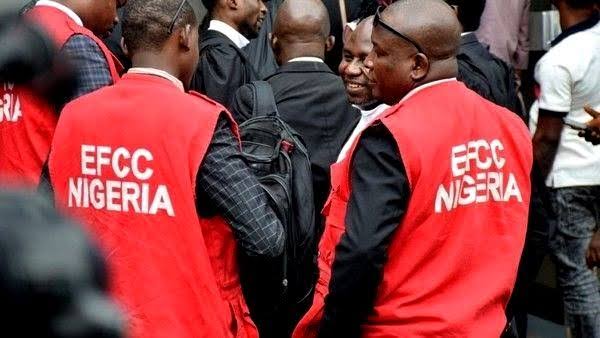
Two men, Buhari Abdullahi and Umar Mukhtar Usman, have been sentenced to prison by Justice Nasiru Saminu of the Kano State High Court after confessing to impersonating officials of the Economic and Financial Crimes Commission (EFCC).

The duo were arraigned on a one-count charge of falsely presenting themselves as EFCC investigators. The case revealed that they used a forged EFCC identity card in their scheme to deceive unsuspecting individuals.

According to the charge sheet:

“That you Buhari Abdullahi and Umar Mukhtar Usman, sometime in May 2025 at Kano, within the jurisdiction of this honorable court, falsely impersonated to be investigators of the Economic and Financial Crimes Commission (EFCC) where you used a false identity card and paraded yourselves as staff of EFCC and thereby committed an offense contrary to and punishable under Section 132 of the Penal Code law.”

Both Abdullahi and Usman pleaded guilty to the charge.

In his ruling, Justice Saminu convicted them and handed down a sentence of six months imprisonment each.

However, the court gave them the option of a ₦50,000 fine in lieu of jail time.

Google search engine

Six Nigerian Law School Students Kidnapped


Six students from the Nigerian Law School were abducted by suspected gunmen while traveling from Onitsha, Anambra State, to the Yola campus in Adamawa State, where they were due to resume classes.

DAILY GAZETTE gathered that the kidnapping took place late on Saturday, July 26, as the students made their way back for the resumption of academic activities scheduled for Monday, July 28.

A fellow student at the Yola campus, Damilare Adenola, told newsmen:

“Six students of the Nigerian Law School have been reportedly kidnapped by suspected armed bandits while travelling to resume school after their court externship break.”

Among the missing are Rev. Ernest Okafor, Ogbuka Fabian, Nwamma Philip, Okechukwu Obadiegwu, Obalem Emmanuel, and Obiorah David.

The abduction occurred near a border community between Ukum LGA in Benue State and Wukari LGA in Taraba State, an area known for insecurity and frequent attacks on travelers.

One student leader at the Yola campus shared:

“We are currently in Yola. We have contacted the Adamawa Police Command and are waiting for further updates. We haven’t received any concrete information yet.”

The spokesperson for Adamawa State Police Command, SP Yahaya Suleiman, acknowledged the incident while clarifying jurisdictional limitations:

“The command is collaborating with officers and men of the Benue State Police Command to ensure these students are rescued.”

The Benue State Police Command said it had not yet received formal details of the kidnapping.

Google search engine

Atiku Vows To Win Ekiti Governorship For ADC As Top APC, PDP Loyalists Join Party


Former Vice President Atiku Abubakar has vowed that the African Democratic Congress (ADC) will claim victory in the upcoming 2026 governorship election in Ekiti State, signaling a strong challenge to the current administration led by Governor Biodun Oyebanji.

Atiku, a leading figure in the ADC, made the statement during the official launch of the party’s Ekiti State chapter over the weekend in Ado-Ekiti.

Represented at the event by Prof. Bayo Fakunle, former Dean of the Faculty of Pharmacy at Obafemi Awolowo University (OAU), the ex-Vice President declared:

“The party will participate in the 2026 governorship election in Ekiti State and win,” adding that Governor Oyebanji should begin preparing his handover notes.

The occasion also marked a wave of defections from multiple major parties into the ADC.

Defectors included prominent members of the People’s Democratic Party (PDP), Social Democratic Party (SDP), Labour Party (LP), and even the ruling All Progressives Congress (APC).

Expressing appreciation to Ekiti voters for their support during past presidential elections, Atiku used the platform to renew his commitment to the state’s people, promising better governance under the ADC.

“The ADC would rescue them from untold hardship,” he said through Prof. Fakunle, calling on citizens to rally behind the party’s rescue mission.

Former Deputy Governor Prof. Kolapo Olusola, who led the PDP faction into the ADC, echoed this sentiment during his remarks.

“The ADC was formed to chase away those who are destroying the country through maladministration,” he said.

“The calibre of men and women in the party is capable of restoring the country back to prosperity.”

In what is seen as a strategic shift that could reshape Ekiti’s political scene, several influential aides and allies of former governors Ayodele Fayose, Kayode Fayemi, and Segun Oni have also defected to the ADC.

This move casts uncertainty over Oyebanji’s reelection bid. It’s particularly noteworthy given that all three former governors; Fayemi, Fayose, and Oni had previously endorsed Oyebanji’s candidacy for 2026.

Now, however, several of their former key associates are throwing their weight behind the ADC. Among the high-profile defectors present at the unveiling were: Prof. Kolapo Eleka (former Deputy Governor under Fayose), Dipo Anisulowo (former Chief of Staff), Modupe Alade (ex-Secretary to the State Government), and Gbenga Faseluka (former Head of Service), alongside other notable political figures.

Google search engine

FG Launches N10m Welfare Loan Scheme For Tertiary Institution Staff


The Federal Government has introduced a new loan scheme, the Tertiary Institution Staff Support Fund (TISSF), aimed at enhancing the welfare and career development of staff across Nigeria’s higher education institutions.

The initiative, which allows each qualifying staff member access to up to ₦10 million, was unveiled during a high-level stakeholder meeting in Abuja, signaling the government’s renewed commitment to improving the quality of life for academic and non-academic personnel in universities, polytechnics, and colleges of education.

According to a statement by Folasade Boriowo, Director of Press and Public Relations at the Federal Ministry of Education, the programme was designed to support transportation, healthcare, and small business ventures such as poultry farming.

“Each academic and non-academic staff member is eligible to receive up to ₦10 million, capped at 33.3% of their gross annual salary,” the statement explained.

“Each eligible staff’s uses include transportation, medical support, and micro-enterprise ventures such as poultry farming.”

Education Minister, Dr. Maruf Alausa, emphasized that the fund reflects the administration’s long-term vision for education, aligning with President Bola Tinubu’s Renewed Hope Agenda.

“TISSF is not just about welfare. It is about empowerment,” Dr. Alausa stated.

“We are ensuring that our education workforce is supported to live well, grow professionally, and continue contributing meaningfully to institutional excellence.”

The scheme will be executed in collaboration with the Bank of Industry, which is responsible for managing the disbursement process.

The ministry noted that the partnership would help ensure transparency, accountability, and effective fund delivery.

“Participants, including the Senior Special Assistant to the President on Student Engagement, the Executive Secretary of TETFund, and the Managing Director of the Bank of Industry, Vice Chancellors, Rectors, and Provosts — expressed strong support for the initiative.”

“They described it as timely and essential for boosting staff morale and improving performance across Nigeria’s tertiary institutions,” Boriowo added.

Reaffirming the Ministry’s commitment, the statement assured stakeholders of a collaborative approach to implementing TISSF and building a more resilient and motivated workforce in the education sector.

“The Ministry reaffirmed its commitment to working closely with all stakeholders to ensure the smooth implementation of TISSF and to build a more resilient, motivated, and empowered workforce in the education sector,” the statement concluded.

Google search engine

Trump, EU Reach Tariff Deal To Avert Full-Blown Trade War

US President Donald Trump (R) shakes hands with European Commission President Ursula von der Leyen (L) during a meeting, in Turnberry south west Scotland, on July 27, 2025, on the third day of his visit to the country, since his second tenure as President began. Trump has said he sees a 50-50 chance of reaching a deal with the European Union, having vowed to hit dozens of countries with punitive tariffs unless they hammer out a pact with Washington by August 1, 2025. (Photo by Brendan SMIALOWSKI / AFP)


U.S President Donald Trump and European Commission President Ursula von der Leyen have struck a long-awaited agreement to end a looming trade crisis, just days before the August 1 deadline that would have triggered sweeping 30% U.S tariffs on European exports.

Speaking from his golf resort in Turnberry, Scotland, where the meeting took place, Trump hailed the outcome as a success for both sides.

“We have reached a deal. It’s a good deal for everybody,” Trump told reporters.

The agreement establishes a uniform 15% tariff on EU exports to the U.S, including the highly sensitive auto sector, replacing the existing 25% rate.

Trump framed the new arrangement as consistent with terms previously agreed to with Japan.

“We are agreeing that the tariff straight across, for automobiles and everything else, will be a straight-across tariff of 15 percent,” he said.

The U.S President also announced that the EU had agreed to a massive $750 billion energy purchase from the U.S, along with $600 billion in additional investments in the country.

Von der Leyen, speaking alongside Trump, confirmed the deal and emphasized its economic significance.

“It’s a good deal,” she said.
“It will bring stability. It will bring predictability. That’s very important for our businesses on both sides of the Atlantic.”

While the agreement may have averted a trade war, some of the EU’s key demands were left out.

Brussels had been pressing for sector-specific exemptions particularly for pharmaceuticals, aircraft, spirits, and steel but those were largely dismissed by Washington.

Trump explicitly ruled out any special treatment for the pharmaceutical sector, an industry crucial to Ireland and other EU member states.

“We have to have them built, made in the United States,” he stated, reiterating his earlier threat of a 200% tariff on drug imports to push domestic production.

Steel, another sore point for European negotiators, will also remain under the existing 50% levy, with no quota-based compromise in sight.

“Steel was staying the way it is,” Trump insisted.

Though the agreement was reached at the executive level, it still requires formal approval from all 27 EU member states.

EU ambassadors, who were briefed while on an official visit to Greenland, are expected to reconvene to assess the final terms.

Brussels had previously authorized retaliatory tariffs targeting $109 billion worth of U.S. goods, which would have gone into effect from August 7 had the negotiations failed.

The bloc had also prepared a list of potential restrictions on U.S services under its anti-coercion laws.

Countries like France had pushed the EU to be ready with a “trade bazooka” legislation allowing the bloc to restrict access to its market and public procurement in retaliation for aggressive trade tactics.

Google search engine

2027: More Governors Will Join APC Soon – Governor Sule


Governor Abdullahi Sule of Nasarawa State has projected a wave of defections to the All Progressives Congress (APC) in the build-up to the 2027 general elections, downplaying claims of political persecution and declaring the ruling party’s readiness for the opposition.

Appearing on Sunday Politics on Channels Television, the governor emphasized that the APC is not taking the emerging opposition lightly particularly after the formation of a new coalition bloc under the African Democratic Congress (ADC).

“Yes, we have discussed,” Sule said when asked if APC governors had evaluated the threat posed by the new coalition.

“And it is not something, actually, that I will disclose here. You know, as they are planning, we are planning. We are in politics. We’re not just sitting down watching them plan. So as they plan, we plan. And at the end of the day, the better plans will take over.”

The governor noted that several defections to the APC are already underway, including from among opposition governors and lawmakers.

“We keep getting more and more governors from the PDP joining us. Very soon, you will hear another governor joining us. You hear every day about senators decamping and coming back to the APC. Every day. These are all part of the plans—they’re not happening just by magic,” he said.

Governor Sule’s remarks come shortly after a major political event held on July 2 at the Yar’Adua Centre in Abuja, where opposition leaders across various parties rallied behind the ADC as a unified platform to challenge the APC’s dominance in 2027.

At that gathering, former Senate President David Mark and former Osun State Governor Rauf Aregbesola were named interim chairman and secretary of the coalition.

The event also featured key political figures such as Peter Obi, Atiku Abubakar, Nasir El-Rufai, Rotimi Amaechi, Ireti Kingibe, Dele Momodu, Emeka Ihedioha, and Dino Melaye, signaling a serious push to consolidate forces ahead of the next election cycle.

However, some within the ADC have alleged that fear of persecution by the APC government is discouraging certain politicians from joining the coalition. Governor Sule dismissed that suggestion outright.

“I don’t underrate anybody, but the bottom line is, they must find something else to say. Jonathan’s era is completely different from this era. We didn’t see what we’re seeing now during Jonathan’s time. We didn’t go through the challenges we’re facing now during his time,” he said.

He also cast doubt on the strength and cohesion of the opposition alliance compared to the diverse and broad-based merger that birthed the APC.

“The calibre of people that came together to form the APC—ANPP, APGA, ACN, CPC, and even the new PDP—is not the same kind of thing you’re seeing in this new opposition,” Sule concluded.

Google search engine

MOST COMMENTED

- Advertisement -
Google search engine