Home Blog Page 523

Kano TikToker  Jailed For Naira Abuse

 

Murja Ibrahim Kunya, a social media influencer popularly known on TikTok, has been sentenced to six months in prison by the Federal High Court in Kano for abusing the Nigerian currency.

The conviction was secured on Wednesday by the Kano Zonal Directorate of the Economic and Financial Crimes Commission (EFCC) before Justice Simone Amobeda.

The EFCC confirmed the sentencing in an official statement released by its Head of Media and Publicity, Dele Oyewale.

Kunya was arrested after she was seen spraying Naira notes for entertainment purposes while staying at Tahir Guest Palace in Kano.

Her actions were deemed to have violated the provisions of the Central Bank of Nigeria (CBN) Act that prohibits the abuse and mutilation of the Naira.

“She was granted an administrative bail by the Commission pending her arraignment before the Federal High Court in Kano.”

“However, when it was time for her court appearance, she absconded in her bid to evade the legal processes,” the EFCC stated.

Following a period of surveillance, EFCC operatives re-arrested Kunya on Sunday, March 16, 2025, and she was arraigned on May 20, 2025, where she pleaded guilty to the amended one-count charge.

The charge read:

“You Murja Ibrahim Kunya on the 28th of December, 2023 at Tahir Guest Palace, Kano, within the jurisdiction of this Honorable Court whilst dancing in one of the rooms at Tahir Guest Palace tampered with Naira notes issued by Central Bank of Nigeria by spraying and matching on same in the said occasion and you thereby committed an offence contrary to Section 21 (1) of the Central Bank of Nigeria Act, 2007.”

During proceedings, Prosecution Counsel Musa Isah reviewed the facts of the case and urged the court to convict her in accordance with the law.

In his judgment, Justice Amobeda sentenced the influencer to six months in prison, offering her an option of a ₦50,000 fine.

Beyond the jail term, the court added a unique twist to the ruling aimed at rehabilitation.

Recognizing her significant social media following, the judge also appointed Kunya as an EFCC and CBN Ambassador for online advocacy against Naira abuse.

“The court order requires Kunya “to utilize her social media reach to educate her followers on the importance of respecting the Nigerian currency and the legal consequences of its abuse or mutilation.”

Google search engine

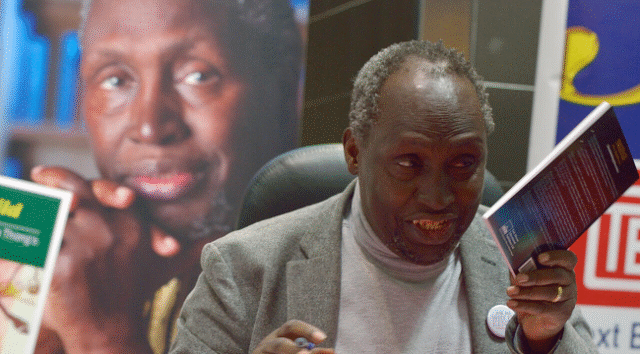
Kenyan Literary Icon Ngugi wa Thiong’o Dies At 87


Celebrated Kenyan author and academic Ngugi wa Thiong’o, widely regarded as one of East Africa’s greatest literary minds, has passed away at the age of 87.

His daughter, Wanjiku wa Ngugi, confirmed the news in a heartfelt announcement on Facebook early Wednesday.

“It is with a heavy heart that we announce the passing of our dad, Ngugi wa Thiong’o this Wednesday morning,” she wrote.

“He lived a full life, fought a good fight,” she added.

News of his passing quickly drew tributes from across Kenya and beyond, honoring a man whose work defined post-colonial African literature and resistance.

Opposition leader Martha Karua took to X (formerly Twitter) to express her condolences.

“My condolences to the family and friends professor Ngugi wa Thiong’o, a renowned literary giant and scholar, a son of the soil and great patriot whose footprints are indelible,” she posted.

Ngugi’s influence extended far beyond literature.

In 1977, his politically charged play “Ngaahika Ndeenda” (“I Will Marry When I Want”) was deemed too provocative by authorities.

He was jailed without charge soon after its premiere, a move that drew international condemnation.

Amnesty International designated him a prisoner of conscience, and a global campaign ultimately led to his release from Kamiti Maximum Security Prison in December 1978.

“Thank you Mwalimu (teacher) for your freedom writing,” the Kenya branch of Amnesty International wrote on X.

“Having already earned his place in Kenyan history, he transitions from mortality to immortality.”

Following a government crackdown on theatre groups in 1982, Ngugi went into self-imposed exile, first in Britain and later in the United States.

There, he continued to write and teach, championing African languages and identity through his academic and literary work.

In 1986, he published one of his most influential books, “Decolonising the Mind”, a collection of essays that examined the power of language in shaping post-colonial identity and nationhood.

Ngugi wa Thiong’o’s legacy as a fierce advocate for linguistic and cultural decolonization continues to resonate in literary and political spheres alike.

His life and works remain a testament to the enduring power of words in the fight for justice and cultural pride.

Google search engine

WAEC Apologises For Delay In English Exam, Cites Anti-Leakage Measures


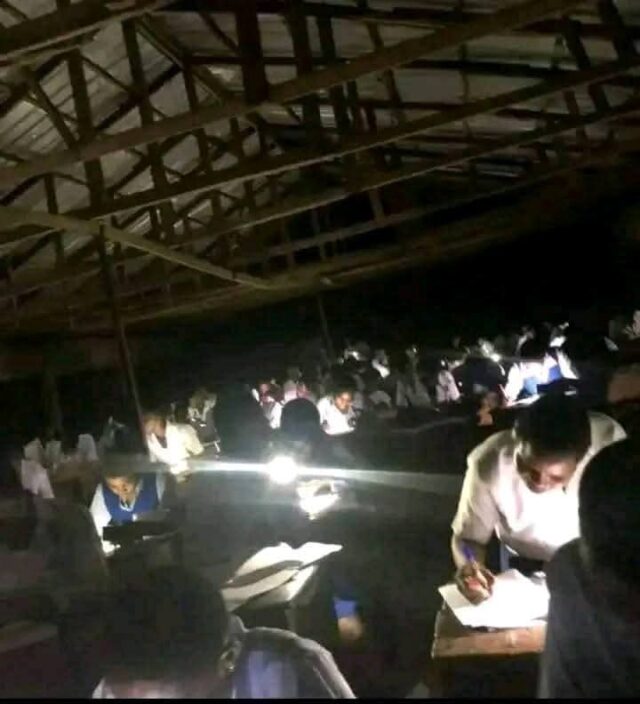
The West African Examinations Council (WAEC) has issued an apology following the delayed commencement of the English Language Paper 2 in the ongoing 2025 West African Senior School Certificate Examination (WASSCE).

The News Agency of Nigeria (NAN) reports that the exam, originally scheduled for earlier in the day, was eventually held on Wednesday evening, sparking criticism and concern from candidates and stakeholders alike.

In a statement released by Moyosola Adesina, the Acting Head of WAEC’s Public Affairs Department, the council acknowledged the disruption and attributed the delay to efforts aimed at preventing examination malpractice.

“While maintaining the integrity and security of our examination, we faced considerable challenges primarily due to our major aim of preventing leakage of any paper,” the statement read.

WAEC admitted that while its objective to secure the exam content was achieved, the decision had unintended consequences on the exam’s logistics and timing.

“We recognise the importance of timely conduct of examinations and the impact of this decision on candidates, their schools and parents, and we sincerely apologise for any inconveniences caused,” the council added.

The examination body also cited broader issues that contributed to the disruption.

“In spite of our best efforts, we encountered logistical hurdles, security concerns and socio-cultural factors that negatively influenced our operations,” WAEC explained.

Reiterating its mission, the council affirmed its dedication to preserving high standards in its examination processes.

“The council re-affirms its commitment to upholding the highest standard in examination conduct, and pledged to continue to promote academic excellence.”

WAEC’s apology follows mounting criticism, including backlash from student bodies and lawmakers, with many citing concerns about candidate safety, especially in regions grappling with power outages and insecurity during the evening exam session.

Google search engine

Over 10,217 Killed Since Tinubu Took Office, Amnesty International Alleges


Amnesty International has revealed that over 10,217 Nigerians have been killed in attacks by armed groups since President Bola Ahmed Tinubu assumed office two years ago.

The human rights organization stated that Benue State recorded the highest number of deaths with 6,896 fatalities, followed by Plateau State with at least 2,630.

According to the report, the violence has escalated despite President Tinubu’s promise to improve national security.

Isa Sanusi, Director of Amnesty International Nigeria, said, “Today marks exactly two years since President Bola Tinubu assumed office with a promise to enhance security.”

“Instead, things have only gotten worse, as the authorities continue to fail to protect the rights to life, physical integrity, liberty and the security of tens of thousands of people across the country.”

Sanusi emphasized the need for urgent action in light of the resurgence of threats from Boko Haram and other armed groups.

He noted that “recent escalations by Boko Haram and other armed groups indicate the current security measures are ineffective.”

During the period under review, Amnesty reported the rise of new armed groups such as Lakurawa in Sokoto and Kebbi states and Mamuda in Kwara state.

Hundreds of communities across Benue, Borno, Katsina, Sokoto, Plateau, and Zamfara have suffered devastating attacks.

In Zamfara alone, 638 villages were destroyed, while 725 villages remain under bandit control across 13 local government areas.

The report further highlighted that over 273 people were killed and 467 abducted in Zamfara within the last two years.

Maru local government area witnessed severe attacks, including one on April 24, 2025, where over 20 miners were killed at Gobirawar Chali. In Kebbi State, the Lakurawa group was linked to 70 deaths in 22 attacks.

Benue and Plateau states, in particular, suffered alarming levels of violence. In Bokkos, Plateau State, a deadly coordinated attack on April 3, 2025, resulted in the deaths of entire families.

In Benue, communities were not only attacked but also stripped of critical infrastructure.

“Attackers have destroyed boreholes, clinics, schools, grain reserves, and places of worship in addition to killing residents,” Amnesty stated.

The humanitarian toll is staggering. All 23 local government areas in Benue State have faced assaults, displacing approximately 450,000 people.

In Plateau, about 65,000 people have been displaced in 38 attacks in just two years. Many victims have suffered repeated violence, including assaults on IDP camps.

“The humanitarian situation is worsening as most affected are farmers who have lost access to their land, threatening food security,” Amnesty noted.

Many displaced individuals in Plateau and Katsina now rely on begging to survive. In Zamfara’s Dangulbi district, farmers are unable to sell their sweet potato harvests due to insecurity.

“These attacks deprive people of their right to life while the survivors are deprived of their livelihood,” Sanusi said.

In Sokoto’s Isa local government area, four villages were overrun by gunmen between May 9 and 11, displacing residents and exacerbating hunger.

The report also described how armed groups are now demanding levies via phone threats in Zamfara, Sokoto, and Katsina, with non-compliance punishable by death.

Frustration over the government’s perceived inaction is widespread. A resident from Maru, Zamfara said, “The only relationship between us and the government is that they issue media statements after we are attacked and killed.”

“That is all they do. When the next attack comes, they will issue another empty statement while bandits escalate their atrocities. We are helpless.”

Amnesty International reminded the Nigerian government of its obligations under international law to protect lives and ensure justice for victims.

“Authorities must move swiftly to match their words with serious and concrete action to guarantee the human rights of everyone in Nigeria if they are to be taken seriously on their oft-expressed commitment to stop the killings, violence, abductions and other human rights crimes in several parts of the country,” said Sanusi.

He warned that unchecked impunity is worsening insecurity and urged immediate action to stop the violence. “Time is running out,” he stressed.

Amnesty International has been documenting Nigeria’s security crisis since 2016 and continues to call for accountability and protection for vulnerable rural communities.

Google search engine

Students, Corps Members Injured As Classrooms Collapse During WAEC Exams In Taraba


A disaster was narrowly averted on Wednesday in Taraba State as final-year students and National Youth Service Corps (NYSC) members escaped death when classrooms collapsed during the ongoing West African Examinations Council (WAEC) exams.

The incident occurred at Government Secondary School, Namne, located in Gassol Local Government Area.

The collapse followed a severe thunderstorm accompanied by strong winds and torrential rainfall, which hit the area around 6 p.m., just after the second batch of students had begun their examination.

Eyewitnesses reported scenes of chaos as the roof and walls of the classroom building gave way, trapping students, teachers, and exam supervisors beneath the rubble.

Many sustained injuries, with some students reportedly suffering broken limbs. Locals rushed to the scene and worked for hours to rescue those trapped.

A resident of Namne, Alhaji DanAzumi Lauris, who spoke to The Guardian by telephone, confirmed that the first group of students had already completed their papers and vacated the classrooms before the incident.

“It was the second set that got caught when the rain started. The classrooms collapsed just minutes after the exam began,” he said.

Lauris also revealed that the injured victims were taken to a nearby primary healthcare center for urgent treatment.

He added that the powerful windstorm also destroyed several homes in the community, compounding the damage caused by the collapse.

Meanwhile, similar weather disruptions were reported in Jalingo, the Taraba State capital.

Prolonged rainfall and severe flooding left many students stranded, with some reportedly unable to return home until after 1 a.m. due to poor visibility and impassable roads.


Google search engine

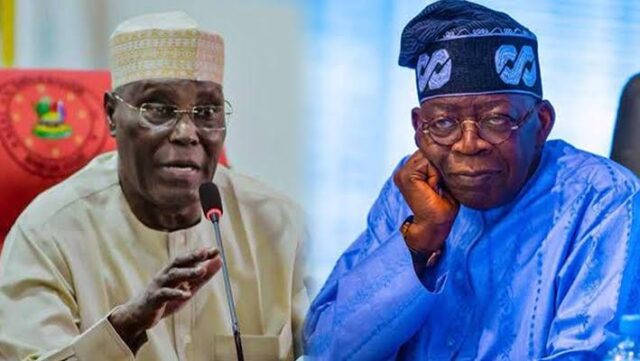
Two-Year Anniversary: Tinubu’s Government Incompetent, Anti-People – Atiku Fumes


As President Bola Tinubu marks two years in office, former Vice President Atiku Abubakar has launched a scathing critique of his administration, calling it “incompetent,” “disconnected,” and “anti-people.”

In a post on X (formerly Twitter) on Thursday, Atiku claimed that the current government is among the worst Nigeria has seen since the return to democracy, citing rising hardship, lack of transparency, and irresponsible governance.

According to Atiku, no administration in Nigeria’s democratic history has inflicted such economic pain on citizens while demonstrating “such disregard for transparency, accountability, and responsible leadership.”

He accused the Tinubu-led government of worsening the country’s economic crisis through excessive borrowing and regressive policies that disproportionately burden the poor.

Atiku highlighted the sharp rise in Nigeria’s public debt, which has grown from ₦49 trillion in 2023 to ₦144 trillion in 2025. He also warned that planned borrowings could push the figure to ₦183 trillion.

Contrasting the federal government with state administrations, he wrote, “While the federal government racks up debt, state governments have shown more discipline, reducing their debt levels from ₦5.86 trillion to ₦3.97 trillion. The implication is clear: the federal government, under Tinubu, is the primary driver of Nigeria’s current debt crisis.”

He further alleged that Tinubu’s administration has intensified poverty and squandered public resources.

Government officials, he said, are living in luxury while millions of Nigerians struggle to survive.

“It is sad that, apart from being the poverty capital of the world, Nigeria has under this administration emerged in the unenviable position as the capital of malnourished children in Africa, having beaten Sudan, a nation that is at war.”

“According to the Global Hunger Index 2024, our country is one of the most affected by hunger and malnutrition, occupying the 18th position,” Atiku noted.

The former presidential candidate added that the administration’s policies are deepening inequality.

He accused Tinubu’s government of creating a two-tiered society, where public services like education, healthcare, and identification systems now operate on class lines.

“From healthcare to education to identity management and basic public services, Nigerians are now faced with class-based systems where the wealthy enjoy VIP treatment, and the rest are left behind,” he said.

“Today, Nigeria is a nation where the rich get richer, and the poor are punished for trying to survive. This reality cannot and will not be ignored,” Atiku concluded.

Google search engine

Living standards Of Nigerians Have Dropped Significantly In Last Two Years – Onaiyekan 


The Archbishop Emeritus of the Catholic Archdiocese of Abuja, Cardinal John Onaiyekan, criticized the Tinubu administration on Wednesday, stating that the living standards of Nigerians have deteriorated drastically over the past two years.

He warned that if President Bola Tinubu continues on this path throughout his term, he risks losing any future free and fair elections.

Speaking to journalists at the Communication Week Public Lecture, hosted by the National Directorate of Social Communications of the Catholic Secretariat of Nigeria (CSN) in Abuja, Onaiyekan expressed deep concern about the worsening economic difficulties in the country.

He urged President Tinubu to prioritize improving the quality of life for Nigerians, tackle the growing insecurity, uplift the economy, and fight corruption.

“My advice for Mr. President is to find ways and means of finding out what Nigeria is actually going through but not from those around him who are always praising him to the skies.”

“He should also know how families are managing with ₦30,000 salary a month. Since it is the people that he should serve, he should do more to raise the level of well-being of Nigerians.”

“I don’t think we are unfair to government if we say that in the last two years, our level of well-being has crashed considerably,” he said.

Onaiyekan acknowledged that the government may argue that it is not at fault or that it has done its best, but he emphasized the government’s responsibility to at least maintain, if not improve, Nigerians’ welfare.

“The government may say it’s not their fault. The government may say they’ve done their best, but the government is there to make sure that at least the level of well-being of Nigerians is maintained and, if possible, improved, and I think it is a good time. Two years is halfway through for him to at least try and do that.”

He further advised that if the President shifts focus to policies that truly benefit Nigeria’s poor, “they will remember him forever.”

However, he warned, “But if he continues like this for the rest of his term, if we have a free and fair election, he will not win because how can the country bring him back if we are not feeling good? Obviously, if they are not waiting for us to vote and they already make up their mind if we win, okay, we praise God.”

“We are still 250 million of us here in this country. We are struggling and we shall win. So I’m hoping that the people around Mr. President will give him that advice.”

Regarding election concerns, Cardinal Onaiyekan remarked, “The elections were over two years ago. He doesn’t have to worry again whether he won the election or not.”

“The Supreme Court said he won, so we have agreed now. Now he should just govern, make life as livable as possible for Nigerians, deal with security everywhere, improve the economic level of our people, and fight corruption.”

Reflecting on the previous administration, he stated, “These were the things that his predecessor said he would do Buhari, He didn’t do it. Eight years, and we expect him to do something.”

“So I don’t know any of you who have the possibility to reach him, or the courage to tell him, but that is necessary.”

Earlier in his speech, Onaiyekan stressed the important role of the media in bringing hope and healing to Nigeria amid mounting social, economic, and political challenges.

He called on media professionals to be responsible in their communication, not merely providing information but also inspiration, while fostering peace, dialogue, non-violence, and inclusive leadership.

In his welcome address, Rev. Fr. Michael Banjo, Secretary General of the Catholic Secretariat of Nigeria, explained that the National Communications Week aims to stimulate meaningful discussions and develop actionable plans around critical Church themes.

He said, “The Church’s call for disarmament among nations, a recurrent message in Papal Messages for the World Day of Peace, has now found profound expression in the realm of communications.”

“In his four-section 59th ‘Message for the World Day of Communications, 2025,’ Pope Francis passionately calls for the disarming of communications to rid it of aggression, violence, unhealthy rivalry, and divisive ideologies.”

Also speaking, Shuaib Husseni, Executive Director of the National Film and Video Censors Board (NFVCB), noted that Nigeria faces multiple crises including ethnic tensions, religious conflicts, political violence, and misinformation, often worsened by inflammatory media coverage.”

He emphasized that “disarming communication and conflict-sensitive reporting are essential tools for mitigating these conflicts.”

Google search engine

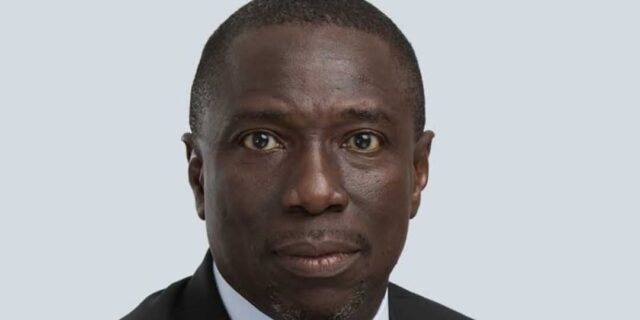
Edo Gov’ship: Ighodalo Rejects Appeal Court Verdict, Heads To Supreme Court


Asue Ighodalo, the Peoples Democratic Party (PDP) candidate in the September 21, 2024, Edo State governorship election, has expressed strong disappointment following the Court of Appeal’s decision to uphold Senator Monday Okpebholo’s election as governor.

In a statement released on Thursday, Ighodalo confirmed that he and his legal team would not relent in seeking legal redress, as they remain committed to challenging what they consider an unjust outcome.

“My good people of Edo State, today, the Court of Appeal delivered its judgment on our petition challenging the declared outcome of the September 21st, 2024 Governorship election in Edo State,” he began.

“As with the judgment of the tribunal, we have received this decision with deep disappointment, but also with unwavering resolve to continue our pursuit of justice.”

Ighodalo emphasized that despite the court’s ruling, many of the critical issues raised in the petition were not adequately addressed.

He cited widespread electoral malpractice and violations of the Electoral Act as major concerns.

“While we acknowledge the Court’s pronouncement, we believe that this judgment, like that of the Tribunal before it, failed to address the grave concerns we raised regarding widespread acts of non-compliance with, and clear violations of the Electoral Act,” he said.

“These decisions appear, worryingly, to validate a dangerous pattern of electoral impunity that strikes at the very heart of our democracy and continues to erode public confidence in our electoral process.”

According to Ighodalo, his quest for justice is not driven by personal ambition but by a responsibility to defend the will of the Edo people and ensure credible elections.

“The struggle to reclaim the mandate has never been about personal ambition. It has always been about standing with the people of Edo State and defending their sacred right to freely choose their leaders through a credible, transparent, and fair election,” he explained.

Referring to the September 21 poll, he described the electoral process as fundamentally flawed and accused the courts of overlooking critical irregularities.

“That right was brazenly subverted on September 21st, 2024. The decisions of both the Tribunal and the Court of Appeal, though rendered in the name of the law, in effect ignore the will of the people and reward blatant electoral irregularities.”

Despite the setbacks, Ighodalo reiterated his belief in the judiciary and confirmed his intention to escalate the matter to the Supreme Court.

“As democrats and patriots, we remain anchored in our belief in the rule of law. But we cannot, and will not, allow injustice to go unchallenged. I have therefore instructed my legal team to approach the Supreme Court of Nigeria to seek redress.”

“We do so for every voter who queued patiently with hope in their hearts, for every young person who dreams of a better Edo State, and for every Nigerian who still believes that democracy must be well practised to yield a great country.” he added.

Calling on the Supreme Court to uphold justice, Ighodalo urged the apex court to consider the broader implications of its decision.

“The Supreme Court now bears a profound responsibility, not only to interpret the law and apply same to available facts, but to defend the democratic principles that give the law its meaning.”

“We approach the apex court with full confidence in its integrity, its independence, and its role as the final guardian of justice in our republic.”

“We believe their Lordships will consider not just the letter of the law, but the greater implications for democracy, justice, and public trust. The eyes of Edo people, and indeed all Nigerians, now look up to the Supreme Court with hope.”

He concluded by calling for calm among his supporters, assuring them that the fight is not over.

“To all our supporters, I urge you once more to remain peaceful, vigilant and steadfast. This is not the end. It is simply the next chapter in our collective struggle for truth, justice, and a bright future for our dear Edo State.”

“We remain resolute. We remain committed. We remain undaunted. And we shall not rest until the voices of our people are heard and their stolen mandate restored.”

Google search engine

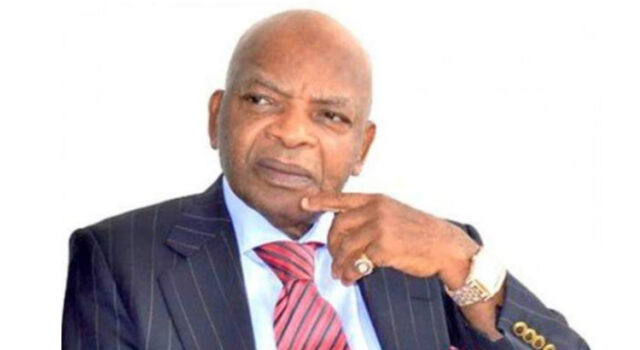
Tinubu Has Endorsed Enugu Governor For Second Term – Arthur Eze


Renowned businessman and oil magnate Arthur Eze has revealed that President Bola Tinubu has thrown his support behind Enugu State Governor Peter Mbah’s bid for a second term in office.

Eze, the Chief Executive Officer of Atlas Oranto Petroleum, made this disclosure during the celebration of the second anniversary of Mbah’s administration, held on Thursday.

According to Eze, Governor Mbah has significantly transformed Enugu State over the past two years, and notably, without incurring any debt from financial institutions.

To emphasize the governor’s achievements, Eze stated that President Tinubu has already given his blessing for Mbah’s re-election.

“God is a wonderful God. He brought Peter Mbah to change Igboland. Let me tell you, Tinubu has already endorsed him for second term. Tinubu endorsed him for second term because he has character. He is very honest, nobody will stop him,” Eze declared.

This endorsement comes shortly after the airing of a State House documentary celebrating President Tinubu’s second year in office, in which Eze also expressed strong admiration for the president.

In the documentary, Eze described Tinubu as “God’s gift to Nigeria,” praising his leadership qualities and inclusive approach.

“Tinubu has no enemies. He is a unifier. He speaks with humility and honesty,” Eze said.

He further emphasized the president’s fairness and religious tolerance, saying:

“He is not a man of division,  whether Christian or Muslim, he respects all.”

Eze concluded by highlighting Tinubu’s contributions to the South-East region, stating:

“What Tinubu has done for the South-East, nobody else has. He gave us the Minister of Works, the Minister of Science and Technology, and the South-East Development Commission. This is an opportunity for the Igbo to unite with the rest of Nigeria.”

“Tinubu has no enemies. He is a unifier. He speaks with humility and honesty; that’s why we admire him,” he added.

Google search engine

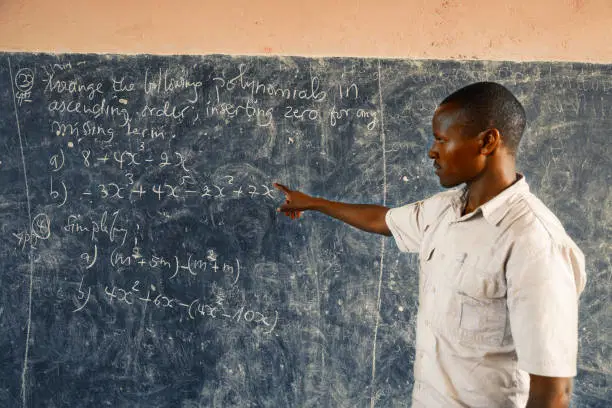
Over 4,000 Teachers Fail TRCN’s Qualifying Exam


No fewer than 4,169 teachers did not pass the Batch ‘A’ Professional Qualifying Examination (PQE) organized by the Teachers Registration Council of Nigeria (TRCN), which was held from May 15 to 17, 2025.

Figures obtained by The PUNCH on Wednesday reveal that 13,782 individuals registered for the exam.

Of that number, 12,874 (representing 93.4%) actually sat for the test, while 908 candidates (6.6%) were absent.

Among those who took the exam, 8,705 candidates, about 67.62%, achieved a passing score.

However, 4,169 (32.38%) were unsuccessful.

Lagos State posted the best performance with an 80% pass rate.

It was followed by Edo State at 73.3%, Niger State with 69.2%, and the Federal Capital Territory at 68.3%.

According to the TRCN, the performance of some candidates was negatively impacted by a lack of digital literacy, which hindered their ability to navigate the computer-based test.

In light of these challenges, the council said it is implementing new strategies aimed at improving the digital competence of teachers.

“All candidates who participated in the examination can check their results online at www.fron.gov.ng or www.trcnigeria.ng, or visit any of our TRCN state or liaison offices. Successful candidates may proceed to process their certificates and licenses,” the TRCN stated in its performance report.

The council added that it will also make curriculum guides and past exam papers available online and provide training sessions focused on digital skills to help teachers prepare better for future assessments.

Additionally, it reminded candidates that exam results are valid for certification for only one year after publication.

“TRCN encourages candidates who did not pass to engage in ICT training and pedagogical development, and to register for the November batch,” it added.

The PQE is a mandatory assessment used by the TRCN to determine the readiness and professional competence of individuals seeking to register as teachers in Nigeria.

Those who fail the exam and do not register for a retake risk losing their eligibility for a teaching license.

Google search engine

MOST COMMENTED

- Advertisement -
Google search engine