Home Blog Page 625

IPOB Warns South-East Leaders Against Mobilising Youths For Army Recruitment, Suggests CBN, NNPC Jobs As Alternatives

 

The Indigenous People of Biafra (IPOB) has issued a stern caution to political and community leaders in the South-East, urging them to desist from mobilising young people in the region for enlistment into the Nigerian Army.

In a statement on Tuesday, IPOB’s Media and Publicity Secretary, Emma Powerful, accused the Nigerian military of manipulating the South-East populace under false pretenses, allegedly seeking to use Igbo youths as cannon fodder in violent conflicts, especially in the northern parts of the country.

According to IPOB, the Nigerian Army has been secretly engaging traditional rulers, clergy, community elders, and youth leaders across the region, encouraging them to rally support for military recruitment drives.

“The Nigerian Army has begun employing Igbo individuals to mislead Ndigbo into enrolling their children in the Nigerian Army,” the group said.

It further claimed, “The Nigerian Army assigned 3000 individuals from Kaduna and various northern states, while only 200 individuals were allocated to each state from the South-East region, indicating that we do not belong to Nigeria at all. Join the Nigerian Army and endure the challenges.”

IPOB raised questions about the fairness and transparency of the recruitment process, and accused the government of marginalising the South-East in gainful employment opportunities.

“The question is, if the Nigerian Army presents a solid job prospect, will the Nigerian government or its violent military provide Igbo youths with such an opportunity?”

“Are our young people not capable of securing jobs in the Central Bank, NNPC, EFCC, Customs, and other profitable parastatals in Nigeria?” the group queried.

IPOB also criticised the government’s treatment of soldiers killed in action, especially those from the South-East.

“What actions has the Nigerian government taken to support the families of soldiers who died in active duty defending Nigeria?” it asked.

“Why were the valiant Igbo soldiers who allied with their peers to prevent Nigeria’s downfall in 1966 characterized, betrayed, and labeled ‘the Igbo coup plotters,’ resulting in the slaughter of thousands of Ndigbo in the North during that same year?”

According to the group, the identities of many soldiers killed in the North are kept secret, and a large proportion of the casualties are of Igbo extraction.

It also condemned the Army’s activities in the South-East, describing them as targeted assaults on local communities.

IPOB further alleged that the military recruitment push was part of a broader “population reduction agenda” targeting the Igbo people.”

“The group also took exception to reported plans to deploy South-East recruits under the ECOWAS standby force mission in the Sahel region, branding it a “proxy war.”

Powerful said, “Our recommendation to the Nigerian Army is to enlist thousands of Igbo youths whom they unlawfully hold in different detention facilities across Nigeria.”

He continued, “Or even better, visit the mass graves where thousands of Igbo youths were buried and enlist their bodies into the Nigerian Army to fight for them.”

In its final warning, IPOB said, “We caution Ndigbo against encouraging and campaigning for Igbo youths to enlist to combat state and foreign-sponsored terrorists who have more resources than the Nigerian Army.”

“We will hold responsible anyone who encourages Igbo youths to the slaughter of Fulani terrorists under the guise of joining the Nigerian Army. IPOB will oppose all depopulation strategies targeting Ndigbo.”

Google search engine

Court Invalidates Obasa’s Removal As Lagos Speaker, Overturns Assembly Actions


The Lagos State High Court in Ikeja has ruled that the removal of Mudashiru Obasa as Speaker of the Lagos State House of Assembly was unlawful, unconstitutional, and of no legal effect.

The judgment, delivered on Wednesday, also voided all proceedings and resolutions passed by the House on January 13, 2025 — the day Obasa was removed from office.

Justice Yetunde Pinheiro, who presided over the case, awarded N500,000 in damages to Obasa for what she described as the “unlawful and illegal removal” and the psychological distress he suffered.

Obasa had taken legal action against the House of Assembly and Hon. Mojisola Meranda, who was appointed Speaker following his removal.

Represented by Senior Advocate of Nigeria Afolabi Fashanu, he contended that the process used to oust him was flawed and lacked legal standing.

He claimed the action was carried out while the House was on recess and he was abroad.

The court first dismissed preliminary objections that challenged the validity of the case.

Justice Pinheiro ruled that failure to issue a pre-action notice did not invalidate the suit.

On the issue of jurisdiction, she affirmed, “A court of law can intervene where the provisions of the constitution have not been met during any proceedings of the house of assembly.”

The court drew upon precedents such as Usman v Kaduna State House of Assembly, Agbaso v Imo State, and Rivers State House of Assembly v Government of Rivers State.

According to the judge, courts are permitted to step in when constitutional gaps exist, or when house rules are ignored and fair hearing is denied.

She emphasized that the issues raised by Obasa pertain to the constitutionality of his removal and the procedures employed by the Assembly.

“The facts of this case are questions that the court can adjudicate upon,” she said, adding that the matter was one of due process.

The court examined the House’s internal rules and determined that only its recognized leaders have the authority to summon a sitting.

The chief whip, who had played a role in the controversial sitting, lacked the capacity to convene the session.

“By the rules of the Lagos State House of Assembly, there exists a hierarchy under Order 7,” Justice Pinheiro stated.

“Rule 30 of the Rules which relates to the authority of the chief whip also does not confer on him such authority.”

She further noted that even if a majority of lawmakers supported the session, the reconvening of the Assembly after an indefinite adjournment required compliance with specific procedural rules.

“Every step taken towards reconvening the meeting of the house after it had adjourned indefinitely cannot stand,” she ruled.

Concluding the judgment, Justice Pinheiro declared the session that led to Obasa’s removal invalid.

“The defendants cannot validly remove the speaker without complying with Order 2, Rule 9 of the Lagos State House of Assembly Rules,” she said.

Accordingly, the court set aside the January 13 session, Obasa’s removal, and the appointment of Hon. Mojisola Meranda as Speaker.

Google search engine

Governor Mutfwang Bans Night Grazing, Restricts Motorcycle Use


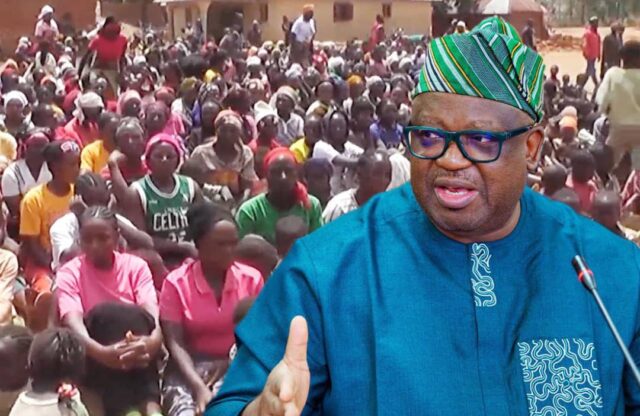
Following a series of deadly attacks that have shaken Plateau State, Governor Caleb Mutfwang has announced immediate security measures, including a ban on night grazing and restrictions on motorcycle movement.

During a state-wide broadcast on Wednesday, Governor Mutfwang condemned the violence as “coordinated acts of terror” with the intention of displacing residents from their ancestral lands and eroding their right to live in peace.

To curb the violence, he also prohibited the transportation of cattle by vehicle after 7pm and imposed a state-wide restriction on motorcycle use from 7pm to 6am.

Referencing past tragedies, Mutfwang said, “The tragic echoes of Dogo Na Hawa, Riyom, Barkin-Ladi, Mangu, and the Christmas Eve massacres in Bokkos remain vivid. The cycle continues, but it must not endure. Enough Is Enough.”

He vowed not to let Plateau State succumb to fear or normalize bloodshed.

“As your governor, I stand resolved — Plateau shall not be overrun by fear, nor shall we accept this culture of bloodshed as the new normal,” he declared.

“My administration is intensifying efforts to protect our people and enforce the rule of law across all local governments.”

The measures, effective April 16, include a statewide ban on night cattle grazing, a prohibition on cattle transportation after 7pm, and restricted motorcycle use during nighttime hours.

Addressing residents directly, Mutfwang said, “My Dear People of Plateau, I speak to you not just as your Governor, but as your brother — one who deeply feels the pain and sorrow that has again darkened our land.”

The latest violence struck Zikwe Village in Bassa LGA late on Sunday, April 13th, when unknown gunmen launched a brutal night attack.

The following day, Kimakpa village in Miango district witnessed similar horror, where at least 50 people were reportedly killed.

“There was no specific target. They were just shooting,” said 25-year-old survivor Peter John. Speaking from a hospital bed, he recounted how he fled by climbing onto the roof after gunmen stormed his family home around 10:00 pm.

Tragically, his sister, her daughter, his older brother, and a nine-month-old niece were all killed.

“They shot and killed my younger sister and her daughter right in front of me,” he recalled.

The recurring conflict between farmers and herders in Plateau is often inflamed by competition over land, compounded by climate change, illegal mining, and land grabbing.

The religious and ethnic divide — with Christian farmers and predominantly Fulani Muslim herders — adds further complexity.

John and other witnesses told AFP that the attackers spoke the Fulani language. While a local herder group condemned the violence, they also claimed their own communities were under attack from farmers.

So far, no arrests have been made, and authorities have yet to establish a motive for the fresh wave of violence.

“This is not an isolated conflict between farmers and herders,” Mutfwang emphasized. “What we are witnessing is a systematic and premeditated campaign,” alleging that the attacks had external “sponsors.”

He encouraged communities to protect themselves lawfully and urged vigilante groups to “organize night patrols in coordination with the security agencies”.

Peter John said he attempted to call local vigilantes during the attack but received no help. “It was too late,” he said.

His seven-year-old nephew, suffering machete wounds to the neck and head, lay nearby in severe pain.

Earlier that day, security forces had reportedly been stationed in Kimakpa due to rising insecurity, but they departed before nightfall.

“The attackers came, shouting ‘Allahu Akbar’ (‘God is Greater’), and began shooting, killing people, and burning houses,” John added.

Another victim, Diwe Gado Diwe, described the event as “one of the worst experiences” of his life. His cousin was among the dead, and his brother later died in the ICU after being attacked.

“She told me not to come,” Diwe said of a call from his sister warning him to stay away during the assault.

“I tried calling the vigilante group, but the line didn’t go through.”

Jessica John, 45, sat beside her son, Saryie John, in the hospital, awaiting surgery.

He had returned home with a friend after fleeing the house earlier.

The friend was killed; Saryie survived, though he has a bullet lodged in his chest.

Google search engine

Enugu Govt Committed To Responsible, Tech-Driven Gaming Regulations – Commission

Governor Mbah of Enugu State, 

The Enugu State Government has reaffirmed its dedication to fostering responsible and technology-driven gaming and lottery operations within the state.

This was made known by the Executive Secretary of the Enugu State Gaming Commission, Prince Arinze Arum, during a press briefing held on Wednesday in Enugu.

The briefing marked the official commencement of activities leading up to the 2025 Enugu International Gaming Conference.

The conference is scheduled to take place on July 30 and 31, 2025, at the International Conference Centre, Enugu, with the theme: “From Unification to Diversification – Shaping Nigeria’s Gaming Future.”

Arum noted that the state has been deploying innovative technologies and applications to ensure that regulations in the gaming and lottery sector are effectively enforced and remain seamless.

According to him, “With the help of technological devices and innovations, the commission’s monitoring and sanctioning of unethical practices is top-notch and with the speed required to retain confidence in the gaming and lottery sector.”

He emphasized the Commission’s proactive role in promoting a well-regulated environment.

“As a Commission, we remain committed to our role as a progressive and proactive regulator.

“We believe that fostering a well-structured, transparent, and socially responsible gaming environment is essential to driving sustainable development within the sector and unlocking its full economic potential.”

Speaking on the significance of the upcoming conference, Arum said the theme captures the evolving dynamics within the Nigerian gaming industry.

“The theme reflects not only the current trajectory of the gaming sector in Nigeria but also the bold conversations in response to growing diversity of players, regulators, technologies and jurisdictional realities that characterise the industry,” he said.

He further observed that the gaming industry in Nigeria is undergoing a major shift.

“From the once monolithic structure of centralised regulation, we are now witnessing a shift towards state-led frameworks, technological adoption and deeper socio-economic implications.

“This diversification, though challenging, offers a unique opportunity for innovation, inclusion, and growth; particularly when guided by collaboration and shared values.”

According to Arum, the 2025 Enugu International Gaming Conference will bring together stakeholders from across Nigeria and beyond, including regulators, operators, technology providers, legal experts, financial institutions, and civil society organizations.

“Our collective goal is to create a platform for open dialogue, policy harmonization and the advancement of responsible gaming practices,” he said.

He revealed that several international gaming and lottery companies from the United States, South Africa, and Europe—as well as prominent players in the industry—are expected to attend the two-day conference.

Highlighting the key features of the event, Arum said it would include panel sessions, exhibitions of emerging technologies and regulatory solutions, and the unveiling of the Commission’s Good Cause Projects aligned with international best practices.

“Others are: strategic roundtables with government agencies, investors, and civil society; and targeted networking opportunities for startups, innovators, and operators seeking expansion into the South-East and Nigerian gaming/lottery market,” he said.

“The conference promises to be more than just a gathering as it will be a catalyst for reform, innovation, and partnership,” Arum concluded.

Google search engine

Businessman Bags Four-Year Jail Term For Rejecting Naira In Jewelry Deal


Justice Alexander Owoeye of the Federal High Court in Ikoyi, Lagos, on Tuesday convicted and sentenced businessman Uzondu Chimaobi to four years in prison for refusing to accept the naira as legal tender in a commercial transaction.

Chimaobi was arraigned by the Lagos Zonal Directorate 1 of the Economic and Financial Crimes Commission (EFCC) on February 5, 2025, over a two-count charge stemming from a dollar-based jewelry sale.

One of the charges read: “That you, Precious Chimaobi Uzondu, on the 10th of December 2024, in Lagos, within the jurisdiction of this Honourable Court, refused to accept Naira (Nigeria legal tender) by accepting the sum of $5700 (Five Thousand Seven Hundred USD) as a means of payment for a purchase of a cartier diamond bracelet with serial number (12345678) and you, thereby, committed an offence contrary to Section 20 of the Central Bank of Nigeria Act, 2007.”

Initially, Chimaobi pleaded not guilty, prompting a full trial. The prosecution called its first witness, EFCC operative Owolabi Oyarekhua Jude, who offered details of the investigation.

Led in evidence by prosecuting counsel H.U. Kofarnaisa, Jude told the court: “The Commission received intelligence on the activities of a jewellery company called Unlimited Jewellers Limited, whose owner is one Uzondu Precious Chimaobi.”

He explained further: “The Company, which deals in jewellery at Atlantic Mall, Chevron Drive, Lekki, Lagos, intentionally tags and sells its products in Dollars as against the CBN Act, 2007, which stipulates Naira as the only legal tender in Nigeria.”

According to him, “Subsequently, a covert operation was carried out, where an undercover operative of the Commission disguised as a customer to purchase a Diamond Nail bracelet that was tagged $6000 and bought it for $5700.

“The company refused to receive Naira and demanded Dollars as a means of payment. The payment was made, and the receipt was issued in dollars. The owner of the company was arrested and taken to the Commission’s office.”

At the resumed hearing on April 14, 2025, Chimaobi reversed his initial plea and opted to plead guilty to the charges.

Following the plea change, Kofarnaisa asked the court to rely on the testimony earlier given and to admit the accompanying evidence.

Consequently, “Kofarnaisa prayed the court to rely on the evidence earlier given by the investigating officer and admit the same in convicting the defendant.”

The court also admitted Chimaobi’s statement and additional evidence submitted by the prosecution.

Justice Owoeye adjourned proceedings to April 15 for judgment. Upon resumption, he delivered the ruling, finding Chimaobi guilty on both counts.

“Justice Owoeye then adjourned till Tuesday, April 15, 2025, for ruling. Delivering judgment, they found the defendant guilty and gave him an option of a fine of N50,000 (Fifty Thousand Naira) on count one.”

The judge sentenced the businessman to four years’ imprisonment, offering an alternative fine of N600,000 on the second count.

Furthermore, his Cartier diamond wristwatch was ordered forfeited to the federal government.

Chimaobi’s conviction stems from his refusal to accept naira in a transaction where he instead received $5,700 for a Cartier diamond bracelet, violating the Central Bank Act’s stipulation that naira remains the only legal tender in Nigeria.

Google search engine

Falana Loses In Court As Judge Strikes Out His Defamation Suit Against VDM

Verydarkman, 

A Lagos High Court sitting in Ikeja has struck out the defamation suit filed by Senior Advocate of Nigeria, Femi Falana, and his son, the artist Folarin Falana (popularly known as Falz), against controversial social media personality Martins Otse, also known as Verydarkblackman (VDM).

The case, which centered around a video published by VDM on September 24, 2024, accused the Falanas of allegedly receiving N10 million from Idris Okuneye (also known as Bobrisky) to obstruct justice.

The plaintiffs had filed separate lawsuits, each seeking N500 million in damages over the viral video content.

According to their statements, the father and son argued that the allegations were entirely untrue and unverified, yet VDM published them with the intent to damage their reputation.

They also noted that the said video was still live on the blogger’s platforms, continuing to cause harm.

“In their suits, the father and son submitted that the defendant knew all his comments were unverified and not true, yet he proceeded to publish same to injure their reputation recklessly.”

“They also stated that the alleged defamatory publication is still trending on the defendant’s online handles and pages and as such, the injury to their reputation continues as long as the publication remains online.”

When the matter came up on Tuesday, neither the plaintiffs nor the defendant appeared in court.

However, the defense counsel, Niyi Alagbe, appearing on behalf of Marvin Omorogbe, informed the court that an application for a stay of proceedings had already been filed before Justice Fimisola Azeez.

In response, Omotayo Olatunbosun, counsel for the Falanas, acknowledged receiving the application late Monday afternoon, at about 4:15 p.m.

He argued that the application was a delay tactic and urged the court to proceed with hearing the preliminary objection, which was ready for argument.

But presiding judge, Justice Matthias Dawodu, expressed concern that the application referenced was not found in the court file. He also questioned the relevance of proceeding with the case when the substantive suit was already before another judge.

“Justice Matthias Dawodu said the application in question was not in the file and wondered why he was being troubled with the case when the substantive suit was before another court.”

Consequently, the judge ruled that continuing with the matter would be unnecessary and academic.

“Consequently, this suit is hereby struck out,” he declared.

Google search engine

Enugu International Airport Set For 80-Year Concession Deal


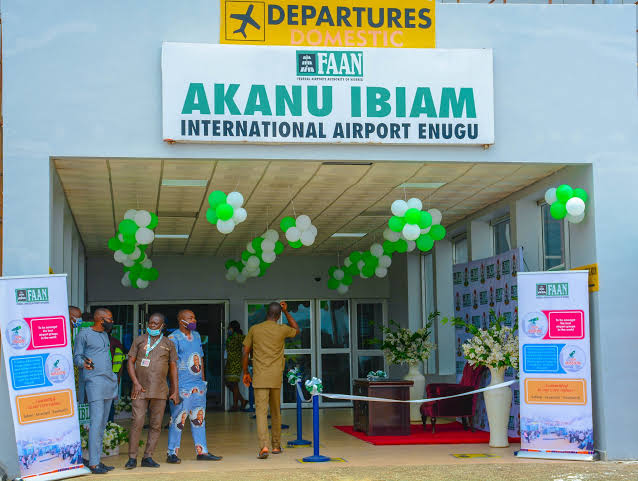
The federal government is finalizing a Public-Private Partnership (PPP) deal to hand over management of the Akanu Ibiam International Airport (AIIA) in Enugu to Aero Alliance Consortium under an 80-year concession agreement.

According to Daily Sun, which reviewed a draft of the 64-page agreement, the long-term concession includes significant provisions for airport upgrades, operational management, and personnel transition.

One key element, outlined in Clause 5.1, is the transfer of all current FAAN (Federal Airports Authority of Nigeria) employees at the airport to Aero Alliance for a 24-month transitional period.

“There will be no forced redundancies,” the contract states, adding that any employee found redundant after restructuring “will be reabsorbed by the federal government,” which will also remain responsible for their pensions and gratuities.

The concession is set to last 80 years from the “Effective Date,” with an option to extend for an additional 20 years based on the performance of the concessionaire.

“The concession period (the ‘Concession Term’) shall be eighty (80) years, commencing on the Effective Date and ending on the Eightieth (80th) anniversary (subject to any extension in accordance with this Agreement) or, if earlier, until this Agreement is terminated in accordance with this Agreement,” the agreement states.

Revenue-sharing details appear in Clauses 2.1.4 and 2.2.2. Aero Alliance is expected to remit 1% of net income to the Infrastructure Concession Regulatory Commission (ICRC).

The consortium will have full control over non-aeronautical revenue channels—such as cargo handling, rentals, parking, and lounge fees—without needing government approval, as long as legal thresholds are not violated.

However, “aeronautical tariffs, including landing fees and passenger service charges, must be submitted for government approval.”

These funds must then be allocated to operational costs, maintenance, capital investment, debt servicing, and taxes.

The contract includes mechanisms for oversight. Clauses 14.7 and 15 require the submission of quarterly financial reports, while the government retains the right to audit revenue and expenditures.

Force majeure provisions are laid out in Clause 16.7. In cases of natural disasters, each party will cover its own costs. If disruptions arise from strikes or civil unrest, the concessionaire pays up to insurance limits, with any excess shared equally.

In political events, such as discriminatory legislation, the government will fully compensate the concessionaire.

Termination compensation is addressed in Clause 18. If the government defaults, it must cover outstanding loans, third-party obligations, equity investments, and projected returns.

Clause 2.2 spells out mandatory upgrades. These include full runway rehabilitation, terminal expansion, installation of ICAO-compliant navigation and communication systems, and baggage handling improvements to IATA standards.

Additional works include VIP lounge development, retail spaces, parking, fire and lighting systems, and emergency infrastructure, all under NCAA guidelines.

Clause 8 insists on preventive maintenance and maintaining “optimum” IATA service standards for facilities throughout the concession. The contract allows for optional enhancements such as real estate projects, branding, and technology vendor selection.

Should Aero Alliance fail to complete key upgrades, the government can terminate the deal and seize assets under Clause 19.5. Meanwhile, Clause 2.3 empowers the NCAA to levy fines for safety violations.

Clause 18.6 states that if legal changes require further improvements, the concessionaire will cover the costs when “commercially reasonable.”

If the impact is significant and the costs are deemed unreasonable, both parties will split the expenses.

Oversight will be handled by a five-member compliance committee—three from the government and two from the concessionaire. If decisions are deadlocked, the issue will go to the ICRC for a binding resolution within five business days.

Quarterly updates are mandatory under Clause 13.4, covering financials, operations, maintenance, and progress on KPIs. The agreement becomes effective once both sides confirm in writing that conditions in Clauses 4.1.1 and 4.1.2 have been fulfilled.

Before implementation, approval must come from the Federal Executive Council, and the ICRC must issue a Certificate of Compliance. The concessionaire must also present proof of financing.

If all conditions are not met within 180 days—extendable to 270—either side may withdraw from the agreement.

Google search engine

Reports Of Mass Killing In Enugu Fake, Misleading, Attempt To Cause Panic – Police


The Enugu State Police Command has strongly dismissed recent media reports alleging a “reign of terror” and the killing of 25 persons by insurgents in the state, describing the claims as “false, sensational, and mischievous.”

In a statement issued by the Police Public Relations Officer, SP Daniel Ndukwe, the Command described the allegations as not only misleading but a calculated attempt to cause panic among residents and undermine the ongoing efforts of security agencies in safeguarding lives and property.

“The report in question is entirely baseless,” said SP Ndukwe.

“It contains fabricated names and incidents that have never occurred in our jurisdiction. Such speculative reporting lacks credibility and is detrimental to public peace.”

SP Ndukwe further noted that the Commissioner of Police, CP Mamman Bitrus Giwa, while acknowledging the critical role of the media in disseminating information, condemned the spread of unfounded claims.

“While we respect the media’s duty to report news, we strongly condemn the circulation of misinformation that misleads the public and incites unnecessary fear,” CP Giwa stated.

He reassured residents of the state that the police, in collaboration with other security agencies, remain committed to ensuring peace and security across Enugu.

“We will continue to work tirelessly to ensure the safety and security of all citizens in Enugu,” he added.

Google search engine

2027: All Plans Concluded For Kwankwaso To Rejoin APC, Says Ganduje


National Chairman of the All Progressives Congress (APC), Dr. Abdullahi Umar Ganduje, has said that Senator Rabiu Musa Kwankwaso, presidential candidate of the New Nigeria Peoples Party (NNPP) in the 2023 election, is on the verge of returning to the APC.

Ganduje made the statement on Tuesday at the APC National Secretariat in Abuja while addressing members of the Tinubu Support Groups (TSG).

Describing the former Kano governor as politically isolated, Ganduje likened him to “a general who is wandering in the wilderness after losing his foot soldiers in the battle front.”

The former two-term governor of Kano emphasized that Kwankwaso’s influence has significantly declined, pointing to the recent wave of defections by his loyalists in both Kano State and the National Assembly.

“That party called the NNPP is dead and it will soon be buried. The coffin where we would put the dead body of the party has already been constructed,” Ganduje declared.

He went further to say, “What remains of the party now is to dig the grave and they are already digging it. I assure you that their Senators, House of Representatives, state Assembly members, their SSG all have resigned and are all coming to the party soon.”

According to Ganduje, Kwankwaso is among those seeking a political return to the APC fold.

“Even the so-called leader of the party (Kwankwaso), he too after losing everywhere wants to come back to APC. We will welcome him when coming home after losing his foot soldiers,” he added.

Ganduje also dismissed ongoing efforts by opposition politicians to form a coalition, asserting that no other platform offers better prospects for Nigerians than the APC.

“The ongoing gang-up by a coalition of politicians will fail,” he said, reinforcing his belief in APC’s continued dominance in the national political terrain.

Google search engine

CBEX: Nigerians In Tears As Ponzi Scheme Fails, Office Looted


Desperation and heartbreak filled the air as angry Nigerians stormed the Ibadan office of CBEX, a suspected Ponzi scheme, after its abrupt collapse earlier this week.

Once celebrated on social media as a golden gateway to “financial freedom,” CBEX lured thousands with screenshots of huge balances—some as high as $85,000.

But by Tuesday morning, those same accounts had been wiped clean, leaving investors with no access to their funds—unless they complied with a suspicious new directive: pay more money to withdraw existing balances.

“The small amount I made in Libya was invested in it. I was made to believe I would make twice that amount from the scheme,” said Bolarinwa, a distraught Libya returnee, sobbing outside the company’s Oke-Ado office in Ibadan, Oyo State.

She explained that her investment was largely made up of loans from friends now expecting repayment.

The situation escalated quickly when angry investors, denied audience with CBEX officials, began looting the office.

Videos circulating on social media show people carrying out chairs, tables, and other items in frustration.

“They said we should still wait so that they can attend to us,” Bolarinwa added through tears.

Another victim shared his story on X (formerly Twitter), lamenting that he had invested his savings in the scheme with dreams of launching his music career.

“All in the name of making enough money to push my unreleased song, Alhamdulillah,” he wrote. “I woke up today and discovered that all my $4000 is gone. At this point, I am lost.”

As panic spread, CBEX administrators released a video—spoken in Pidgin English—offering a controversial “solution”: investors could recover their funds by making new payments.

“If you have below $8,000 in your CBEX account, you have to pay $100 to withdraw your money. If you have above $8,000, then you will have to pay $200 to withdraw it,” said a male voice in the video.

But even within the CBEX community, skepticism was mounting.

“If you fall for the new scam with the hope of getting your investment, don’t be surprised that they will come up with a new idea to milk you further without you achieving your aim,” a concerned member warned.

“Accept your loss and move on. CBEX is gone, it has crashed and there’s nothing you can do about it.”

The crash comes amid renewed warnings from the Securities and Exchange Commission (SEC), which recently cautioned Nigerians against patronizing unlicensed digital investment platforms promising unrealistic returns.

“We welcome innovation, but it must occur within a regulated environment that protects investors and maintains the integrity of our market,” said Dr. Emomotimi Agama, Director General of the SEC.

CBEX now joins a growing list of fraudulent platforms that have left scores of Nigerians devastated, many with borrowed funds and shattered hopes.

Google search engine

MOST COMMENTED

- Advertisement -
Google search engine