Home Blog Page 671

Cross River Council Chairman Impeached

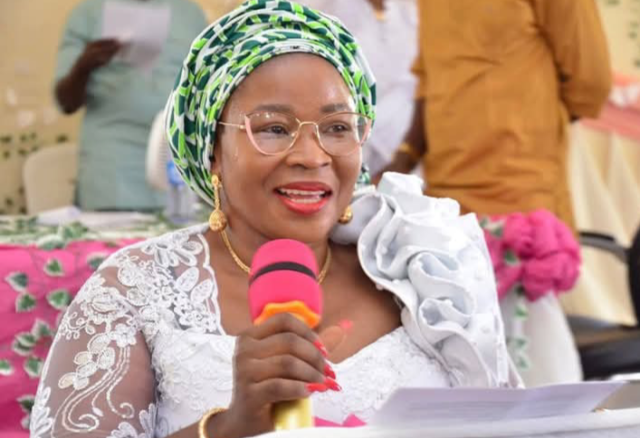
Theresa Ushie, 

The Legislative Arm of Bekwarra Local Government Area has removed its chairman, Hon. Theresa Ushie, over allegations of gross misconduct and abuse of office.

Announcing the decision on March 20, 2025, Council Leader Hon. Thompson Inah stated that Ushie’s leadership had stifled development and undermined Governor Prince Bassey Otu’s “People First” agenda.

The councillors accused Ushie, popularly known as the Queen of Bekwarra Nation, of financial mismanagement, lack of transparency, and administrative high-handedness.

Specific allegations included secrecy in revenue management, unilateral execution of projects, and confrontations involving her and her family members.

One of the key grievances was the denial of proper office spaces for councillors, delays in salary payments through an inaccessible bank, and the alleged mismanagement of Christmas palliatives meant for the community.

Attempts at reconciliation, including interventions from key stakeholders, reportedly failed.

The impeachment process was carried out under the Cross River State Local Government Law, with nine out of ten councillors signing the resolution.

A formal notice has been sent to Governor Bassey Otu and Acting Governor Rt. Hon. Peter Odey.

In response, the state government has scheduled an emergency meeting on March 24, 2025, to address the crisis.

The Acting Governor has directed that the “status quo before the crisis” be maintained, leaving uncertainty about the next steps in Bekwarra’s leadership.

Attempts to obtain a response from Hon. Ushie were unsuccessful, as she did not return calls.

Google search engine

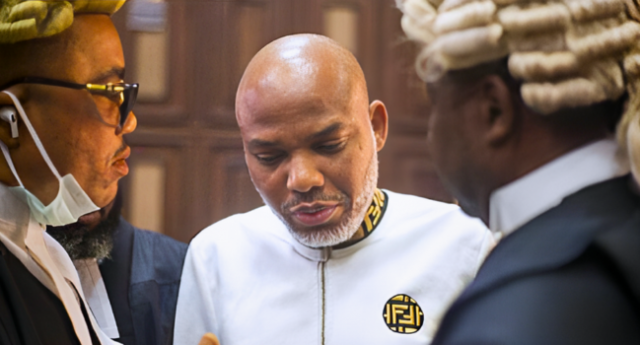
Nnamdi Kanu Apologizes For Remarks Against Judge, Others


The leader of the proscribed Indigenous People of Biafra (IPOB), Nnamdi Kanu, has formally apologized for his recent criticisms of the Federal High Court and Justice Binta Nyako.

Through his new legal representative, Kanu Agabi, SAN, the IPOB leader also extended his apology to the Federal Government’s counsel, Adegboyega Awomolo, SAN.

Agabi, a former Attorney-General of the Federation (AGF) and Minister of Justice, further apologized to Kanu’s former legal team, previously led by Aloy Ejimakor, acknowledging that the attacks on Justice Nyako were unwarranted.

Speaking on behalf of Kanu before Justice James Omotosho, Agabi explained that his client had been deeply frustrated for a long time, leading to his outbursts.

He admitted that the criticisms directed at Justice Nyako and others were unjustified.

He also expressed regret over the verbal attacks on Kanu’s legal team, adding that the prosecution team, led by Awomolo, and the chairman of the Body of Benchers, were held in high regard by his client.

Agabi described Kanu as a good man who, like everyone else, is prone to making mistakes.

He urged the court to recognize that errors are inevitable and emphasized the importance of seeking resolution rather than destruction.

In response, the prosecution accepted Kanu’s apology and assured the court of their commitment to ensuring a swift hearing of the case.

Awomolo acknowledged the emotional weight of the matter and the impact it has had on Kanu.

Justice Omotosho, reflecting on the prolonged nature of the trial, noted that Kanu’s frustration may have contributed to his remarks.

He pointed out that Kanu was 47 years old when he was first arraigned in 2015 and is now 57, still uncertain about his fate.

The judge suggested that the prolonged legal battle might have influenced Kanu’s statements and subsequently extended an apology to the prosecution on Kanu’s behalf.

Google search engine

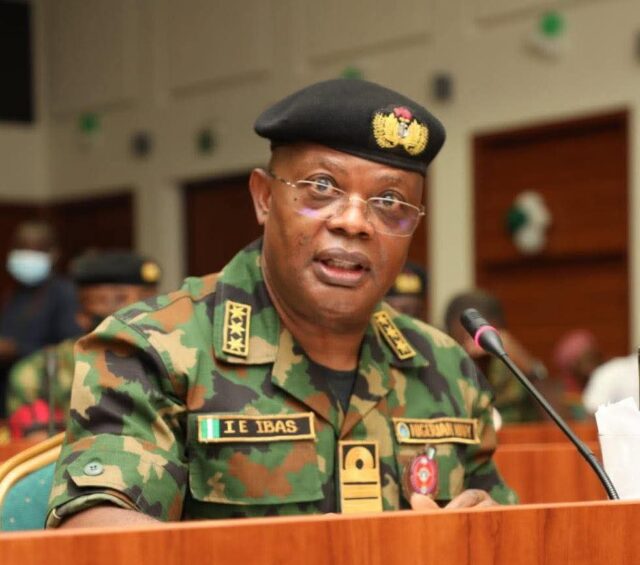
Rivers Sole Administrator Confirms Release Of Withheld Local Govt Allocations


The Sole Administrator of Rivers State, Vice-Admiral Ibok-Ete Ibas (retd.), has confirmed the release of local government allocations that had been withheld due to the state’s political crisis.

Following the crisis, the Supreme Court had placed a hold on the state’s allocation until the Rivers State House of Assembly properly appropriated the funds for use.

However, during a briefing at the Presidential Villa in Abuja on Wednesday, the Attorney-General of the Federation and Minister of Justice, Lateef Fagbemi, SAN, stated that the funds could be released if requested by the sole administrator.

Answering questions about whether the Federal Government would authorize the release of the state’s allocation, Fagbemi said, “If the administrator requests it, I will say it should be released to him. And to me, it will be in order for the release of that fund because the event of the extraordinary situation has brought them out of the normal situation of things.”

On Friday, during a meeting with Heads of Local Government Administrators in Port Harcourt, Ibas confirmed that the withheld funds had now been released.

He assured that necessary steps would be taken to promptly pay workers’ salaries and acknowledged the hardships faced by affected employees.

“I sincerely feel the pain of these workers, many of whom have endured months of financial strain. Let me assure that the withheld allocations have now been released, and I hereby issue a directive that all the necessary steps be taken to ensure that these salaries are paid with no further delay.

“As leaders, we must feel the pains of our people and offer them a more positive, inclusive, and transformative leadership. This is the mandate I have accepted, and it is the standard I expect from all of you.”

“To this end, I hereby direct further that all Local Government Areas furnish my office with wage bills by way of briefing through the office of the Head of Service.”

“This will enable me to acquaint myself with the situation, as this will enable me to deal with such matters. All such submissions should be supported with relevant documents to provide clarity and ensure accuracy.”

Emphasizing financial accountability, Ibas instructed all local government areas to submit their wage bills, along with the necessary supporting documentation, to the Head of Service’s office.

He reaffirmed his commitment to good governance, stating, “Good governance is not just a slogan but a commitment to changing the negative narrative within the next six months.”

Urging local government administrators to take responsibility for security in their areas, he said, “You must take the lead in ensuring security within your domains.”

In response, the President of the Nigeria Union of Local Government Employees and Administrator of Port Harcourt Local Government Area, Clifford Paul, commended the Federal Government for appointing Ibas, attributing the decision to his competence and leadership skills.

Paul acknowledged the state’s developmental progress despite political challenges and pledged his support for peace and stability.

He also urged the administrator to prioritize workers’ welfare.

Google search engine

Why I Opposed Emergency Rule In Rivers, Walked Out Of Chamber After Clash With Akpabio – Seriake Dickson


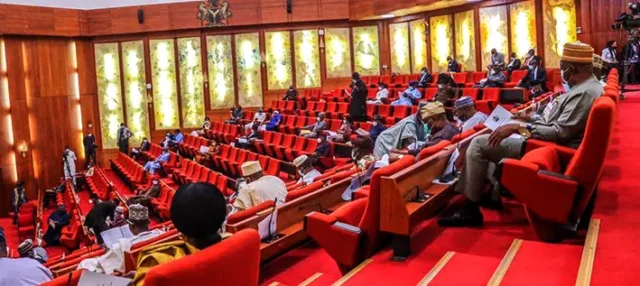
Bayelsa West senator, Seriake Dickson, walked out of the Senate chamber on Thursday shortly before the upper chamber approved the state of emergency in Rivers State.

The Senate gave its approval after a closed-door session that lasted for one hour and twenty minutes during Thursday’s plenary.

At around 1:40 pm, as senators returned from the closed-door meeting, Dickson, a member of the opposition Peoples Democratic Party (PDP) and former Bayelsa State governor, was seen leaving the chamber visibly upset.

Although he did not publicly state the reason for his abrupt exit, it was clear that he was uncomfortable with the agreement reached during the closed-door session.

Earlier, there was a disagreement between Dickson and Senate President Godswill Akpabio before the Senate moved into the private session.

The dispute began when Dickson raised a point of order, citing Order 135 of the Senate Rules, which mandates that the President of Nigeria must brief the Senate in a closed-door session on the circumstances necessitating a state of emergency.

Akpabio immediately interrupted him, referencing Dickson’s prior comments on television opposing the emergency rule even before the Senate had deliberated on it.

“I watched you on television. Listen to me; let’s not argue. If we argue, it won’t be good for any of us. We are all distinguished people. You’re a former governor and I am a former governor, please off the mic, please be seated,” Akpabio told Dickson.

Dickson complied and took his seat.

Akpabio then accused him of forming an opinion on the matter before the Senate had reached a conclusion.

“I watched you on television and you said ‘no matter what the Senate does, the Senate will never go with you. The Senate will not go with you.’ You said no matter what the Senate does, the Senate will not have your vote, that was what you said on the television.

“I am saying that if you’ve already made up your mind to talk on television when the Senate has not considered this issue. I am not arguing with you, please allow me to preside,” Akpabio added.

Despite the Senate President’s remarks, Dickson proceeded with his point of order, urging his colleagues to adhere to Senate rules.

He emphasized the importance of following procedural guidelines and reminded the chamber that the Senate is governed by two key documents: Nigeria’s constitution and the Senate Standing Rules.

“We must have national respect for all our colleagues and for you, particularly our presiding officer, and it should be reciprocal. The point of order is to draw the attention of the presiding officer and our colleagues to the specific provisions of our rules. Each one of us is guided by two documents, the Constitution of the Federal Republic of Nigeria and rules that govern our proceedings.”

“The proclamation has been read to us, and I want to draw your attention, Mr President, respectfully, and the attention of all our colleagues to the specific provisions of our rules, Order 135. It is very exhaustive. Once there’s a state of emergency declaration, there is a procedure,” he stated.

Akpabio later upheld Dickson’s point of order but clarified that the Senate Leader, Opeyemi Bamidele, had already planned to move for a closed-door session before Dickson raised his concerns.

The Senate then proceeded into the closed-door meeting, where the emergency rule was discussed and unanimously approved.

Order 135 of the Senate states, “The President shall, in a closed-door session, brief the Senate on the circumstances of the proclamation of a state of emergency.”

Meanwhile, the South-South Governors’ Forum had earlier opposed the state of emergency declaration in Rivers.

The forum’s chairperson, Governor Douye Diri of Bayelsa State, argued that the political situation in Rivers had not deteriorated to the point of warranting emergency rule, considering the provisions of Section 305(3) of the Nigerian Constitution.

Diri explained that Section 305(3) specifies that a state of emergency should be declared only under conditions such as war, external aggression, or imminent invasion.

Google search engine

Steer Clear Of Partisan Politics – Rivers Administrator Orders Traditional Rulers


The Sole Administrator of Rivers State, Ibok-Ete Ibas, has called on traditional rulers to avoid partisan politics, emphasizing their role in maintaining peace and stability across the state.

During a meeting with traditional leaders at the Government House in Port Harcourt, Ibas, a retired vice admiral and former Chief of Naval Staff, expressed his strong commitment to the Niger Delta region and underscored the importance of Rivers State in Nigeria’s development.

Reflecting on the ongoing political instability in the state, he expressed concern over the unrest.

“As a former naval chief, my duty was to protect lives, and I remain committed to restoring peace in Rivers State,” he said.

He assured the traditional rulers that his administration would work diligently to restore stability and uphold the state’s reputation.

Stressing his primary mandate of ensuring peace, he noted that Rivers State is too important to be engulfed in turmoil.

“A society without order is a society without progress,” he added.

Ibas described traditional rulers as a crucial link between the government and the people and urged them to play an active role in de-escalating tensions within their communities.

He cautioned them against political affiliations in both words and actions, while also warning against involvement in cultism and vandalism.

Emphasizing their role in community security, he encouraged the rulers to maintain open communication with their subjects.

“Security is the responsibility of all, not just the government,” he stated, making it clear that his administration would not tolerate disorder.

While acknowledging the challenges ahead, Ibas reaffirmed his willingness to collaborate and receive suggestions that would help in stabilizing the state.

In response, the Chairman of the Rivers State Council of Traditional Rulers, HRM Chike Worlu-Wodo, assured Ibas of their full cooperation.

He praised the appointment as a positive step for the state and reiterated the commitment of traditional rulers to upholding peace in their respective communities.

“As traditional rulers, our primary duty is to ensure peace in our kingdoms, clans, and communities,” he said.

He encouraged Ibas to see himself as a mediator, likening his role to that of a peacemaker resolving conflicts.

The monarch wished the administrator success in his mission, stating that Rivers State is in dire need of peace.

“We are not in doubt of your ability, which is why you were appointed,” he concluded.

Google search engine

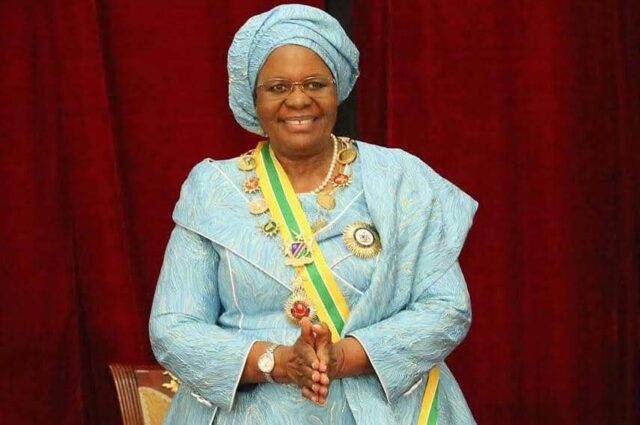
Just In: Namibia Swears In First Female President


Namibia is set to make history as Netumbo Nandi-Ndaitwah is sworn in as the country’s first female president.

Her inauguration on Friday will extend the ruling South West Africa People’s Organisation (SWAPO)’s decades-long hold on power, following her victory in the November 2024 elections.

Nandi-Ndaitwah, 72, secured 58 percent of the vote in an election marred by logistical failures and delays, cementing her position as the leader of the uranium-rich southern African nation.

She will take over from outgoing President Hage Geingob, continuing SWAPO’s dominance since Namibia gained independence from apartheid-era South Africa in 1990.

The ceremony in Windhoek is expected to draw leaders from neighboring countries, including Angola and South Africa.

A longtime member of SWAPO, Nandi-Ndaitwah has been active in Namibian politics for decades.

She previously served as vice president and held key government roles, including foreign minister from 2012 to 2024.

During her time in exile in the Soviet Union during Namibia’s liberation struggle, she developed ties with various international allies, including North Korea.

Throughout her career, she has maintained a conservative stance on social issues.

She opposes abortion except in exceptional circumstances, and Namibia continues to outlaw same-sex marriage under her leadership.

Nandi-Ndaitwah’s victory came amid growing dissatisfaction, particularly among young voters.

The opposition Independent Patriots for Change (IPC) mounted a strong challenge, securing 25.5 percent of the vote, but was unable to break SWAPO’s grip on power. A key issue in the election was the country’s high unemployment rate, which stood at 44 percent among young people in 2023.

Addressing economic concerns, Nandi-Ndaitwah has pledged to create 500,000 jobs over the next five years.

In a pre-inauguration interview with South Africa’s SABC, she emphasized the need for substantial investment, estimating that 85 billion Namibian dollars ($4.67 billion) would be required.

Key areas for job creation include agriculture, fishing, and the creative and sports industries.

Despite political divisions, she has called for national unity, urging Namibians to work together to address economic and social challenges.

“Campaigns are campaigns, but once they are over, we must come together to build our country,” she said.

Namibia is one of the world’s top uranium producers, supplying nuclear power industries in countries like France.

It also possesses significant diamond reserves and untapped natural gas and oil deposits. The country has been exploring opportunities in renewable energy, particularly solar and wind, but reports suggest Nandi-Ndaitwah has expressed skepticism about the sector’s viability.

Her presidency marks a significant milestone for gender representation in Namibia, breaking barriers in a region where female leaders remain rare.

“It’s a good thing that we are breaking the ceiling, we are breaking the walls,” she told SABC.

Google search engine

2027: Peter Obi’s Loyalists Lobbying For SDP Ticket – Agunloye


As Nigeria inches closer to the 2027 presidential election, political maneuvering has intensified, with key figures seeking viable platforms among the country’s 19 registered parties.

Among these, the Social Democratic Party (SDP) has emerged as a hub of activity, with seven presidential aspirants already lined up, according to the party’s National Secretary, Olu Agunloye.

“We have eight presidential aspirants; it could be 10. Seven of them are on our platform,” Agunloye revealed on Inside Sources with Laolu Akande, a socio-political program aired on Channels Television. While he refrained from naming the aspirants, he emphasized the party’s determination to retain all interested contenders, ensuring they do not defect to rival parties.”

Adding to the intrigue, Agunloye confirmed that allies of 2023 Labour Party (LP) presidential candidate Peter Obi had approached the SDP, exploring the possibility of his future candidacy under the party.

“Obi’s people came to us to say if Obi comes, would you take him? Of course, we told them: ‘Yes’. I was in that meeting. Some of them are with us saying that they are preparing the ground but you have to join SDP. You cannot be in the Labour Party and be telling us Obi is coming without joining us otherwise we can’t open our doors for you. But Obi may have no plan to come or he may want to come. People do all of this but where we stand is that we must do well in our platform,” he stated.

The buildup to 2027 has seen opposition forces coalescing in a bid to challenge the ruling All Progressives Congress (APC) and its leader, President Bola Tinubu.

On March 20, 2025, prominent opposition figures, including former Vice President Atiku Abubakar, Obi, and ex-Kaduna State Governor Nasir El-Rufai, formally announced a coalition aimed at unseating the incumbent administration, which has faced criticism over rising inflation and economic hardships.

The coalition is banking on the numerical strength of votes secured by Atiku and Obi in 2023, when they collectively garnered over 12 million votes, more than four million above Tinubu’s total.

However, with internal crises plaguing both the PDP and LP, along with discontent among APC members, the SDP has emerged as a viable alternative for political heavyweights.

SDP’s Agunloye confirmed the party’s openness to new entrants.

“Our gates are open. So, if all of them want to come, we will take them,” he said. However, he stressed that new arrivals would not be allowed to overshadow long-standing party members.”

“We will not allow people to come and sweep the people out from the place. We must synergize; we must maximize the opportunities because these are people with a lot of experience.”

“Whatever anybody wants to say about El-Rufai, you cannot take his experience away, you cannot take his expertise away, you cannot take his energy away. And he has money because anybody who is able to win elections has money –whether he is able to raise it or has it from inheritance. So, it is a plus that he joins the party but we must find a way to work together with him.”

The SDP official also confirmed that El-Rufai’s defection from the APC to the SDP had triggered an influx of new members.

“I know that (Hamza) Al-Mustapha has come because he came to the office to collect our membership card. El-Rufai has come and a couple of his former commissioners, and associates.”

“Several other people called and said they don’t know El-Rufai but because he came, they want to come. I am the secretary of the party. If your name is not on our book, you have come but you have not entered,” he explained.

Rumors have swirled about Atiku potentially joining the SDP, but Agunloye remained cautious.

“I’ve been hearing that Atiku is coming. Atiku and I are friends since the time he was vice president. He still spoke to me about one week or less ago; he didn’t say: ‘I am coming’.”

With multiple high-profile politicians eyeing the SDP’s presidential ticket, Agunloye acknowledged the complexity of the situation.

“Just imagine Peter Obi, Atiku, El-Rufai, (Attahiru) Bafarawa come on the same platform, you have to find a balance,” he noted.

Regarding zoning of the party’s 2027 ticket, he indicated that the decision would be made collectively.

“We need to strengthen all the structures in SDP. We need to preserve the integrity of the SDP. We need to have a situation where everybody has his responsibility. Because they have come, we are not going to merge but we must be honest. It is only when we deal honestly that Peter Obi can sit down, Adewole (Adebayo) can sit down, Atiku can sit down.”

Google search engine

BREAKING: Supreme Court Affirms Anyanwu As PDP National Secretary


The Supreme Court has reinstated Senator Samuel Anyanwu as the National Secretary of the Peoples Democratic Party (PDP), overturning the decision of the Appeal Court, Enugu Division.

In a unanimous judgment, a five-member panel of the apex court ruled that issues concerning the leadership or membership of a political party fall under internal party affairs and should not be subject to judicial intervention.

The decision nullifies the earlier ruling of the Federal High Court in Enugu, which had affirmed Anyanwu’s removal following a suit filed by Aniagwu Emmanuel.

Delivering the lead judgment, Justice Jamilu Tukur stated that the Federal High Court lacked jurisdiction to hear the case, as the necessary exceptional circumstances were not present.

The court clarified that such circumstances include cases where the Nigerian Constitution explicitly grants jurisdiction, when a crime has been committed, or when contractual rights have been violated.

Additionally, the Supreme Court pointed out that the failure to include Sunday Udeh Okoye as a party to the case meant that Aniagwu Emmanuel lacked the legal standing to file the suit in the first place.

Google search engine

Senate, Reps Face Backlash Over Rivers’ State Of Emergency Approval


The National Assembly (NASS) has come under heavy criticism following its approval of President Bola Tinubu’s declaration of a state of emergency in Rivers State.

Nigerians across different sectors have expressed outrage over what they describe as a hasty and undemocratic endorsement of the president’s decision, which includes appointing Vice Admiral Ibok-Ete Ibas (rtd) as the state’s sole administrator.

Despite calls from opposition leaders and concerned citizens urging lawmakers to reject the emergency declaration, members of both chambers unanimously approved it through a voice vote.

The Senate, in addition, invoked Section 11(4) of the Constitution, giving itself the authority to oversee the administration of Rivers State.

In the House of Representatives, an attempt by Obi Agwuncha to call for a headcount of lawmakers present was ignored, while the motion was amended to transfer legislative authority over Rivers State from the Federal Executive Council (FEC) to the National Assembly.

Prior to the deliberation, prominent figures, including Labour Party’s 2023 presidential candidate Peter Obi and former Aviation Minister Osita Chidoka, had spoken against the state of emergency.

Obi had urged Labour Party lawmakers to oppose the decision, while Chidoka argued that security agencies should be strengthened to maintain peace rather than resorting to emergency rule.

He also suggested that the Nigerian Governors’ Forum (NGF) should play a more active role in resolving the crisis.

However, the Senate President, Godswill Akpabio, and Speaker of the House, Tajudeen Abbas, stood firm on their decision.

After a closed-door session lasting over an hour, the Senate approved the emergency declaration and set up a joint ad hoc committee to oversee the state’s administration.

The House of Representatives followed suit in a swift one-hour session, where initial opposition to the decision was quickly overruled.

President Tinubu, in a nationwide broadcast, had earlier suspended Governor Siminalayi Fubara, his deputy Prof. Ngozi Nma Odu, and members of the Rivers State House of Assembly for six months.

Lawmakers in the House debated modifications to the emergency rule, with Minority Whip Ali Isah suggesting that the emergency should be reviewed periodically instead of lasting a fixed six months. His recommendation was adopted.

In response to accusations that he failed to address security concerns in the state, Governor Fubara, through his Chief Press Secretary Nelson Chukwudi, denied any role in the recent threats by militants and dismissed claims that he neglected rebuilding the demolished House of Assembly complex.

He blamed ongoing tensions on comments made by FCT Minister Nyesom Wike, stating that Wike’s refusal to apologize for remarks against the Ijaw people fueled unrest in the state.

Criticism of the National Assembly’s handling of the situation has continued to mount.

The Peoples Democratic Party (PDP) National Publicity Secretary, Debo Ologunagba, warned that the approval could set a dangerous precedent, allowing President Tinubu to impose emergency rule in other opposition-led states.

He also condemned the use of a voice vote, arguing that Nigerians deserved to know where each lawmaker stood on the issue.

Peter Obi also criticized the voice vote on his X handle, stating: “You cannot determine a two-thirds majority by a voice vote. Decisions of such magnitude must be made with integrity, following the letter and spirit of the law.”

Former Ogun Central Senator Femi Okurounmu also questioned the decision, arguing that the voice vote undermined representative democracy.

He said, “While I do not have evidence to back the insinuation that the lawmakers were either induced or coerced to use voice votes, it is not impossible, because voice votes have also been adopted to determine important matters like this in the past. But that doesn’t make it right.”

Google search engine

Enugu Community Now In Ruins After Devastating Attack By Herdsmen


Ndiagu Amofia, a once-thriving village in Umuhu autonomous community, Eha-Amufu, Isi-Uzo Local Government Area of Enugu State, now lies in ruins after a devastating attack by suspected Fulani herdsmen.

The assault, which occurred on Friday, February 28, 2025, forced hundreds of residents to flee their ancestral homes in fear for their lives.

Reports indicate that the attackers set two houses on fire, ransacked several others, and killed a final-year university student—the only child of a widow.

The student’s uncle also sustained gunshot wounds, further plunging the community into mourning.

During a visit to Ndiagu Amofia Umuhu on Monday, a SaharaReporters crew found the village completely deserted, its farmlands abandoned and homes left in disarray.

The once-bustling agricultural community now sits eerily silent, covered in dry leaves, a ghost of its former self.

Eyewitness accounts reveal that the herdsmen are still lurking in the area.

As the team approached the affected parts of the village, gunshots rang out, followed by the unmistakable sounds of cows, suggesting that the invaders had settled in the community.

Conversations during the visit were conducted in hushed tones, with the crew’s local guide—who was also a victim—moving cautiously, hiding, and peering around to ensure safety.

“We are in a state of panic,” said Mr. Godwin Chukwudi Odoh, chairman of Ndiagu Amofia village. They burned two houses, killed a final-year university student and only child of a widow. I was targeted, but I escaped by hiding in the bush. My house was burned, and my wife and newborn baby were forced to flee.”

The attack has left survivors homeless and struggling to survive.

“As we speak, I have nothing left,” Odoh lamented. “To eat, I depend on the generosity and kindness of the people. I’m currently squatting with a relation. It’s disheartening that since the attack, no government agency has brought food or assistance to us.”

Odoh expressed confusion over the attack, stating, “I don’t know. We don’t have problems with Fulanis, and this is the first time we are witnessing this kind of attack.”

He further noted that while some government officials had visited, there had been no concrete response.

“Since the attack, some government officials have come, but I have never heard anything from them thereafter. I don’t know whether they came to verify if the attack happened or not. But you have seen the burned houses. My own house was destroyed. They actually came for me, but I saw them from afar with AK-47 rifles. I escaped through the backyard, ran inside the bush, and hid.”

Recalling the harrowing experience, Odoh recounted, “When they came, my wife, who gave birth barely three months ago, was asked about me, and she told them I wasn’t around. Two of them entered the house, ransacked it, and took away everything valuable, including money and my motorcycle.

“After looting, they told my wife to leave the house and threatened that if they returned and found her, she would be killed. A few minutes later, they came back and set the house on fire, burning all our belongings, including clothes and our yam barn. The very clothes I am wearing were given to me by sympathizers. As we speak, I have nothing left. To eat, I depend on generosity and kindness. I’m currently squatting with a relation.”

“It is even more disheartening that since the attack, no government agency has provided us with food or relief materials. We have lost everything, not by our making. What government officials were busy doing was trying to whitewash the attack,” he lamented.

Odoh stressed the urgency of government intervention, stating, “As you witnessed how we were sneaking around to see the burned houses, you heard the voices, the noise of cows, and the gunshots. This proves that Fulani herdsmen are still in Ndiagu Amofia. Our people have been driven away, and now, even retrieving basic necessities from our homes is a dangerous task.

“We need the government to step in and drive them out so that our people can return to their farms and homes. We depend on farming for survival. I am appealing to both the government and kind-hearted individuals to come to our aid.”

Other affected residents shared similar heartbreaking experiences.

Odoh listed some of the victims, saying, “Igwurube Idenyi’s house was razed down like mine—nothing was salvaged. Others whose homes were looted and vandalized include Okibe Eze, Ododo Nwa-Ogboku, Cyprian Ani, and Igwurube Ede.”

Another victim, James Igwurube, recounted his ordeal: “I went to the farm that day, and when I returned, I found that our houses had been burned. My father died from the shock of hearing about the incident. I appeal to the government for assistance.”

The displaced villagers are pleading for urgent intervention to reclaim their land and restore their livelihoods.

“We need the government to help us take back our community so that we can resume our normal lives,” Odoh emphasized.

Google search engine

MOST COMMENTED

- Advertisement -
Google search engine